
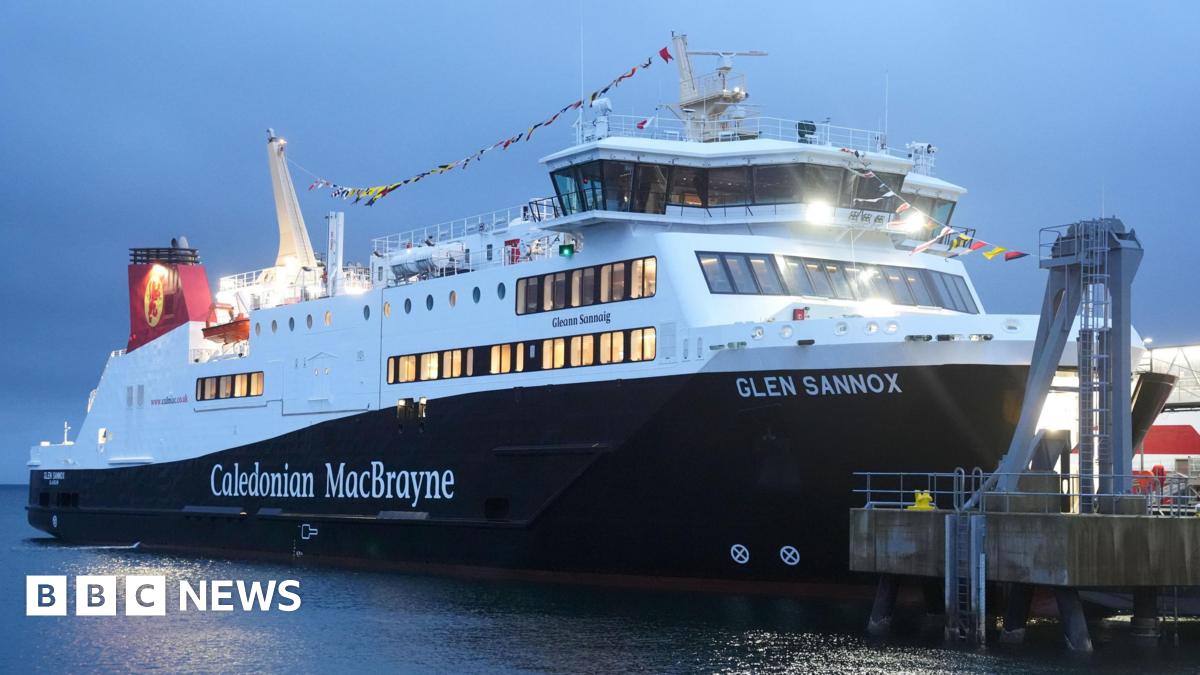
Glen Sannox was briefly taken out of service last year for the crack on a weld seam to be repaired, and was again off duty in November for annual maintenance at Cammell Laird’s yard on Merseyside.
That work was extended to include steel strengthening to tackle the vibration issue.
The committee heard that the problem related to “cavitation” – when bubbles detach from a propellor and pop, causing damaging vibrations.
Thomson said that the source of the crack was “vibration through the hull caused when the ship went astern.”
Similar work would be needed on its sister ship, the Glen Rosa, he added.
The issue is understood to run right back to the ferries’ controversial design, which was intended to allow them to ply both the Arran route and the higher-speed ‘Uig triangle’, which links Skye to North Uist and Harris in the Outer Hebrides.
Glen Sannox was the first UK ferry capable of running on the dual fuels of liquified natural gas (LNG) and marine gas oil (MGO), a low-sulphur type of diesel.