
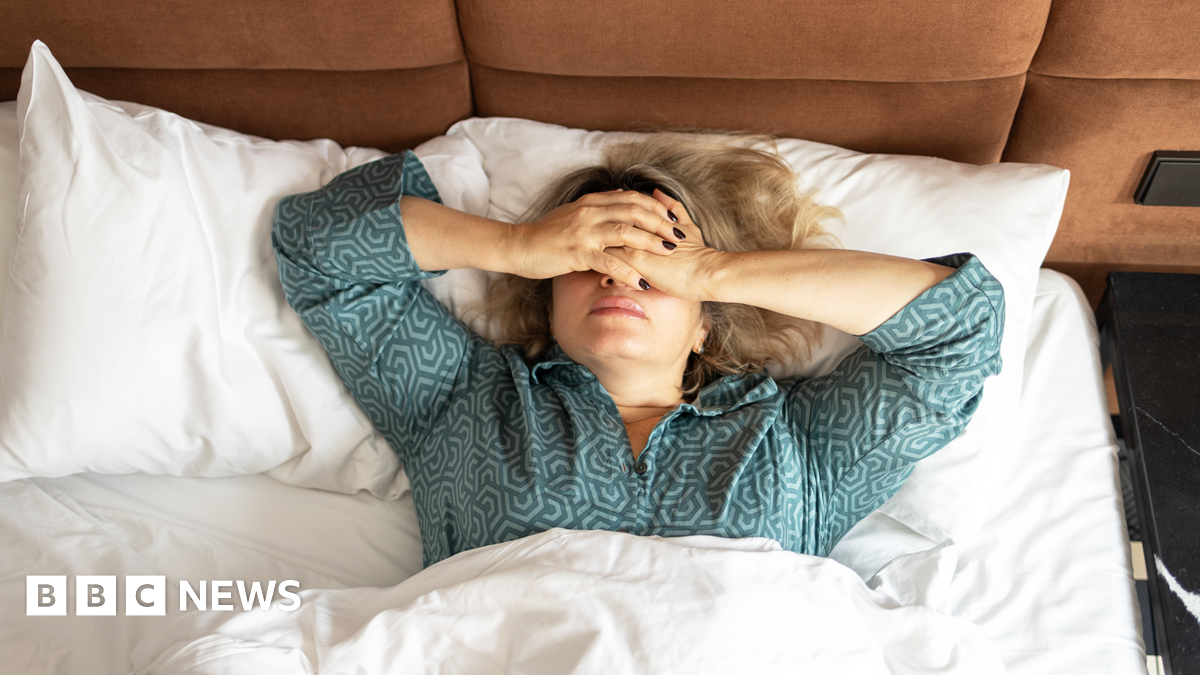
The menopause – and the years leading up to it – can affect women’s daily life in many different ways.
Falling levels of oestrogen in the body have a knock-on effect on the brain, on periods, skin, muscles and emotions.
Hot flushes and night sweats are some of the most common symptoms experienced. They can disturb sleep and concentration, while also affecting relationships and the ability to work.
Hormone replacement therapy (HRT) is available to treat symptoms in the form of tablets, patches and gels – but there have been few non-hormonal options available to date.
Veoza, also known as fezolinetant, is an important additional option, says Helen Knight, director of medicines evaluation at NICE – the National Institute for Health and Care Excellence – which provides guidance on how to improve healthcare.
“For those who are unable to take HRT for varying reasons, options have historically been limited, and we have heard clearly from patients how difficult that can be,” she said.
“The evidence shows fezolinetant can meaningfully reduce symptoms, and was found to be cost effective, offering value for the taxpayer.
“This decision will give much-needed relief to those for whom HRT is unsuitable.”
The drug can be used in cases of deep vein thrombosis (DVT) or pulmonary embolism, and in some cases of diabetes or heart disease when HRT isn’t suitable.
But Veoza is not going to be an option for everyone.
NICE said the drug was not recommended for women with breast cancer, other oestrogen-dependent cancers or liver disease because these groups were not included in clinical trials of the drug. As a result, there is no data available on the risks or benefits to these women.
Women who have had breast cancer in the past and have finished their treatment may be able to take it, but it would depend on their individual situation.