
Analysis: It’s impossible to know how long this war will last, but what is certain is that the longer the duration, the bigger the impact on consumers
As the conflict continues in the Middle East, the International Energy Agency released a record volume of strategic oil reserves yesterday to mitigate supply shortages and calm global markets. In Ireland, the oil supply shock is already impacting on consumers and businesses, with the cost of motor fuel increasing to over €2 a litre at the pumps this week.
Although it can seem trivial to think about the economic costs of a war that has resulted in close to 1,300 lives lost already, continued conflict will have real impacts on households here. There have been conflicting messages from the White House about the planned timeline for the war, meaning we are once again faced with high levels of uncertainty. While it’s impossible to know how long the war will last, what is certain is that the longer the duration, the bigger the impact on consumers.
We need your consent to load this rte-player contentWe use rte-player to manage extra content that can set cookies on your device and collect data about your activity. Please review their details and accept them to load the content.Manage Preferences
From RTÉ Radio 1’s Drivetime, Dr Emma Howard from TU Dublin on how the Iran conflict will hit your supermarket shop
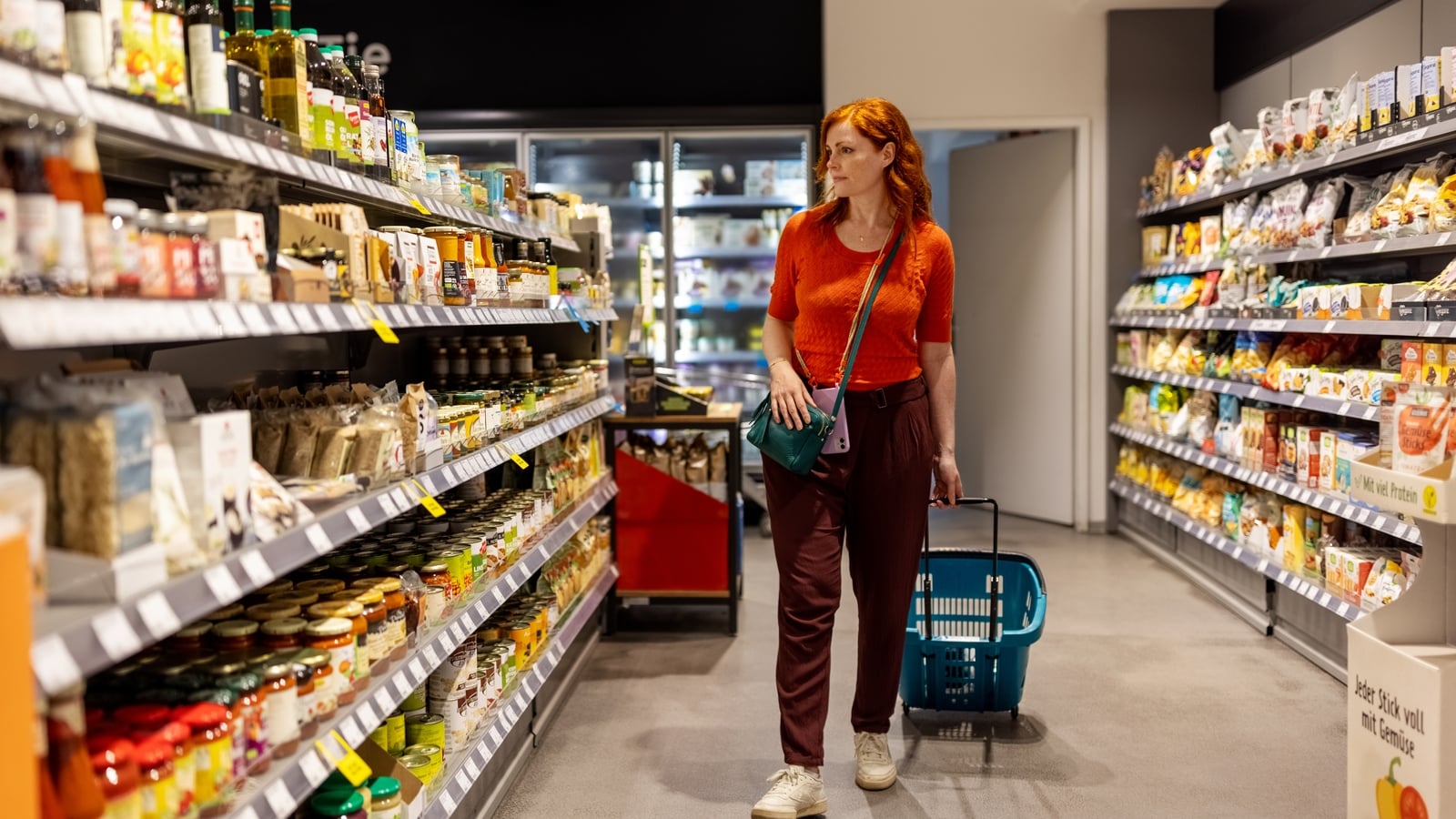
The immediate economic impact has been on energy prices, but continued conflict in the Middle East will lead to a higher price level overall in the economy. In addition to increased oil and gas prices, grocery prices are likely to rise too.
A prolonged war will impact globally, increasing food prices through two channels. First, as energy is an input into the production of foods, businesses will face higher costs and at least partly pass increases onto consumers. In Ireland, food is predominately transported by diesel trucks, with over 8,000 tonnes carried by road freight in the third quarter of last year alone. These increased production and transport costs will feed through the supply chain resulting in higher prices on the supermarket shelves.
Second, because of the closure of the Strait of Hormuz, the supply of some consumer goods and inputs into the production of others will be impacted. Approximately half of global food production depends on synthetic fertiliser, of which around a third of global supply transits through this vital shipping route.
We need your consent to load this rte-player contentWe use rte-player to manage extra content that can set cookies on your device and collect data about your activity. Please review their details and accept them to load the content.Manage Preferences
From RTÉ Radio 1’s Morning Ireland, Dr Nikolaos Valantasis-Kanellos from TU Dublin on how the closure of the Strait of Hormuz will hit the cost of oil, gas and other goods
A drop in the global supply of fertiliser will increase food production costs impacting on both the price and availability of crops and animal feed, again leading to higher food prices for consumers. Longer shipping routes for globally traded commodities such as tea and coffee, and for goods produced in the Middle East such as sugar, and petrochemicals used in plastic packaging, will also result in higher costs or a shortage of many consumer goods.
As a small, open economy, Ireland is always exposed to global macroeconomic shocks. Additionally, we are heavily reliant on global markets for consumption and production. Although we have increased renewable energy generation, we imported 80% of our energy in 2024.
Worryingly, not only do we lack energy security but, despite a large agricultural sector, we also lack food security. We export the vast majority of the beef and dairy products produced here, while we import around 80% of what we consume. The food we eat primarily comes from other countries, as does most of the animal feed used in domestic food production. This overreliance on imports leaves us more exposed than most to global supply shortages.
We need your consent to load this rte-player contentWe use rte-player to manage extra content that can set cookies on your device and collect data about your activity. Please review their details and accept them to load the content.Manage Preferences
From RTÉ Radio 1’s Today with David McCullagh, w hy the Iran war is a threat to food security
The EU’s energy commissioner’s statement this week that member states should ‘lower taxes on energy’ where they can has been widely reported. There are many proponents of tax cuts and opposition parties have called for the Government to reduce excise tax or suspend carbon taxes.
However, as the commissioner also pointed out in his remarks, ‘whatever we need to do needs to be temporary and targeted’. Universal measures that benefit all consumers have an inflationary impact on the economy. Supporting consumers who can well afford the price increases, as well as those consumers who cannot, increases demand in the economy, further driving up the price level.
We saw the extent of this in the wake of Russia’s invasion of Ukraine. Costly, universal, ‘one off’ cost of living measures were repeated in three subsequent budgets, resulting in Government expenditure significantly exceeding the national spending rule. The direct inflationary impact of these spending breaches over three years was an estimated €1,000 increase in an average household’s annual costs. Although it would be popular to cut taxes for everyone, in the long run costs would simply increase even more as a result.]
We need your consent to load this rte-player contentWe use rte-player to manage extra content that can set cookies on your device and collect data about your activity. Please review their details and accept them to load the content.Manage Preferences
From RTÉ Radio 1’s Dricetimne, what aret he pros and cons of Government intervention in energy prices because of the Iran war?
While effective tax cuts for this crisis would need to be temporary, such temporary changes prove to anything but historically in Ireland. In May 2022, the VAT on gas and electricity was temporarily reduced to 9% to help with the cost of living crisis, this tax cut was extended in October 2025 out to 2030. It’s hard to argue that a reduction lasting eight years is temporary.
Another consideration is that one of the reasons why taxes are levied on fossil fuels is to reduce demand. Ireland is a laggard when it comes to decarbonising the economy. On current projections, we are facing compliance costs of up to €26 billion for failing to meet our legally binding emissions reductions targets. Although targeted measures are needed to support lower income households, the majority should not be cushioned from the impact of this oil shock as higher prices will incentivise them to reduce their use of oil, reducing emissions.
This crisis has brought our reliance on fossil fuels into sharp focus. Decarbonising the economy is critical, not just to mitigate climate change, but to ensure energy and food security for future generations. Now is the time to get the climate action plan back on track. Winston Churchill is reputed to have once said, ‘never let a good crisis go to waste’. Let’s hope the government doesn’t waste this one.
Follow RTÉ Brainstorm on WhatsApp and Instagram for more stories and updates
The views expressed here are those of the author and do not represent or reflect the views of RTÉ