
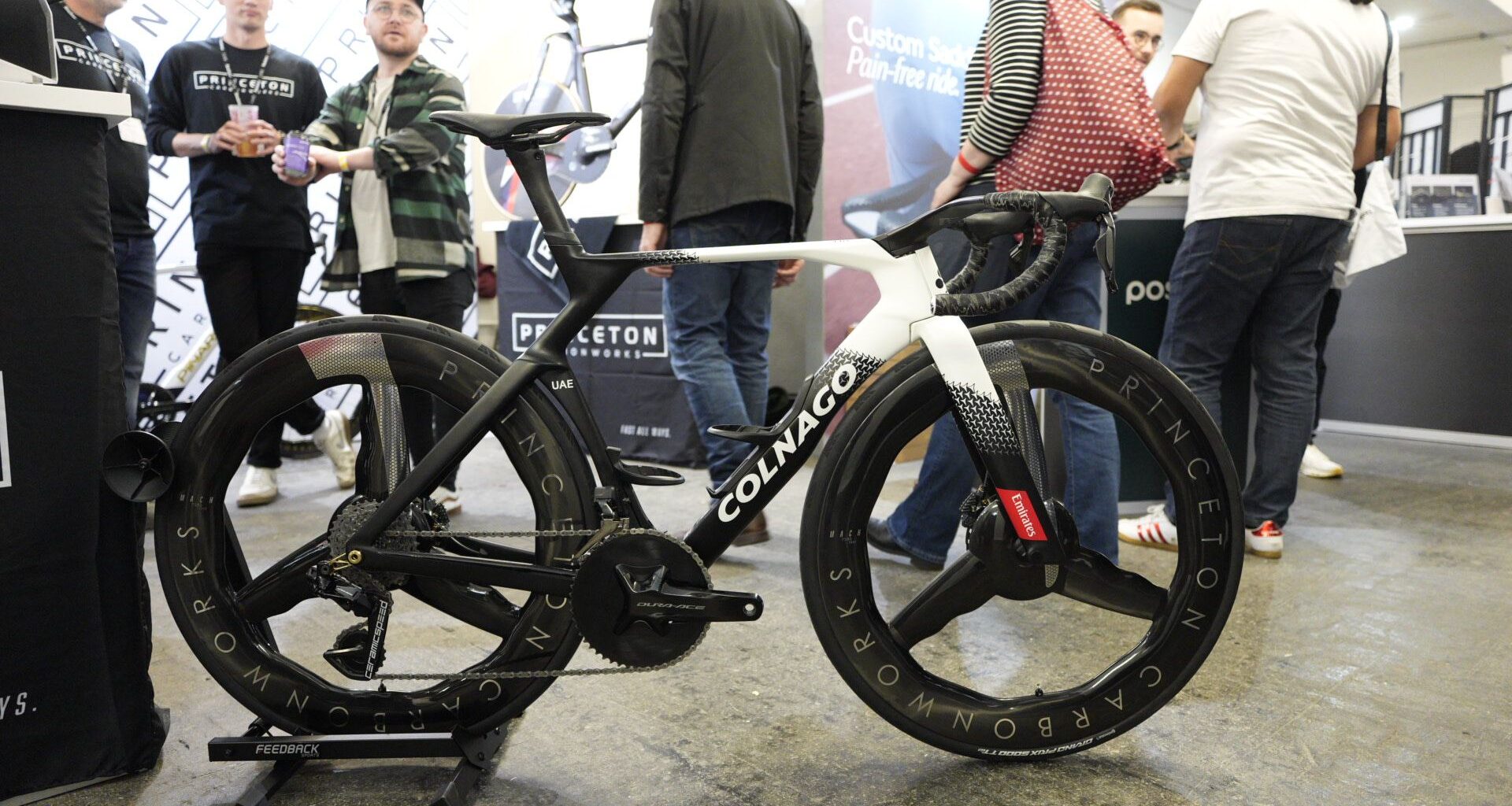
Check the comment section under any article featuring a recently released bike and you’ll see one of cycling’s favourite talking points: the rising price of bikes. In recent years, ‘hero’ bikes – the ones ridden by the pros – have become absurdly expensive . I was myself arguing that if we don’t do something about the link between WorldTour cycling, and what brands sell us, then eventually the costs of pro tech will push prices so high that they will actively discourage participation.
With a flagship road bike now nudging £12,000 – and in some cases well beyond – it’s easy to conclude that the needs of the pro peloton are out of whack with ours, or at least that the industry has lost touch.
But, if you step back for a moment and look at the actual numbers, the picture is more nuanced. By some measures, the best road bikes are cheaper in real terms than they were a decade ago. And if the progress we’re seeing in the Chinese market is anything to go by, then that trend is set to accelerate.
Article continues below
You may like
But before everyone leaps to the comments to chastise me for being out of touch, let’s look at a comparison. In 2014, a Specialized S-Works Tarmac SL4 retailed for £8,500. Fast forward to today, and the S-Works Tarmac SL8, our road bike of the year in 2024, sells for £11,489. A leap of 35%. The smoking gun to support the anguish in the comments… until you adjust for inflation.
An inflation-adjusted bag of cash containing £8,500 lands at roughly £11,700 in today’s money. In other words, the modern SL8 sits exactly where you’d expect it to if prices tracked the wider economy.
The more relevant point isn’t if the price has moved, it’s what you get for your money.
Performance inflation, not price
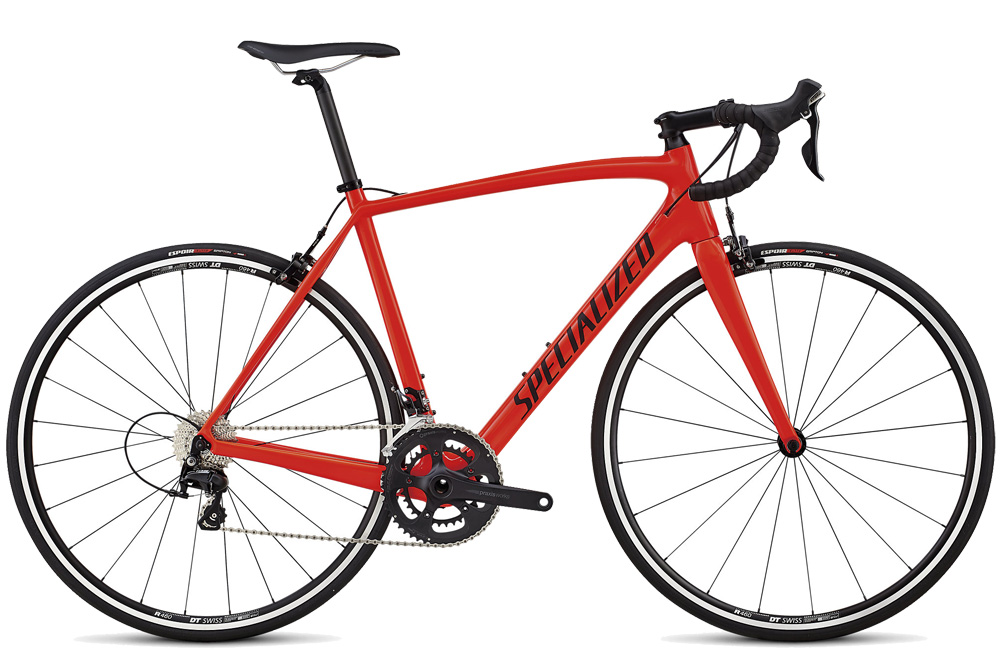
A 2014 Specialized Tarmac SL4 Minimal integration, mechanical gears, less aero development
The 2014 SL4 was cutting-edge for its day, but compared to modern standards it’s a pretty basic bike. Rim brakes were still dominant, which is part of the reason I selected 2014 for the comparison. Mechanical shifting was also commonplace. Integration was limited and while aero development was part of the conversation, it was nowhere near the level we now take for granted.
Today, the baseline expectation for a WorldTour level bike includes wireless electronic shifting, hydraulic disc brakes, deep section carbon wheels, fully integrated cockpits, and aero R&D input that just didn’t exist back then.
Depending on your perspective you could argue that in that context, performance per pound has exploded.
Ok, ok. I hear you. I’ve picked a convenient example. The SL4 was never a cheap bike, and was perhaps an outlier at the top of the market.
What to read next
Let’s look at the bikes at the other end of the cost spectrum. You get more for your money there too. In 2014 a credible team-level race bike from Giant or Merida retailed around the £5,500 mark. Adjust that for inflation, and you end up around £6,650 to £7,300 in today’s money.
That spend brings into focus the current crop of WorldTour bikes from the more ‘value-focussed’ brands. Machines from Cube and XDS land squarely in that ball park. A Cube C68 can be had for £6,799 while an X-Lab AD9 is £7,000. In real terms that means the entry point to genuinely pro-level kit has barely moved. A Merida Reacto isn’t hugely more expensive at £8,000.
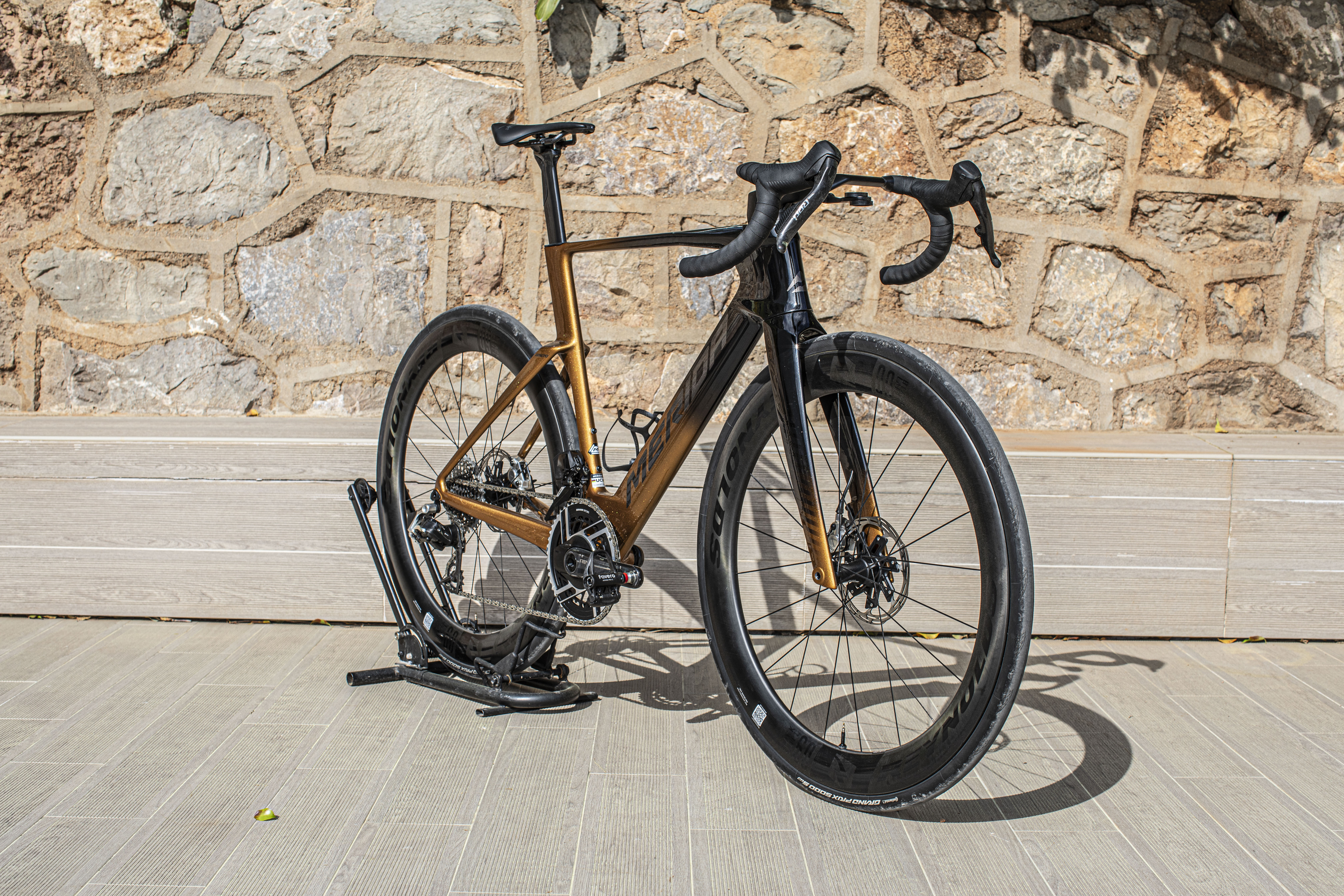
Fifth generation Merida Reacto
(Image credit: Aaron Borrill)
So why does it all feel so expensive?
Part of the issue is that wages haven’t kept pace with inflation. In fact, they’ve barely moved in some sectors, let alone kept up. The cost of living crisis, energy bills, and slowing housing markets alongside rising rents, all contribute.
Another part is psychological however, as the halo end of the market has stretched out a long way from the mid-market in absolute terms. £14,000+ bikes are driving a sense that it’s all getting away from us. But those top-of-the-range bikes are about anchoring brands into the ultra-premium market, and most of us will never buy them. Add those into the calculations and they outpace inflation. They also feed into the sense that we all need these wafer-thin marginal gains, or exotic parts, just to enjoy a bike ride.
Of course, costs have risen for bike companies too. They’re having to deliver more for less. Electronic shifting adds expense. Disc brakes required new frame moulds and punitive tariffs in markets like the US can add close to 10% to retail pricing, and shipping have doubled. Brands are not operating in a frictionless world.
But there is another more structural explanation here.
For much of the last decade, and longer, the industry’s growth strategy has focused on selling existing cyclists more product: new standards, new niches, and an ever longer list of new marginal gains. Aero-road. Endurance road. All-road. Gravel race. Ever more refined, segmented, and specialised. That has, of course, pulled pricing up at the premium end.
But that strategy might not survive in the wake of the emerging threat from China.
Manufacturers in China are slowly shifting from making bikes for western brands to making their own, and they’re taking a different path. They’re trying to drive prices down through scale and efficiency, whilst also shouldering much tighter margins. Democratising access to performance products.
Shifting from brand premiumisation to a democratised model
On a recent visit to XDS in China, our own Jamie Williams, saw the overwhelming evidence of this shift firsthand. He was part of the first western media team allowed behind the gates of the enormous XDS factory in Shenzhen, located in Guangdong Province of China. The mega–factory outputs 5000 bikes per day, and makes carbon bikes for a raft of household names, including WorldTour level bikes.
When it comes to marketing their own brand X-LAB, the impression he got was not one of luxury positioning, or premium storytelling. Although with bikes under pro-riders and WorldTour teams now, that is part of it, they were instead focused on quality underpinned by relentless efficiency. Automation at the heart of the process, not just people.
“You could be forgiven for indulging in old imperialist tropes, imagining factories brimming with [low paid] staff, doing the work we can’t afford in the West,” he said.
Instead he shared video of enormous halls stuffed full of state-of-the-art, multi-million-pound CNC machines, performing tasks that are still done by hand in other parts of the world.
He said: “The approach I saw is underpinned by a philosophy of bringing down the price of the best technology to bring more people into cycling, and to expand the market.”
That mindset is the polar opposite of the traditional ‘premiumised’, margin-focused approach of established brands. Rather than pushing pricing ceilings higher and creating ever smaller niches in which to sell the existing customers new bikes, XDS seem focused on democratising the high-end by bringing the price of the best technology down.
What’s crystal clear from Jamie’s experiences in China, is that the balance of power is shifting.
As Chinese brands focus less on the premium end and more on affordability driven by efficiency, the traditional European and US brands will be feeling the pressure coming from competing products that are built by the same minds, hands and machines in the same factories.
If the strategy Jamie witnessed at XDS becomes more widespread – and the last decade has indeed felt like high performance bikes have been getting ever more premium, then the next decade, could be about how much cheaper and more accessible high performance bikes could get instead.