
Codfish Island, New Zealand —(Map)
New Zealand’s kakapos are some of the strangest birds in the world. They’re heavy, flightless parrots that are only active at night. And they’re endangered. Now, thanks to efforts to protect them, kakapos may be bouncing back. Scientists are expecting a record number of kakapo chicks to be born this year.
Kakapos are only found in New Zealand. Roughly the size of a cat, they’re the world’s heaviest parrots, and can weigh as much as nine pounds (four kilograms). Since they can’t fly, they spend most of their time on the ground. But they can also use their wings to help them balance as they jump between tree branches.
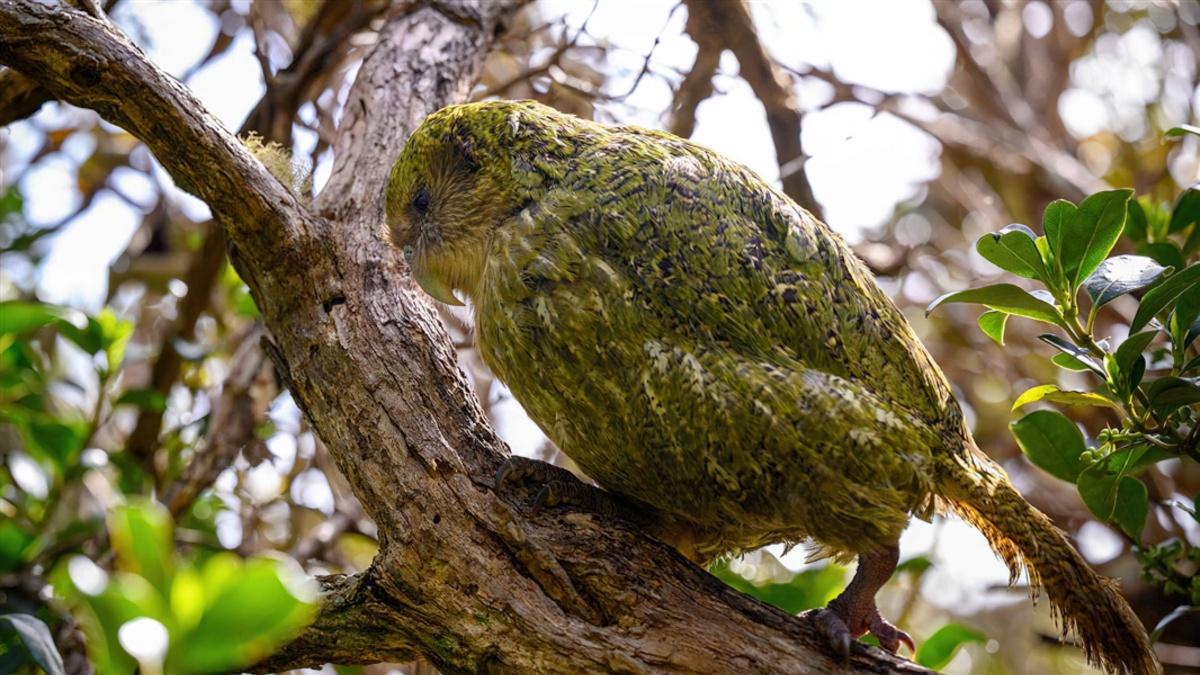 New Zealand’s kakapos are heavy, flightless parrots that are only active at night. And they’re endangered. Now, thanks to efforts to protect them, kakapos may be bouncing back. Scientists are expecting a record number of kakapo chicks to be born this year.
(Source: [CC BY-SA 4.0], New Zealand Dept. of Conservation.)
The faces of kakapos look a little like owls. And their bodies are covered in green, yellow, and black feathers that help them blend in with the leaves and branches around them. The birds can be almost impossible to spot, but they have a strong smell.
Long ago, there were large numbers of kakapos in New Zealand. But after humans arrived (along with the dogs, cats, and rats that came with them), their numbers dropped rapidly. This was partly because of hunting, and partly because the forests they lived in got cut down.
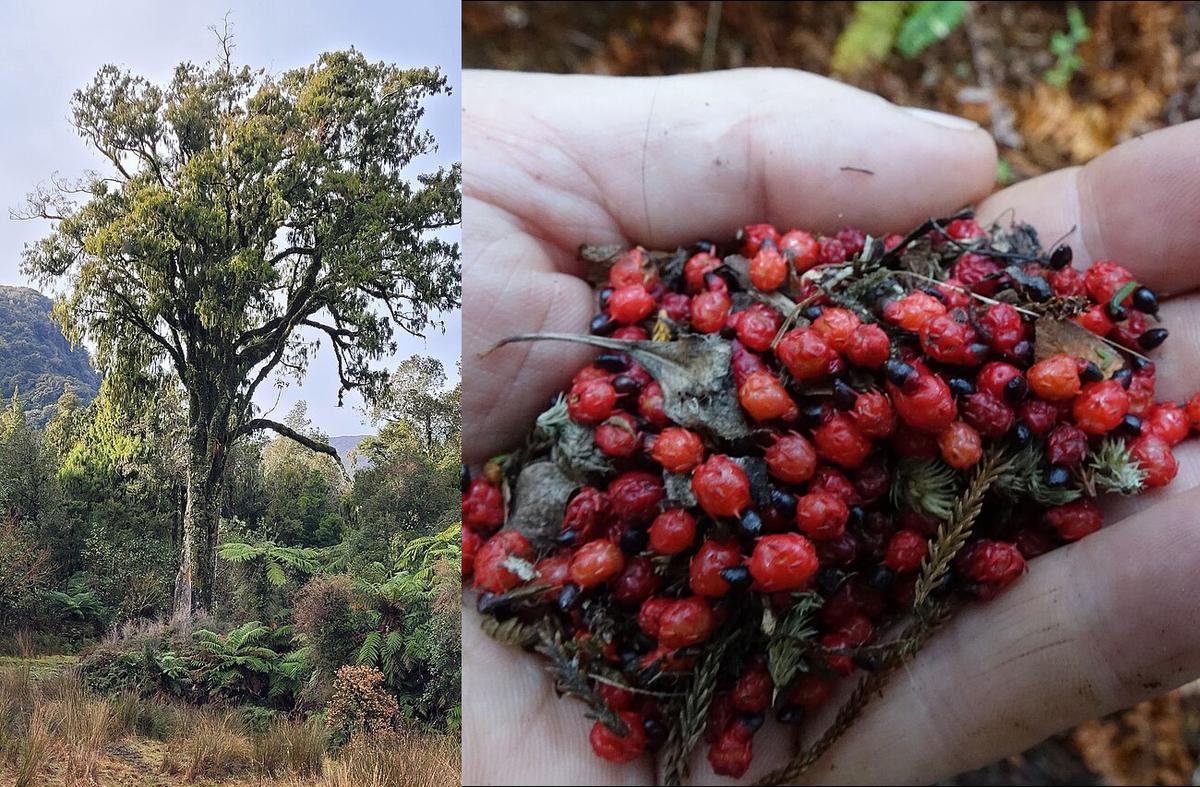 Long ago, there were large numbers of kakapos in New Zealand. But after humans arrived, their numbers dropped rapidly – partly because of hunting, and partly because the forests they lived in got cut down. Kakapos depend on trees like the Rimu tree above, and its fruits.
(Sources: Tree: Logan Lucas, Berries:[CC BY-SA 4.0], John Barkla, via Wikimedia Commons.)
In the early 1970s, scientists worried that kakapos might have become extinct. But in 1977, one last group of kakapos were found. Even so, just 30 years ago, in 1995, there were only 51 kakapos remaining.
Scientists worked extremely hard to protect the remaining birds. They moved them to three remote islands which didn’t have any dogs, cats, or rats. And they took steps to help make sure the birds had as many babies as possible, and that the chicks survived.
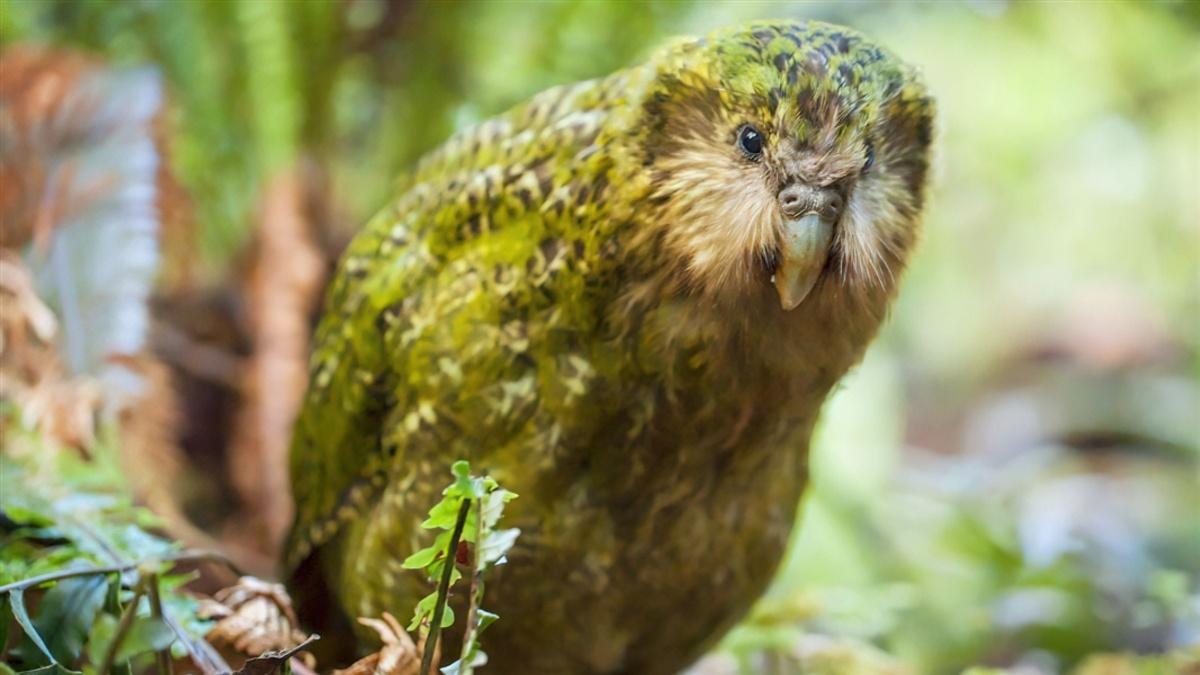 In 1995, there were only 51 kakapos remaining. Scientists worked extremely hard to protect the remaining birds. Now there are 236 living kakapos. That’s a big improvement, but it’s still not many birds. The good news is that kakapos can live for 60 to 80 years.
(Source: [CC BY-SA 4.0], New Zealand Dept. of Conservation.)
Now there are 236 living kakapos. That’s a big improvement, but it’s still not many birds. The good news is that kakapos can live for 60 to 80 years. The bad news is that they don’t have babies every year. Instead they only breed every two to four years.
The breeding seasons of the kakapos depend on whether the nearby forests are supplying plenty of food. The kakapos depend especially on the red berries of rimu trees, which are only found in New Zealand.
It’s not clear how the birds know whether it will be a good rimu berry season or not. But they do. This year, rimu trees are producing lots and lots of berries. And the kakapos are having lots and lots of chicks.
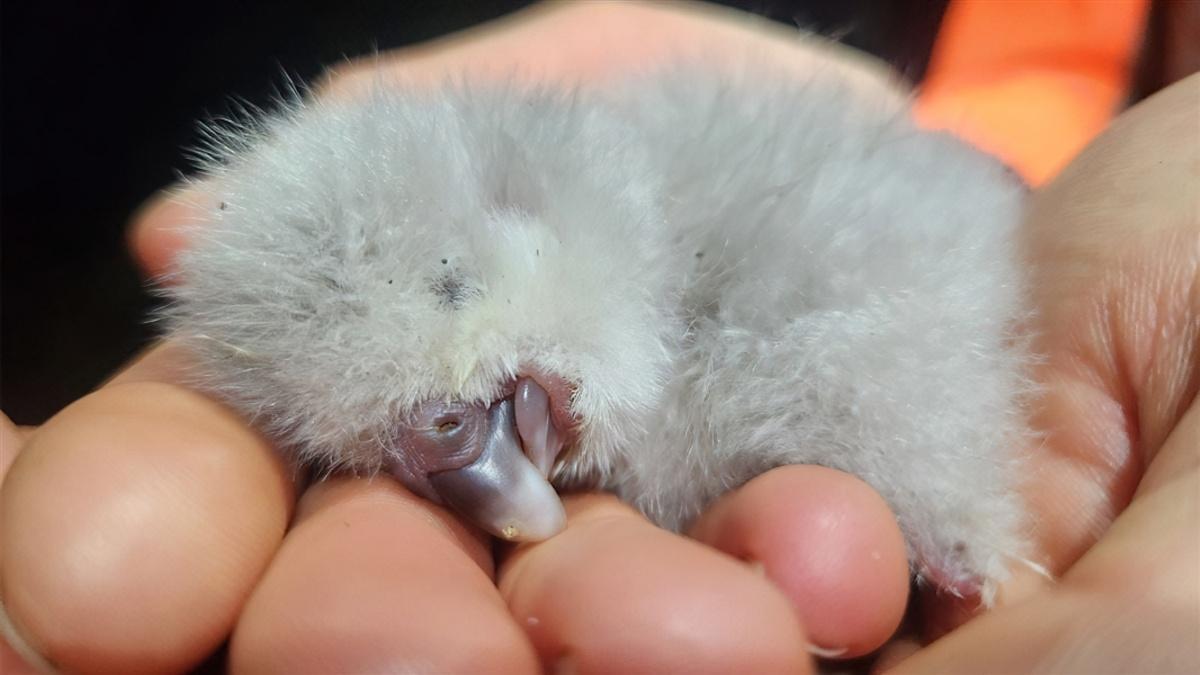 This year, rimu trees are producing lots and lots of berries. And the kakapos are having lots and lots of chicks. On Valentine’s day, a kakapo chick hatched for the first time in four years (above). Scientists believe that 2026 will set a new record for the most kakapo chicks hatched.
(Source: [CC BY-SA 4.0], New Zealand Dept. of Conservation.)
On Valentine’s day, a kakapo chick hatched for the first time in four years. And then another, and another. So far, 52 kakapo chicks have hatched this year. And scientists believe that by the end of the breeding season, 2026 will set a new record for the most kakapo chicks hatched. The previous record of 73 was set in 2019.
Scientists say it will still take a lot of work to protect the kakapos. But this year’s great breeding season is a very good sign. They hope that in five to 10 years, the kakapos will be on their way to a more secure future.
😕
This map has not been loaded because of your cookie choices. To view the content, you can accept ‘Non-necessary’ cookies.