
When the text notification popped up on his player’s phone, the caddie did everything he could to hide the gut punch.
It was a Thursday afternoon at a PGA Tour event, and nothing seemed out of the ordinary. The player asked his caddie to take a few videos of his swing, just like he usually would during a practice session. It was only then that a message from the player’s wife appeared at the top of the screen: “Did you tell him you’re firing him yet?”
As the story goes, the caddie didn’t say a word. But as soon as the tournament was over, he notified his player of a new decision he’d come to: He was quitting, effective immediately.
The relationship between a player and caddie is sacred — until it’s not. There’s a level of emotional intimacy in these years-long partnerships that goes beyond what anyone outside the ropes will ever understand. Their depth also makes them fickle, by nature.
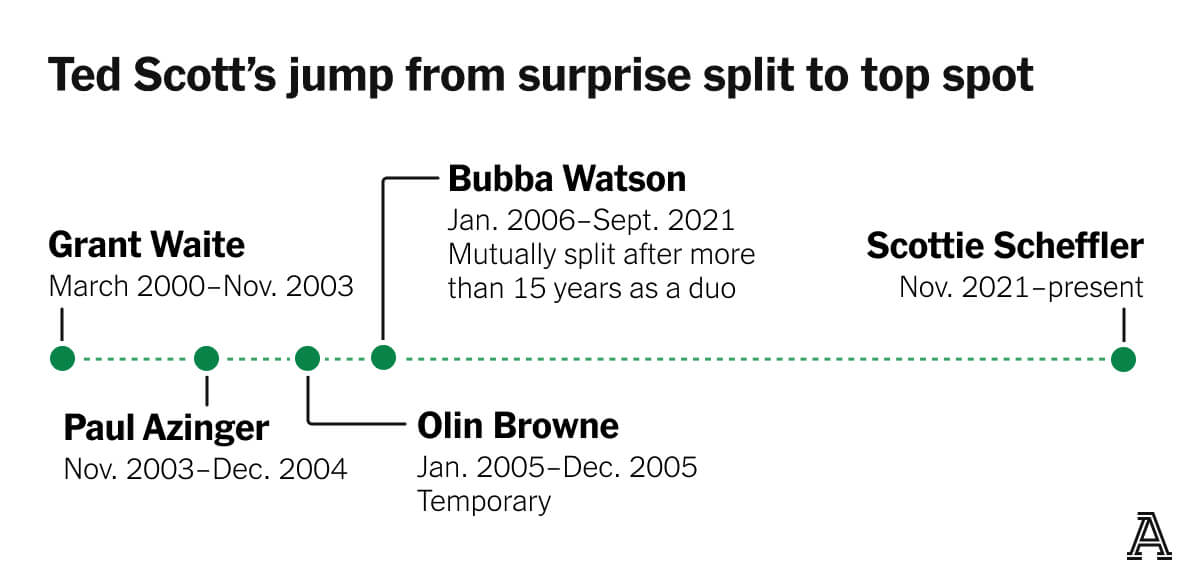
At the most basic level, the job of a professional caddie is to carry a very heavy bag. But it also requires immense preparation to set the player up for their best possible shot. Caddies scout the course, judge the wind and calculate the yardages. Some read greens, others handle course management strategy. All of them double as roving therapists — they carefully choose what information to share with their player, and what to omit. Michael Greller and Ted Scott are household golf names because of their immense influence on Jordan Spieth and Scottie Scheffler, respectively.
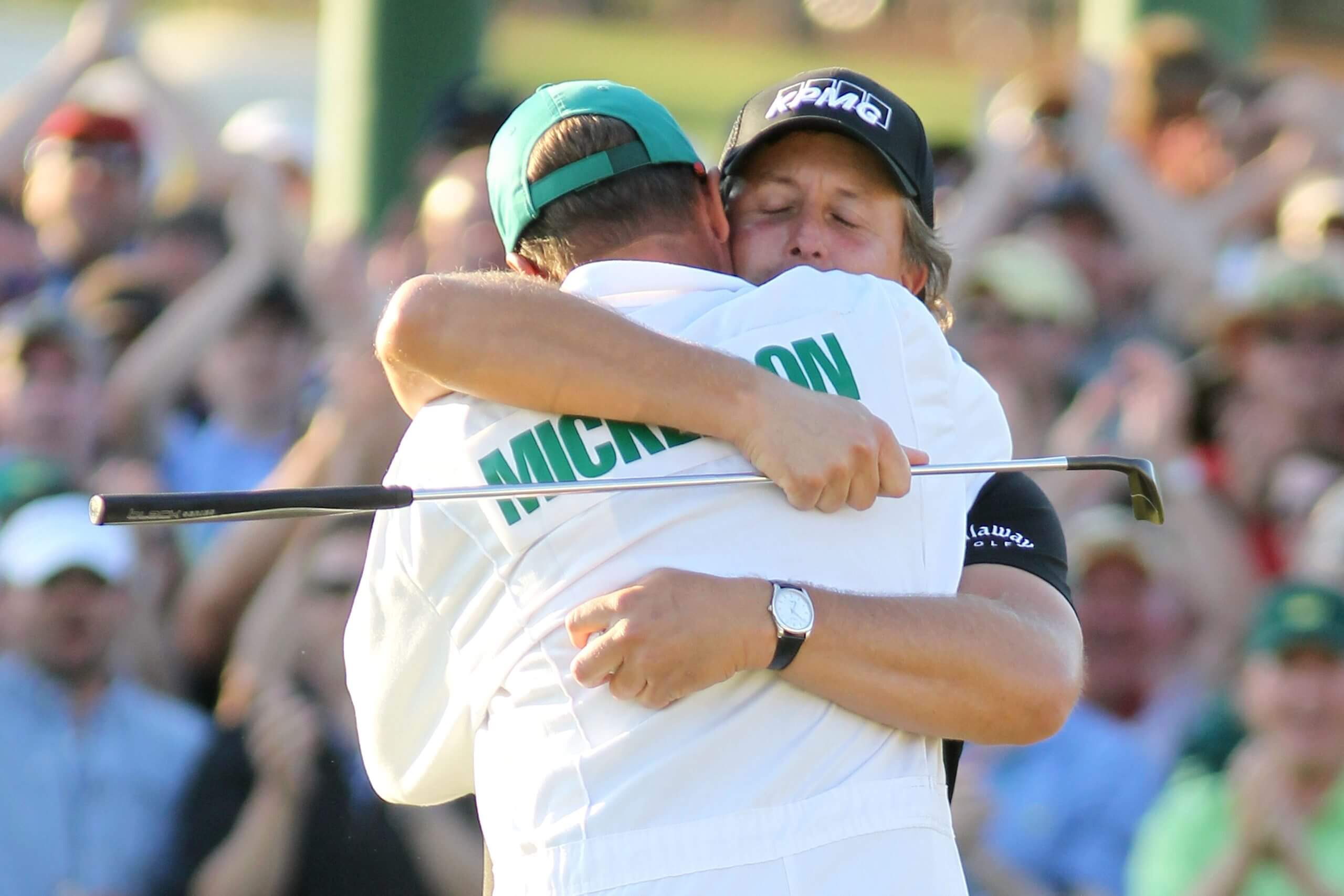
Phil Mickelson hugs his caddie Jim Mackay after his three-stroke victory after winning the 2010 Masters Tournament at Augusta National Golf Club. (Jamie Squire/Getty Images)
A caddie and player will spend more than 50 hours by each other’s side each week. There’s no such thing as a contract. No job security. A caddie can get hired or fired at any time. But when a pair is together, they’re together. Caddies are embedded into their player’s ecosystem, living and dying by their success, and collecting between 5-10 percent of their weekly earnings, with bonuses for a win. Everything is intertwined.
“You can’t overstate the value of the relationship,” says Jim “Bones” Mackay, best known as Phil Mickelson’s caddie for 25 years. “You’re going to spend more time with this guy than you are with your wife or significant other.”
This is why golf has the caddie carousel — the sport’s version of the trade deadline or transfer portal. For a different kind of fan, it may be more akin to a reality dating show, a la “Love Island.” Movement happens all the time, whether you hear about it or not.
There are break-ups and re-hirings, talent-poaching schemes and under-the-table shopping periods. Some players employ a friend or their former college teammate, while others pick up a seasoned veteran. But it doesn’t matter which route you go. Sometimes, things just don’t work out, and your ex-caddie might be carrying your playing partner’s bag the very next week.
“It’s like having a break-up,” Max Homa says. “Maybe even a divorce.”
A year ago this week, at the Players Championship, Homa emerged from a back room in the scoring building at TPC Sawgrass, nearly in tears. Everyone knew he’d just missed his fourth straight cut on the PGA Tour. But no one was aware of what else had just transpired: Homa had just been fired by his long-time caddie and best friend, Joe Greiner. It doesn’t happen that way often — caddies taking matters into their own hands.
For Greiner, that very sensitive and difficult decision was multifaceted. He had a serious family matter to tend to at home. But he also knew he couldn’t stay caddying for Homa any longer. Homa had recently changed both his swing coach and sports psychologist, and his world ranking was plummeting rapidly. Greiner thought that splitting up would be the best thing, both for Homa’s future and for the longevity of their friendship.
“I was hoping it would actually make him better,” Greiner said last month. “I told him, ‘You don’t need me to be great. You’re already great without me.’”
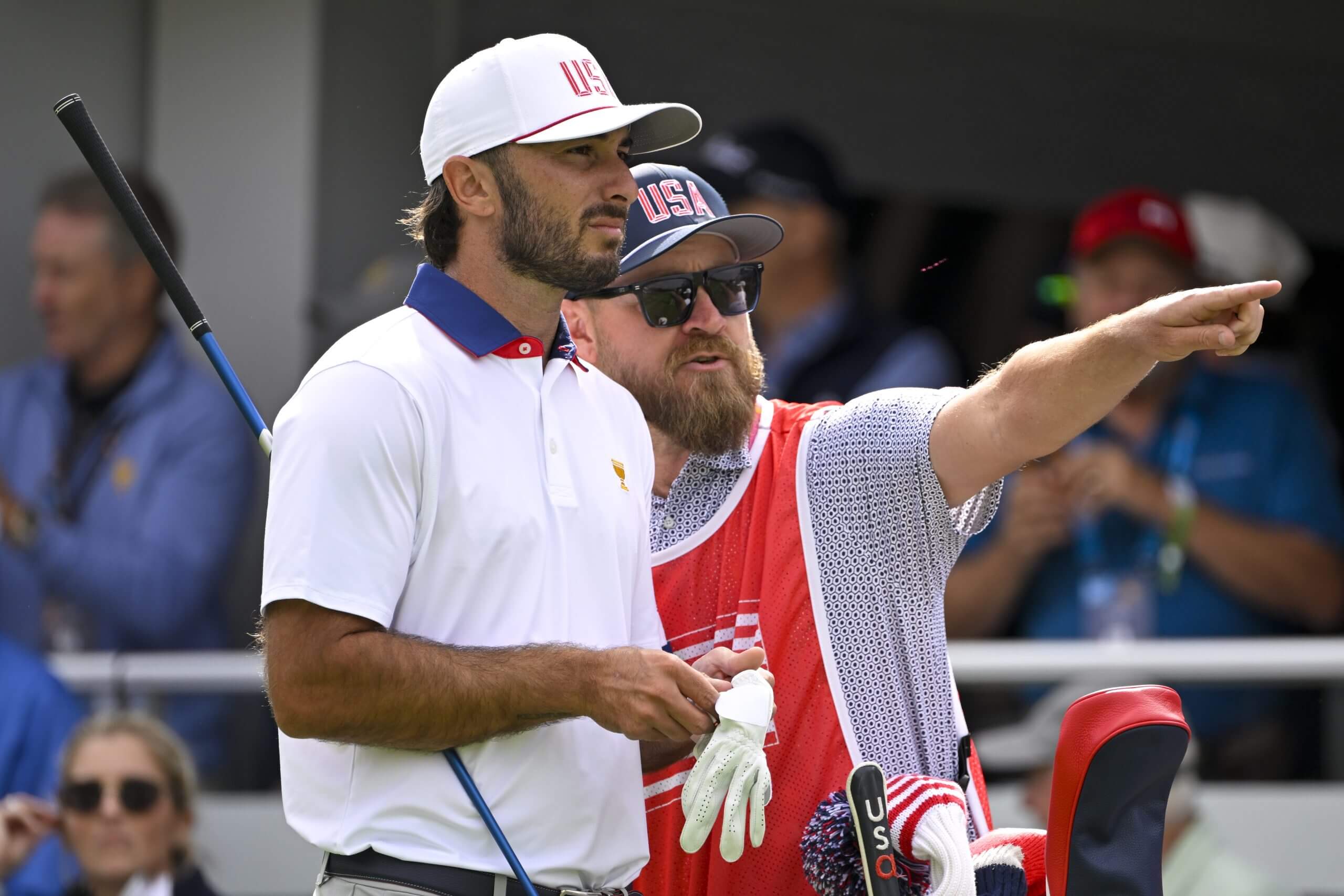
Max Homa talks with his caddie, Joe Greiner, during the 2024 Presidents Cup at The Royal Montreal Golf Club. (Ben Jared/PGA TOUR via Getty Images)
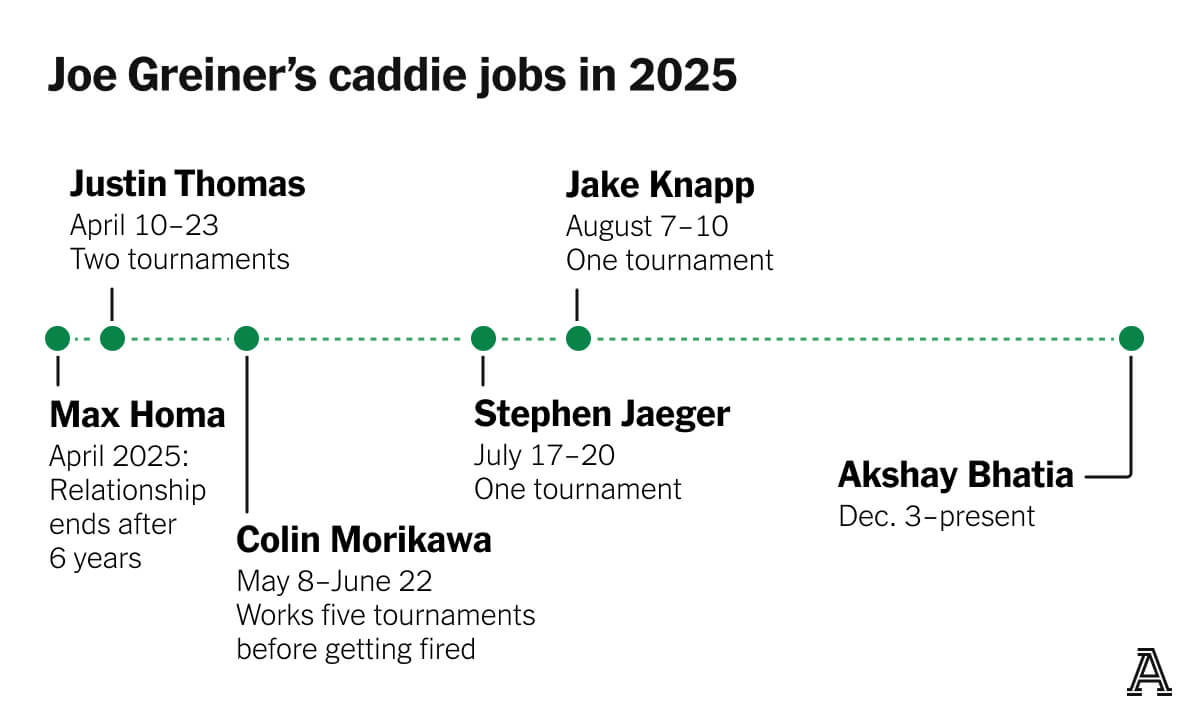
Still, Homa was left in shock and caddie-less. And Greiner was suddenly a free agent. With a long history on the PGA Tour, it was only a matter of time before Greiner’s phone started ringing. Over the next nine months, Greiner cycled through five different bags: He filled in for Justin Thomas’s caddie, worked with Collin Morikawa for a short-lived summer, and did stints with Stephen Jaeger and Jake Knapp. He’s now working for Akshay Bhatia.
“You learn so much about different pros,” Greiner says. “With Max, it was almost second nature. So I had to start over and figure out how to help the next player. It didn’t feel good to have five bosses.”
Bhatia, who agreed to accommodate Greiner’s need for a flexible schedule, had two top-10 finishes in five events to start this season, then scored the biggest win of his career on Sunday at the Arnold Palmer Invitational.
Homa had test-runs with multiple caddies, too, before pairing up with Lance Bennett, the former looper for Lorena Ochoa and Tiger Woods’ recent caddie of choice. If the 15-time major champion comes back, Homa might have to keep searching.
“I’ll never hide it. I still miss having one of my best friends with me every day. It’s different now,” says Homa, who has had his own promising start to the season. “It can get a bit heavy when you have your best friend with you, because the good times are 10 times better, but the bad times are hard. Lance and I don’t really have ups and downs. We’re just there, which is probably healthier.”
The break-up was so difficult and personal that Homa says it brought him closer to his wife. In separate interviews with The Athletic, Homa and Greiner both shared that they are now on good terms. They also each expressed a sense of gratitude for the singularity of their relationship. There’s nostalgia there. Perhaps a magnetic pull.
“Everyone’s like, you’ll work for him again,” Greiner said.
“They mind-f—ed me. All of a sudden I’m like, ‘Wait, really?’”
Building a new caddie-player relationship is a chaotic song and dance.
These days, the caddie industry is so competitive that agents get involved. Often, a player representative will make the first move in hiring — call a caddie up, ask if he’s still available, or inquire if he’d consider making a jump. That’s what happened in 2023 to Joe Skovron, the long-time caddie of Rickie Fowler, but who was at that moment on the bag for South Korean prodigy Tom Kim.
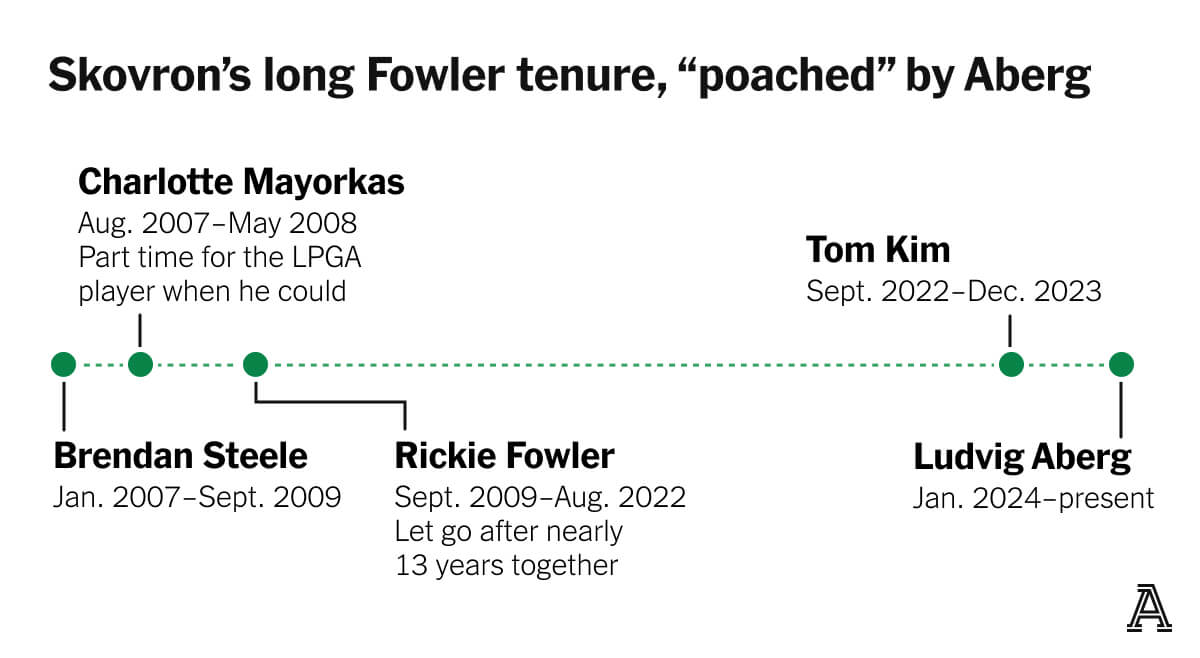
Ludvig Åberg’s team identified Skovron as the best option to guide the Swedish phenom through his rookie PGA Tour season. Skovron only knew of Åberg, but after some due diligence, he decided the hype around the former No. 1 amateur was real. Shortly thereafter, Skovron broke the news to Kim.
“It’s tough because you have two special players there that were young,” Skovron said. “I just felt like it was going to be a better situation for me going forward. I’ve maintained a great relationship with Tom and he’s been amazing about it.”
Not every caddie-player split is amicable. Woods and Stevie Williams famously didn’t communicate for more than a decade after they broke up. A messy ending often results from a sudden departure or a poor communication method, like your wife sending a text message at the exact wrong time. Some separations are so out-of-the-blue that they cause shock waves throughout the caddie industry. Multiple caddies mentioned Mackay’s departure from Mickelson as the strongest example of that.
“I got fired by a wife before,” says Paul Tesori, who’s been a professional caddie for 26 years, and recently reunited with Webb Simpson. “Sean O’Hair and I were great friends, and in October of 2010, he called me and fired me. I’m like, Sean, we’re getting along unbelievably well, you’re still top-50 in the world, what’s going on? He goes, ‘Buddy, to be honest with you, my wife just doesn’t like you. It’s either her or you, and I can’t get divorced.”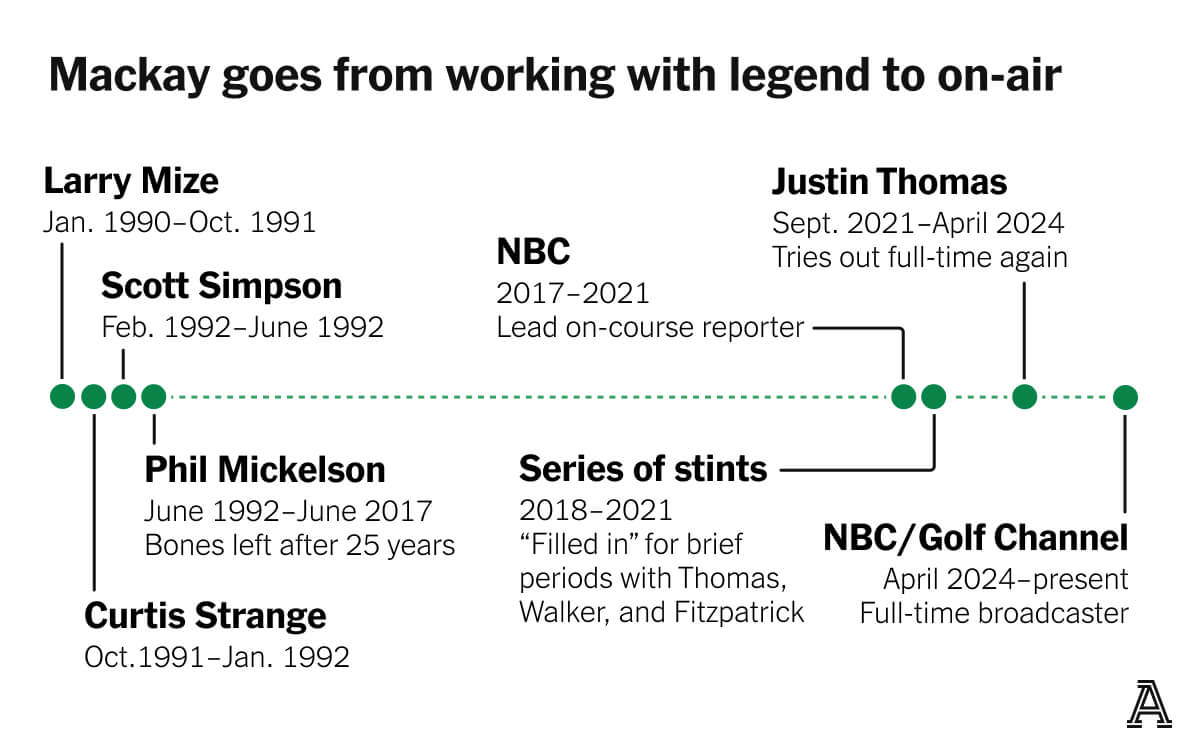
Because of the fleeting nature of these relationships, caddies abide by a few golden rules. Most importantly: Never badmouth your player. If you’re suddenly in a pinch looking for a new bag, the last thing you want as a caddie is a reputation for complaining to whoever will listen. Protocols differ from player to player when a new pairing comes together. The top caddies of this generation bend to the will of the golfer — anything they say, goes.
“Nothing is more important than a player’s level of comfort,” Mackay says. “A caddie’s ability to make things small is a great attribute they can have.”
A new caddie will want to ask questions and adapt along the way, observing the player’s behavior to adjust to their personal likes and style. Some players will let that process naturally play out, while others don’t quite have the patience.
“Something that somebody else loved might get you punched by the next guy,” says Mark Urbanek, who got hired by Collin Morikawa after Tony Finau let him go over the summer. “Some players need to hear something and some players don’t. You have to learn all the little things that make him tick all day long.”
But there is also a cohort of older, more experienced caddies who come in with a game plan. They need to be personally involved in a player’s development.
Johnny McLaren is one of those. The Englishman, who currently loops for Paul Casey on LIV, takes a hands-on approach. Before he starts with a player, he ensures they’re comfortable with him using whatever outside-of-the-box methods he believes could improve their game. That means anything from statistics to club selection to conversations about poker during tournament rounds, instead of golf. Those are the types of strategies that helped get Luke Donald to world No. 1. It’s also the reason why McLaren suddenly called it quits with Donald in 2015.
“For whatever the reason, I felt I had run out of ideas. I felt exhausted mentally from chasing ideas to make him better. So I said, ‘Look, I just think that I’ve run my course. For you and for me.’” McLaren says. “He did not take it that way and did not like it very much.”
The sensitivities of these caddie-player break-ups stem from the depth of the relationship, but also the lucrative nature of the job. Ted Scott, the caddie for world No. 1 Scottie Scheffler, made roughly $2 million in 2025. Of course, his player won two majors and posted 16 top-10 finishes, but the monetary opportunities in the caddie industry are bigger than ever these days. With the rise of LIV Golf and the way the competition has inflated PGA Tour purses, successful caddies have more power because they have leverage.
“The Tiger Woods boom, the influx of prize funds and the knockdown for caddies definitely gave a lot more people financial security to then speak how they want to speak,” McLaren says.
The PGA Tour published an article on its own website when Joel Dahmen and Geno Bonnalie, one of the most beloved caddie-player duos, announced their split. CBS and NBC have ramped up their TV coverage around caddie-player conversations in recent years. The clips provide an inside look at what the job entails and have given caddies a higher national profile than ever.
For all of this turnover and change in the business, there are plenty of player-caddie relationships that last. Jim Furyk and Mike “Fluff” Cowen remained together for 25 years, and it was 78-year-old Cowen who moved on to a new opportunity while Furyk was recently injured. Then there’s Rory McIlroy and Harry Diamond, childhood best friends, and Xander Schauffele and Austin Kaiser, a pair of former teammates.
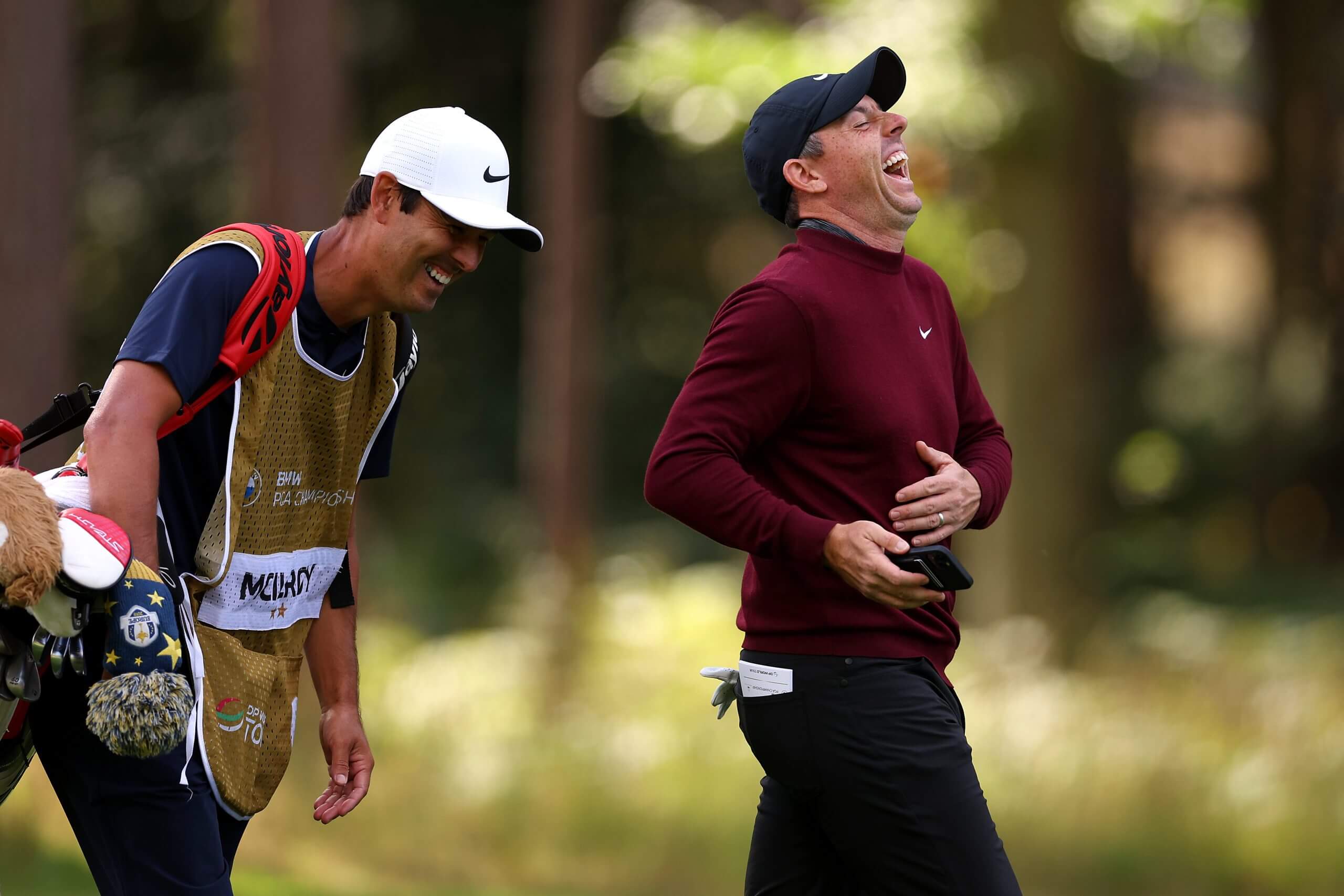
Rory McIlroy laughs with caddie, Harry Diamond during the Pro-Am prior to the 2023 BMW PGA Championship in Virginia Water England. (Richard Heathcote/Getty Images)
Gary Woodland and his caddie, Brendan Little, have been together for 10 years. Sometimes, they get into natural disagreements, go to dinner after the round, and act like nothing happened. But they’ve learned that talking it out is much more productive. Woodland’s sports psychologist even steps in to act as a mediator. The result is a relationship strong enough that Little has been an ally for Woodland as the latter struggles with PTSD.
“We’re able to talk about it if something’s not going right,” Woodland says. “We don’t just hold it in, which is probably the key to any relationship.”
The key to stability in these partnerships is simple: Abide by the principles you’d find integral to any other relationship in life. Caddies and players alike speak of the importance of mutual respect, communication and an awareness that both sides are on the same team.
“You have to know what you want as a player,” says Rickie Fowler. “Communication in your relationship is a big thing. Just like with your spouse.”