
Add DMNews to your Google News feed. 
Tension: Lower middle class families aren’t struggling because of poor spending habits. They’re struggling because wealth has reshaped the cost of living in their communities while their incomes stayed flat.
Noise: The dominant narrative blames individual choices — too much spending, not enough saving — while ignoring that gentrification, amenity capture, and wealth migration have structurally inflated the cost of baseline existence for people who never moved up.
Direct Message: The lower middle class doesn’t have a discipline problem. They have a proximity problem: close enough to wealth to absorb its costs, never close enough to access its compounding returns. That’s an architecture failure, not a personal one.
To learn more about our editorial approach, explore The Direct Message methodology.
The conventional wisdom about lower middle class financial struggle assumes that people are making poor choices: too much eating out, too many subscriptions, not enough discipline. But the more you look at the actual mechanics of their spending, the more you realize something counterintuitive. Their biggest costs aren’t discretionary. They’re structural. And those structural costs exist precisely because lower middle class families live in geographic and social proximity to wealth, close enough to absorb its inflationary wake without ever catching its tailwind.
This is the thing nobody mentions about the lower middle class squeeze. It’s not about avocado toast. It’s about the cost of existing in spaces that wealth has reshaped.
Consider the experience of dental hygienists in suburban metros who’ve watched their neighborhoods transform around them. Apartments that were workforce housing a decade ago now sit amid luxury developments. Rents climb while nearby grocery stores shift to high-end organic brands because the neighborhood demographics changed. Pediatricians in medical complexes increasingly cater to concierge patients; wait times triple while co-pays creep up. These workers didn’t move to wealthier neighborhoods. The wealthier neighborhood moved to them.
This pattern reflects what economists sometimes call “amenity capture,” where rising affluence in a geographic area drives up the cost of baseline goods and services, not because those goods improved, but because the local market now prices to a wealthier customer base. And workers can’t just opt out. They work there. Their kids go to school there. Their entire life infrastructure is embedded in a place whose cost of living is now calibrated to people who earn twice what they do.
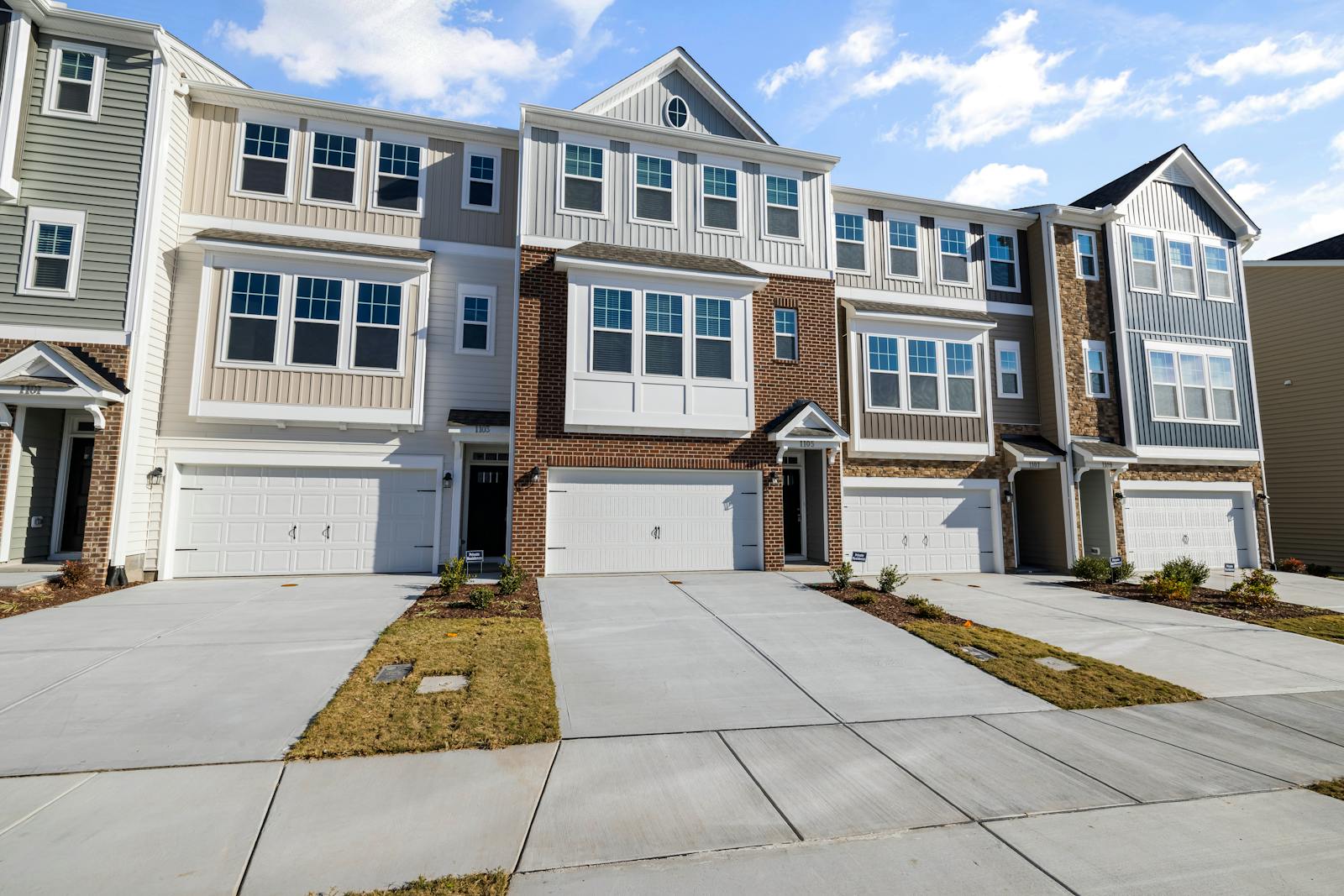 Photo by Curtis Adams on Pexels
This pattern is playing out across American metros. Income class boundaries vary dramatically by geography, which means households occupying different metros face fundamentally different economic realities. But we talk about the “middle class” as if it’s a single experience. It isn’t. What defines the lower middle class isn’t just their income level. It’s their proximity to costs engineered for someone else.
This dynamic shows up vividly in the housing market, where rising property values in formerly middle-class neighborhoods aren’t making current residents wealthier. They’re making them house-poor, or pushing them out entirely. The pattern is consistent: wealth doesn’t just accumulate in a vacuum. It reshapes the cost landscape around it, and the people closest to that reshaping bear costs they never signed up for.
Take the experience of facilities managers at mid-size tech firms in cities like Raleigh, North Carolina. In neighborhoods that have gentrified, property taxes rise because surrounding homes sell for premium prices. Public school fundraisers now operate like galas, with silent auctions and sponsorship tiers, because many parents are dual-income professionals. Those who can’t match these contributions know the social math. Not contributing means their kids feel the gap.
This is what researchers studying the social costs of growing up in the shadow of wealth have documented: proximity to affluence doesn’t create opportunity for everyone nearby. It often creates a kind of economic undertow, where the costs of participation in community life, housing, schooling, healthcare, even food, are set by the wealthiest participants. The lower middle class absorbs those costs without accessing the investment returns, asset appreciation, or professional networks that make those costs manageable for wealthier neighbors.
The dividing line between the lower and upper middle class isn’t just about income anymore. It’s about asset ownership and the compounding advantages it provides. Upper middle class households often own homes purchased before the current run-up, hold retirement accounts that benefit from market growth, and have access to employer-subsidized benefits that effectively increase their total compensation. Lower middle class households, by contrast, are renters in markets priced for owners, savers in accounts that don’t keep pace with inflation, and workers in jobs where “benefits” means the bare legal minimum.
And here’s where the narrative of personal responsibility falls apart completely. When someone spends more on groceries than a financial planner would recommend, it’s often not because they’re choosing premium products. It’s because the affordable grocery store in their neighborhood closed, replaced by a Whole Foods. When monthly expenses look “inflated” on a spreadsheet, it’s because property tax bills reflect neighborhood valuations driven by buyers who earn multiples of their salary.
The wellness industry compounds this in ways that drive me slightly crazy. “Prioritize sleep,” the advice goes, or “reduce your stress through mindfulness.” As if the single mom working two jobs to cover rent in a neighborhood that gentrified around her has a meditation deficit rather than a resource deficit. Data from Bankrate shows that financial stress falls hardest on women and Gen Xers, and the prescription from wellness culture is almost always individual: better habits, better budgeting, better self-care. Growing up, I watched my parents debate whether a doctor visit was worth the cost because insurance was thin and a single appointment could derail the monthly budget. They weren’t lacking discipline. They were navigating a system that extracted maximum cost for minimum return.
 Photo by Mikhail Nilov on Pexels
The financial stress experienced by the lower middle class is a health stressor in itself. Research examining macroeconomic inequality and brain health has shown that income inequality doesn’t just affect bank accounts. It physically reshapes brain structure and function, with measurable impacts on mental health outcomes. People living in high-inequality environments, exactly the kind of mixed-income metros where the lower middle class exists alongside significant wealth, show elevated markers of chronic stress. Their brains are literally processing the gap.
Now, the reasonable counterargument: isn’t proximity to wealth also proximity to opportunity? Better schools, better infrastructure, more jobs? Sometimes, yes. A lower middle class family in a thriving metro area does have access to opportunities that don’t exist in a depressed rural economy. That’s real. But access and affordability are different things. A job posting in a high-cost metro is an opportunity. A job posting in a metro where housing costs consume half of a modest salary is a trap dressed as opportunity. The door is open, but the floor is tilted.
Medical coders and similar professionals often move to higher-cost metros for exactly the reason the optimists would predict: better jobs, more upward mobility. But salary increases can be quickly outpaced by rent increases, leaving workers with better titles but worse financial stability than they had before.
And there’s a spatial dimension to this economic frustration that we don’t talk about enough. Remote workers bid up housing in communities they don’t physically depend on for services. The people who do physically depend on those communities, the dental hygienists, the facilities managers, the medical coders, watch their costs rise to accommodate incomes being earned somewhere else entirely.
The deepest financial stress, the kind that keeps you up at night and erodes your health from the inside, comes from the gap between the life you’re paying for and the life you actually wanted. I write about health, but I’ve come to understand that you can’t separate health outcomes from economic position. Financial stress is a health stressor, full stop. For the lower middle class, that stress has a specific, structural origin. They’re paying for proximity to a standard of living that was never designed with their income in mind. They absorb the costs of living near wealth: the inflated rents, the gentrified grocery bills, the escalating childcare fees, the property taxes pegged to someone else’s home equity. And they receive almost none of the returns: no stock portfolio quietly compounding, no home equity building through market appreciation, no professional network that converts a casual coffee into a career leap.
The story we tell about the lower middle class is one of insufficient effort. Save more. Budget harder. Make coffee at home. But the actual story, the one that shows up in the data and in the lived reality of working Americans, is about a structural position in the economy where you are close enough to wealth to pay its prices but never close enough to share in its gains.
That’s not a spending problem. That’s an architecture problem. And no amount of personal finance advice will fix an architecture that was never built to hold you.
Feature image by Gene Samit on Pexels