
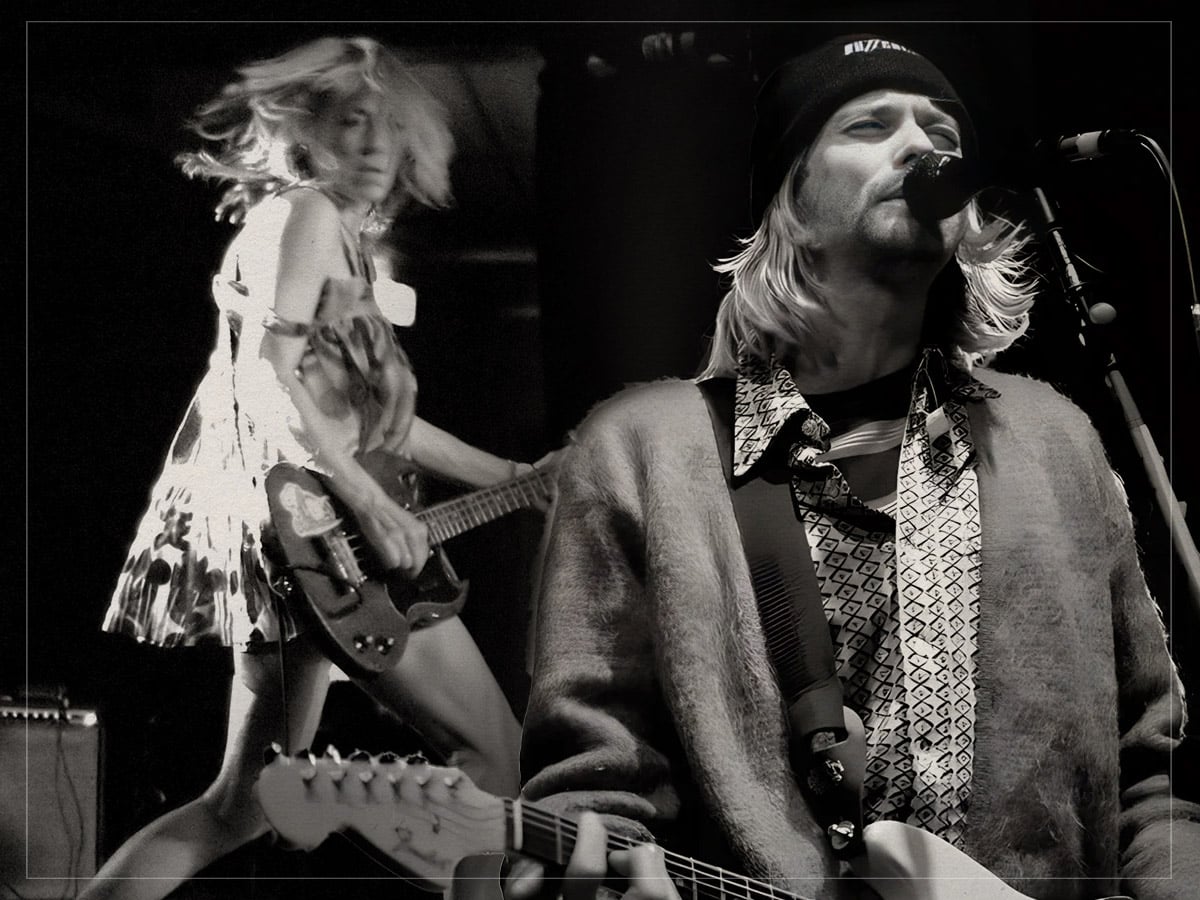
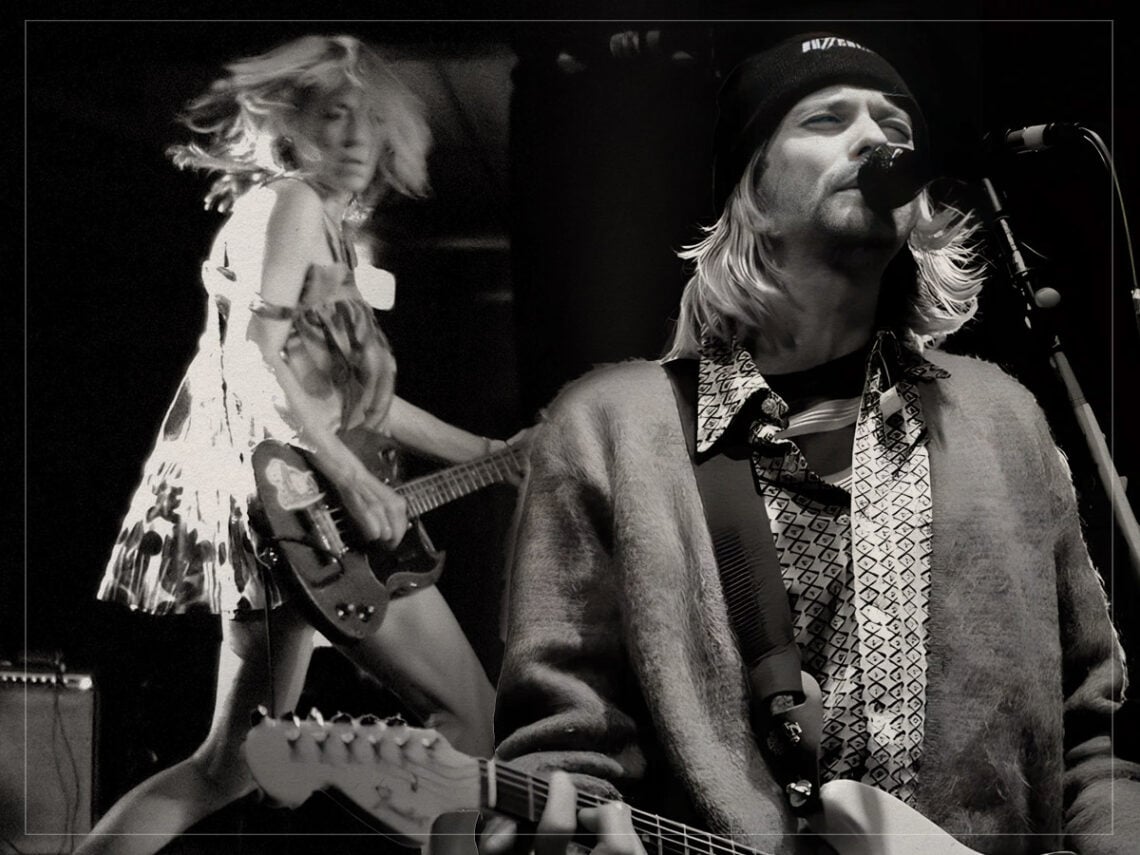
(Credits: Far Out / Alamy / Anders Jensen-Urstad)
Fri 13 March 2026 2:00, UK
The atmospheric weight of Sonic Youth‘s influence on alternative rock is as dense as the feedback from one of their Fender Jaguars.
At the centre of this whirlwind was Kim Gordon, whose radical approach to the guitar laid the groundwork for the grunge explosion, drawing from the raw energy of New York icons like The Velvet Underground and The Stooges, to help the band emerge from the late 1980s noise underground to completely dismantle traditional musicianship.
They reimagined the guitar as an object of sonic experimentation, utilising drumsticks and hardware store tools to find new textures, while Gordon’s vocals, delivered in a captivating, gritty rattle that demanded total focus. By 1990, the band had spent nearly a decade in the trenches before finding mainstream traction with their sixth studio album, Goo, but while it was this record that finally introduced their dissonant brilliance to the wider public, for the burgeoning class of musicians rising in their wake, Sonic Youth were already the high priests of the underground, and no one worshipped at their altar more fervently than Kurt Cobain.
Cobain was a dedicated crate-digger whose musical identity was forged by an obsessive devotion to his record collection, with his journals now famous for their curated lists, which included his ‘Top 50 by Nirvana’, where Sonic Youth’s 1988 masterpiece Daydream Nation held a permanent spot, and as it transpired, the feeling would grow to be mutual.
Having caught wind that there was a buzz growing around Nirvana, Thurston Moore and Kim Gordon, and Dinosaur Jr frontman J Mascis attended the quartet’s show at Mawell’s in Hoboken, New Jersey, on July 13th at the invitation of a mutual friend who’d been tasked by Sub Pop co-owner Bruce Pavitt to “round up troops to go and support the guys”, as recalled by Moore in his autobiography Sonic Life.
Cobain’s band was playing in support of labelmates Tad, but it was Nirvana that left a lasting impression; just months before Nirvana brought ‘Teen Spirit’ mania to the world in late 1991, the band was tapped by Sonic Youth for a European festival tour.
“To be asked to go on tour with Sonic Youth was a dream come true,” said Kurt, “I still can’t describe what I felt. What an honour”. However, a shift in the hierarchy occurred the moment the amps were turned on, where the veterans quickly realised they were witnessing a force of nature that would go on to eclipse the very genre they had helped to build.
Moore’s account in Rolling Stone of a 1994 show at San Francisco’s Warfield captures the moment he realised the “students” might just become the main event: “We did this show with Nirvana at the Warfield, in San Francisco. They plugged in, and from the first chord, Kurt flew into the audience. He was surfing over the crowd while playing the song. The crowd threw him back onto the stage, and [snaps his fingers] he hit the first line of the vocal. I was like, “F*** it, there is no way we can beat that’.”
Despite Nirvana’s explosive trajectory, which Sonic Youth recognised so early on, Kim Gordon also saw a person who would need a grounding force amidst the forthcoming storm: “I’m not sure why, but I felt an immediate kinship with him… Kurt was funny and fun to be around, and soaked up any kind of personal attention. I felt very big sisterly, almost maternal, when we were together.”
With what would have been Cobain’s 60th birthday approaching this month, his legacy has reached a state of mythic immortality. Without Sonic Youth, there might not have been a Nirvana, although the latter would eventually go on to outsell their mentors by millions, a staggering reality that I’m sure young Cobain, who sat in his room carefully curating his ‘Top 50’ list, would never have believed.