
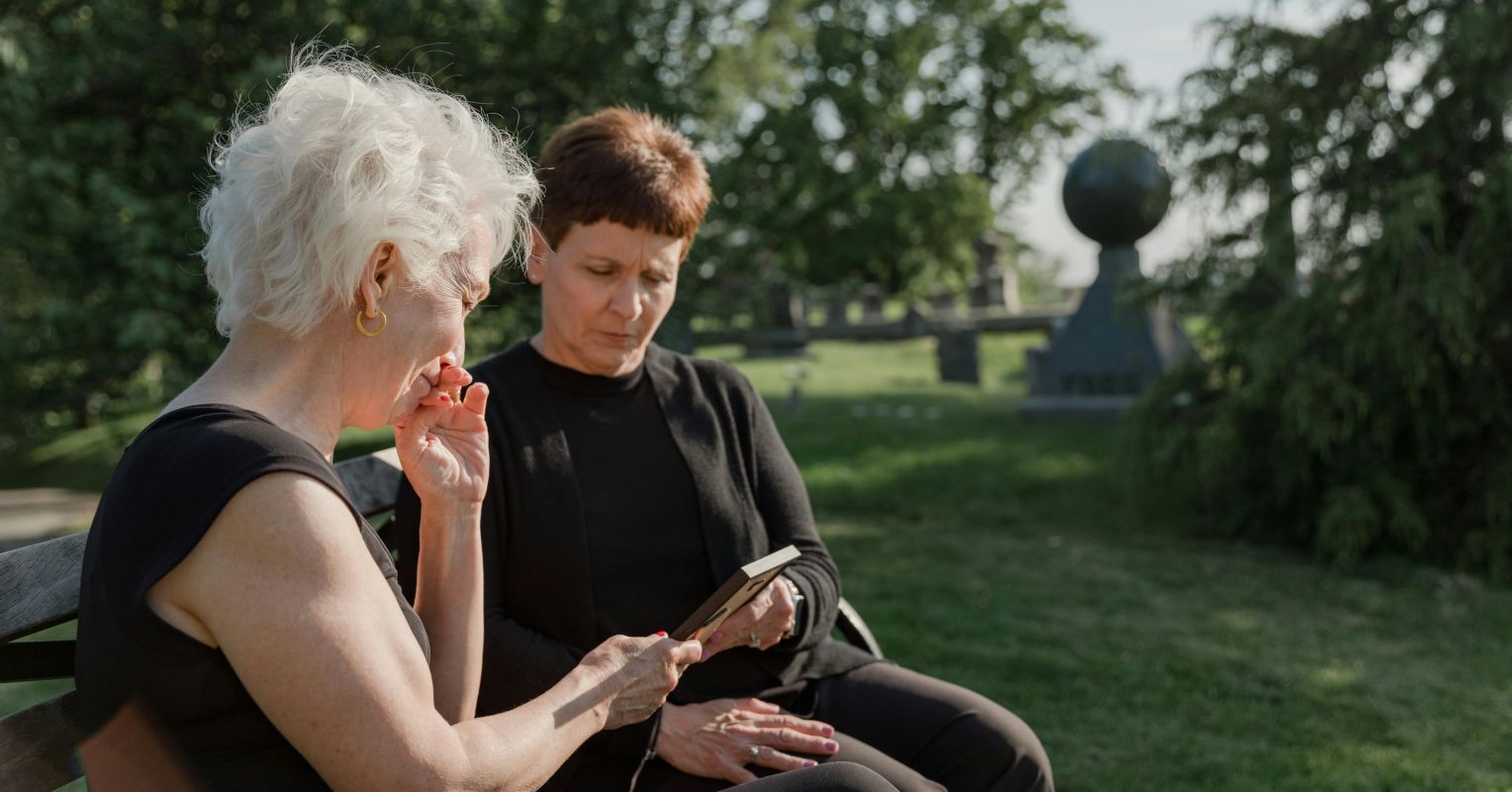
At her daughter’s first high school soccer game, Angela Crocker found herself unexpectedly frozen.
A few seats away sat a mother in her community who had recently lost a child in a tragic accident. Crocker—who now leads a nonprofit focused on end-of-life care and bereavement support—suddenly realized she didn’t know what to say.
“I was ashamed,” she later told me. “We are helping grievers. But we are not helping the community around the grievers.”
That moment reshaped how she thought about grief. If even those working in end-of-life care struggle to respond in real life, it raises a difficult question: how prepared is the rest of society? The answer, it seems, is not very. In a conversation about grief, caregiving, and community support, Crocker reflected on why so many people feel unprepared for death.
Across cultures, we are profoundly unprepared for death—not only practically, but psychologically and relationally.
We Prepare for Living Longer, Not for Dying
Crocker, executive director of the Parmenter Foundation, began her career as a lawyer. Today, she sees that training is unexpectedly influencing her thinking about end-of-life care: preparation.
“Planning,” she says, “lessens the chaos and the grief for those you leave behind.”
Yet culturally, these conversations rarely happen.
Modern societies devote enormous energy to extending life—through medicine, supplements, and lifestyle optimization. But discussions about how we want to live at the end of life remain largely absent.
Psychologically, this avoidance is understandable. Research suggests that reminders of mortality trigger existential anxiety, leading people to distance themselves from thoughts about death (Greenberg, Solomon & Pyszczynski, 1997).
But avoidance has consequences.
When families do not discuss end-of-life wishes ahead of time, decisions often occur during crisis—when emotions run high and clarity is limited. Preparation cannot eliminate grief, but it can reduce confusion, conflict, and regret.
The Hidden Burden of Caregiving
When asked what families are most unprepared for, Crocker answers immediately: caregiving.
“It is incredibly exhausting,” she says. “Physically and emotionally full-time. And isolating.”
Caregiver burden is well-documented in psychological research. Family caregivers frequently experience increased levels of depression, stress, and physical health problems compared with non-caregivers (Schulz & Sherwood, 2008).
Caregiving also introduces anticipatory grief—the mourning that begins before death occurs.
Anticipatory grief can be complex. Caregivers may experience love alongside exhaustion, guilt alongside relief. Emotional detachment sometimes begins long before the loss itself, as a way to cope with ongoing stress (Holley & Mast, 2009).
By the time death occurs, grief is rarely a single emotional moment. It is the culmination of months or years of emotional strain.
When Systems Struggle to Hold Grief
Practical realities also shape how people experience loss.
During our conversation, Crocker and I compared how grief is navigated in the United States and the United Kingdom. Both countries offer support—but in different ways, and both reveal gaps.
In the United States, grief support often emerges through a combination of health care services and community-based organizations. While hospice medical care may be covered by Medicare, room and board in hospice residences often are not, sometimes costing hundreds of dollars per day. In response, nonprofits and community organizations frequently help fill gaps in bereavement support, offering educational resources, support groups, and community programming that supplement formal counseling services. Organizations like the Parmenter Foundation play an important role in providing this kind of community-based support.
In the United Kingdom, the National Health Service (NHS) provides more structured access to health care. However, bereavement support services can vary significantly by region, and psychological support is often delivered through time-limited therapy pathways or community and charitable services.
In both systems, structural limitations shape how grief unfolds.
Workplace policies illustrate this clearly. Bereavement leave is often short and sometimes restricted to specific family relationships. Crocker shared stories of students who lost a parent while at university but struggled to obtain time or understanding from their institutions.
“Where is the compassion?” she asked.
Psychologists describe another dimension of this problem as disenfranchised grief—losses that are not fully acknowledged or validated by society (Doka, 2002). Others may minimize the death of a grandparent, former partner, or beloved pet despite the emotional impact.
But grief intensity is not determined by social hierarchy. It is determined by attachment.
When Death Changes Relationships
Unpreparedness also affects relationships.
When end-of-life wishes have never been discussed, siblings may disagree about what a parent “would have wanted.” Under stress, unresolved family dynamics often resurface.
Friendships can shift as well.
Many grieving individuals say they were surprised by who showed up and even more surprised by who did not. As I explored in an earlier post, grief often reshapes relationships, clarifying which connections offer presence and which quietly fall away.
“I didn’t know what to say,” friends often explain.
But silence can feel like abandonment.
Research consistently shows that social support is one of the most important protective factors in adjusting to loss (Stroebe et al., 2017). Yet many people avoid reaching out because they fear saying the wrong thing.
Recognizing this gap, Crocker’s organization focuses heavily on community education. Programs like UGrieve support college communities where students may experience significant loss while living away from home. Short educational videos on “what to say—and what not to say” provide practical guidance.
Often, the advice is simple: acknowledge the loss, avoid minimizing statements, and remain present.
Presence matters more than perfect words.
Preparedness Is a Form of Care
We cannot eliminate grief. Loss is an unavoidable part of being human.
But we can reduce the suffering caused by silence, avoidance, and lack of preparation.
Preparation clarifies wishes before a crisis.
Conversations reduce family conflict.
Grief literacy helps communities show up for one another.
And sometimes the most meaningful response is simply being present—awkwardly, imperfectly, but sincerely.
Death is universal. Avoidance is cultural.
If we want dignity at the end of life, we must begin long before the end—with conversation.