

On mountain descents, with just a helmet on their head and Lycra on their backs, professional cyclists will regularly exceed 50mph.
While Bert Celis does not want to slow them down, his company are pushing for a different approach to cycle safety: race hard but land soft.
As the chief executive of Belgian company Aerobag, he and his team have created a wearable airbag that he says could be more important to cycling safety than the helmet.
With the concept common in other sports, many have tried and failed to bring it to cycling before. But with professional teams now adopting Aerobag in their training its widespread use in racing looks inevitable and could come as soon as this year.
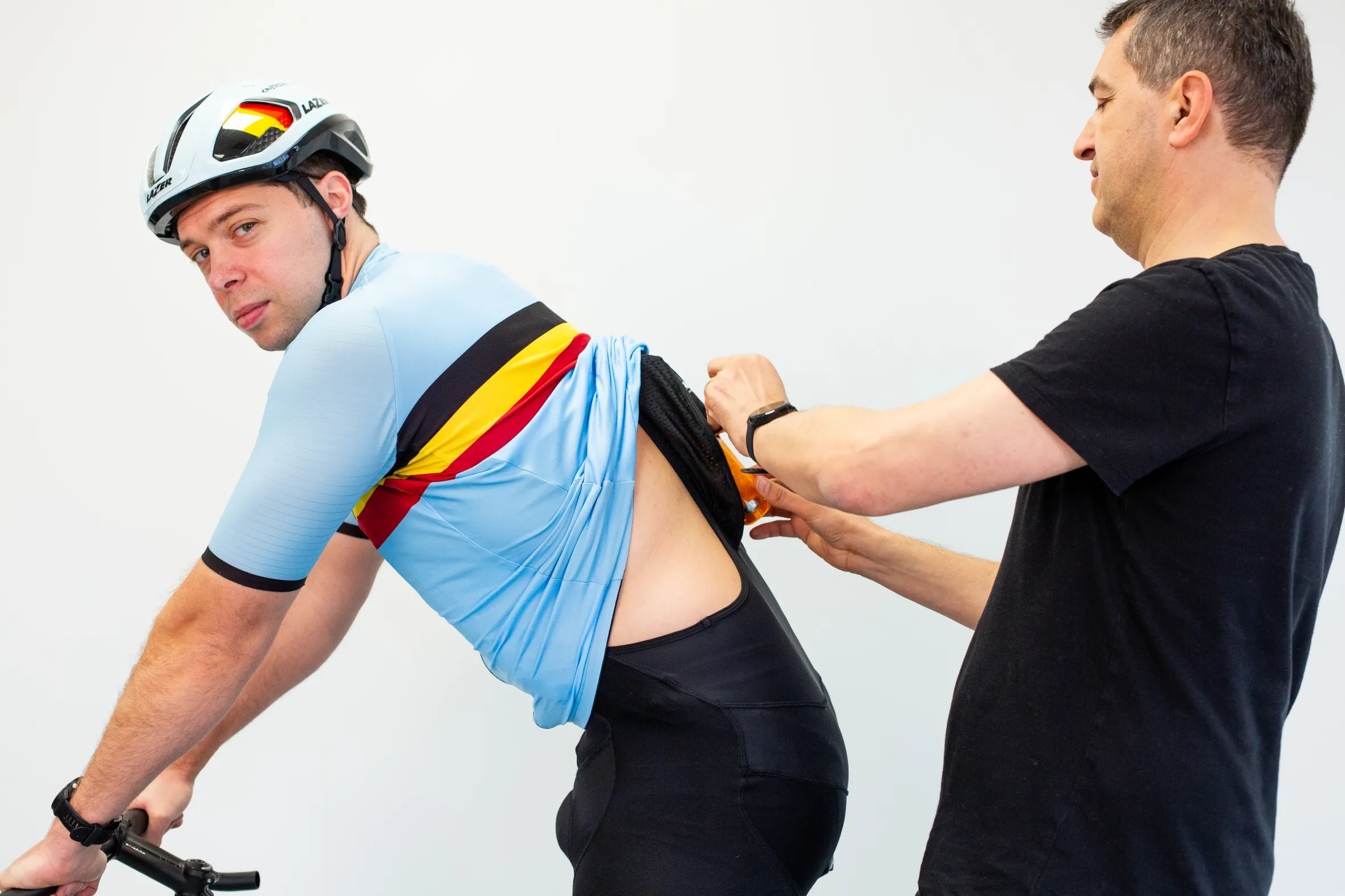 The Times’s Laurence Sleator tests the wearable airbagNatalie Hill for The Times
“It’s not only for the top cyclists but definitely the amateur cyclists as well,” said Celis. “You invest €6,000 (£5,180) or more in your bike, why not invest €700 to €800 in extra protection that would make more difference.
“We are always busy with speed in professional and amateur cycling but we don’t invest enough in safety.”
The system, which could be available to purchase from June, consists of plastic TPU tubes sewn into modified bib shorts and a small 3D printed pouch worn on the rider’s back.
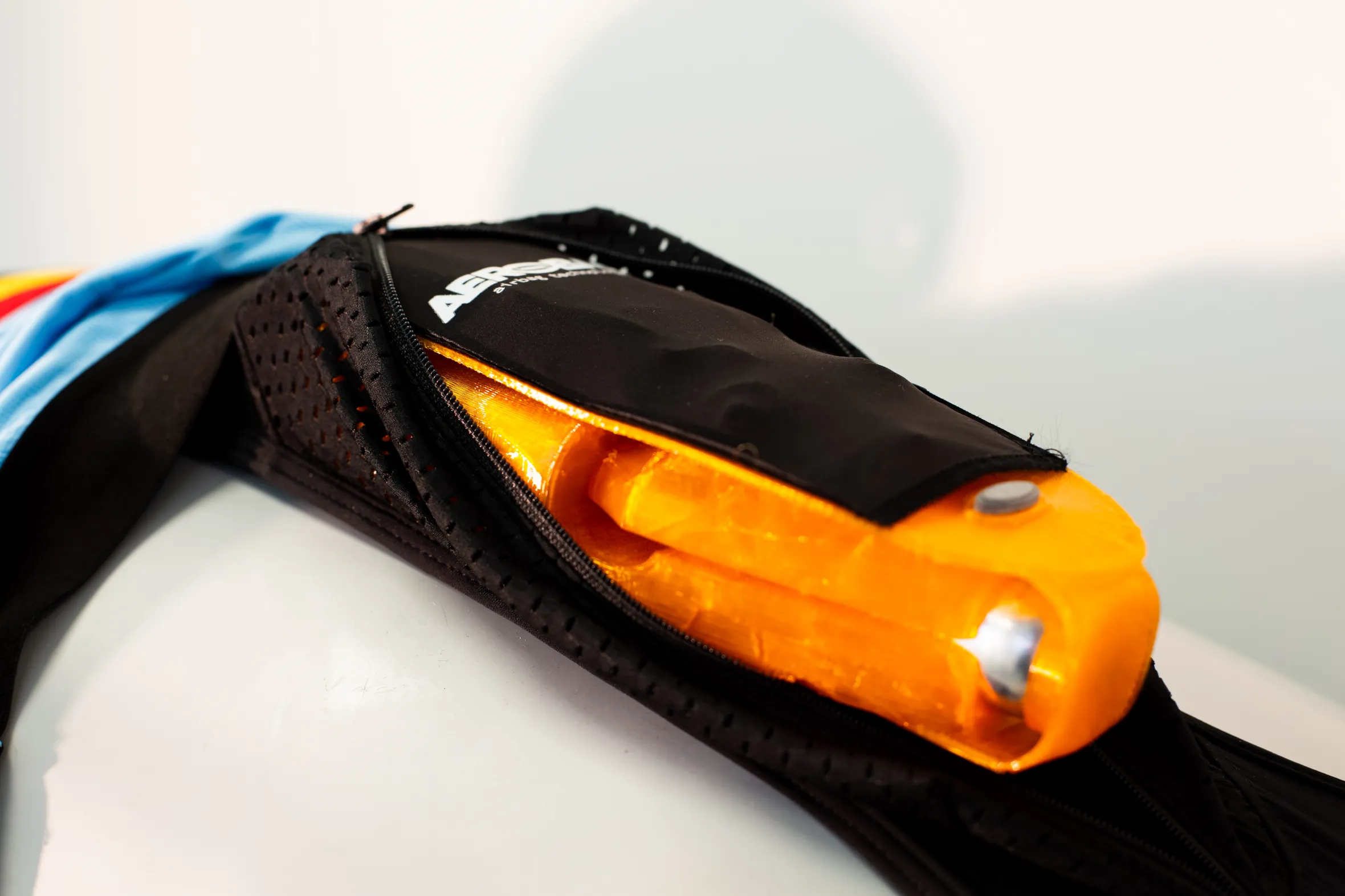 A small 3D printed pouch worn on the cyclist’s backNatalie Hill for The Times
It is connected to a rechargeable, nine-sensor AI-powered motion unit which, when it detects a fall, deploys a carbon dioxide gas cartridge to inflate the plastic tubes ahead of impact.
The AI-system was trained using a crash mat in the Aerobag office but also thousands of images and video of incidents, and near-incidents that took place in professional cycling.
 Natalie Hill for The Times
“You give the data to an AI engine and say this is a real crash, this is not and there it can determine it by itself. The AI can train itself and learn,” said Celis.
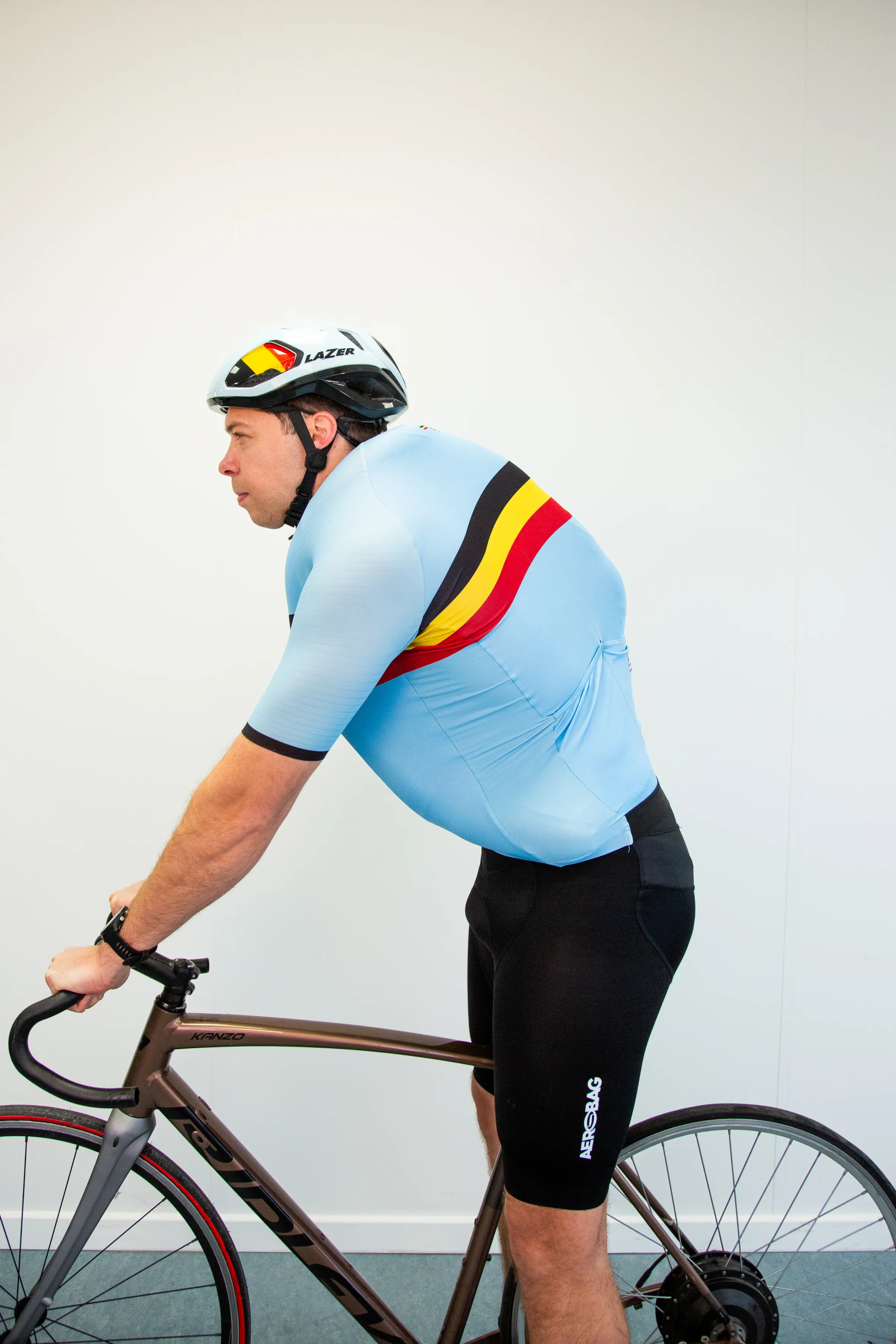
The airbag monitors a rider’s back position and will only inflate when it detects “rotational acceleration” — or when a rider is heading over the top of the handlebars.
Celis said the airbag is focused on the “most severe injuries not the most common” so covers the hips, pelvis, chest, spine and neck.
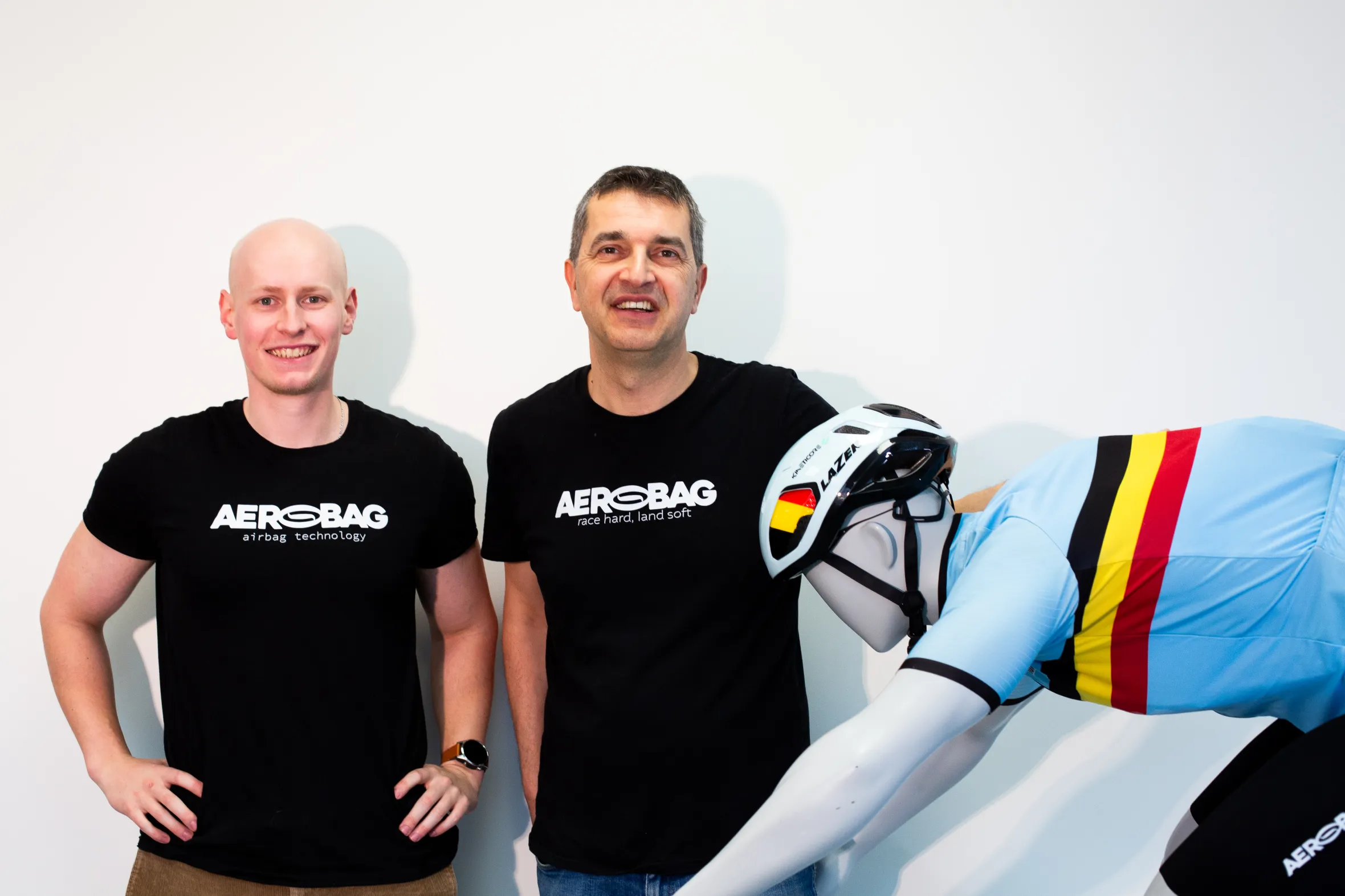 Enno Mangelschots and Bert Celis of AerobagNatalie Hill for The Times
“It takes roughly 20 milliseconds to detect the fall then 100 milliseconds to blow up the TPU. The fastest falls are more in the range of 200 to 300 milliseconds.”
In total the airbag adds around 600g extra weight to the rider or what Celis says is “equivalent to a big drinking bottle”.
It is also “reversible” returning to its initial shape after about six seconds, allowing a rider to hop back on their bike in the event of a less serious crash, and “reusable”, only requiring a new CO2 canister to be fitted.
“This is just the beginning of a new era of cycling protection,” he said. “I think it will be as important as the helmet, even more important after a while. We’ve started covering the body parts I mentioned but we could also cover the front of your face.
“Roughly 30 per cent of cycling injuries can be solved by a helmet but there are 70 per cent of cycling injuries not covered by protection.
“What we say is we can cover up to 30 per cent of injuries as well, complementary to the helmet. So that’s 60 per cent of cycling injuries covered.”
The idea for the product came after the death of the 22-year-old professional cyclist Bjorg Lambrecht in 2019, who crashed into a concrete culvert during a race.
Celis knew the rider personally from a previous job and said the incident was a “real trigger” for him to get into cycling safety. He set up Aerobag five years ago.
“In MotoGP airbags are common and in horse riding. It’s not something that’s totally new but it’s definitely new in cycling.
“So I did a tour of the different suppliers of airbags and I visited them to figure out who could do what. Most of them were concerned it would never move to cycling because cycling is about weight. They said it’s not going to happen. But aerodynamics is way more important than weight.
“By creating a new product we solved all these challenges one-by-one.”
However, he says there are crashes which the airbag will struggle to detect.
Determined to prevent it inflating at the wrong time, he and his team avoided training it for falls where a cyclist comes off at the side.
“Maybe after three or four years we can make it more sensitive,” Celis added. “There is a zone of crashes you cannot reach, if you drive straight into a bus or something. That’s really difficult.”