
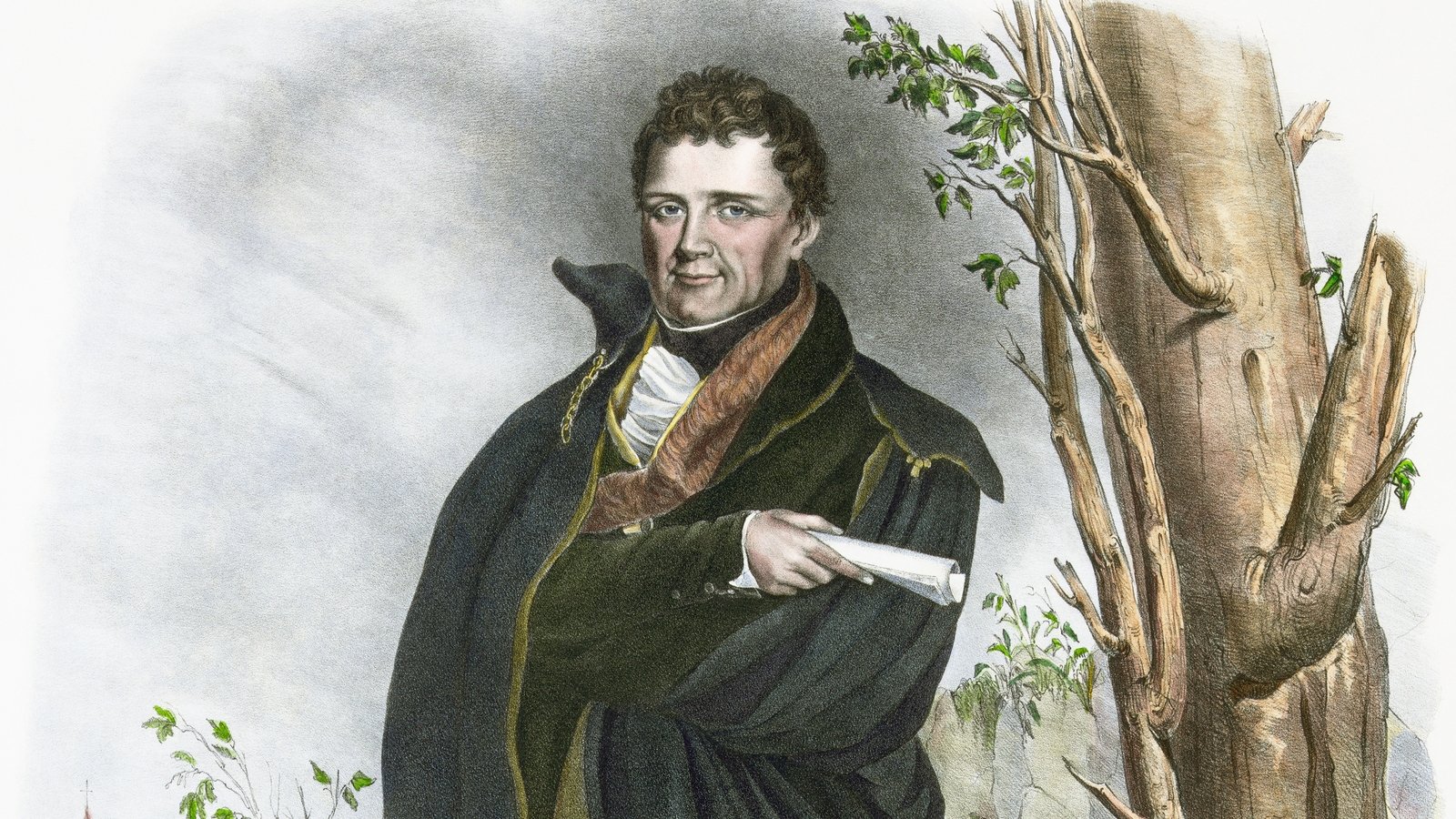
Today marks the 250th anniversary of the birth of Daniel O’Connell, the man known as ‘The Liberator’.
Historians say his campaigns for Catholic Emancipation and Repeal in the 19th Century laid the foundation for Ireland’s independence.
However, his philosophy of using non-violent protest to achieve civil rights has also had an international legacy.
O’Connell is the most commemorated of all Irish historical figures with nine cities and towns around the country naming their main streets in his honour, including the capital, where his statue is given pride of place.
Watch: O’Connell tried to convince Catholics ‘they deserved equality’
“He took a people who were on its knees, and he convinced them that they were more than slaves,” said Director of the Trinity Long Room Hub Professor Patrick Geoghegan.
O’Connell led a campaign for Catholic Emancipation to remove the Penal Laws which denied civil rights to the Catholic population.
“Really, what these restrictions meant was that only a Protestant elite controlled the levers of power in Ireland.
“O’Connell used to say that you could walk down any street in the country and you could recognise a Catholic because they wouldn’t make eye contact with you. They would shuffle, they had bad posture, they were broken down, defeated, ashamed, demoralised,” Prof Geoghegan said.
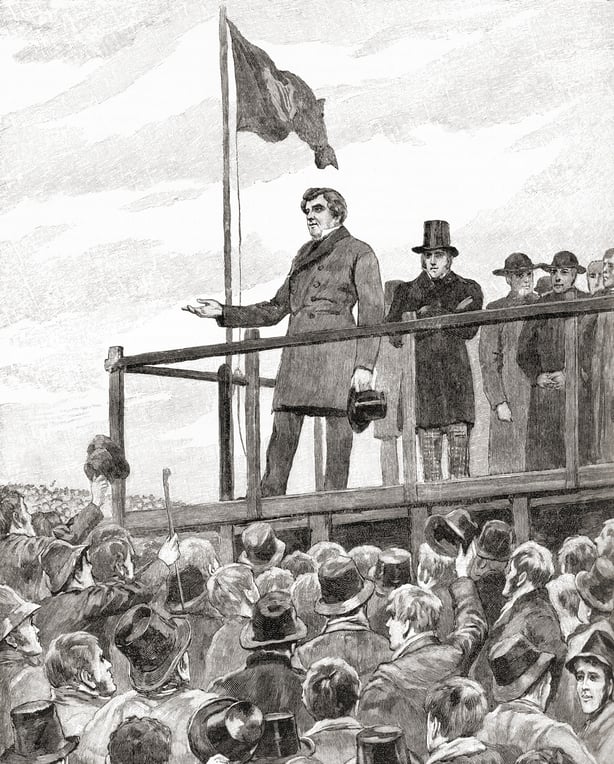
Daniel O’Connell started a movement to repeal the Act of Union with a series of so-called ‘monster meetings’ around the country
He said O’Connell convinced the Catholic population that they deserved equality.
“Through three decades of agitation, he raised them up, persuaded them to campaign for their own liberty and freedom, and forced the British government to concede emancipation,” Prof Geoghegan said.
O’Connell then started a movement to repeal the Act of Union between Ireland and Britain with a series of so-called ‘monster meetings’ around the country.
Prof Geoghegan said this movement “terrified” the British government and it finally acted to stop a rally in Clontarf in 1843 by sending in the army and two gunboats with orders to fire on the protesters.
O’Connell cancelled the meeting, with the result that the Repeal movement lost its momentum and O’Connell lost a great deal of his stature as leader.
However, Prof Geoghegan believes O’Connell made the right decision as he would otherwise be leading his people into a massacre.
“It was a courageous decision. It reflected the principles that he had fought for all his life, and I think it was the right decision,” he said.
O’Connell’s non-violent campaign for civil rights aroused interest from other countries in Europe and the rest of the world.
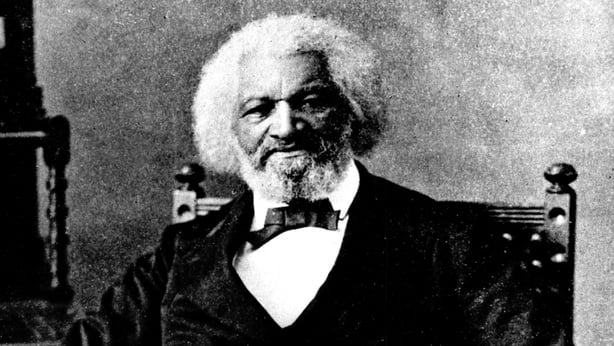
US abolitionist Frederick Douglass met Daniel O’Connell while visiting Dublin in 1845
“He was internationally renowned and internationally admired, from Australia to India to America,” said Prof Christine Kinealy of Quinnipiac University in the US.
Prof Kinealy said that O’Connell became a strong advocate for the abolition of slavery after he was elected to the House of Commons.
This led to a visit to Dublin by escaped American slave Frederick Douglass, who addressed meetings in 1845 in City Hall and the Quaker Meeting House in Eustace Street.
It was an incident between O’Connell and the US ambassador in London that captured Douglass’ admiration, explained Prof Kinealy.
Ambassador Andrew Stevenson was in the House of Commons and wanted to meet O’Connell and shake his hand.
“And O’Connell refused and said to him publicly, ‘I will not shake your hand. You are a slave breeder’.
“You can imagine, the American ambassador was very angry. Challenged O’Connell to duel, which they didn’t fight.
“But this issue played out in the newspapers for months and months. It was debated in the American Congress, etc, and, of course, it polarised opinion.
“But Frederick Douglass said, ‘when I heard my master lambast that Irishman, I knew I should love him because he defended the enslaved people’,” Prof Kinealy said.
Read more:
The curious case of Daniel O’Connell’s missing heart
RTÉ Brainstorm: Who was the real Daniel O’Connell?
US President Barack Obama referred to the meeting between O’Connell and Douglass when he addressed crowds in College Green in 2011.
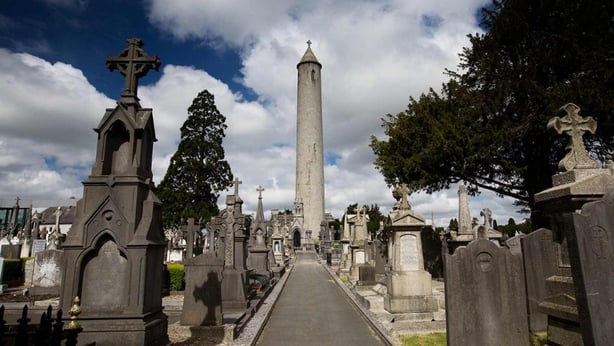
Daniel O’Connell also established Glasnevin Cemetery as part of his campaign for civil rights
O’Connell also established Glasnevin Cemetery as part of his campaign for civil rights.
As part of the penal laws, Catholics and dissenting Protestants had been denied the right of dignified burial, so there was a demand for a new cemetery in Dublin.
Heritage Officer of the Dublin Cemeteries Trust Ultan Moran said: “O’Connell believed that fundamentally, everyone should be treated with equality in life, of course, but then, very importantly, in death as well.
“He felt it was very important that we didn’t limit the people buried here on their religion. He said, this is going to be a cemetery for people of all religions and none.”
From its establishment in 1832, the cemetery has grown from nine acres to 140 acres. A total of 1.5 million people have been laid to rest there.
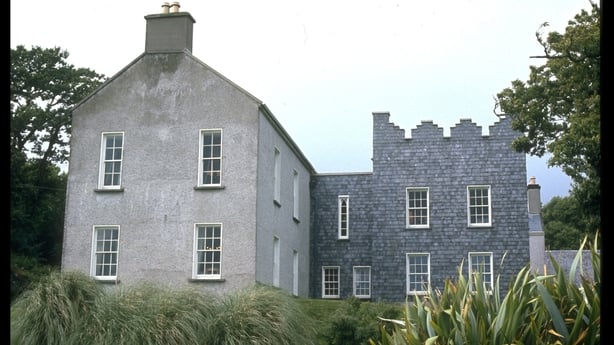
Daniel O’Connell’s home Derrynane, Co Kerry, opened as a museum in 1967
When O’Connell died in 1847, his followers built him a round tower and crypt “fit for a king”, as Mr Moran described it.
The monument was damaged in a suspected Loyalist bomb attack in 1971.
Prof Geoghegan said O’Connell’s reputation had suffered after the cancellation of the Clontarf meeting, but was subsequently reappraised.
When President Éamon de Valera opened O’Connell’s home Derrynane, Co Kerry, as a museum in 1967, he admitted he had been wrong about him, said Prof Geoghegan.
“He admitted that he and the revolutionary generation had hated O’Connell growing up, that they thought he was weak, that he should have gone ahead with Clontarf.
“De Valera admitted that he and that generation had been wrong, because they would never have been able to achieve freedom if O’Connell hadn’t achieved his great breakthroughs in the 19th century,” he said.
Prof Christine Kinealy, speaking of O’Connell’s legacy internationally, said: “I think his vision is really a north star for many people to follow that violence isn’t always the answer, and equality independence, fairness can be achieved in other ways.
To mark the 250th anniversary of the birth of Daniel O’Connell, the RTÉ News Channel will carry live coverage of a State-led Commemorative event from Derrynane House, Co Kerry at 2pm this afternoon.
The special programme will be broadcast live on the RTÉ News Channel and on the RTÉ Player.
You can also watch Nationwide’s full programme on Daniel O’Connell at 7pm on RTÉ One and later on the RTÉ Player.