
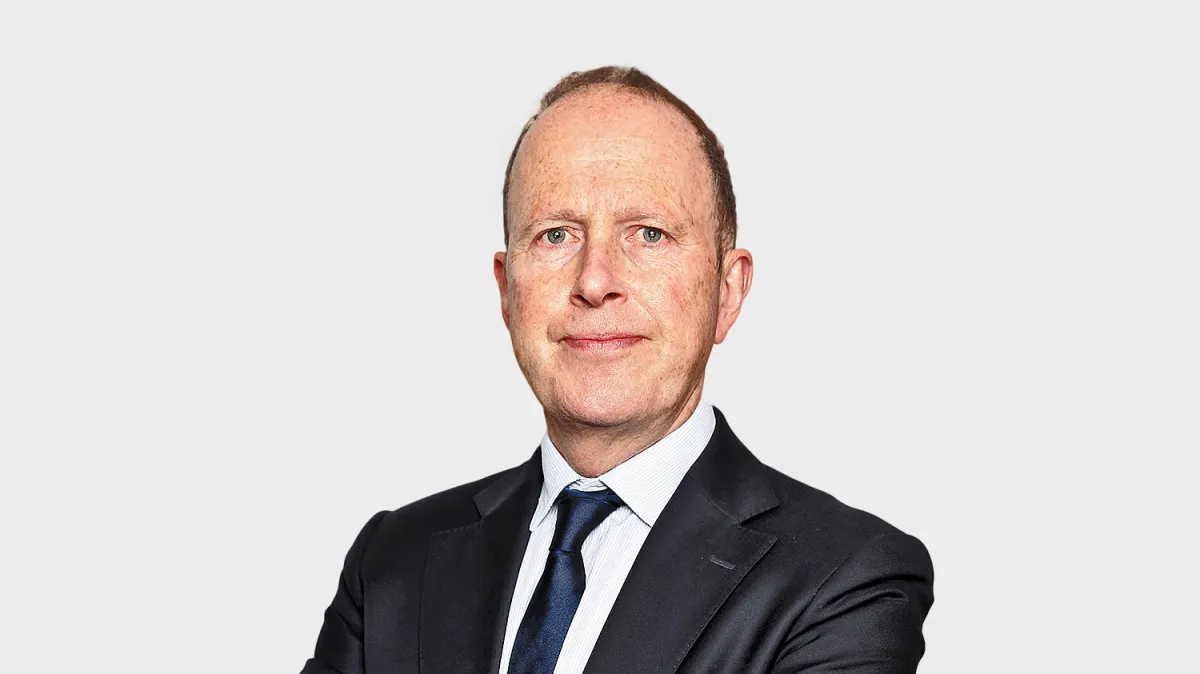
On Monday Andrew Bailey marks his sixth anniversary as governor of the Bank of England, a tenure dominated by two crises: the Covid-19 pandemic and Russia’s invasion of Ukraine. If the hostilities in the Middle East do, as feared, lead to a serious and prolonged disruption to oil supplies, he should be getting ready for a third.
Bailey has one thing in his favour. Crisis three will be just like crisis two. An energy price shock was the main economic impact in the UK of the Ukraine war, with oil and particularly gas prices shooting up rapidly. There are similarities to the current price spike; Russia invaded Ukraine in February 2022, with Brent crude then hovering around $75 a barrel. By May it hit $123, before dropping back to its pre-war level in June the following year. Gas prices started at just over 100p a therm and briefly hit an astonishing 650p a therm in August, before dropping back roughly in step with oil.
Although the extreme prices did not last long, their effect on inflation was profound. It mounted steadily throughout the year, from less than 1 per cent at the start of 2022 to over 11 per cent by October. It followed what with hindsight was an obvious path. First the transport component of the consumer prices index went up — petrol and diesel prices and air fares — and then food, as higher fertiliser prices were added to the mix.
Finally the “household services” section of the index rose, as higher fossil-fuel prices fed into energy bills. (Most economists, by the way, think the reason inflation went so high so fast was that the UK was still struggling to recover from the strains of the pandemic. The economy had so little spare capacity that the external shock of higher oil prices had a much greater impact than might otherwise have been the case.)
Business newsletter
The business editor’s exclusive analysis of all the latest financial and economic news.
Sign up with one click
It is hard to see why something similar shouldn’t happen again. This week I was at a City event where Michael Browne, global investment strategist at the fund manager Franklin Templeton, sketched out a scenario where oil supplies from the Gulf were disrupted for a few months, and oil and gas prices shot up in the way they did three years ago. What, Browne asked, should the monetary policy committee (MPC), the independent committee at the Bank of England that sets interest rates, do in response?
Last time round the MPC put interest rates up to try to choke off inflation. Bank rate went up 13 times between December 2021 and August 2023, from 0.1 per cent — the historic “lowest since the Stone Age” rate aimed at shocking some life into the economy after the pandemic — to the recent peak of 5.25 per cent. Most of the increases were one quarter of a percentage point, but three were one half, and one three-quarters.
That sounds like rapid action, but in fact the Bank was heavily criticised for being too slow to act. The House of Lord economics affairs committee said the Bank had shown “complacency about the inflation threat”, while its own former chief economist Andy Haldane said it had made “regrettable” errors. The pile-on prompted the appointment of Ben Bernanke, former chairman of the Federal Reserve, to lead an inquiry into the effectiveness of the Bank’s forecasting.
 CHRIS DUGGAN
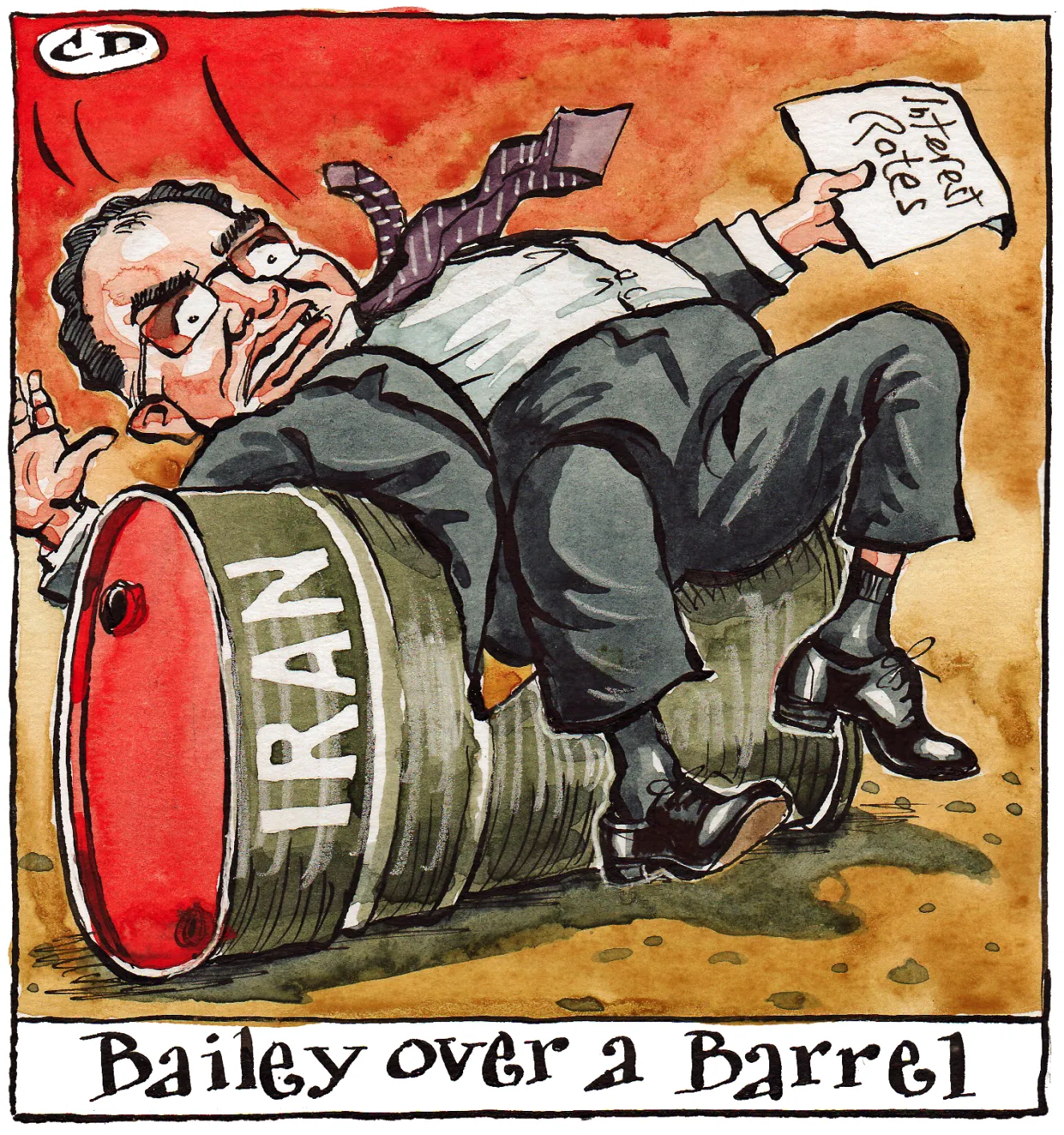
With those criticisms still ringing in its ears, the MPC is presumably primed to get ahead of the game this time round and is ready to raise rates should the Strait of Hormuz stay blocked. This expectation is what has sent gilt yields sharply up over the past ten days. Two-year gilt yields have gone from 3.5 per cent at the start of the month to 4.1 per cent, a big move that speaks volumes for market expectations of UK inflation and interest rates over the next couple of years.
Some investors, though, think the idea that the MPC will suddenly turn into the Incredible Hulk and rampage around putting up interest rates is laughable. After Browne spoke there was a panel of fixed-income fund managers, the ones who specialise in gilts and other bonds. When interest rate rises in the UK were mentioned, one of them gave the most derisive hoot of laughter I have heard since Donald Trump saw Emmanuel Macron’s aviator sunglasses.
Interest rate rises now, the fund manager said, would strangle whatever green shoots were showing in the economy and send employment sharply higher, a view borne out by Friday’s flat GDP numbers. Implicit in the answer was a conviction that this MPC did not have the stomach for inflicting that kind of harsh medicine, and definitely would not do so now. The economy was not in the same place it was in 2022, and the bigger risks were in killing growth than in stoking inflation.
There was, however, another leg to Browne’s argument. If the MPC did act decisively, he said, there was a chance of a bigger prize: the elimination of the “moron premium” that has dogged the gilts market ever since the Liz Truss mini-budget. That premium is the difference between the yields on gilts and the bonds issued by other European governments, and is the result of the hard fact that investors are nervous about the UK’s record on inflation and the government’s ability to control spending. It is surprisingly large.
The yield on the German two-year government bond, for example, is only 2.4 per cent, and it is 2.5 per cent for France. The British government has to pay more to borrow than its peers, which is one of the reasons why our annual interest bill is more than £100 billion. If the MPC showed its teeth, Browne argued, markets might cut the premium, knowing that inflation would in future be taken seriously.
We will get some clues about which way the committee is leaning this week, with the interest rate decision due on Thursday. As my colleague Jack Barnett points out, the Iran conflict has dashed hopes of a rate cut and it is almost certain there will be no movement. What investors will be most interested in is how that hold is framed. Will the MPC’s comments focus on the risks to growth or the threat of inflation? Most forecasters think it is most likely to be the former. Browne’s plan to tackle the moron premium might have to wait for another day.
Dominic O’Connell is business presenter for Times Radio