
Similar patterns of extraction have also been reported from parts of Himachal Pradesh and Uttarakhand, where barberry species are collected for the medicinal plant trade. Conversations with locals suggest that the demand for its roots has increased steadily, encouraging more collectors to gather the plant wherever it occurs.
The problem lies not merely in the harvesting but in the method. Since the commercially valuable part lies underground, collectors often uproot the entire plant rather than removing only portions of the root. The result is complete loss of the shrub, leaving behind bare patches of soil. In landscapes where vegetation already struggles to hold fragile slopes together, such extraction can have ecological consequences that are easy to overlook but difficult to reverse.
What was once familiar wild shrub of the hills is gradually becoming a target of extraction.
In some instances, the forest department has intercepted vehicles carrying uprooted barberry collected from forest areas, highlighting the growing concern around its removal. Yet regulating the harvest of the plant remains challenging. Barberry grows not only within forests but also along village commons and agricultural fringes, making enforcement alone difficult.
In India, the harvest and transport of forest produce are regulated under the provisions of the Indian Forest Act, 1927 and associated transit rules. Historically, non-timber forest produce (NTFP) was managed by the forest department through official auctions, with royalties collected for harvested forest produce. In J&K, NTFP trade is now regulated under the J&K Non-Timber Forest Produce Policy 2022, which also oversees its transportation through National Transit Permit System (NTPS) under the J&K Forest (Transit) Rules 2020.
From a regulatory perspective, most Himalayan Berberis species are not currently listed under the appendices of the Convention on International Trade in Endangered Species (CITES), and several species such as Berberis aristata and Berberis lycium are assessed as “Least Concern” on the IUCN Red List due to their relatively wide distribution.
However, unsustainable local extraction can still lead to regional depletion of wild populations. Another challenge is the absence of reliable data. Despite its ecological and medicinal significance, there are currently few baseline studies on the abundance or regeneration status of Berberis in Jammu & Kashmir or the Himalayan region. Its presence outside forests is already declining in several places due to land-use changes, road construction and agricultural expansion. Without such information, it becomes difficult to determine how much harvesting is sustainable or whether restrictions may be required.
Saving Himalayan barberries
The solution lies not only in enforcement but also understanding the plant itself. Sustainable harvesting protocols, better monitoring and community participation through Biodiversity Management Committees (BMCs) could help reduce pressure on wild populations. Propagation in forest nurseries may offer a practical solution. Raising barberry in forest nurseries could support restoration efforts and provide a regulated source of planting stock. During my previous posting in Kupwara, I experimented with raising a small nursery bed of barberry through cuttings, and the results were encouraging.
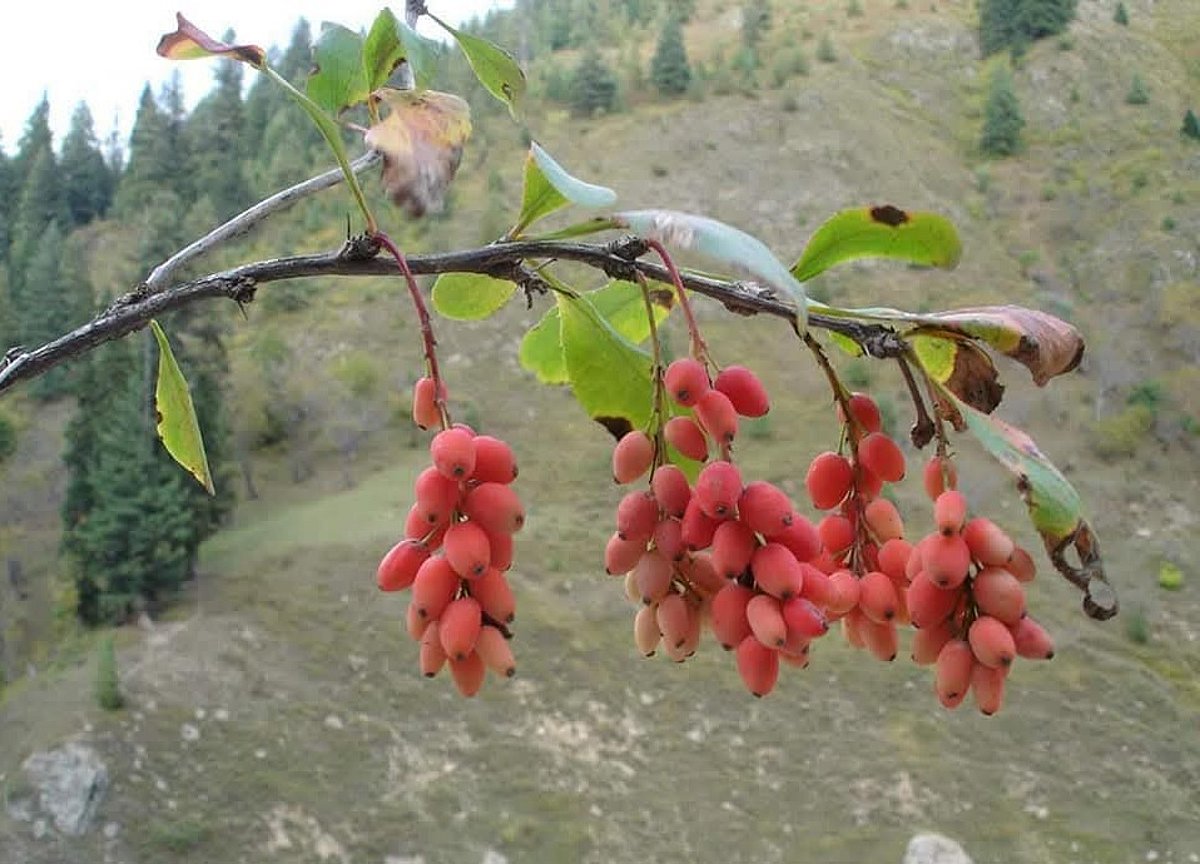
For many people in Kashmir, barberry still evokes memories of childhood summers. Today, however, the same plant is increasingly exploited for its roots rather than appreciated for the berries it once offered so freely.
If the growing demand for its roots continues unchecked, the quiet shrub that once fed children and birds alike may gradually disappear from many of the slopes where it has grown for generations.