
(Credits: Far Out)
Sat 14 March 2026 7:30, UK
Since the dawn of Britain’s music scene, attention has been consistently and almost exclusively pinned to London and the south of England, despite the fact that a multitude of the country’s greatest musical exports have come from much further up the M1. Indie music, in particular, has always thrived in the industrial gloom of the north.
It was in Manchester, after all, that indie rock as we know it was truly born, with the advent of Buzzcocks’ self-released EP Spiral Scratch, opening the floodgates for labels like Factory Records in its wake. Across the border in Yorkshire, Sheffield has played host to a wealth of indie excellence, spanning the spectrum from Pulp’s Britpop revolution to the synthpop of Heaven 17 and, of course, the unmistakable sound of Arctic Monkeys.
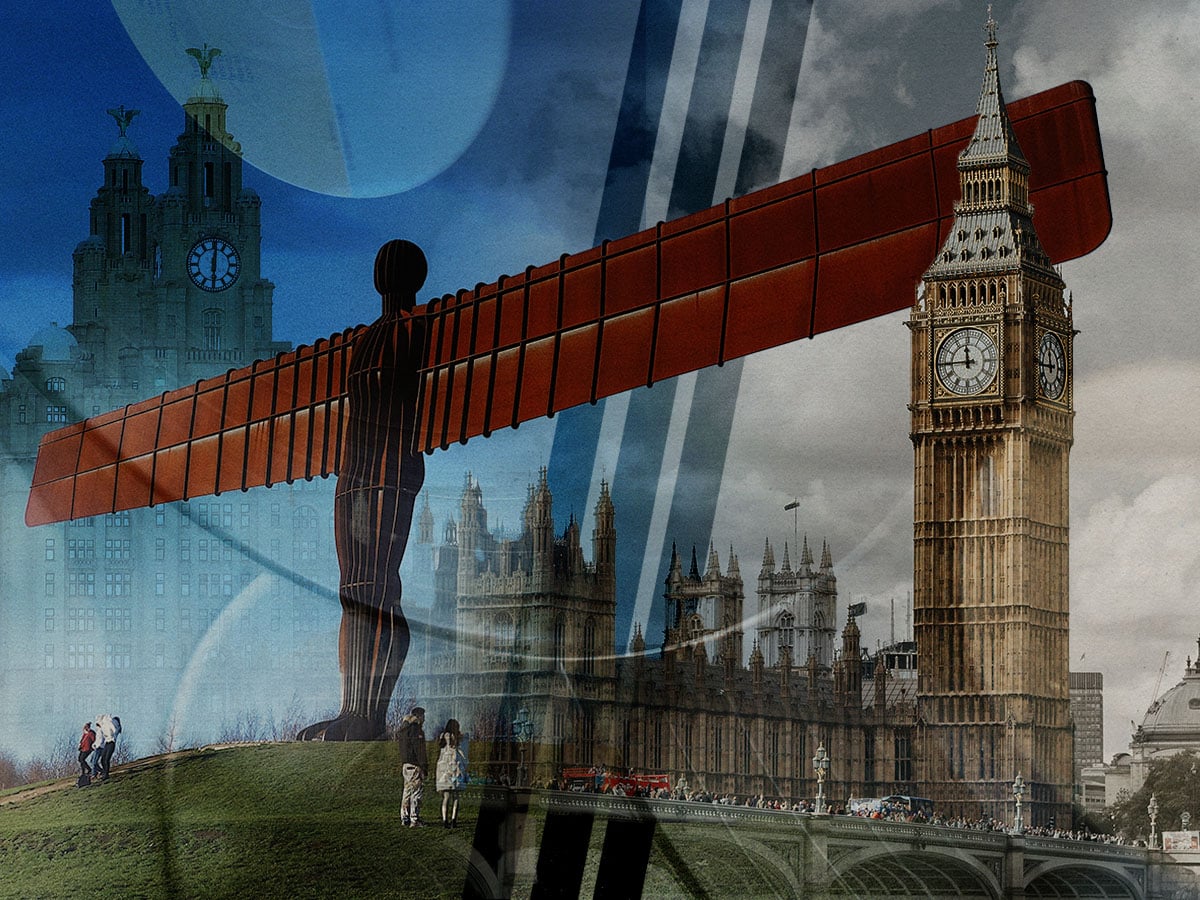
Seemingly, there is something in the DNA of the north that is particularly suited to the underdog realm of indie rock, and never has that spirit been so evident as in The Housemartins’ 1986 record London 0 Hull 4, which perfectly captured the north-south divide within the music industry.
Hull is rarely hailed for being a haven for music, despite the fact that it has produced an array of legendary outfits, including both The Spiders from Mars and industrial pioneers Throbbing Gristle. The Housemartins, however, aimed to change all of that; striking upon an early indie-pop sound imbued with social activism and an underdog spirit, as well as being unshakably rooted in East Yorkshire.
One of the boldest debut albums of the 1980s, London 0 Hull 4 covered a wealth of different topics, from a lampooning of yuppie misogyny on ‘Happy Hour’ to an emotive anti-monarchy anthem in the form of ‘Flag Day’. Perhaps most impressively, though, the entirety of its content and atmosphere is succinctly contained within that legendary album title.
Reportedly, the title came from a declaration by frontman Paul Heaton that, during that time, The Housemartins were the “fourth best band in Hull,” whereas England’s capital was completely devoid of any decent groups. Of course, there was an element of tongue-in-cheek self-deprecation about the album’s title, but that humour masked an important sentiment about the north-south divide.
While Hull boasted at least four incredible bands, according to Heaton and the gang, the city was almost entirely ignored by the music industry at large. Meanwhile, a plethora of two-bit, long-forgotten indie groups were being signed to deals in London for little reason other than their being in the right place at the right time. Tragically, it is a practice which still continues to this day.
That north-south divide is present in countless aspects of culture and society in England – a thinly-veiled adaptation of the class divide – and the music industry is certainly no exception. Although a shift has certainly taken place in recent years, London still seems to be the be-all, end-all as far as certain executives are concerned, and that was a worrying trend that Heaton clearly identified all those years ago.
The Housemartins were far from being the only indie outfit flying the flag for the glorious north back in the 1980s, but they were certainly among the most outspoken about that divide within the industry.
Hull, as well as having more decent bands than London, was essential in curating the distinctive sound of the band and, without it, breakout tracks like ‘Happy Hour’ and ‘Caravan of Love’ might never have come to fruition – they certainly wouldn’t have sounded the same, anyway.