

Referees have to be trusted to make on-field decisions on not rely on the TMO
06:00, 14 Mar 2026
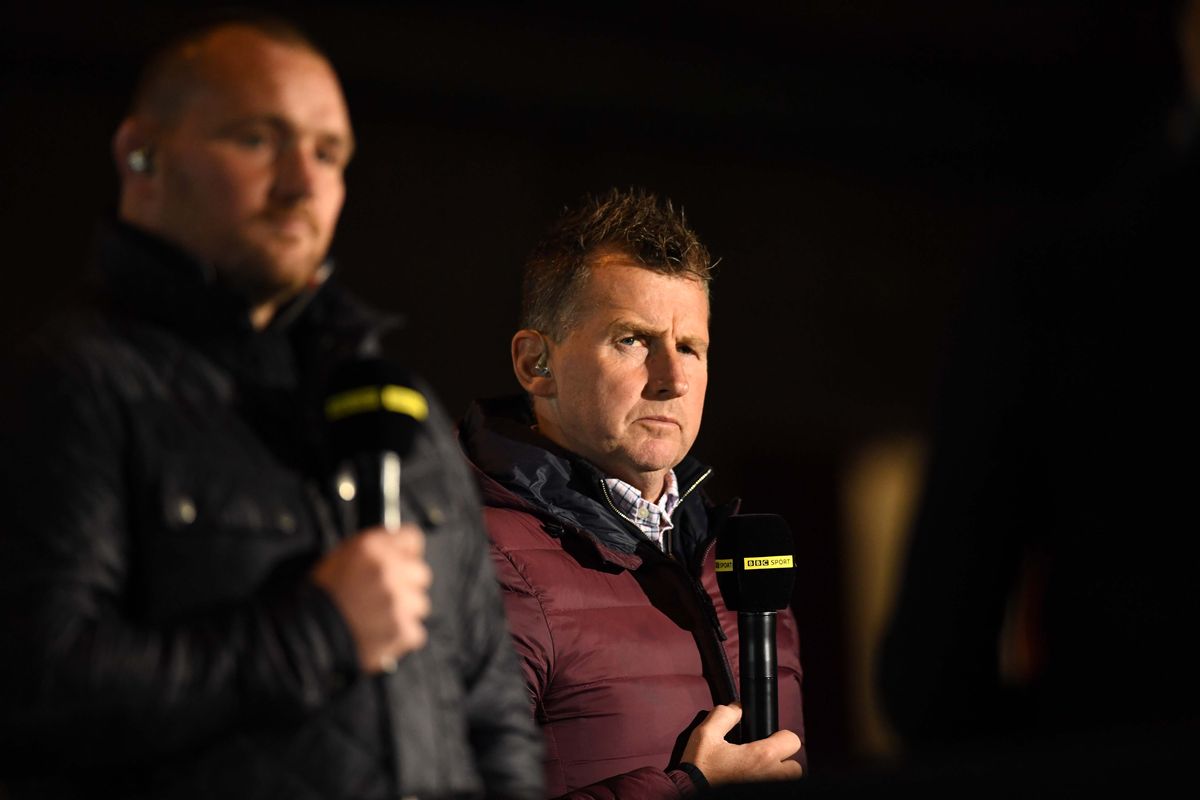
Former international referee Nigel Owens.(Image: © Huw Evans Picture Agency)
The laws of the game came under the microscope again recently, with some fresh proposals made at a meeting about a fortnight ago between World Rugby and members of the various nations, including coaches, CEOs, referees and ex-players.
At that meeting, I believe Australia and New Zealand proposed changes regarding the scrums, but no major alterations were announced.
You can only conclude that the powers-that-be are happy with the laws as they are.
I suppose you just look at the Six Nations weekend just gone. You had the Ireland-Wales game, which was physical and very much defence-oriented, with Wales putting their bodies on the line.
It was a great game of rugby. Not too expansive rugby, but more of your sort of traditional style. For the rugby purist, I guess, and Wales should have won, I think.
Then you look at Murrayfield, which was just like a Super Rugby type of game, where it was 50 points to 40. Some marvellous rugby played.
Ensure our latest sport headlines always appear at the top of your Google Search by making us a Preferred Source. Click here to activate or add us as Preferred Source in your Google search settings
Then there was a big upset out in Rome with Italy beating England for the first time. So on that Saturday, it was the Six Nations at its very, very best, where there was excitement, upsets and everything you want.
That, to me, suggests there’s nothing much wrong with the laws of the game. If the laws are applied appropriately, balancing what matters and not chasing technicalities, you can produce a wonderful game of rugby.
It shouldn’t be a case of changing laws for the sake of change. Rugby is a very, very unique sport. If it’s not broken then don’t mend it.
Players like the legendary Adam Jones; he’s a front-row player. He wouldn’t be able to play anywhere else (he may disagree with me here, mind!). So if you don’t have a scrum for those types of players, for example, you’re losing a huge percentage of the player population. Even more so this would affect the community game more than the pro game.
The only law I would like to see changed is the goal-line hold-up drop-out law.
I think you should promote the attack, not the defence. What the current rule does is reward the defence, and players now just chuck their bodies on the ground close to the goal line.
As a result, we’re seeing a lot more of these tackles where there’s no attempt to wrap, with players just diving in front of ball-carriers in the hope players will just fall on top of them so they can’t get the ball down.
I don’t think that makes the game more exciting and if anything I think it makes it more dangerous, with far more speed bump tackles and players not wrapping while attempting to tackle low.
So, at the moment, that’s the law I’d like to see changed.
I think the scrum needs to be officiated better and stronger, though. Players need to be more positive in the scrum because we’re still seeing some games where sides can be very negative, resulting in collapses, resets and standing up.
There’s been a few games in this year’s tournament where many scrums have not been completed, or played on with collapses and needless resets.
Referees need to be stronger at officiating the scrum and to get the players to be more positive in the scrum rather than scrummaging illegally to look for penalties. We must reward good strong legal scrummaging, of course, and be much stricter with the negative actions or non-compliance by individuals or teams.
I don’t think that needs a new law. It just needs stronger enforcement of current laws.
In fairness, I think the refereeing over the Six Nations has been pretty decent. There have no doubt been some decisions that, when the referees review for themselves, they will make a better or a different decision next time.
But in general, we haven’t really had any huge talking points.
I suppose the only talking point from the weekend just gone was the eye-gouge during the Scotland-France game, which officials didn’t look at on the day. This type of action has to be picked up and dealt with on the day, not by the citing process afterwards.
That to me was disappointing, and this is where I sometimes get a bit annoyed with how the TMO is used and the protocol of it.
Too often, we’re seeing the TMO intervene for very technical offences that the officials should be able to judge for themselves. We have top-quality officials on the field that are far more than capable of getting these things live.
And yet, the TMO doesn’t intervene for something like an alleged eye-gouge, which could have an impact on the rest of the game, and I suppose the rest of the tournament. If France are down to 14, do they score those tries? Would the points difference be different? Who knows.
I was surprised it wasn’t looked at.
This is where people get annoyed with the technology. Why are you not intervening for something that is clear and obvious that needs to be looked at, and then intervening for things that are very, very marginal?
I also believe there’s an over-reliance on technology now and the only way to sort this out is to reduce the amount of time the TMO can come in.
It should only intervene for clear and obvious acts of foul play and anything on the goal line.
As I said, I think in general referees can be proud of their performances overall, but I think it needs to come back to referees making decisions on the field for themselves, which they have the capability to do.
But technology is in the background now, and for some reason, they’re relying on that A BIT too much.