

On their Sydney construction site ten years ago, Josh Payne was known as “Payno” to his workmates. The then 22-year-old “dogman”, Australian slang for a crane rigger, would work hard all day before spending his evenings trading bitcoin.
A decade later, Payne has become one of the world’s most talked about tech executives. His start-up company, Nscale, is at the forefront of the artificial intelligence boom.
From roughing it on a building site, “Payno” these days rubs shoulders with the likes of Sir Keir Starmer and Nvidia tech billionaire Jensen Huang. Last week Britain’s former deputy prime minister, Sir Nick Clegg, and ex-Facebook executive Sheryl Sandberg joined his company’s board.
Nscale, which was launched in London less than two years ago and has an office in Mayfair, raised $2 billion (£1.5 billion) last week at a valuation of $14.6 billion from investors including Nvidia, making it one of Europe’s most valuable start-ups.
It is at the heart of the Labour government’s dream of turning the UK into a world leader in AI. When Microsoft announced a $30 billion investment in British AI last September, it included a multi-year partnership with Nscale to build the country’s largest supercomputer in Essex.
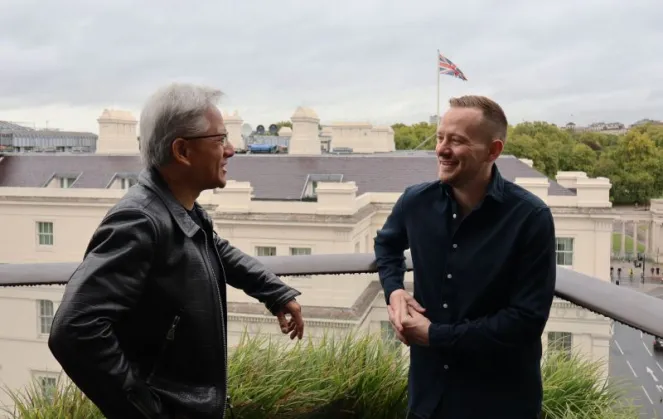 Josh Payne with Nvidia chief Jensen Huang last year
Yet curiously, Nscale who have retrofitted existing data centres, are yet to complete the building of one from scratch. Aside from impressive-sounding press releases and the billions being poured into AI, Josh Payne’s background has largely remained shrouded in mystery.
His LinkedIn CV dates back only to 2020. And aside from posts on LinkedIn and occasionally appearing on the Nscale X account, his public social media presence is next to non-existent.
Speaking to former colleagues and reviewing other documents in the public domain, The Sunday Times can tell the story of how the 32-year-old Australian became the man the UK’s AI hopes are pinned on.
From coal miner to bitcoin miner
Payne was born and raised in Newcastle, New South Wales, an industrial hub on Australia’s east coast where many school-leavers are destined for local coal mines that, 200 years ago, were manned with convict labour.
After leaving school aged 16 or 17, Payne didn’t go to university, and instead spent three years working in Ravensworth coal mine in nearby Hunter Valley.
He worked as a manual labourer on a couple of other construction and tunnelling projects before, in 2016, moving two hours south to Sydney, where he got a job as a “dogman” — an endearing term used for the construction worker who is responsible for slinging loads and directing crane operators.
The controversial $2.2 billion Barangaroo development, which transformed 22 hectares of Sydney Harbour into a luxury hotel, business hub and casino, was the brainchild of James Packer, the son of late Australian media mogul Kerry Packer, who has faced allegations impropriety, illegality and corruption.
Dylan Giovane was “Payno’s” boss on the Barangaroo site. “He was doing a lot of this bitcoin and trading in the background, staying up late,” he said. “He was really nice, calm, never looked upset or cranky or anything — just easy-going, hard worker”, Giovane added. “Really determined — whatever was put in front of him, he was determined to do the best he could.”
Payne left after about a year and Giovane recalled that he set up a recruitment company with a friend. Australian business records show that this was called CTM Workforce, a staffing agency for the “civil, tunnelling and mining industries”, started in June 2017.
It is unclear whether the venture was a success, but the company was deregistered in 2019 when Payne became managing director of PT Capital, a Sydney corporate advisory firm specialising in the renewable energy and technology sectors.
In that same year, Payne founded Arkon Mining (later Arkon Energy) with fellow Australian Nathan Townsend. It was described as a “data centre start-up that uses renewable electricity to mine bitcoins”, and was the blueprint for Nscale.
New Zealander Dan Bathurst, now Nscale’s chief product officer, said: “He told me a little bit about his days in Australia, only broad details in terms of his coal-mining experience and what he did back then … more around his entrepreneurship and the things he had done.
“He was reading a lot of books and obviously educating himself on the business world — a self-taught MBA type if you like … He has incredible financial nous and an incredible ability to understand markets and business.
“Although he didn’t go to university, he certainly runs rings around … myself and a lot of others working on our financial team when it comes to how to structure the business. His ability to retain information is incredibly impressive.”
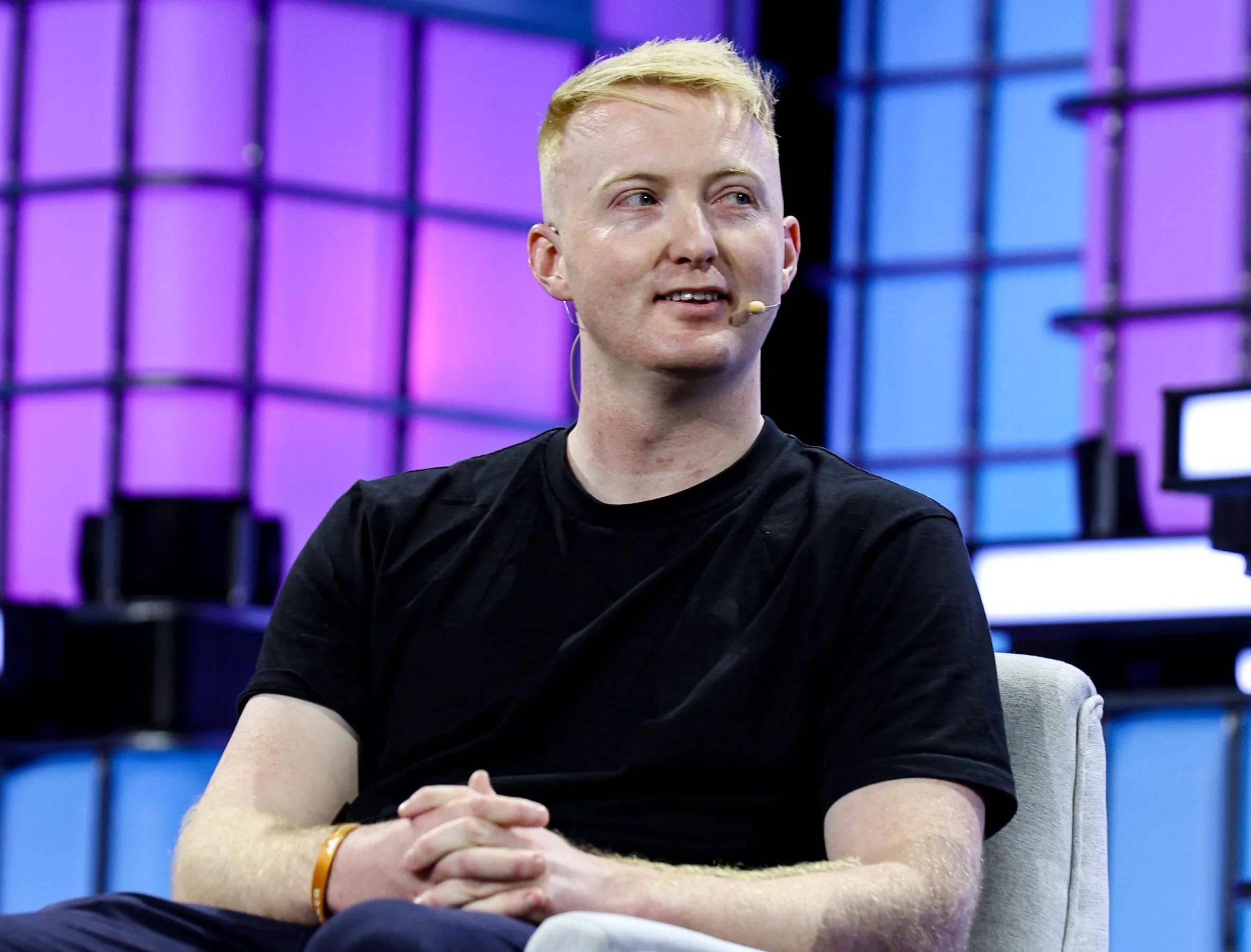 Daniel BathurstCARLOS RODRIGUES/SPORTSFILE
The ultimate salesman
In the summer of 2021, Payne became involved with an American special-purpose acquisition vehicle (Spac) called Battery Future Acquisition Corp, an entity targeting battery minerals and related supply chains.
Payne was brought in as chief operating officer and put in charge of investor relations. He was hired for his “tangible knowledge” of the “renewable energy, clean tech and natural resources sector”, according to the listing document for the company before its New York float in December 2021, when it raised $300 million.
Nick O’Loughlin, Battery Future’s chief development officer, remembers that Payne had the gift of the gab. “He didn’t do a lot once the money was raised … He was very supportive and tried to be helpful, but he knew his limitations and was happy enough for Greg [Martyr, who set up Battery Future] and I to go off and run the thing.”
“At the end of the day, he’s the ultimate salesman,” O’Loughlin said. “That’s how he went from a construction site to raising $16 million as risk capital to get the Spac off the ground.”
The Spac fundraising failed as investors became wary of this mid-pandemic investment fad. But business ties were forged — ties that would stand Payne in good stead in the years to come.
O’Loughlin described Payne as “ambitious”. “Street-smart is [also] a good way to describe him — he would speak to absolutely anyone and would find a way to contact whoever he needed to hit up, or to find email addresses”, he said.
“A lot of people probably would’ve seen through it, but he got by with enough of the talk with some very experienced senior people, and obviously his personality, which was favourable and amenable. And he can chat! I’d say his number one skill is his ability to get a conversation going with just about anyone.”
Route to UK, via Norway
For Payne, the Spac was the training ground for the fundraising ambitions that would follow. As Battery Future floundered, he began spending more time in London and turning his attention back to Arkon.
“He was flying everywhere and always in a hotel during the entire time we were all working together, which a lot of us used to joke about,” said O’Loughlin. “He was quite literally always on a plane. It was all part of the hustle.”
It wasn’t long before the travel began to pay off as he raised A$2.6 million (£1.4 million) for Arkon.
Payne began working with investors financing renewable energy projects and became fascinated with data centres, viewing them as an ideal consumer of unused electricity. Bitcoin mining also requires vast computing power.
In an interview, Payne said he learnt that the Arctic areas of northern Norway had some of the most inexpensive renewable energy in Europe, and he flew there in 2022. “I stayed for two weeks and I left with a letter of intent to acquire a project, which at the time was a bitcoin mine,” he said.
In November that year, through Arkon, he raised a further $28 million from private investors to buy Hydrokraft, owner of a 30MW data centre in the Arctic Circle powered by a nearby hydroelectric facility.
At the time, the bitcoin mining industry was in survival mode during a “bear market” when falling prices and surging energy costs led to investors staying away. However, companies, such as Arkon, with access to low-cost energy were still able to attract investment.
The following June, Arkon did a similar deal for a data centre in Hannibal, Ohio, a tiny township of 300 people on the Ohio River. It would “only be the first of several acquisitions as Arkon Energy is building out its US footprint”, the company said at the time.
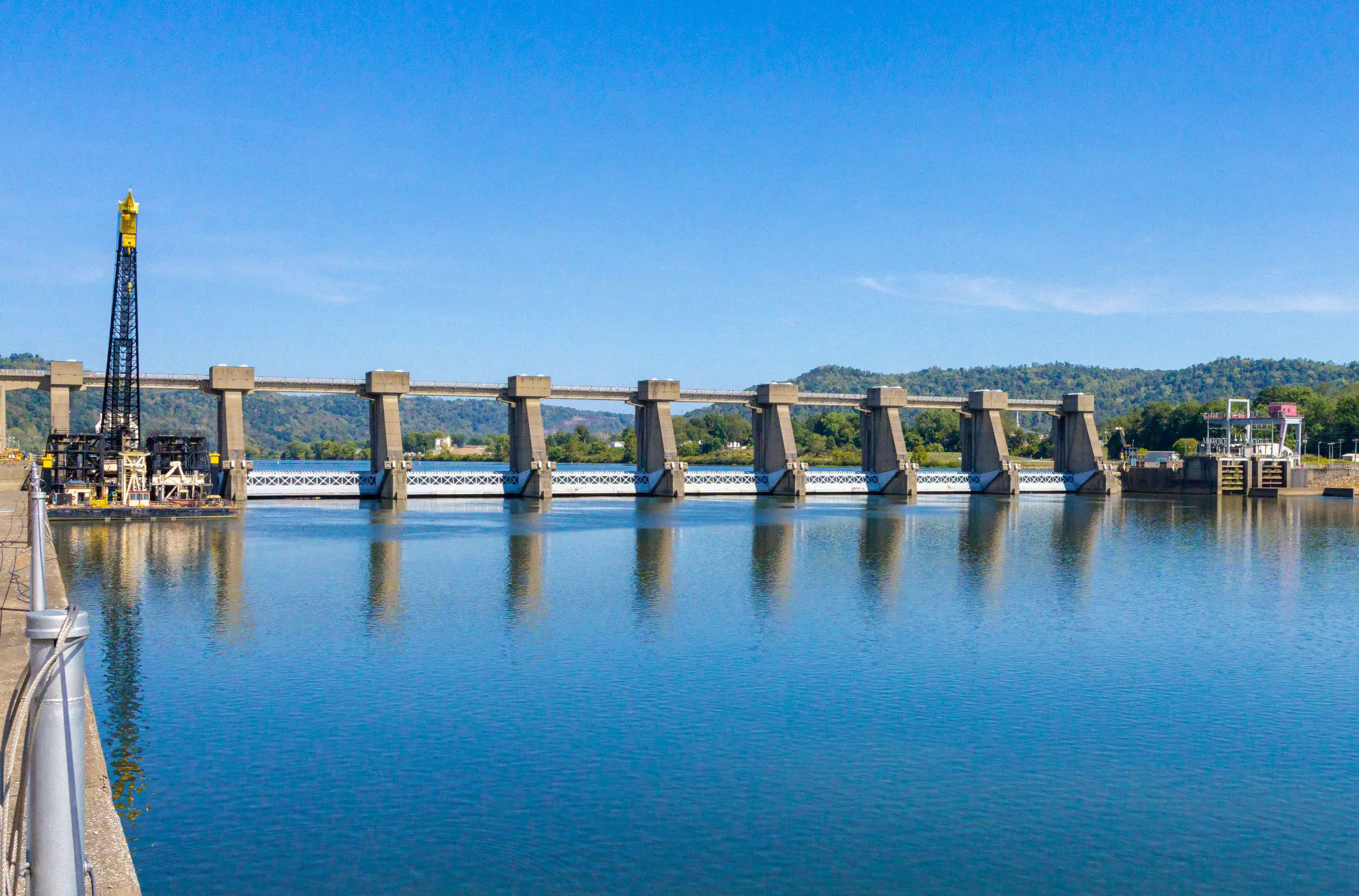 Hannibal Locks and Dam, OhioAlamy
In December 2023, Payne told TechCrunch, the technology news site, that Arkon had closed a $110 million private funding round and it would use $80 million to acquire more data centres in Ohio, North Carolina and Texas for bitcoin mining and AI clients.
The Nscale business model was born from what Arkon had done successfully in bitcoin: it would raise finance to buy premises and microchips, which it would in turn rent out to customers who wanted AI processing power. With the AI boom just beginning, Bitcoin mining had become yesterday’s news.
In the same month that Payne spoke to TechCrunch about Arkon, he raised $30 million in seed funding for Nscale from investors. Not everyone was happy: in January 2024, Arkon was sued by a blockchain consulting and data management company hired to manage its American data centres. The claim was later dismissed by a judge and it is understood it was settled as a misunderstanding.
It was around this time that Bathurst, Nscale’s future chief product officer, first met Payne at a coffee shop near Liverpool Street station in London. “He was a young individual but extremely motivated — very clear vision and very clear business model — and that’s what really attracted me to want to work with him”, Bathurst said.
Zero to $50 billion in 18 months
In one Companies House document, Payne listed an address as a five-star hotel and serviced residence in the City. He now has a permanent home in the UK.
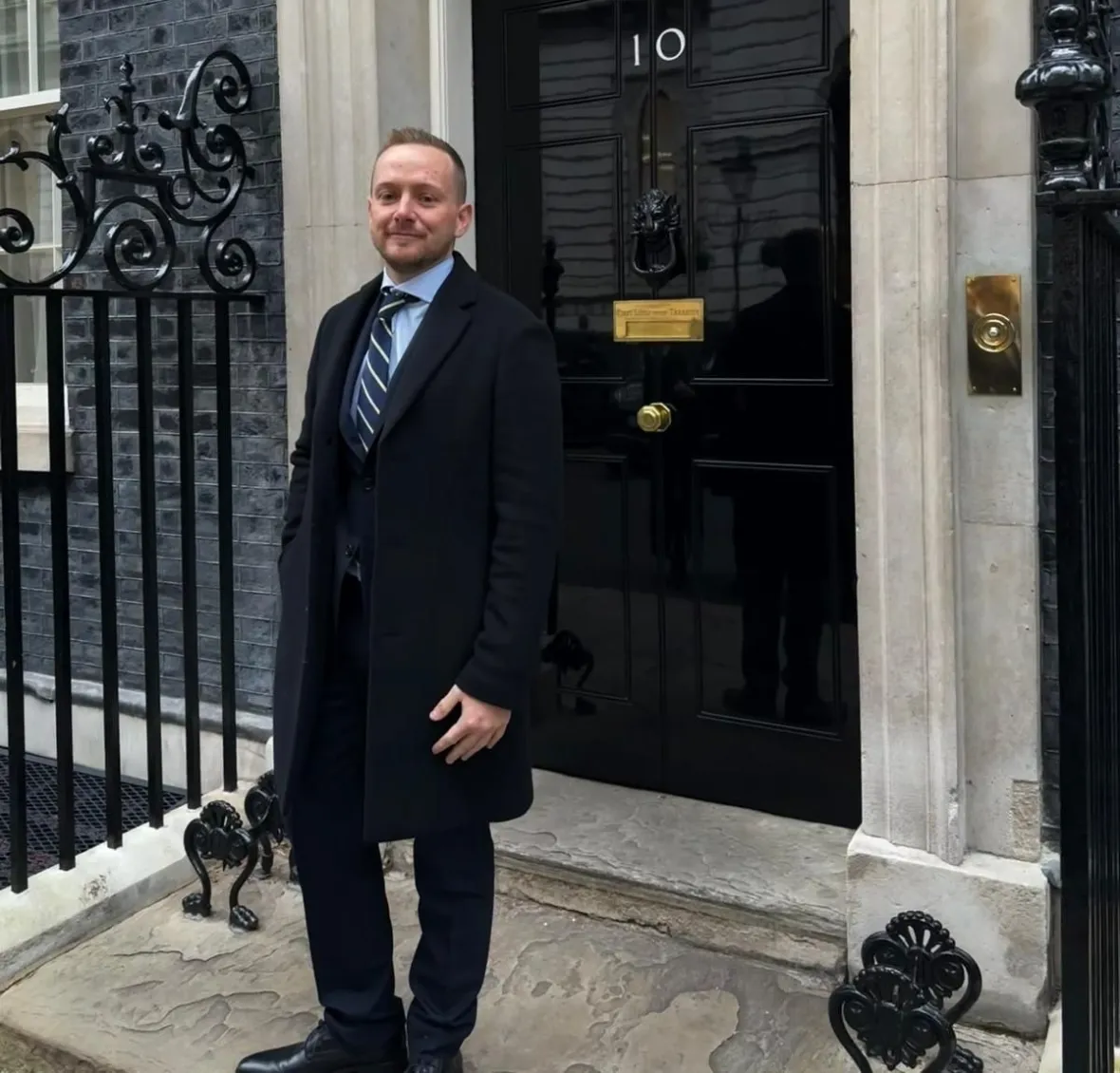
In February 2025, he met the then technology secretary Peter Kyle at a Downing Street reception to discuss AI, along with Starmer. Posting a photo of Payne outside the door of No 10, Nscale wrote that it was “proud to be part of this effort to accelerate AI innovation, investment and impact nationwide”.
 Nscale
Payne met Starmer again this year, along with other tech chief executives, for the first anniversary of the government’s AI Opportunities Action Plan.
It was in June last year that he first met Jensen Huang at GTC Paris, an AI conference backed by Nvidia. They had previously spoken on the phone. The two seem to have got on immediately.
In September, Nscale posted a video of Huang giving Payne a signed bottle of Johnnie Walker scotch after signing a contract with it, in which the tycoon quipped “zero to $50 billion in 18 months”.
“Let’s do it”, Payne says, before Huang replies: “Congratulations, I’ve never seen a start-up take off like that before. There’s a rocket ship but I think you’re on the starship.” Doors were starting to open for Payne.
At around the same time, NScale and Nvidia announced a deal alongside Sam Altman’s OpenAI to establish Stargate UK, a network of data centres to ensure that its most sophisticated models run on “local computing power”. The Microsoft deal was also announced.
Government records show that Nscale had an introductory call and meeting with the current technology secretary Liz Kendall that same month. It then attended a round table with Labour MP Kanishka Narayan, the parliamentary under secretary of state for AI and Online safety.
The supercomputer that is still a scaffolding yard
On its website, Nscale has a computer-generated image of its proposed tree-lined data centre in Loughton, Essex, advertising it as: “London-proximate AI campus …. Designed for high-performance, high-density GPU developments and excellent fibre connectivity to the City of London.” It doesn’t mention it is yet to exist.
Nscale also advertises four data centres in Norway, two in America, two in Iceland and one in Portugal. It says some of these are co-locations where they are already delivering computers, while others are being built or retrofitted.
The four-acre “supercomputer” site in Loughton was announced with great fanfare by Nscale in January last year. When it is built, it will be the UK’s largest data centre.
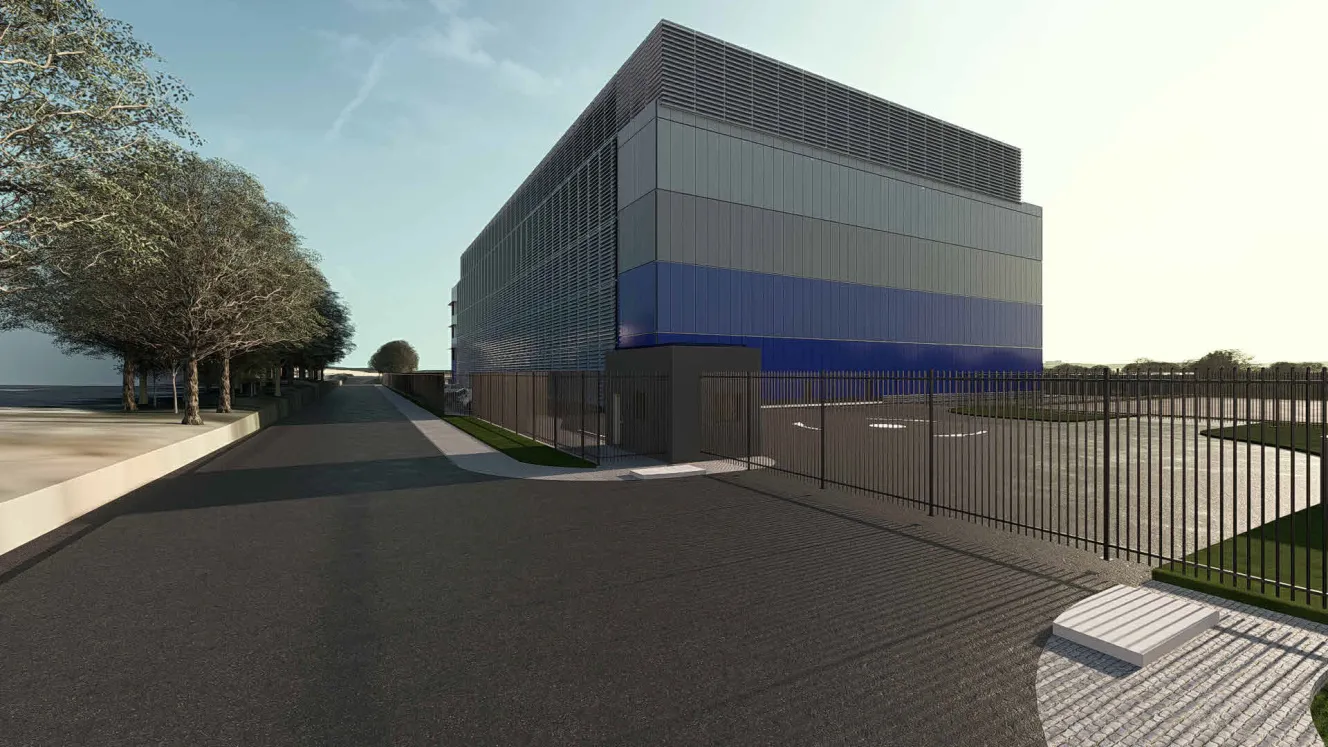 Plans for the data centre in LoughtonNscale
At the time, the company said it was scheduled to be “live” by the fourth quarter of 2026, creating 500 jobs in construction and 250 running the facility. But it is still a working scaffolding yard, stacked with pylons and scrap metal, although the site is currently being cleared.
Planning permission was filed only three weeks ago and the planning notice is currently tied to two lamp posts outside the scaffolding yard. It is understood Nscale is confident that building work will start this year and it will be a working data centre in 2027.
Asked about its track record in building data centres, Bathurst said the company has a “world-class team” with “more than 100 years’ combined experience building supercomputers and large-scale infrastructure”.
He added that along with its “marquee site” in Glomfjord, Norway — which Nscale says it completed retrofitting — the company has “a number of projects live across the globe” and plans soon to do “some tours and campaigns” to show what it looks like building “very complex” and “large-scale infrastructure”.
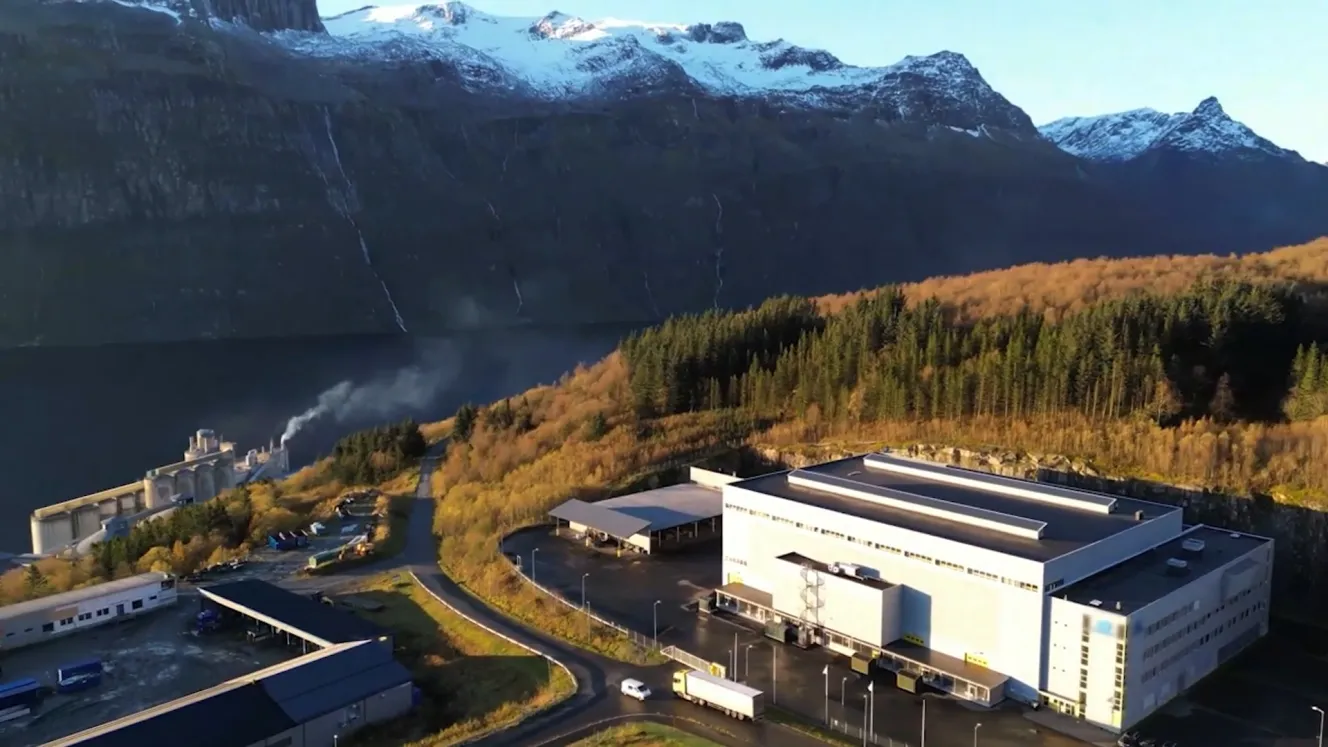 The Nscale building in Glomfjord, Norway
Meanwhile, Nscale, which already has more than 400 staff, is on a hiring spree: there are currently 84 jobs advertised on LinkedIn, including several engineering posts, a social media lead, head of US policy and senior manager for tax compliance and reporting in the UK. Payne said he was unavailable for an interview this week as he was travelling.
When told of the entrepreneur’s rise to prominence in the UK, Giovane, his construction site supervisor from back in Sydney, said: “Holy shit, Payno just keeps surprising me. I knew he was smart, but, f***, I didn’t see this going this far.”
O’Loughlin is similarly stunned. “I am surprised how quickly this went and how large this is in such a short space of time — that just blows my mind! And knowing his background, it becomes even more remarkable.”