

State must stop ignoring women to end fertility crisis says think tank
“Baby bust” caused by fewer mothers not smaller families
Women who want to become mums face growing “motherhood penalty”
Three million women aged 16 to 45 today projected not to have children if current trends persist
If women were better supported, the UK would not be entering a birth rate crisis, says a new report.
New analysis from the influential think tank the Centre for Social Justice (CSJ) reveals that if women consistently realised their hoped for family size, the UK would not have a so called “birth gap”.
In its new report, Baby Bust: Helping families realise their dreams of parenthood, the CSJ has labelled the birth gap a “huge societal failure” as demographers consistently find that the two child family remains the aspiration in Britain, yet the UK’s birth rate has fallen to a record low of just 1.41.
A 2023 poll found that nine in ten young British women hope to be mothers one day, desiring an average of 2.3 children, but rates of family formation are “in freefall”.
New CSJ analysis suggests that around three million women aged 16 to 45 today are projected not to have children under current trends. Yet if rates matched those seen among their grandparents’ generation, the equivalent figure would be closer to 2.4 million.
This means that over 600,000 women today may miss out on motherhood compared to earlier patterns of family formation.
In other words, hundreds of thousands of women who might once have become mothers are now at risk of missing that chance. This is despite evidence that the overwhelming majority of young women still hope to become parents.
The additional “missing mothers” among this generation could mean almost 1.4 million fewer babies are born over time, based on the average number of children women say they would ideally like to have.
The CSJ says that it is the tragedy of “missing mothers” – women who hoped to have children but did not become mothers due to social pressures – that is driving the declining birth rate, as family size for those with children remains similar to previous generations.
The report argues that a range of social and economic pressures are pushing family formation later into life and making it harder for women to achieve their hopes of motherhood.
Rising housing costs, delayed financial independence, later marriage and growing uncertainty about careers were all found to play a role. As parenthood is pushed further into adulthood, more women risk reaching the end of their childbearing years without becoming mothers.
The think tank goes on to highlight how the average age at which a woman has her first child has increased enormously in the last 50 years, from 23 in the early 1970s to 29 years old in 2024.
The report makes clear that the baby bust is not new. “In 2024, the UK’s Total Fertility Rate (TFR; the mean number of children per woman) fell to 1.41, a record low. But Britain’s TFR has been below 2.1, the rate needed to keep the population size stable, since the early 1970s.”
The think tank warns that when combined with the effects of rising life expectancy, our falling birth rate is set to cause the Old Age Dependency Ratio (OADR; the ratio of working aged people to pensioners in a population) to plummet.
In 1970 there were four working age people for every pensioner. By 2025, the ratio had fallen to 3.5:1, and in the coming decades the OADR is set to reach 3:1.
The costs of pensions and health care are placing a heavy burden on the young, and this too is jeopardising birth rates.
The think tank says that “There remain many misconceptions about how the state pension is funded, with too many retirees believing that they have ‘paid for’ their pension rather than understanding that it is funded by current taxpayers.”
It calls for a national conversation about how “having enough children is essential for the economic survival of the nation”, arguing that too much policy is made assuming children are a burden rather than central to the futures of millions of people and the nation at large.
The CSJ’s analysis reveals that families bear each other’s burdens in a way that the state cannot. The ONS estimates that the total value of unpaid care in the UK sits at around £1.37 trillion, much of it provided within families across generations.
The total number of British adults over the age of 65 in the UK is predicted to increase from 13 million in 2023 to more than 17 million by 2043, their share of the population rising from around one in five today to almost one in four by the early 2040s.
Britain now needs almost 250,000 additional births per year to maintain a stable population. In 2024 there were 831,075 people turning 50 but just 594,677 births, leaving a birth gap of around 30 per cent.
The report argues that delayed family formation is a major factor. The average age of first marriage has risen from 22 in 1970 to 31 today, closely tracking the rise in the age of first birth.
The CSJ says we must do more to support couples who want to get married. Polling consistently shows that the vast majority of young people still hope to marry, yet the average age of first marriage has risen dramatically.
Meanwhile soaring housing costs have seen the average age at which men leave the parental home rise to 25, with adulthood and its responsibilities delayed.
The report has five main principles for government consideration:
Prioritise marriage: help people tie the knot earlier
Help men to step up: support more young men into skilled work and tackle the NEETs crisis
Value motherhood: place greater emphasis on the benefits of becoming a parent across public policy
Address “baby boomer politics”: rebalance fiscal policy to support young families
Explore pro family measures: tax cuts and cost of living support targeted to young families
In the foreword to the report, the Rt Hon Claire Coutinho MP, Shadow Energy Secretary & Shadow Minister for Equalities, said:
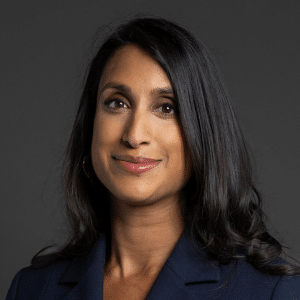
“Britain’s falling birth rate is one of the most significant yet least discussed challenges our country faces today. Demographic shifts take place gradually – almost imperceptibly – but their effects shape the direction of a country for generations to come.
Becoming a mother myself last year is without doubt my most meaningful and joyful achievement. I both left it late in life and experienced quite a hair-raising birth, so there are many parallel universes in which motherhood is something that escaped me. But motherhood, and indeed fatherhood, deserves recognition and respect for the profound contribution it makes not only within families, but to society as a whole.
This report makes an important contribution to a conversation that Britain needs to have more openly. Many ideas will be put forward, including in this report, and while I do not agree with every recommendation, I applaud its creativity. If we want to be proud of passing on something of importance to the next generation then we must never lose sight of the importance of family.”
Miriam Cates, Senior Fellow at the Centre for Social Justice, said:
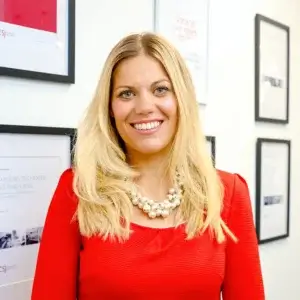
“Millions of women still hope to start a family. But modern life is pushing that dream further out of reach.
We need to stop treating families as an afterthought and do much more to support women who want to become mothers. When hundreds of thousands of women miss out on having the families they hoped for, the consequences are not only personal but social and economic too.
For too long Britain’s politics has prioritised the needs of older voters while failing to support the next generation of families. If we are to reverse the birth rate crisis, we must start tackling the barriers facing young couples and make family formation a national priority once again.”
A CSJ spokesperson is available for interview.
The full report can be found here.
Notes to editors
Methodology
This analysis estimates how many women in the United Kingdom may miss out on becoming mothers compared with earlier generations. The estimate is based on cohort fertility data published by the Office for National Statistics, which track the proportion of women who have had at least one child by specific ages (30, 35, 40 and 45).
Historical cohorts provide a benchmark for typical motherhood patterns in modern Britain. For example, around 87 per cent of women born in 1949 had become mothers by age 45 on average. This cohort, the grandparents of young people today, is used as a reference point representing the level of motherhood typical before the more recent shift towards later and lower fertility.
Because many younger cohorts among women aged 16 to 45 in 2023 have not yet reached age 45, the analysis uses observed motherhood rates at ages 30, 35 and 40 alongside historical cohort patterns to estimate likely final motherhood rates when they reach 45 (see full methodology in the report). The analysis then applies these rates for different age bands to the female population aged 16 to 45 in 2023, using 2022-based population estimates from the Office for National Statistics.
Two scenarios are calculated. The first reflects current fertility trends, applying projected motherhood rates derived from recent trends, as described above. The second applies the motherhood pattern observed for women aged 16 to 45 in the 1949 cohort as a benchmark.
Under current trends, around 3 million women aged 16 to 45 are projected not to have children, while if motherhood rates matched those of the benchmark, the equivalent figure would be closer to 2.4 million.
The difference between these scenarios – around 600,000 – represents the estimated number who may miss out on becoming mothers compared with earlier patterns of family formation.
To illustrate the potential scale of the impact on births, the estimated number of additional women projected not to have children (around 600,000) is multiplied by the average number of children women report ideally wanting (around 2.3), implying roughly 1.4 million births that might otherwise have occurred. Research by the NSCU based on a Whitestone Insight poll of 1,502 women aged 18-35 in September 2023 found that nine in ten hoped to become mothers one day, while demographic surveys consistently show that two children remains the dominant desired family size.