
A year-long investigation claims to have identified the elusive Bristol street artist
Rosaleen Fenton and Julia Banim
07:47, 15 Mar 2026Updated 08:06, 15 Mar 2026
(Image: YouTube)
For decades, Banksy has captivated fans across the globe by keeping his identity shrouded in secrecy, but the world’s longest-running game of ‘Guess Who’ may have finally reached its conclusion – with the elusive graffiti artist potentially being unmasked at last.
A year-long investigation has reportedly identified the street artist – or has it?
Reuters claims he is Robin Gunningham, who the news agency alleges now operates under the name David Jones.
A dedicated team of journalists examined every statement the artist has made about himself, interviewed more than a dozen insiders, and obtained previously sealed U.S. court documents and police files in their mission to reveal the artist’s true identity. Mark Stephens, his long-serving legal representative, has responded without explicitly refuting the allegation, stating that Banksy “does not accept that many of the details contained within your enquiry are correct.”
He provided no additional explanation. Whilst neither confirming nor denying Banksy’s identity, Stephens urged Reuters to scrap publication, contending it would violate the artist’s privacy, disrupt his creative work and potentially place him in danger, reports the Mirror.
The team narrowed down the identity by speaking to residents in Ukraine, where he created seven murals in 2022, and presenting them with photographs of potential suspects.
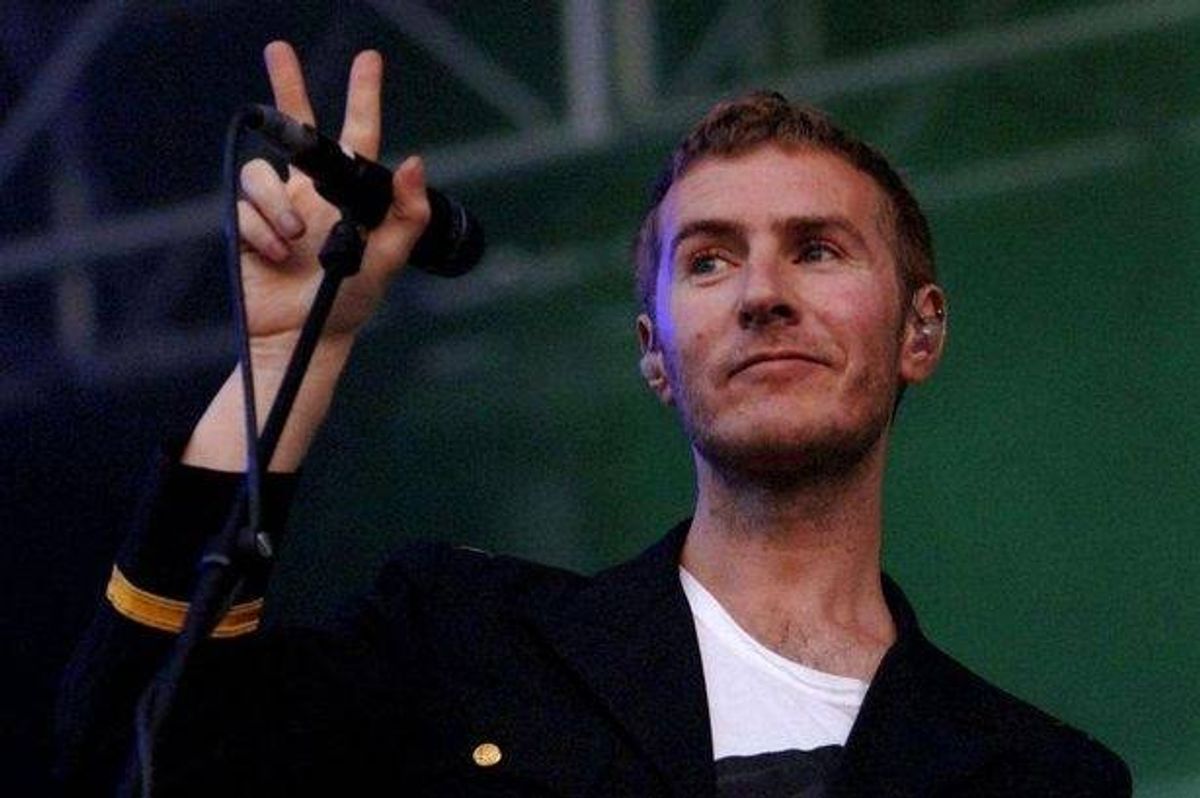
There were rumours that Banksy could be Massive Attack’s Robert Del Naja
Immigration documentation reveals a David Jones entered the war-ravaged nation on the identical date as the photographers – and that David shares the same date of birth as Robin Gunningham. Investigators also examined New York arrest records from 2000, which contained what appeared to be a signed, handwritten confession from Robin following his arrest for vandalising a Marc Jacobs advertisement.
Now, we’ve explored who Banksy truly is, and everything known about an individual whose anonymity has become as legendary as his artwork….
Robin Gunningham
This isn’t the first occasion Robin Gunningham’s name has been connected with Banksy and his renowned street art.
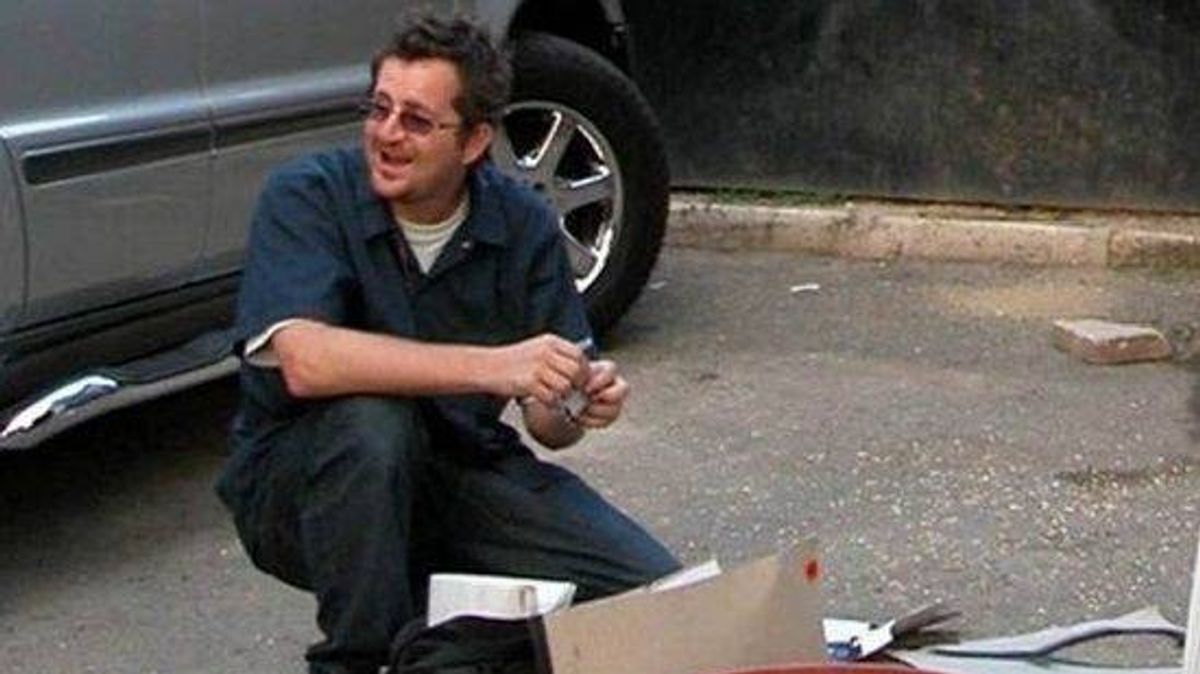
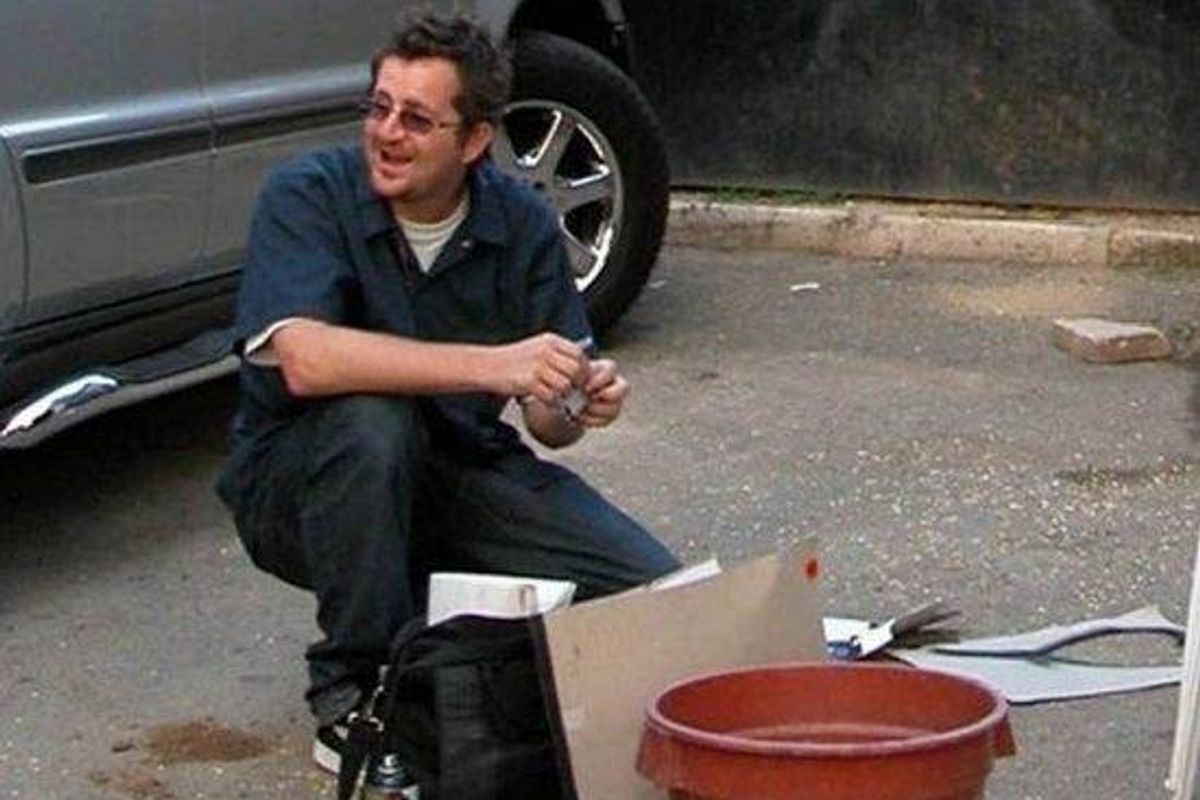
Robin Gunningham was initially unmasked by a Mail On Sunday investigation back in 2008, which alleged he was a former public schoolboy from Bristol. The newspaper published a photograph taken in Jamaica in 2004 showing a man with a bag of spray cans at his feet – identified as Mr Gunningham.
It’s also thought that Banksy once adopted the pseudonym Robin Banks, and in 2017, DJ Goldie referred to him as ‘Rob’ during an interview on the Distraction Pieces podcast.
A Banksy enthusiast from the local area who captured the photographs told the Daily Mail: “I have been going to the mural for a whole week. On Saturday there were more security fences and CCTV up and a few people putting Perspex over the artwork. I went back at 10am to go have another look at what they were doing and saw this man who looks exactly like the photo I saw 20 years ago of Banksy. I found it weird he was putting up his own Perspex.”
Rumours have also linked Banksy with Massive Attack’s Robert Del Naja, known by his stage name 3D, who was once considered Bristol’s original graffiti artist and a pioneer of stencil-based street art. Banksy has openly acknowledged the musician as an early influence, with the pair reportedly maintaining a close friendship.
However, fans became increasingly convinced they might be one and the same following a 2017 podcast in which singer Goldie seemed to inadvertently mention Rob’s name whilst discussing Banksy.
BBC Interview
As far back as 2003, he appeared to confirm his real name in a previously unearthed BBC interview.
The Banksy Story on BBC Radio 4 includes a recording of a face-to-face interview with the artist that hasn’t been aired for two decades.
During the interview, conducted by former BBC arts correspondent Nigel Wrench, Banksy discussed his 2003 Turf War show as it was being set up in an east London warehouse. The exhibition showcased Banksy’s trademark anti-establishment themes, featuring graffitied police vans, the now iconic image of Winston Churchill sporting a grass Mohican, and live farm animals adorned with the Met Police’s blue-checked patterns.
But one of the most significant moments of the interview occurred when the interviewer asked the artist whether he could use his real name. During the exchange, Nigel Wrench asked: “Are you happy for me to use your name? I mean, The Independent has.”
Banksy replied by saying ‘yeah’ before he was asked ‘is it Robert Banks?’
Banksy answered: “It’s Robbie.”
The interviewer then said: “Robbie. Okay. Robbie.”
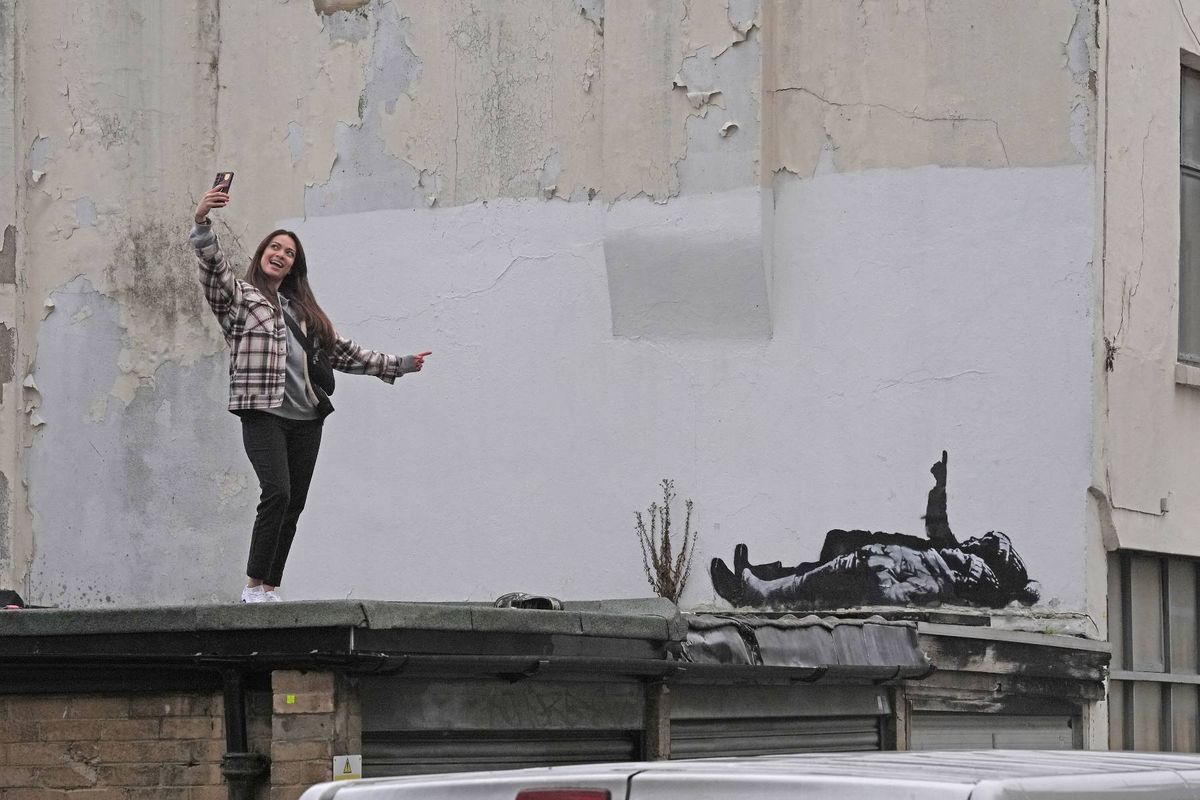
A fan takes a selfie in front of some Banksy artwork(Image: PA)
Regardless of the mysterious figure’s true identity, what’s undisputed is that Banksy emerged from Bristol in 1974, placing him at roughly 52 years old, and was involved in the street art movement that exploded across Bristol during the 1980s before extending his influence to London, LA, and New York. His estimated wealth sits at $50million (£39.6million), according to Celebrity Net Worth – though he directs much of this towards charitable endeavours, mainly keeping proceeds from books and documentaries about his work.
Meanwhile, Banksy commands a celebrity following – the enigmatic artist has sold works to pop icon Christina Aguilera, who owns a provocative portrayal of Queen Victoria with a lady of the night. Hollywood heavyweight Angelina Jolie possesses his reimagining of a Manet classic, depicting a Caucasian family enjoying an outdoor meal beneath an umbrella, watched by 15 starving Africans.
The elusive artist also contributed his unique artistic touch to Blur’s 2003 album Think Tank, and is renowned for orchestrating the self-destruction of his Girl With Balloon painting via a shredder in a Sotheby’s London auction room in 2018.
Sighting
In the past, a passer-by alleged he’d seen Banksy near a mural in Finsbury Park, London in 2024.
The images showcased a man with short hair and glasses, clad in a black Nike hoodie, observing a now-famous painting of a life-sized woman brandishing a pressure washer next to an enormous explosion of lush greenery.
The photographer, who wishes to remain anonymous, asserts he had ‘a gut feeling’ he was capturing the elusive artist when he snapped the bespectacled figure.
At the time, he stated: “I noticed the man in a black hoodie who seemed to have finished his work hand over a box to an assistant in a grey checked flannel shirt with grey hair. He then started to climb over the fence I had a gut feeling that it could be a Banksy mural and that was Banksy himself. I quickly focused on taking pictures of him he looked at me with an expression which seemed to say ‘I’ve have been spotted’. He quickly left the scene in a black van parked near the mural’.”
Meanwhile, the owner of the mural was less than thrilled by the artwork – and the suspicion that he was Banksy, after he was also mistakenly identified, according to the Mirror.
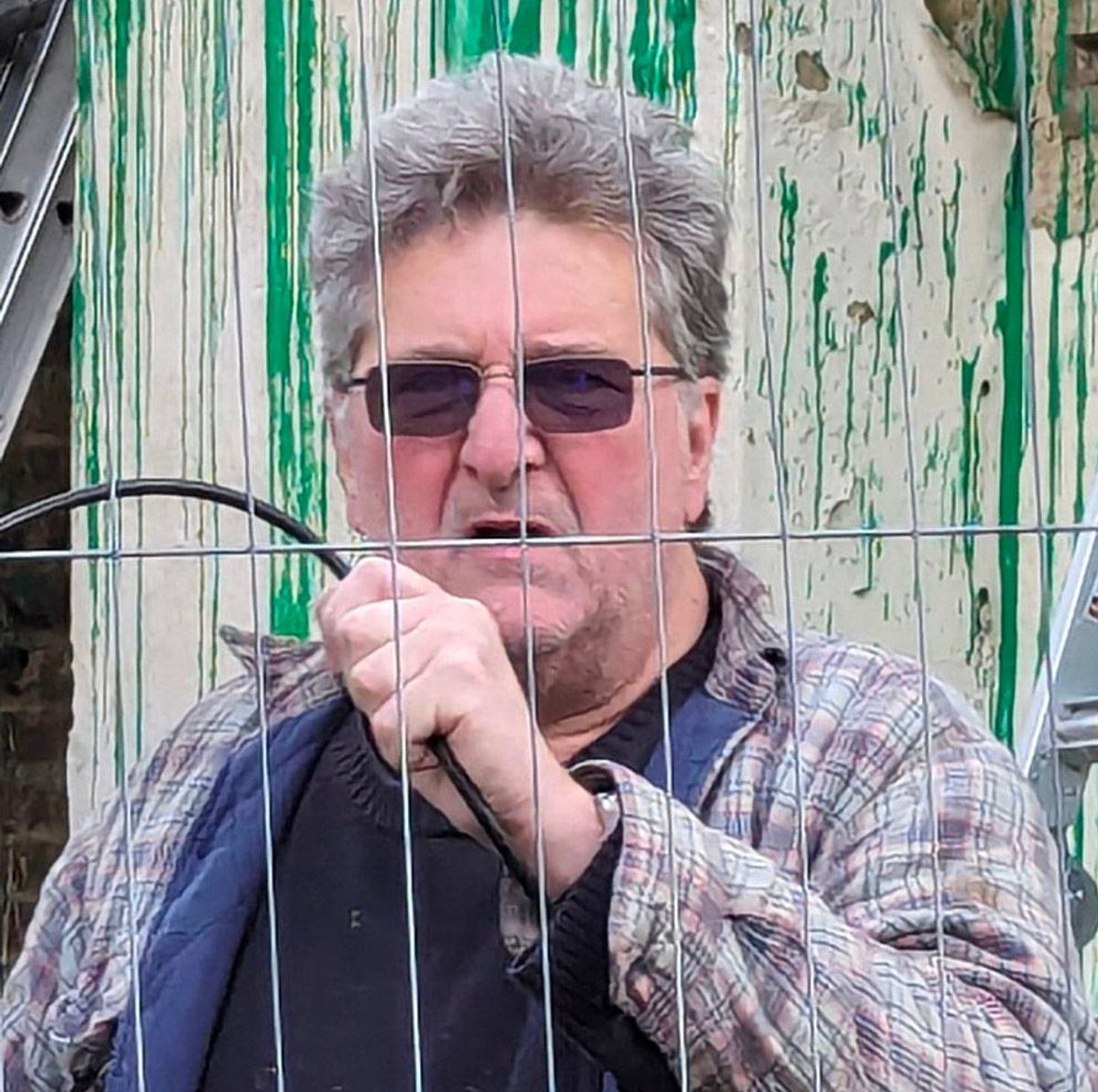
George Georgiou, 67, was falsely identified as Banksy(Image: / SWNS)
Speaking to Mail Online, George acknowledged that he’s not particularly blessed with creative talent, and his first impression of the mural was ‘what a bloody mess’. George confessed: “No, I am not Banksy. Unfortunately it ain’t me, I wish it was but I am not that lucky. When I first saw it I thought ‘what a bloody mess’ but when you see it in context with the tree, it is a really smart idea. The guy has obviously got a vision, he knows what he’s doing, would I have thought of it? Not in a month of Sundays.”
He continued: “I am just not artistic. You give me a hammer and some nails, I’ll make you something but a drawing no? Matchstick men I am good at. We spent a good hour laughing about it [the claim he was Banksy] this morning. No one knows who he is.”
Banksy’s most recent piece depicts a youngster wearing a beanie hat and wellington boots lying on the ground beside another figure in a bobble hat who gestures upwards towards the structure above.
It emerged underneath the Centre Point building near Tottenham Court Road in central London last December. The structure is well-known for its association with the youth homelessness charity Centrepoint, which was established in protest against the unoccupied building during the 1970s housing crisis.
Banksy, whose true identity remains unknown, has subsequently confirmed ownership of the piece on Instagram. In September, the enigmatic artist grabbed headlines with his artwork showing a demonstrator sprawled on the ground clutching a blood-stained placard, whilst a judge, dressed in wig and gown, towers above him, brandishing a gavel.
The piece emerged on an exterior wall of the Queen’s Building, within the Royal Courts of Justice complex. It was promptly concealed and protected by security personnel, before efforts commenced to take it down.
Some interpreted the artwork as commentary on the detention of hundreds of individuals for backing Palestine Action by displaying placards at demonstrations.