
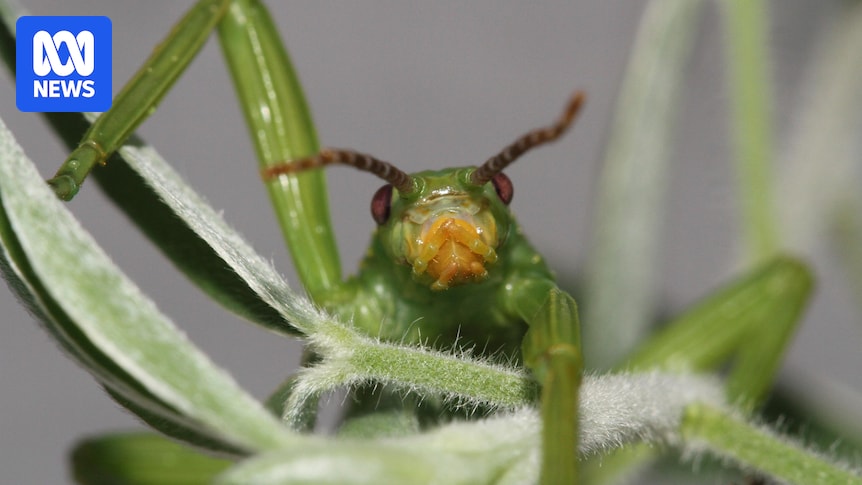
There is renewed hope for the survival of an insect once thought extinct, after two healthy colonies were found on a rock outcrop of Lord Howe Island.
Commonly known as “tree lobster” or “walking sausage,” the Lord Howe Island stick insect’s only known wild habitat is Ball’s Pyramid.
The sheer rock islet was formed more than 6 million years ago by volcanic activity, and at 572 metres it is the tallest volcanic stack in the world.
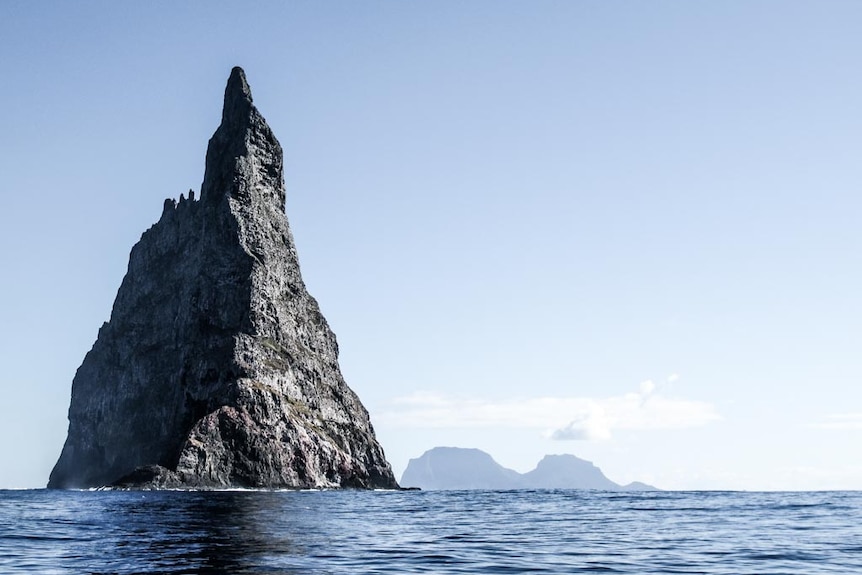
Rodent-free and majestic Ball’s Pyramid, with Lord Howe Island in the distance, is the last surviving habitat for the stick insect. (Supplied: Chelsea Scott)
The challenging geography makes visits difficult but during a short, opportunistic survey by the NSW Department of Climate Change, Energy, the Environment and Water (DCCEEW), weed officers discovered insects at two new locations.
“This species is very cryptic and hard to detect as they have an incredible ability to hide and camouflage themselves,” threatened species officer Craig Stehn said.
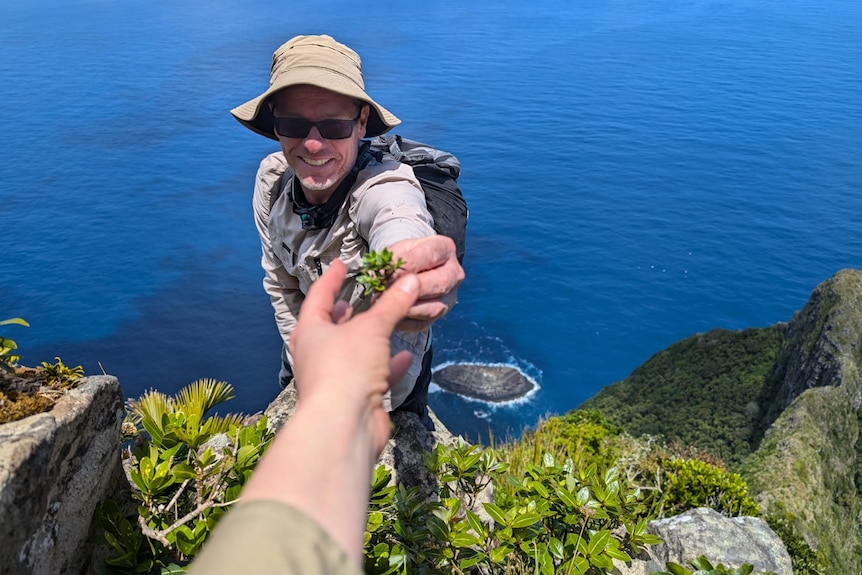
Craig Stehn during an arduous phasmid field trip on the near-vertical Ball’s Pyramid. (Supplied: NSW DCCEEW, Lauren Hook-Walker)
‘Rarest invertebrate’
The officers found a total of nine adult insects. Seven were captured for breeding purposes.
The latest discovery of the insect, scientifically known as Dryococelus australis, marks 25 years since the insect was first rediscovered on Ball’s Pyramid.
The insects were once so common, they were used as bait by early settlers on Lord Howe until black rats colonised the island after a shipwreck in 1918.
After 15 years of rodent predation, the stick insect was believed extinct before it was rediscovered in 2001 on the remote outcrop.
Australian Museum considers it “may be the rarest insect” and possibly also the “rarest invertebrate”.
While Melbourne Zoo’s phasmid specialist Rohan Cleave said they were “one of the most rare invertebrates known in the wild”.
Estimates of the insect in the wild are difficult due to its remote habitat, however NSW Environment and Heritage lists its population as “fewer than 50 mature individuals in the wild”.
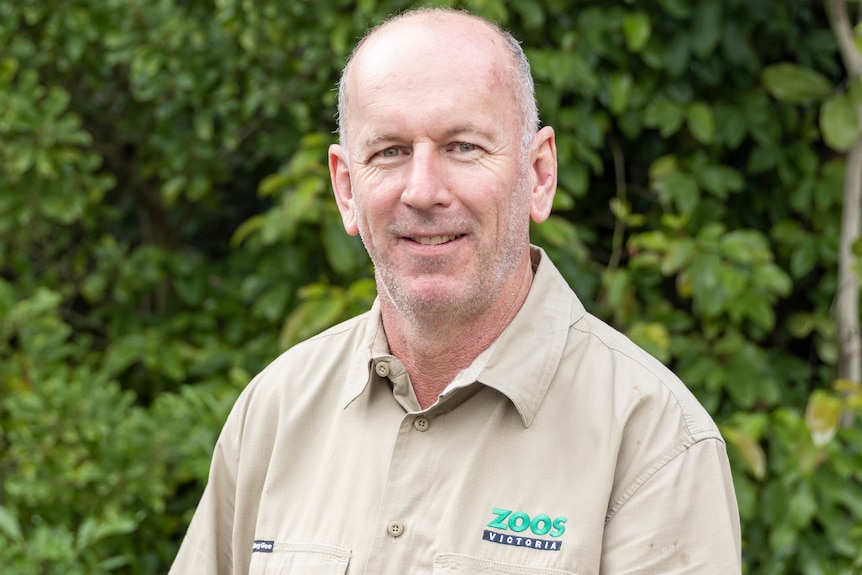
Rohan Cleave says the Lord Howe Island stick insects are one of the most rare invertebrates known in the wild. (Supplied: Zoos Victoria)
Mr Cleave drew attention to Australia’s record of invertebrate extinction rate, estimated to be one to three species a week.
“But the Lord Howe Island stick insects are also one of the best supported, with an incredible international conservation breeding program and captive insurance population,” he said.
Seven of the newest insects to be detected have since been taken more than 1,000 kilometres away to Melbourne Zoo.
For the past 23 years, Melbourne Zoo has run the Lord Howe Island stick insect breeding program, supported by San Diego Zoo, Bristol Zoo, Toronto Zoo and now, Prague Zoo in the Czech Republic.
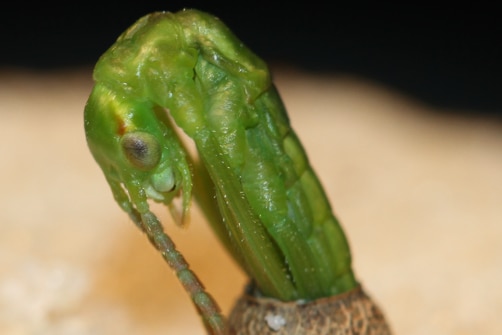
New life emerging is the moment entomologists in the insect’s captive breeding program dream about. (Supplied: Zoos Victoria, Rohan Cleave)
Breeding ‘tree lobsters’
Mr Cleave said he was “really stoked” by the program’s new arrivals, which he described as “beautiful and placid animals” that “you can’t help but fall in love with”.
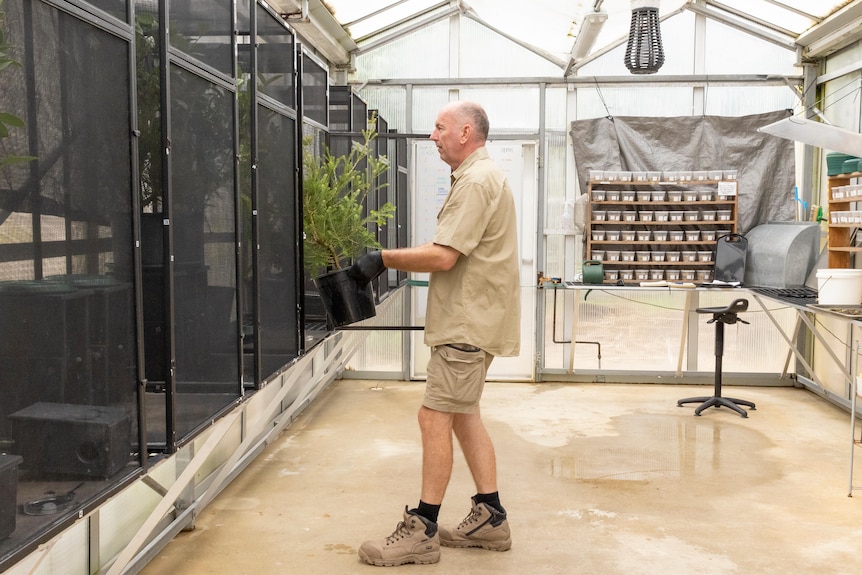
Rohan Cleave wears short sleeves year-round in the subtropical Lord Howe Island stick insects enclosure. (Supplied: Zoos Victoria)
“They’re more important than I am, their future is much more important, as I want to see this species survive long into the future.”
Since the Melbourne University program began with two insects in 2003, it has has bred 19 generations with genetic diversity limited to five wild-captured phasmids.
“So that’s been really tricky and that’s why any injection of new genetics is vitally important,” Mr Cleave said.
“This is now an international captive breeding program, that is really well-known for what can be done with such a small founding population to start with.”
Melbourne Zoo’s captive breeding success with the rare phasmids attracted worldwide attention, including from British naturalist Sir David Attenborough, who visited the zoo’s breeding project in 2012.
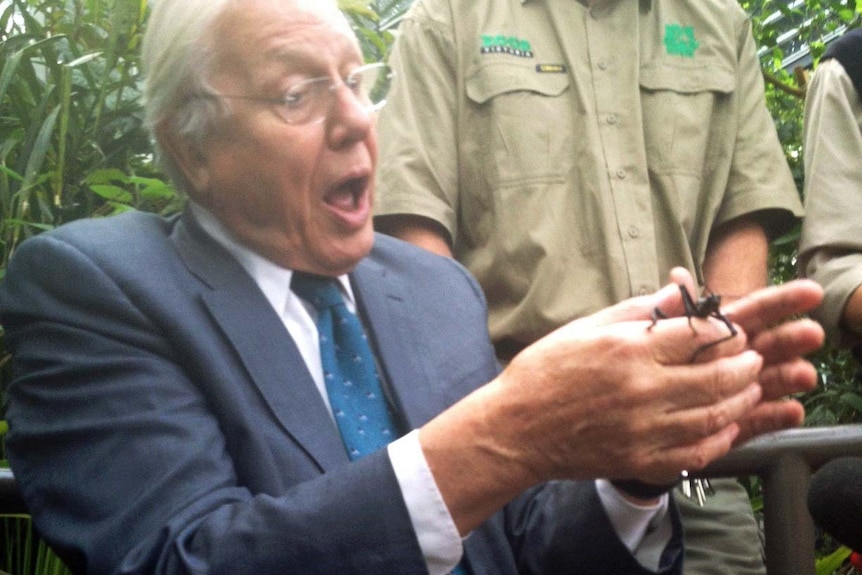
In 2012, David Attenborough was impressed to hold a Lord Howe Island stick insect bred at Melbourne Zoo. (ABC News: Jacqui Peake)
Mr Cleave said the newest stick insects — two adult males, three adult females and two sub-adult females — brought hope for the critically endangered species.
“It means a more robust species you can potentially return to the wild in the future,” he said.
Now, the Melbourne Zoo population varies seasonally between 700 and 800 live insects.
Prague Zoo announced on February 25 that it had successfully hatched 13 Czech-bred Dryococelus australis as part of the program.
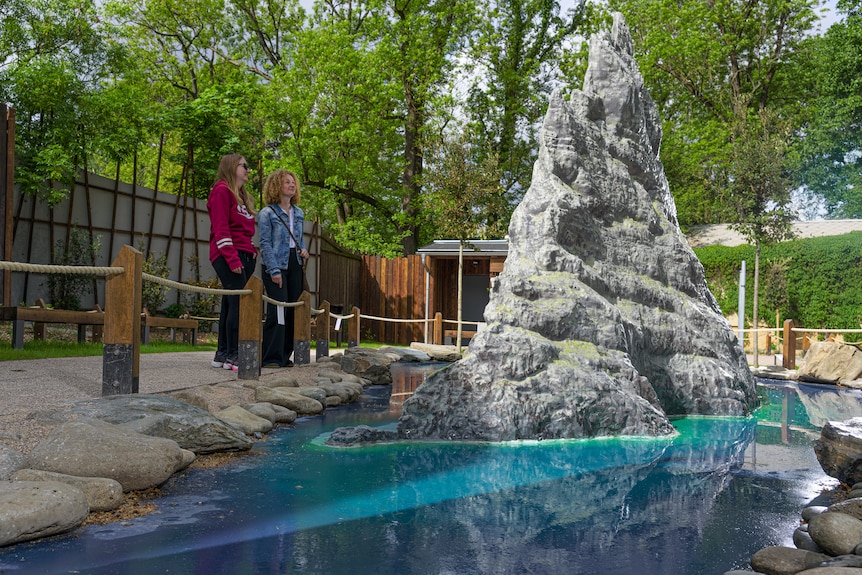
Prague Zoo created a model of Ball’s Pyramid to show visitors how inaccessibility and isolation protected the phasmid. (Supplied: Prague Zoo, Petr Hamerník)
Wild release plans
Authorities have begun surveying Lord Howe Island residents about plans to reintroduce the insect.

Lord Howe Island Board biosecurity officer Ernie Mayo with the insect on his shoulder at Ball’s Pyramid. (Supplied: Lord Howe Island Board, Ernie Mayo)
Lord Howe Island Board chief executive Suzie Christensen said surveys were important, as “the insect hasn’t been seen here in anyone’s living memory”.
“Based on the scientific advice, the first place they would be brought back to would be in the remote areas of the permanent park preserve, up in the mountains and that should give them the best chance of success,” Ms Christensen said.
When Lord Howe Island became the largest inhabited island in the world to successfully eradicate rats in 2023, it opened the way to the species’ reintroduction to the island.
“A lot of the land snails and invertebrate species have really rebounded, seabirds are in huge numbers now, so it’s a real sort of renaissance of the biodiversity on the island,” Mr Stehn said.
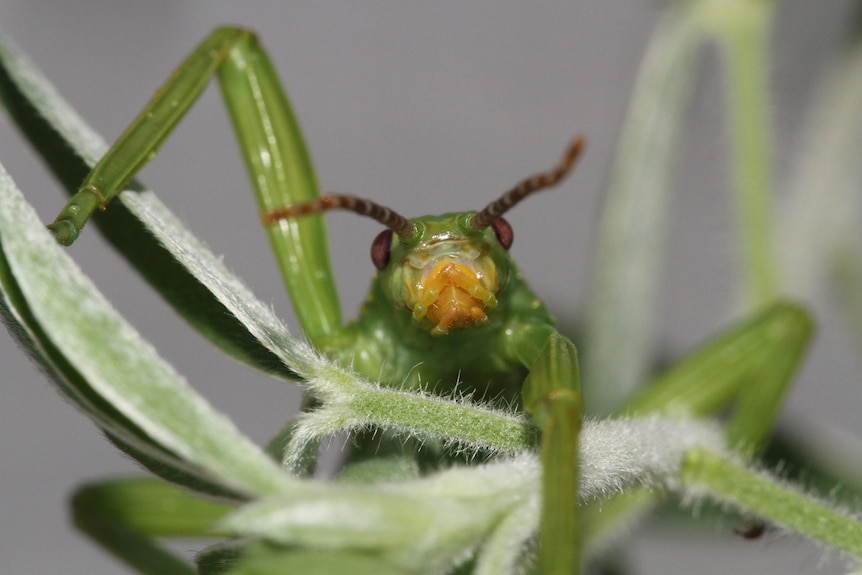
This young phasmid at Melbourne Zoo lives a long way from his Lord Howe Island homeland. (Supplied: Zoos Victoria, Rohan Cleave)