
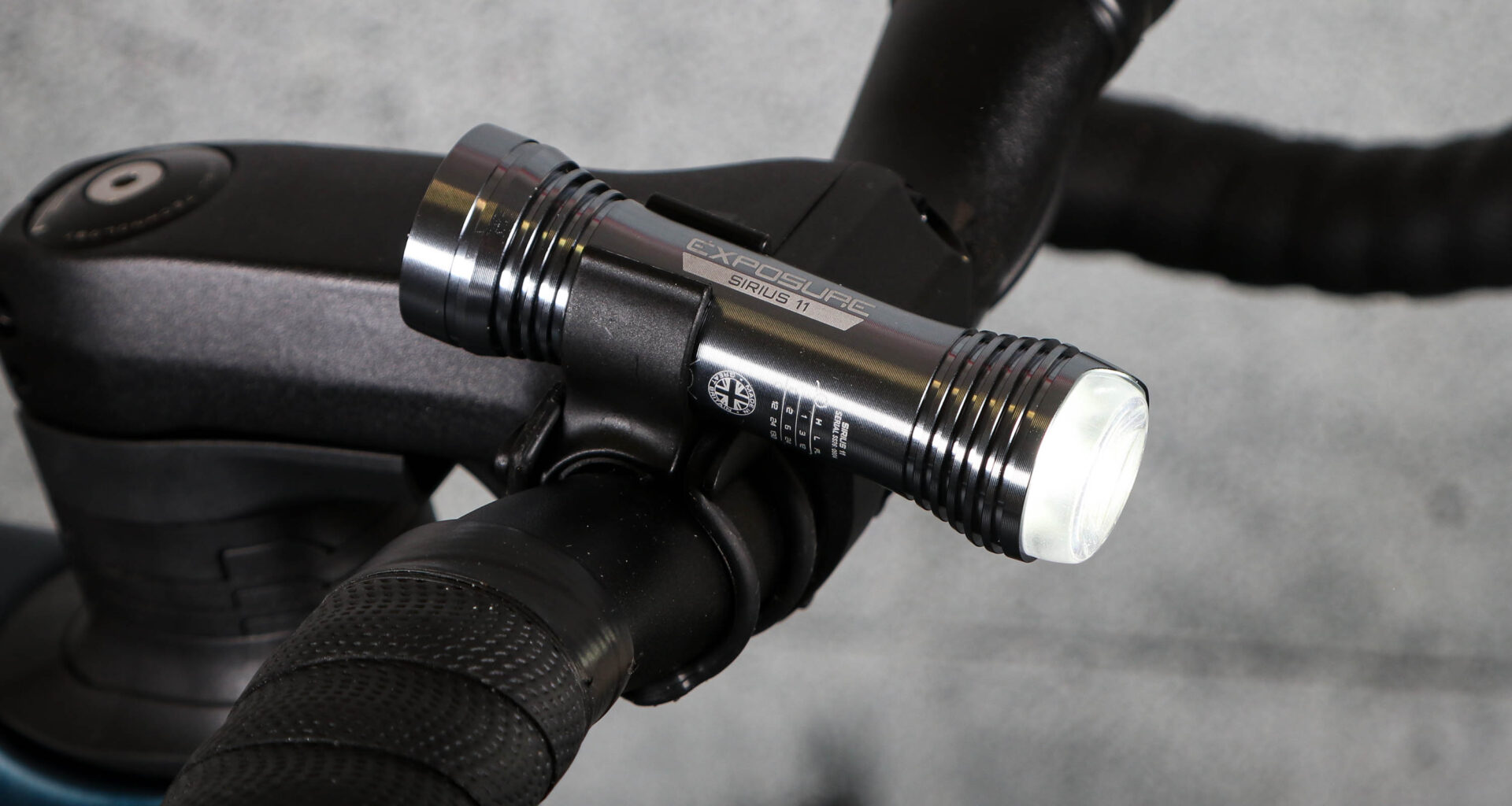
The Exposure Sirius 11 stands out as one of the most refined, high performance compact bike lights on the market. Its combination of high lumen output, excellent DayBright pulse modes, class-leading flashing runtimes, low weight, and long-term serviceability make it a superb choice for road cyclists and commuters.
Despite its relatively small 98g size, the Sirius 11 can output a hefty 1300 lumens, with an 8-degree spot beam. It also boasts 270-degree visibility. The build quality is impressive with a CNC-machined aluminium outer shell, and it has three different program sets, with three output modes in each.
Program mode 1 – 1300 lumens for 1 hour, 570 lumens for 3 hours, 1300 lumen DayBright flash, then a pulse of 700 lumens for 12 hoursProgram mode 2 – 755 lumens for 2 hours, 312 lumens for 6 hours, 1300 lumen DayBright flash then a pulse of 300 lumens for 24 hoursProgram mode 3 – 140 lumens for 12 hours, 65 lumens for 24 hours, flashing mode for 130 hours
It is easy to use. If you have used other Exposure lights, you’ll be at home here. To turn on, you double press the metal button. Single presses then cycle through the three modes of the currently selected program. You hold the button down for two seconds to turn off again.
To switch programs, you hold the button down with the Sirius switched off and then count the flashes, as they correspond to the program number: two flashes for Program 2, three flashes for Programme 3. You then let go when you reach the one you want. Turn the light back on and it will now be in the selected mode. The various running times in hours of the various modes are etched into the casing.
Like all other Exposure lights I’ve experienced, the Sirus 11 is superbly well made. The body is an attractive gunmetal type grey, made of machined 6063 aluminium, with eight concentric cooling fins added to its casing. These increase the surface area of the casing, allowing it to release more heat. The circuitry inside also has thermal management built in, so if it gets too hot, it will automatically reduce its output until it’s cool enough to go back up to max lumens again.
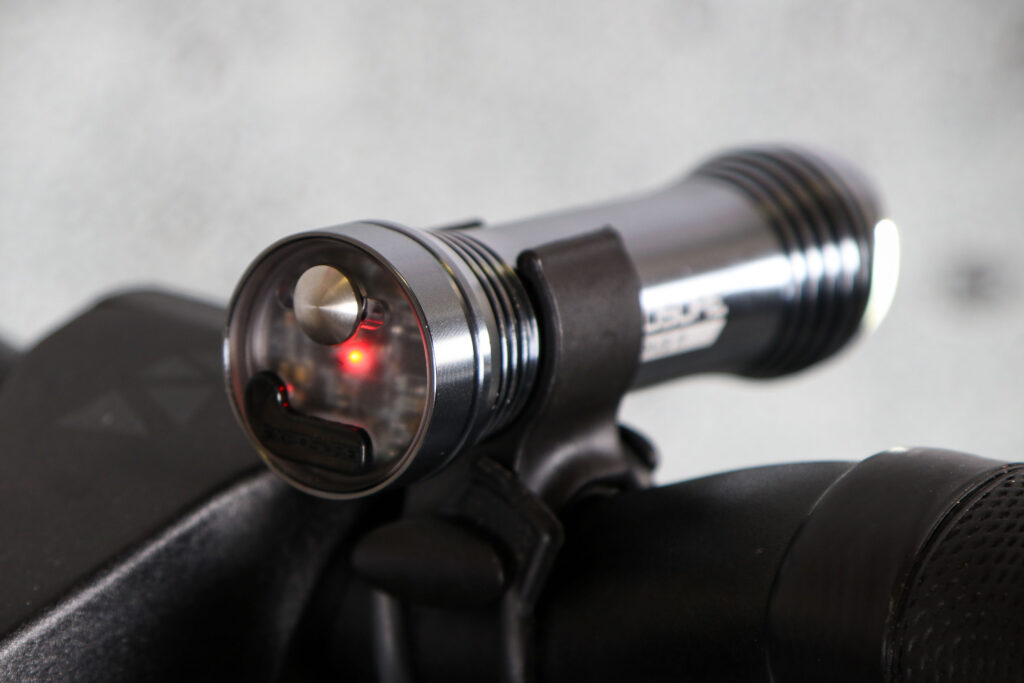 2025-Exposure-Sirius-11-rear.jpg (Image Credit: Farrelly Atkinson)
The metal button on the rear is easy to press with gloves on and the USB-C “storm port” cover has just the right level of flex and forms a tight seal over the USB-C port to secure it for waterproofing. This rubber seems a good improvement over the previous squidgier rubber used on previous lights which had the “smartport”.
I own Exposure lights that are still going strong after over 10 years, with similar mounts, and see no reason to expect anything different from the Sirius 11.
The strap mount is a durable, thick plastic, with a very thick elastic band strap which is the best I’ve tried for any light.
The clamp is secure in use. It needs a decent shove to clip it in, and a decent bit of pressure to release it, but this also means it stays put over rough surfaces.
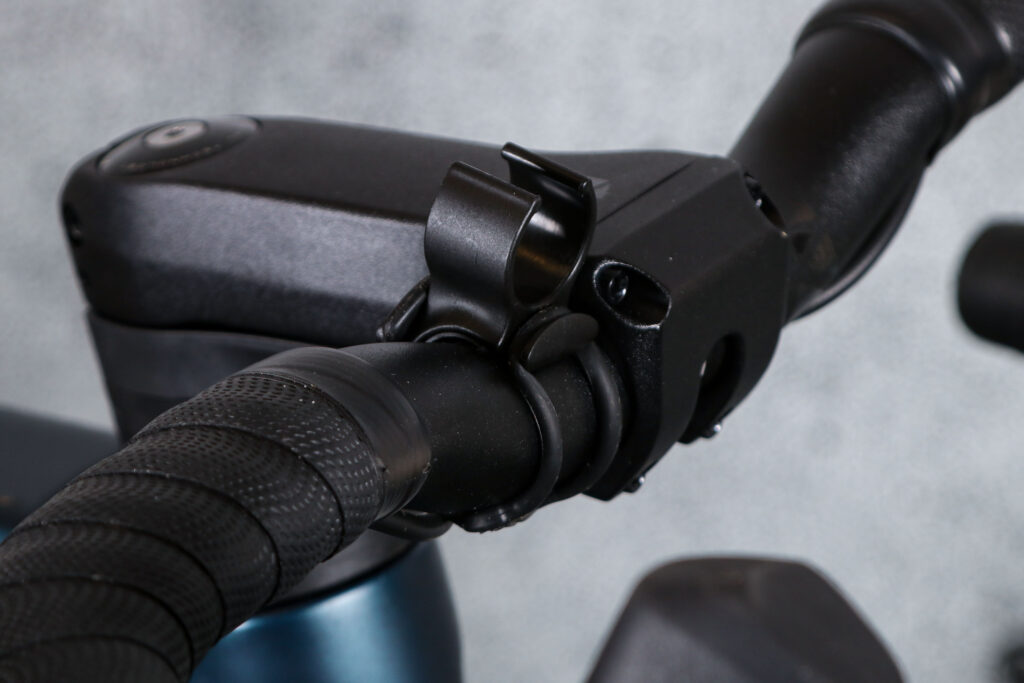 2025-Exposure-Sirius-11-bar-mount.jpg (Image Credit: Farrelly Atkinson)
It can be used either above or below the bars. Personally I preferred above the bars, so that it was easy to adjust modes with my thumb, or cover the lens a bit to reduce any glare for oncoming cyclists. It is still possible to make tilt adjustments on the fly which is really handy.
It’s worth noting that Exposure does separately offer some nifty accessories to make the Sirius 11 more adaptable.
If you have Aero flat bars Exposure sells a longer 80mm band which can stretch to 160mm for a fiver.
You could also use a GoPro out-front mount and put it under your cycling computer. Exposure sells a compatible clip for a tenner.
You can also get a stud bracket for any M5 bolt – for example down on the fork. These are twenty quid.
The Sirius 11 features an 8-degree spot beam, brightest at the centre, but it also offers 270 degrees of visibility, so you can more easily be seen from the side. It lights up the whole lane of a road, with a little bit of the side verges as well. It’s a very white light, which I found made potholes easy to spot.
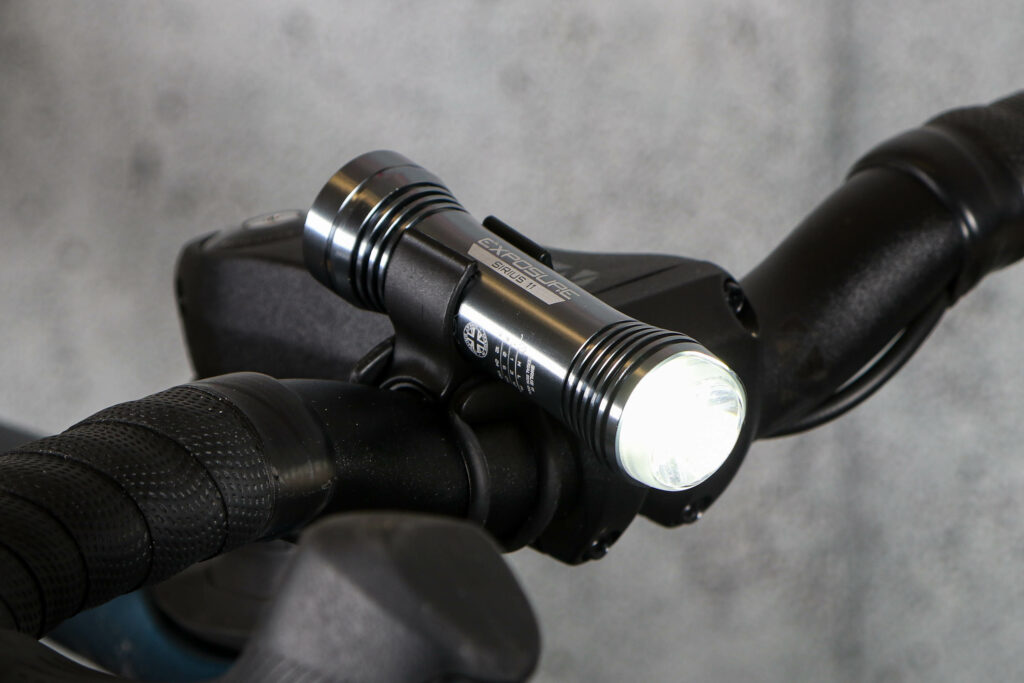 2025-Exposure-Sirius-11-front.jpg (Image Credit: Farrelly Atkinson)
I do however think you need to be responsible with a beam like this. Personally, I wouldn’t wear it on a helmet, unless I was off-road with no oncoming traffic. I think it is so bright that if used on a cyclepath or road you could irritate oncoming traffic. It’s most sensibly used on the bars, where you have immediate control over the beam and mode selection.
My commute is 90 minutes each way and I managed to get two days’ worth of commuting, switching modes – generally a mix of Programs 1 and 2.
I was testing in proper pitch darkness along unlit paths, mostly using the 755 and 312 lumens modes. I found I only need 1,300 lumens on some downhills on weekend rides.
The DayBright and regular flashing modes are also really, really good, with those 12 and 24 hour run-times, or 130 hours on flashing.
The battery indicator works via an LED on the back of the unit, just below the button. When it’s 100 per cent full, it is solid green. Once it loses 15 per cent of its charge, it will flash green. It continues this, 15 per cent at a time, decreasing through amber, and red, until it gets to the very last 10 per cent, when it will flash red. Once it’s properly exhausted, the LED switches off, and puts itself into a really low powered mode, just enough to try and get you home.
You can also check the battery level by single pressing the button before turning it fully on to check the colour of the LED.
Exposure reckons on 2:05hrs to recharge the 4,000mAh Li-ion battery , and I reckon that’s pretty much bang on what I was getting. The Sirius can charge from an external battery pack, but can’t be kept powered on from one.
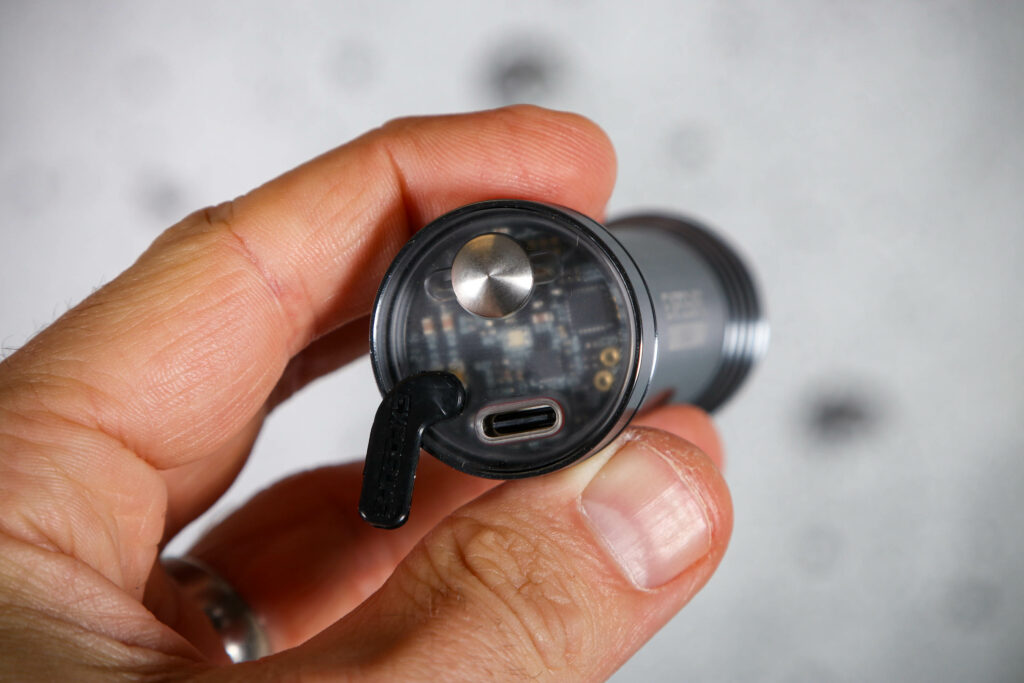 2025-Exposure-Sirius-11-USB-C-port-and-power-button.jpg (Image Credit: Farrelly Atkinson)
As well as being well made in the first place, Exposure stands out for offering a two-year warranty, extended to three years if you purchase via its own website. The brand also states it will try and repair any defects for up to 10 years after purchase.
“Lifetime serviceability” is advertised on the box the Sirius comes in, which is really encouraging. Top marks for embracing ‘the right to repair’.
In my experience, Exposure has been really good when sending previous lights I owned back for a repair, quoting the price to fix it, and then repairing and returning really quickly. It’s great to have this peace of mind.
It sounds like I’m properly raving about the Sirius 11, but there were just a couple of things I’d like to see improved in a future version
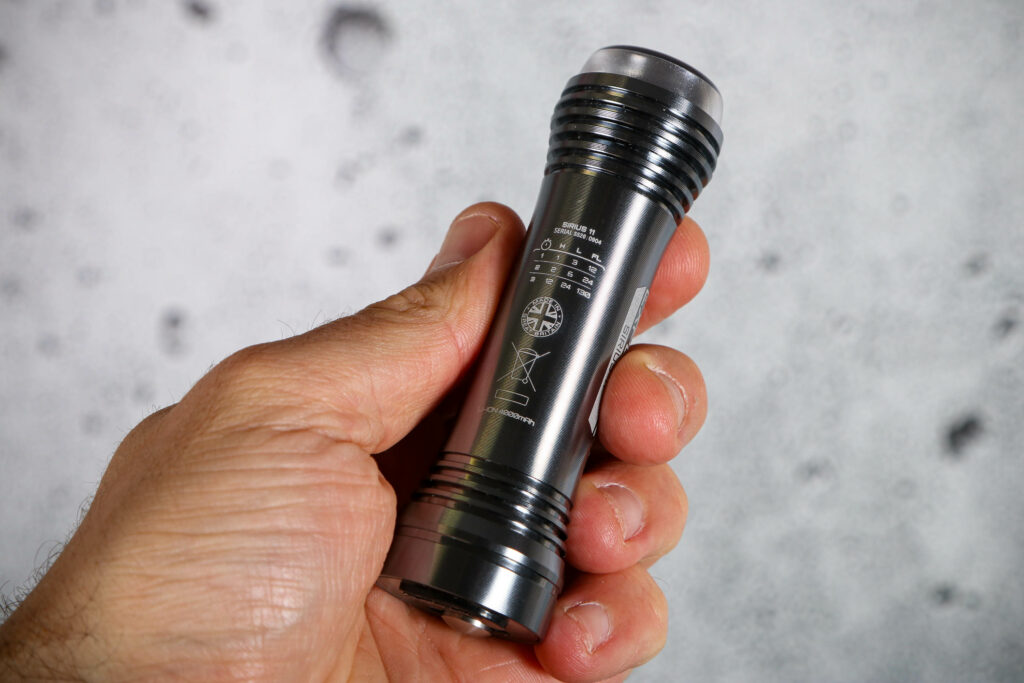 2025-Exposure-Sirius-11-run-times.jpg (Image Credit: Farrelly Atkinson)
It takes a little bit of getting used to, placing the Sirius in the mount, otherwise on your first button press it can slide forward. I put it as far forward in the mount as it would go, so it didn’t do this.
If you use the light in 1,300 lumen mode, it gets surprisingly hot on the “cooling fins” of the case. Similarly, the lens can be surprisingly hot on bare fingers if you forget to turn it off straight away and keep it held in your hand.
When switching modes, it takes about three seconds for the colour to change to show the appropriate battery level, and it will show green for a few seconds before turning to the ‘true’ battery level colour – which could be red. I guess it’s calculating, but it means you often end up double checking.
> See and be seen with our top front bike lights for on the road, trail or path
Value
The Ravemen LR1000 is 137g, so a little weightier, but still outputs 1,000 lumens, not quite matching the Sirius 11. Like the Exposure, we were impressed by its secured mount, and the amount of power on offer from something so lightweight. It’s half the price of the Exposure at a shade under £60.
The Moon Rigel Pro 1000lm is lighter, at 128g, but still can’t match the Sirius. It’s again got a maximum output of 1,000 lumens, and a variety of modes, which we found a little complicated. It does have decent waterproofing, and again, comes in just under £60.
The Knog Blinder Pro 1300 matches the Sirius with a 1,300 lumen output. We tested it as a set with a rear light as well. The front weighs considerably more than the Sirius at 180g. We found it intuitive to use and also well made. It can be purchased on its own for £99.
So although the Exposure Sirius 11 is more expensive at £120, it stands out from its peers for its high lumen output, 12/24hr DayBright modes and 130hrs flashing mode.
A three-year warranty if bought directly from Exposure and lifetime serviceability also provide great peace of mind.
What does the manufacturer say about this product?:
The Sirius 11 is a lightweight, yet very powerful compact light, aimed at urban commuting and road riding. Despite it’s small size, it can output a hefty 1300 lumens, it also features an 8 degree spot beam, with 270 degree side visibility. Build quality is impressive with a CNC-machined aluminium outer shell, and it has three different programs sets, which each have three modes with a variety of outputs and flashing modes.
Tell us some more about the technical aspects of this product:
Program mode 1 – 1300 lumens – 1 hour, 570 lumens for 3 hours, daybright flash of 700 lumens for 12 hours.
Program mode 2 – 755 lumens for 2 hours, 312 lumens for 6 hours, daybright flash of 300 lumens for 24 hours.
Program mode 3 – 140 lumens for 12 hours, 65 lumens for 24 hours, flashing mode for 130 hours
Light Output: Maximum 1300 lumens
Battery: 4,000 mAh Li-Ion (internal).
Charging: USB-C fast charging
Dimensions: Length – 110mm, Head – 28mm.
8° spot beam
270° side visibility
Construction: CNC-machined 6063 aluminium body
IK09 impact rating – meaning it can withstand a 10-joule impact. This is the same as being struck by a 5kg mass dropped from a height of 20cm
Rate the product overall for quality (1-10):
10/10
Rate the product for performance when used for its designed purpose (1-10):
10/10
Rate the product for value (1-10):
8/10
How does the price compare to that of similar products in the market, including ones recently tested?:
Although the Exposure is more expensive, that’s justified by its output, weight and build quality, plus the warranty and the support you get.
Rate the light for design and ease of use. How simple was the light to use?
9/10
Any further comments on design and usability?:
It clips and unclips easily into its mount and can also be placed underneath the handlebars if space is tight. The little “eyelid” hood on the Sirius just needs to be spun round so that you don’t get glare in your eyes.
Rate the light for the design and usability of the clamping system/s:
9/10
Does the light have a waterproofing rating? If so, what is it?:
IP67
Rate the light for waterproofing. How did it stand up to the elements?
10/10
Any further comments on waterproofing?:
The Sirius 11 is IP67 rated, meaning it can withstand being submerged in three feet of water for up to half an hour. I used it in several downpours, and while washing my bike, so it is definitely extremely waterproof.
Rate the light for battery life. How long did it last? How long did it take to recharge?
9/10
Rate the light for weight:
10/10
Any further comments on weight?:
The power you are getting for the weight here really is exceptional. At 98g it’s a class leading weight, and I think it could really appeal to roadies who don’t want a bulky light, but really want to see and be seen on the roads.
Did you enjoy using the product? Yes
Would you consider buying the product? Yes
Would you recommend the product to a friend? Yes
Use this box to explain your overall score
The Sirius Mk 11 Stands out among its peers for its high lumen output, great daybright modes, and 130 hours flashing mode. A three-year warranty if bought direct from Exposure, and lifetime serviceability give great peace of mind. It manages to fit this into a high quality unit, that weighs a mere 98 grams.
Age: 25 Height: 173cm Weight: 65kg
I usually ride: Road bike My best bike is: Road bike
I’ve been riding for: Over 20 years I ride: Most days I would class myself as: Semi pro
I regularly do the following types of riding: road racing, general fitness riding, fixed/singlespeed, mtb,