
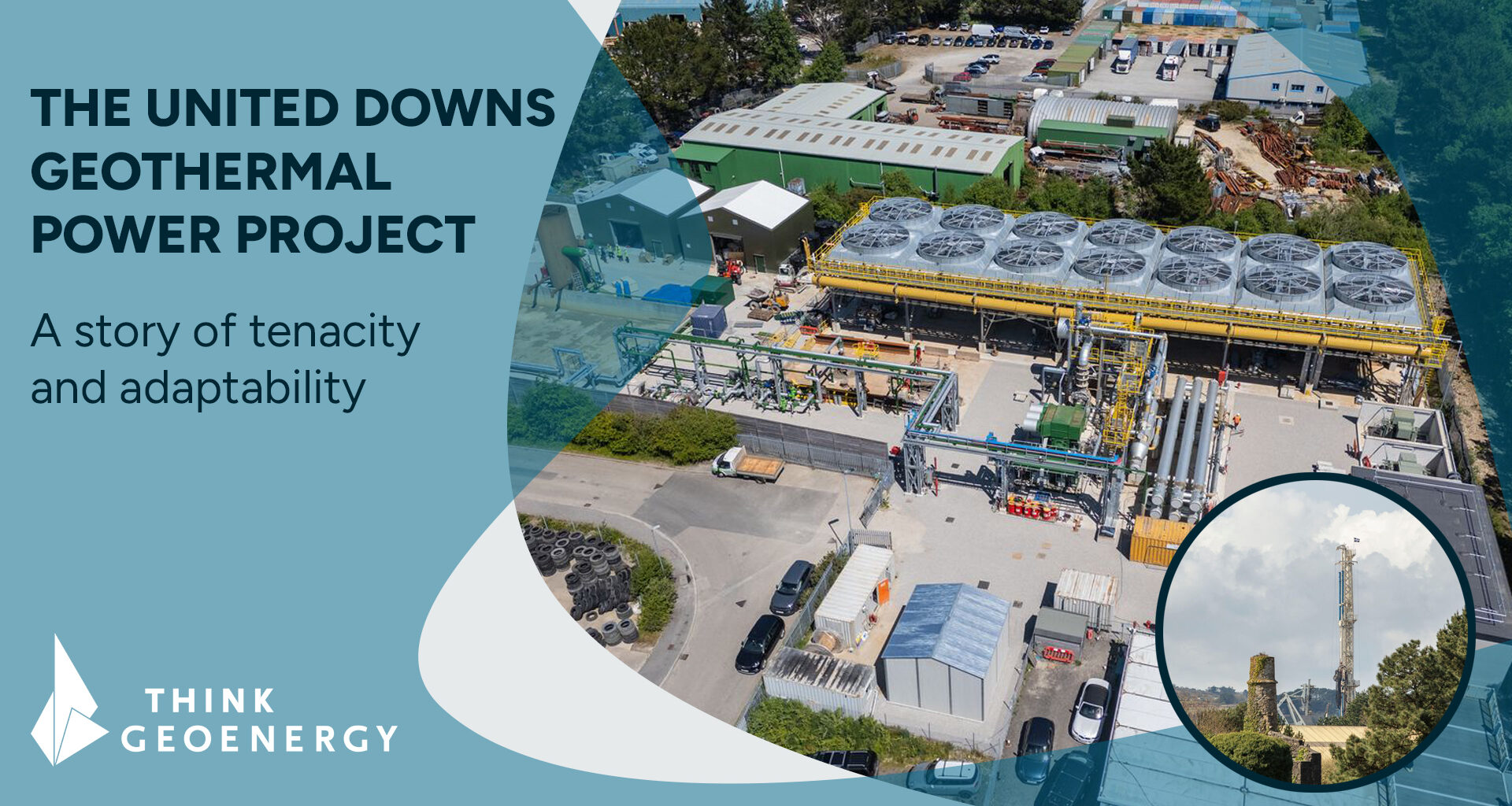
The United Downs geothermal power project: A story of tenacity and adaptability (inset photo credit to GEL)
After 15 years of development, the story of the United Downs geothermal project in the UK demonstrates tenacity and adaptability in an early growth market.
After more than a decade of development, the United Downs geothermal power project in Cornwall has finally reached a milestone long anticipated by the UK renewable energy sector. In early 2026, the plant began exporting electricity to the national grid, marking the first operational deep geothermal power plant in the United Kingdom.
Located at the United Downs Industrial Estate near Redruth in Cornwall, the project taps geothermal fluids circulating within the Cornubian granite batholith at depths of more than five kilometers. These fluids are used to generate around 3 MW of baseload renewable electricity using a binary Organic Rankine Cycle (ORC) system, enough to supply approximately 10,000 homes while operating continuously regardless of weather conditions.
Developed by Geothermal Engineering Ltd. (GEL), the project has been widely regarded as a breakthrough for geothermal energy in the UK. The facility also represents a new model for geothermal development in Europe by combining renewable electricity production with lithium extraction from geothermal brines, potentially contributing to domestic critical mineral supply chains.
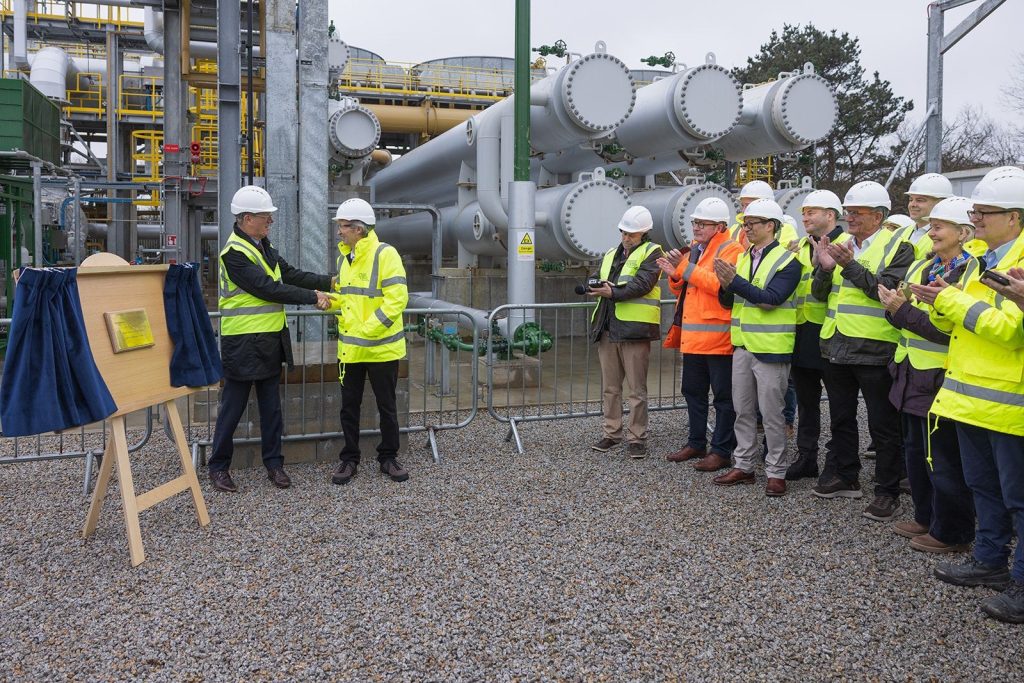 Switching on ceremony of the United Downs geothermal power plant in Cornwall, UK (source: GEL)
The journey to commissioning, however, was far from straightforward. From securing the first geothermal permits in the UK to drilling the deepest onshore wells ever completed in the country, the project required years of persistence and adaptability.
“It’s always difficult for a first project,” said Ryan Law, CEO of Geothermal Engineering Ltd. “You have to educate policymakers, regulators and investors about what geothermal power actually is.”
Historical milestones of the United Downs project
Looking back, the development of United Downs can be understood through several key milestones that shaped the project’s trajectory, from permitting and financing to drilling, construction, power generation, and lithium extraction.
Permitting a first-of-a-kind geothermal project
The origins of the United Downs geothermal project date back to around 2011, when GEL began exploring the potential of geothermal power generation from Cornwall’s granitic formations. This geological setting has long been recognized as one of the most promising geothermal resources in the UK.
Yet despite this geological potential, geothermal electricity had never been developed in the country. As a result, early project development required navigating a regulatory landscape that had little precedent for geothermal energy.
“You had to run through the whole process for the site, educate the councilors, talk to national politicians about the potential of geothermal power,” Law explained. “Even figuring out which regulations applied was part of the challenge.”
This milestone was significant both for GEL and the wider geothermal sector, as it demonstrated that a deep geothermal power project – the first of its kind in the country – could be navigated successfully through the UK’s planning and regulatory frameworks.
Securing funding for drilling
If permitting was the first major hurdle, raising funding for drilling proved to be the most difficult.
Drilling geothermal wells is typically the largest and riskiest investment in any geothermal project. For United Downs, the risks were particularly high because the wells would be deeper than any wells previously drilled in the UK.
“No one had ever drilled to five kilometres in the UK,” Law said. “It’s the deepest well ever drilled in the country, the hottest well, and nobody had developed geothermal power before.”
From an investor perspective, this created a difficult proposition. Unlike solar or wind projects, where technology and resource performance are well understood, deep geothermal development carries exploration risks similar to those found in oil and gas. Law summarized this challenge succinctly, saying “geothermal projects are often viewed as involving oil and gas risk but utility returns.”
Over time, the project secured funding from a combination of public and private sources. Financial support came via grants from the Department of Energy and Climate Change, the European Regional Development Fund (ERDF) and Innovate UK. The company also brought in institutional investors Kerogen-CX and Thrive Renewables. The total development cost of the United Downs geothermal project is estimated at around £50 million.
With financing in place, the project could finally move into its most technically challenging phase—drilling the geothermal wells.
Drilling operations and reservoir testing
Drilling began in November 2018 and concluded in mid-2019 with the completion of two wells that form the geothermal doublet system. The production well was drilled to a measured depth of 5,275 meters, making it the deepest onshore well ever drilled in the United Kingdom. The injection well was drilled to a depth of 2,393 meters. The wells intersected the Porthtowan fault zone within the Cornubian granite batholith, where natural fracture networks provide permeability for geothermal fluid circulation. Reservoir temperatures of around 180–190 °C were encountered at depth.
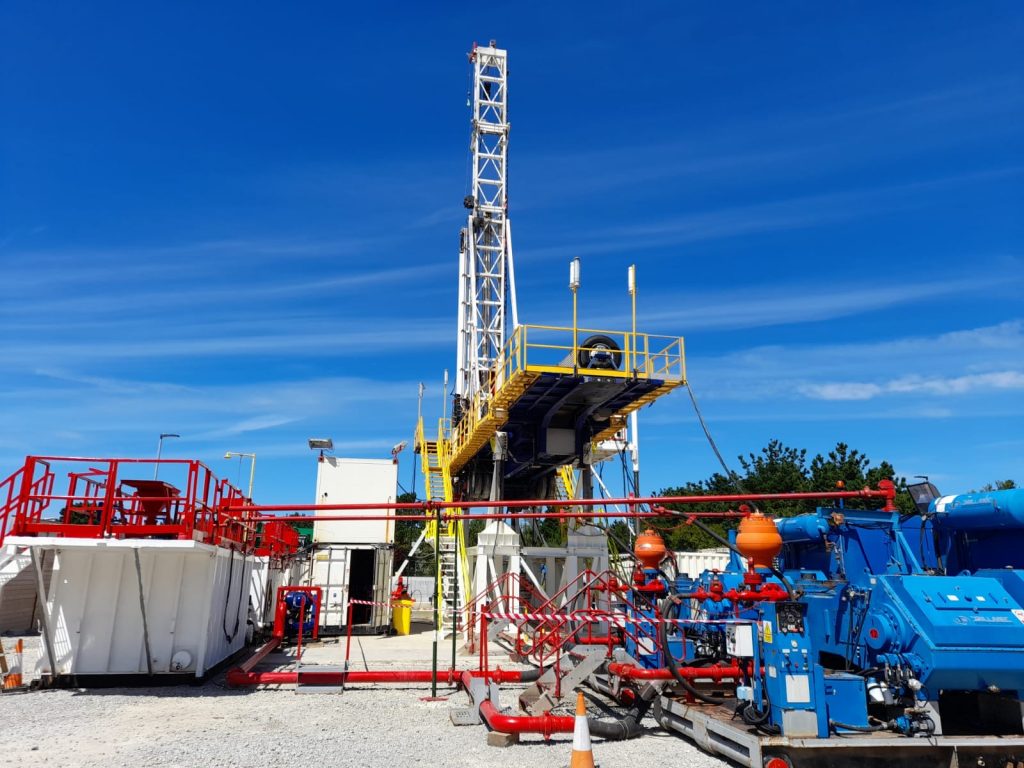 Drilling rig at United Downs project site, Cornwall/ UK (source: GEL Ltd.)
Drilling these wells represented a major technical achievement for the UK geothermal sector. “You’re targeting a fracture structure at five kilometres,” Law explained. “You have to ask: what happens when you hit the fracture, how will the geology behave at that depth?”
After drilling was completed, the project underwent extensive reservoir testing between 2020 and 2021, including injection and production tests designed to evaluate the hydrology of the fractured granite reservoir. The results confirmed that the wells could sustain a geothermal circulation system capable of supporting power generation.
Securing power offtake contracts
With the reservoir proven, the next critical step involved securing long-term revenue for the project. In the UK renewable energy market, the Contracts for Difference (CfD) scheme provides price stability for low-carbon electricity projects by guaranteeing a fixed strike price for generated power. United Downs successfully secured a CfD contract providing price certainty for electricity generation over a 15-year period.
For investors, these agreements represented a critical milestone. “The contracts for difference gave us the holy grail,” Law said. “It’s a bankable return for 15 years linked to inflation.”
With revenue security in place, the final stage of the project, the construction of the power plant, could proceed. Moving past the supply chain issues experience worldwide during the pandemic, construction started in early 2024, with the ORC power plant unit supplied by technology provider Exergy.
Switching on the power plant
By early 2026, the facility was commissioned and synchronized with the UK electricity grid. The launch event marked the first time geothermal electricity had been generated at commercial scale in the UK. Beyond power generation, the project is also designed to deliver around 10 MW of zero-carbon heat and provide a platform for geothermal lithium extraction.
“It couldn’t have gone any better,” Law said of the commissioning ceremony. “Lithium was produced and we synchronized to the grid.”
Community and sector reception
The project has received strong support from local communities and policymakers alike.
Cornwall’s long mining history played a major role in building public acceptance of the geothermal project. For centuries, the region was one of the world’s leading producers of tin and copper, and mining remains deeply embedded in local identity.
“There’s such a history of mining in Cornwall,” Law said. “People remember that it brought well-paid jobs and economic activity.”
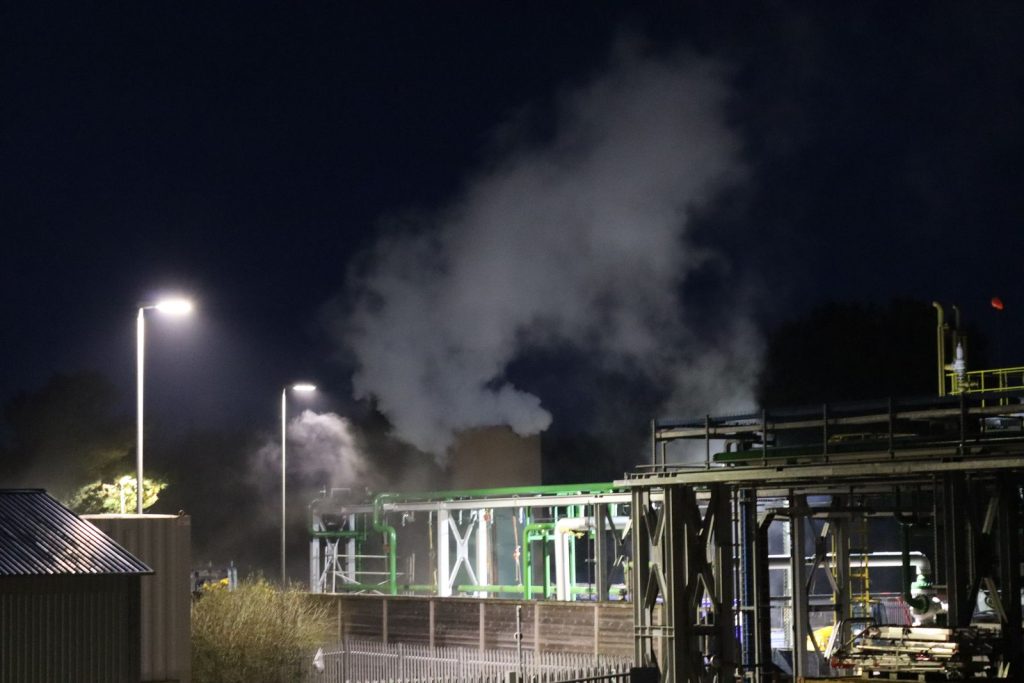 Well testing at the United Downs geothermal project in Cornwall, UK (source: GEL)
During construction, GEL also made efforts to source materials and services locally, directing significant spending toward businesses within roughly ten kilometers of the site. “We have steelmakers next door and precision cutting companies opposite,” Law noted. “We spent a lot locally.”
The project also established a community benefit fund distributing approximately £40,000 to local initiatives in surrounding parishes.
Beyond the local community, the project has also attracted strong interest from policymakers and investors. According to Law, the addition of lithium extraction to the project has significantly strengthened political support. Law noted that the critical minerals component has opened political doors, making policymakers suddenly understand the value of linking renewable energy with mineral production.
Lithium production as an incidental addition
One of the most intriguing aspects of the United Downs project is that lithium extraction was not part of the original development plan. The geothermal project initially focused solely on electricity generation. “We only started looking at lithium around 2019 or 2020,” Law said. “It wasn’t part of the early geothermal presentations.”
Interest in geothermal lithium emerged after companies in Europe began exploring the potential of extracting lithium from geothermal brines. When the United Downs geothermal fluid was tested, it revealed lithium concentrations exceeding 360 parts per million, which was higher than nearly any other geothermal lithium projects in the world. Equally important, the geothermal fluid was unusually clean, making it well suited for direct lithium extraction technologies.
The project subsequently secured government funding to build a demonstration plant capable of producing around 100 tonnes of lithium carbonate annually.
Although still a technically complex matter, building the lithium extraction plant was relatively straightforward compared to drilling a geothermal well to five kilometers. Thus, from initial interest in 2020, the facility was designed and built fairly quickly to commercially operate by 2026.
The integration of lithium production has significantly improved the economics of the project and opened new revenue streams. Law, however, clarifies that the United Downs project would still have been commercially feasible even without the lithium production component.
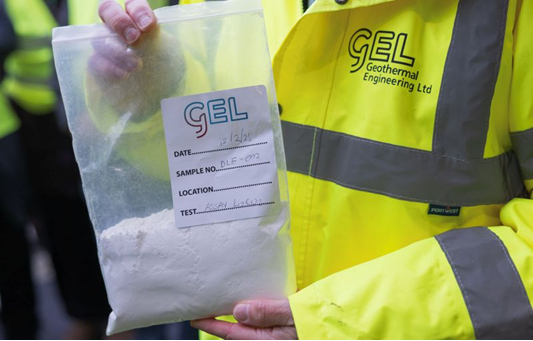 Lithium carbonate produced at the United Downs geothermal facility (source: GEL)
Prospects for growth of the lithium business
From its starting point of producing 100 tonnes of lithium carbonate per year, GEL aims to scale up its lithium production operations to 18,000 tonnes per annum. However, the infrastructure for processing that much material does not exist yet in Europe.
“For our first levels of production up to about 2000 tonnes per annum, we can get that processed in the UK,” said Law. “But there’s no point in promising offtakes of 20,000 to 40,000 tons per annum when the infrastructure is not there to take it.” Currently, a large majority of the world’s lithium refining capacity is in China. Thus, Europe will need to catch up fast if it aims to build domestic processing capacity as part of a broader critical minerals strategy.
At the moment, GEL is working with a very established UK refiner for the still-limited quantities of lithium carbonate that the Cornwall facility is producing. However, Law is optimistic that the domestic infrastructure will be built by the time the company scales up to 10,000 to 15,000 tonnes per annum of production.
Scaling up for future projects
For GEL, the primary goal of United Downs was to demonstrate that deep geothermal energy can work in the UK. “Our mission for United Downs was to prove that it could be done,” Law said. “Some people may comment that it’s only a 3 MW plant, but the point is that you can’t start at an enormous scale. You have to start somewhere. As the industry builds, the supply chain builds, people get better at what they do, and the whole thing scales up at a sustainable pace. But you have to start somewhere.”
With that milestone now achieved, plans are now underway for GEL to go bigger for their next project. Each of the next two projects in the Cornish regions of Manhay and Penhallow are expected to be roughly twice the capacity of United Downs.
As Law pointed out, investors like repeatability. Thus, the next two sites will still be in Cornwall. This means that they are drilling into the same geology, which is now better understood thanks to the United Downs project. The two projects have also already secured permits and contracts for difference. By 2030, GEL is aiming to add around 10 MW of geothermal capacity in Cornwall.
Law emphasizes that the supply chain to support geothermal projects also needs to grow and evolve if the UK aspires to build more geothermal capacity. This would mean more drilling rigs, service providers, and equipment manufacturers.
Advice to new geothermal developers
Reflecting on the lessons from United Downs, Law offers several key pieces of advice for geothermal developers. The most important is securing sufficient financial backing. Geothermal projects often require large upfront investments and must be prepared to deal with unexpected challenges during drilling or reservoir development.
“Have a very big financial backer in place,” Law said. “Without substantial finance, you will get stuck.”
Law also emphasizes the importance of flexibility and openness to new opportunities. The lithium discovery at United Downs, once incidental, has now become a key part of the project’s value proposition.
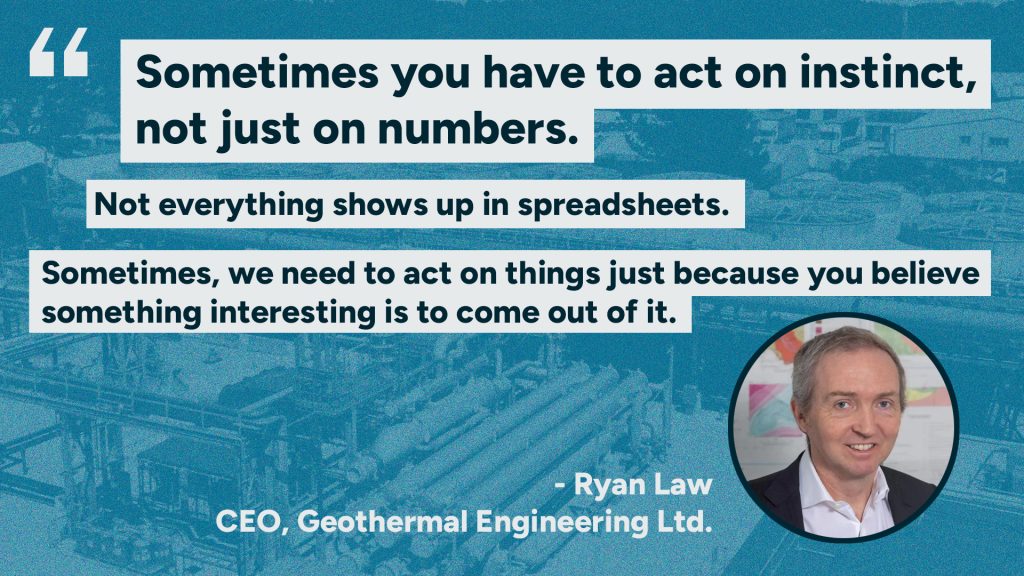
“Sometimes you have to act on instinct, not just on numbers,” Law said. “Many people have done new things that were not in the original business plan. Not everything shows up in spreadsheets. Sometimes, we need to act on things just because you believe something interesting is to come out of it.”
With the United Downs project attracting plenty of attention from the public, politicians, and institutional investors, the deep geothermal sector in the UK is definitely at an upswing at the moment. The critical minerals angle has also resulted in a lot of buy-in, especially considering the increasing lithium prices.
The key right now, as Law points out, is to capitalize on this positive reception and keep the momentum going.
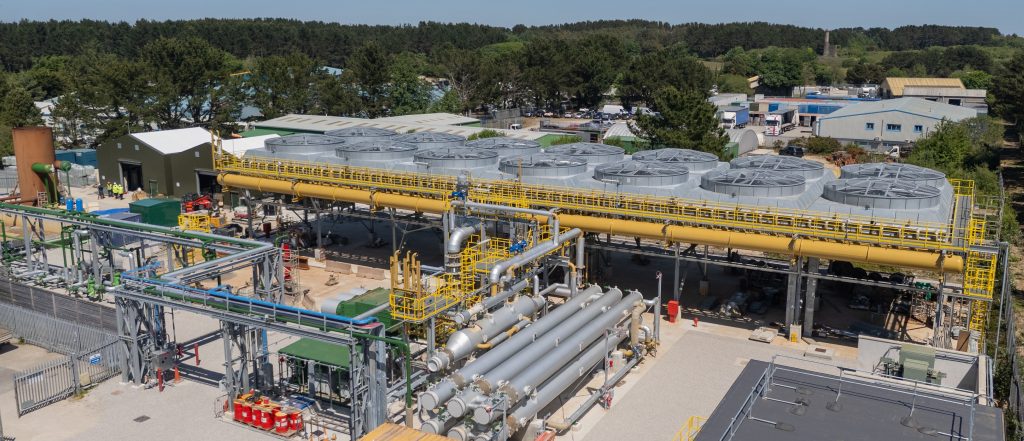 The United Downs geothermal power plant in Cornwall, UK (source: Cornwall Time Lapse)