
(Credits: Far Out / The Bigger Picture)
Mon 16 March 2026 20:03, UK
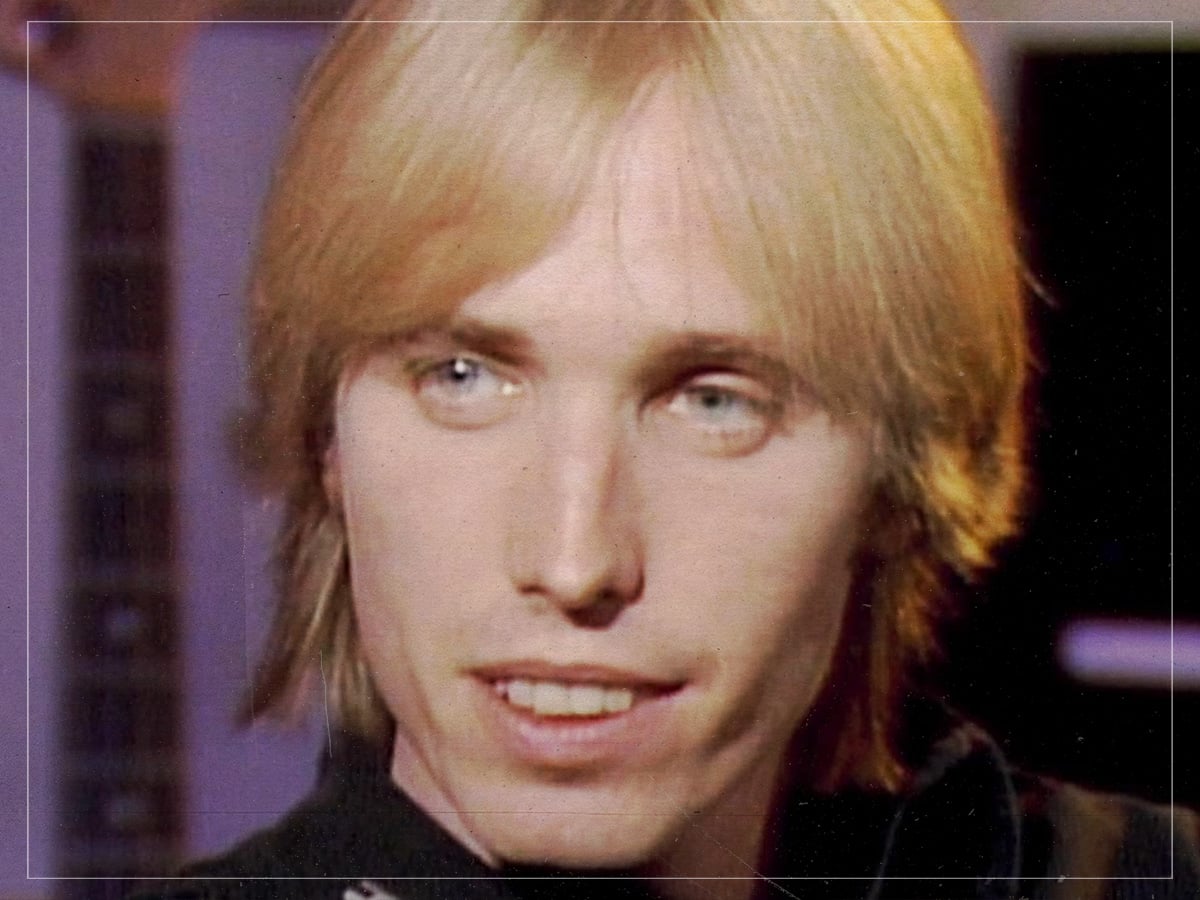
“The energy that came with the British Invasion was the difference,” Tom Petty once said, “these guys brought the guitar to the fore.” That music was the making of him.
There is no such thing as a self-made man. Even those who defy the odds to become respected innovators in their artistic field started out somewhere, inspired by someone and given a chance by someone. In the case of Petty, the golden-haired Florida-born artist, his bright future in music manifested in the late 1950s and early ’60s when he encountered the work of Elvis Presley and, later, The Beatles.
At just ten years old, Petty met Elvis Presley face to face in a defining moment of his childhood. In the summer of 1961, his uncle worked on the set of Presley’s movie Follow That Dream in Ocala and invited him to watch the shoot. Petty was taken aback by the experience and knew from then on that he wanted to be a star.
Just a few months before his death in 2017, Petty accepted an honour from MusiCares. In his speech, Petty noted the debt he owed to The Beatles for keeping the spirit of rock ‘n’ roll alive. He explained that the first wave of rock ‘n’ roll in the 1950s made the American government “very nervous”, especially the Republicans.
Reconciling the revolutionary spirit of the rock ‘n’ roll movement, Petty reckoned, “They put Elvis in the army, they put Chuck Berry in jail,” he said. “Things calmed down for a couple of years, but it was too late; the music had reached England, and they remembered it.” Then came a movement that they couldn’t stop.
 Credit: Alamy
In 1964, when Petty was an impressionable 13-year-old, he saw The Beatles’ first performance on The Ed Sullivan Show. The appearance has since gone down in history as a pivotal moment in the British invasion of the US charts and the beginning of a cultural revolution in the West. The brief performance inspired Petty to form his first teenage rock band. “You get your friends, and you’re a self-contained unit.”
He continued, “It looked like so much fun. It was something I identified with,” he reflected. “I had been a big fan of Elvis. But I really saw in the Beatles that here’s something I could do. I knew I could do it.”
Before joining The Epics, which would morph into Petty’s first notable formative project, Mudcrutch, Petty played with a band called The Sundowners. Remarkably, when he formed the group with a couple of classmates, he had yet to attend his first rock concert. “The first concert I went to was in 1965. I was in this little band, the Sundowners, and the drummer’s mom drove us to this show in Jacksonville, about 75 miles away,” he told Rolling Stone in 2009.
In some parts of the US, rock ‘n’ roll gigs were still relatively scarce in the mid-1960s, leaving fans with long journeys to see the stars. Fortunately, Petty and his bandmates chose a night with an “incredible” lineup of contemporary heroes. “The show opener was The Premiers, who did ‘Farmer John’,” Petty began to list enthusiastically. “Then Del Shannon came out and Lesley Gore, both backed by The Premiers. Then the Shangri-Las rolled out Mary Weiss and Sam the Sham, and The Pharaohs hit the stage with ‘Wooly Bully’ and those turbans.”
The record that changed it all for Tom Petty
Within the first half an hour, Petty had seen some of the contemporary greats, but the best was still yet to come. “There was an intermission, and The Zombies came out and fried my brain,” an awed Petty continued. “The singer, Colin Blunstone, had such an ethereal voice; it was spooky.” At the time, the British invasion band had just released their eponymous debut album and had a significant hit with ‘She’s Not There’.
During their performance, The Zombies played the early single ‘I Want You Back Again’, which became one of Petty’s favourites. After the gig, he tracked down the single and learned how to play it on his first guitar. Many years later, he began to weave the song into his live repertoire with The Heartbreakers and became one of many musicians behind The Zombies’ return to the spotlight.
From that moment on, Petty would always assert that the band changed him with their deeply affecting sound. This was the British “difference” he spoke of. It enlivened his all-American ears, and he wanted more of it. With that in mind, he always ranked ‘She’s Not There’ among his favourite rock ‘n’ roll songs, explaining, “That piano break was over our head at the time, but so right. Colin Blunstone’s voice was a sound I had never heard. I thought if a zombie sang, that’s how he would sound.” That certainly wasn’t what you were going to get “off the Shirelles”.
All the same, following their debut album, The Zombies entered a dry spell, releasing only a scattering of singles through the mid-1960s. They eventually regrouped to record an ambitious follow-up album, Odyssey and Oracle. In 1967, they previewed the album with the lead single ‘Care of Cell 44’, which failed to make much of an impact on either side of the Atlantic.
With very little hope for the album’s commercial performance, The Zombies disbanded to focus on various collaborations and solo projects. Little did they know, but in conjunction with the hit single ‘Time of the Season’, Odyssey and Oracle would receive a warm reception upon its arrival in 1968. Their weirdness had made them stand out in the States. ‘What was this music and what kind of creature bore it’, was a question not only being asked by Petty.
As Blunstone reflected in an interview with Far Out back in 2024, the psychedelic-era masterpiece has grown from strength to strength through the years. It now supports the band’s towering legacy as Rock and Roll Hall of Fame inductees. Not bad considering the album “nearly wasn’t released in America altogether,” according to Blundstone.
Yet, it tied perfectly into the zeitgeist, capturing the Stateside paranoia of the 1960s, impacting the rise of innovative psychedelia riddled with “spooky” meaning. For his immortalised legacy, Blunstone thanks the many artists who kept The Zombies’ music alive through the decades, including Tom Petty, Paul Weller, Elliott Smith, Dave Grohl and Cher.