
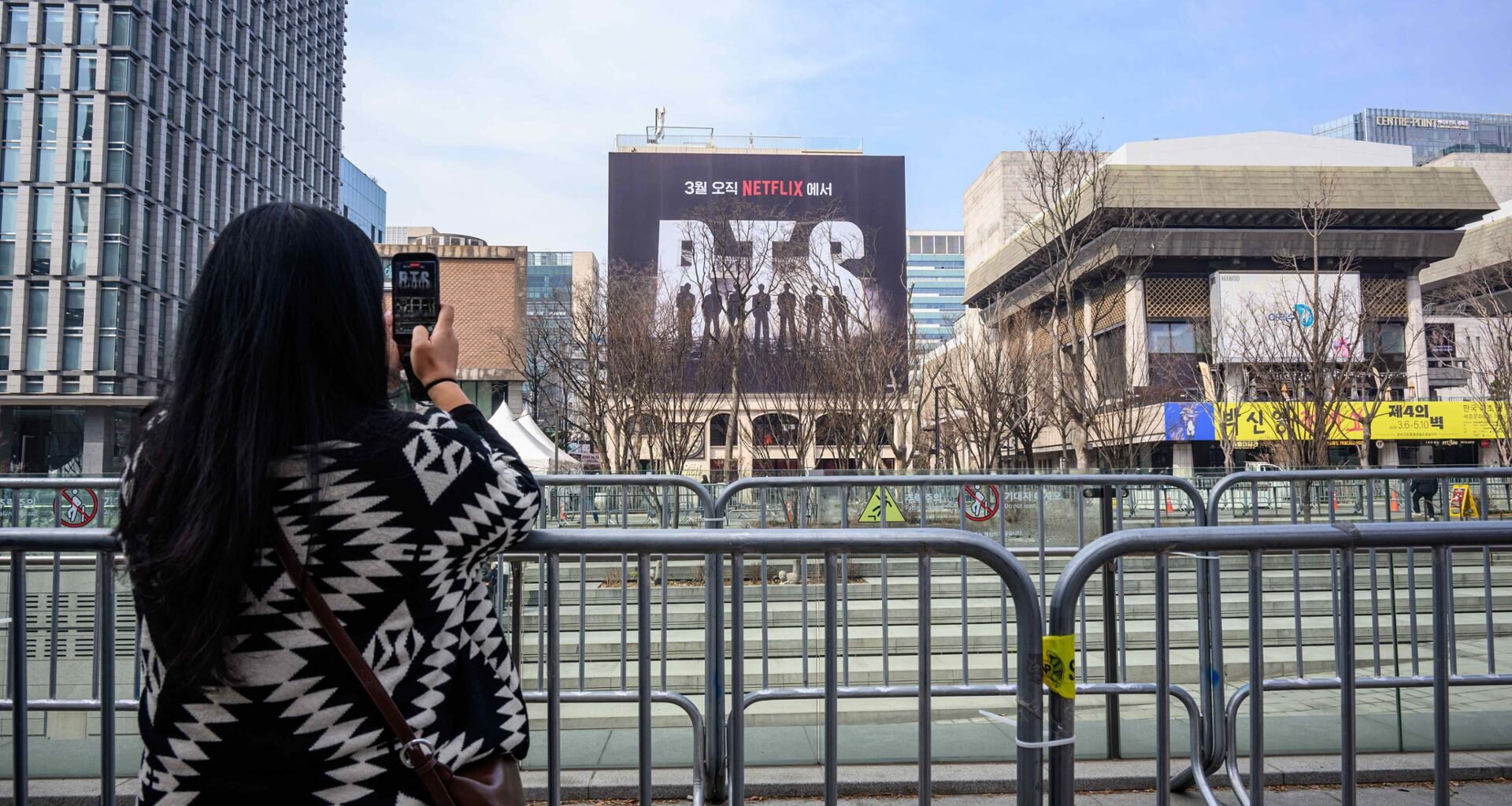
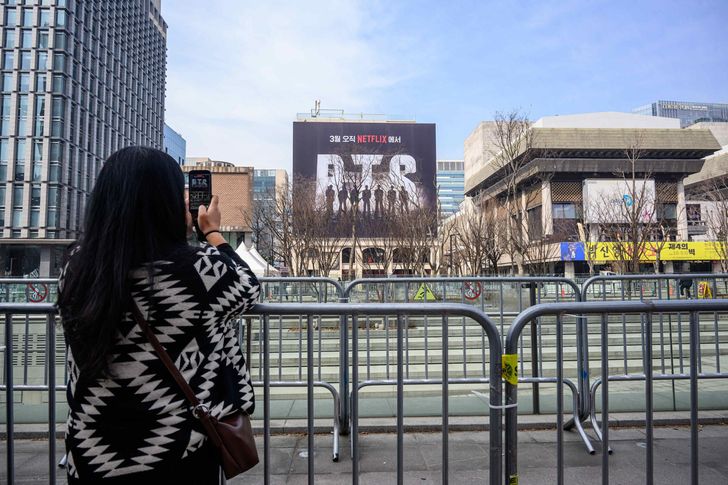
Access is restricted as stage construction is underway at Gwanghwamun Square in Seoul, Monday, five days ahead of BTS’ comeback concert. Korea Times photo by Shim Hyun-chul
As K-pop supergroup BTS prepares to stage a free comeback concert at Seoul’s iconic Gwanghwamun Square on Saturday, the event is drawing attention not only for its scale but also for what it signals about the evolving spatial strategy of K-pop performances.
The show, linked to the group’s upcoming full-length album “Arirang,” is expected to bring hundreds of thousands of visitors into central Seoul. While a limited number of fans will be admitted to designated viewing areas near the main stage, significantly larger crowds are likely to gather along surrounding avenues stretching toward the Sungnye Gate and Cheonggye Stream, turning the entire district into an open-air concert setting.
The event reflects a broader shift in which major K-pop performances are increasingly being staged in prominent urban locations — often as free or publicly accessible spectacles — rather than remaining confined to indoor arenas and domes.
Entertainment agencies and local governments alike have begun using such events to expand the genre’s engagement beyond the core fan base, attract city visitors and boost tourism.
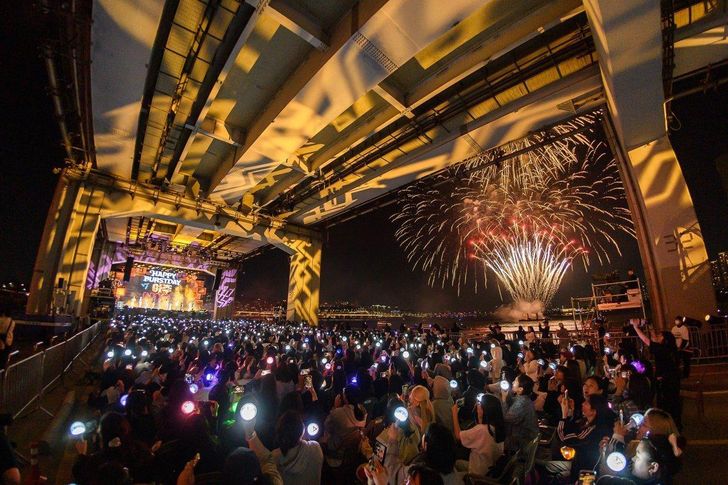
Some 6,000 fans attend SEVENTEEN’s “B-DAY PARTY: BURST Stage @Jamsu Bridge” concert, the first large-scale K-pop show on Jamsu Bridge across Seoul’s Han River, May 25, 2025. Courtesy of Pledis Entertainment
The BTS initiative also marks a continuation of earlier collaborations between the capital and HYBE Labels, the K-pop conglomerate behind the group.
A similar experiment took place in May last year, when boy band SEVENTEEN, under HYBE subsidiary Pledis Entertainment, held its free “B-DAY PARTY : BURST Stage @Jamsu Bridge” concert. About 6,000 seats were installed directly on the bridge, while additional viewing zones at Banpo Han River Park drew tens of thousands of spectators across the waterfront.
The concert, the first of its kind at a Han River Bridge, drew not only devoted SEVENTEEN fans but also nearby residents and casual passersby, many of whom described a stark difference from that of indoor shows.
“People were watching from sidewalks and picnic mats, so the atmosphere felt more like a spring festival than an official concert,” said Park Hyeon-su, an office worker in her 20s who came across the performance during a walk last year.
“Many were also constantly moving around to find a better experience, something concert-goers usually can’t do … It felt like an attempt to get the band’s music beyond the hardcore fans who are used to the culture,” she recalled.
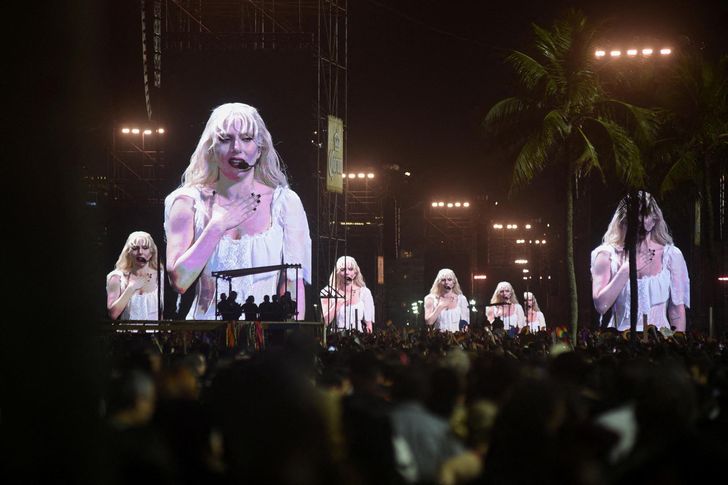
People attend pop star Lady Gaga’s open concert at Copacabana Beach in Rio de Janeiro, May 3, 2025. Reuters-Yonhap
The shift toward outdoor performances in the city mirrors a broader pattern in global pop.
In May last year, pop star Lady Gaga staged a free concert at Copacabana Beach in Rio de Janeiro that drew an estimated 2 million spectators. The show followed Madonna’s 2024 performance at the same location, which attracted roughly 1.6 million people, highlighting how cities have increasingly incorporated public concerts into tourism promotion strategies.
According to industry analysts, while such events may appear to benefit both host cities by boosting tourism and entertainment labels by expanding artistic reach, staging concerts in open urban environments often involves trade-offs between production control and accessibility.
Ticketed indoor stadium tours typically provide engineered acoustics and carefully planned sightlines, while events held outdoors emphasize visibility and scale but require meticulous coordination related to quality management and safety measures related to broader crowd movement.
“In arenas, every seat has a designated name,” said an industry insider who works for a local entertainment public relations company on the condition of anonymity. “This is not the case in an urban outdoors concert, where the surrounding landscape and the passerby also become part of the show.”
“That dynamic may make the event more meaningful, but it also introduces quite a bit of burden for most entertainment agencies. One wrong move can bring out unforeseen consequences,” he added.
City officials say preparations for BTS event Saturday remain focused on ensuring public safety and minimizing disruptions to daily life in the downtown area, as large crowds are expected to continue gathering well beyond the immediate concert perimeter.
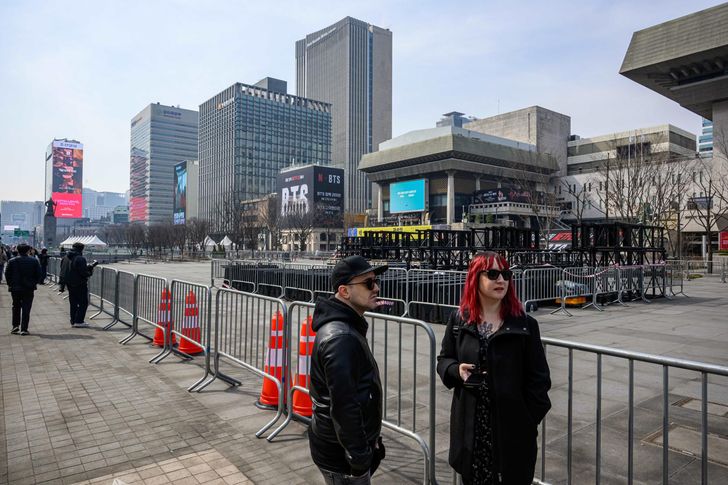
Access is restricted as stage construction is underway at Gwanghwamun Square in Seoul, Monday, five days ahead of BTS’ comeback concert. Korea Times photo by Shim Hyun-chul
Beyond the performance itself, HYBE is also rolling out a series of fan-oriented programs under its “BTS The City Arirang Seoul” project, scheduled to run from March 20 through mid-April.
The initiative will feature themed exhibitions, pop-up retail installations and large-scale media displays at landmark sites including N Seoul Tower and Sungnye Gate.
According to HYBE, such city-integrated programming reflects the company’s will to “intertwine” K-pop experiences with urban cultural life.
“We aim to create opportunities for fans to experience our artists’ content in more immersive ways,” HYBE said through an official release.
“By extending concert-related programs across urban spaces, we hope to strengthen the connection between artists and audiences while contributing to a more vibrant cultural atmosphere in major cities.”