
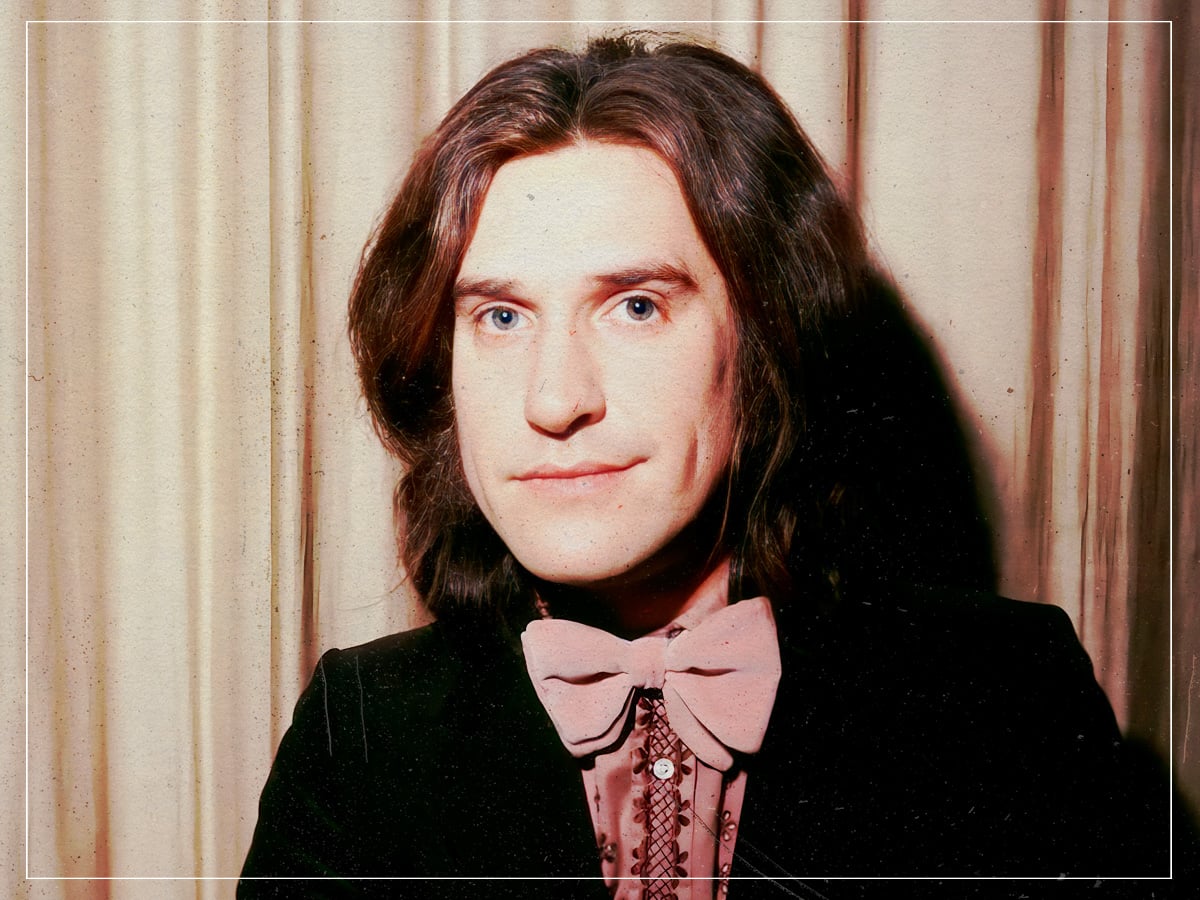
(Credits: Far Out / Alamy)
Tue 17 March 2026 8:54, UK
The Kinks’ 1967 single ‘Waterloo Sunset’ has become emblematic of the band and their affectionate renderings of life in post-war Britain. The song is now generally regarded as one of the great masterpieces of ’60s rock music, even though it seems strangely at odds with the ‘Summer of Love’ in 1967, the year of its release.
If anything, this sense of being an anomaly only adds to its stature as one of the greatest songs ever written by a British artist. Both The Who’s Pete Townshend and Blur’s Damon Albarn have named it among their favourite works, while it regularly appears in various publications’ all-time top 50s.
When he was a student at Croydon Art School, Ray Davies used to cross Waterloo Bridge every day, which is said to have been the inspiration behind the band’s smash hit ‘Waterloo Sunset’. But throughout the years, the meaning of the song has been confused by even the band itself.
The piece apparently came to singer and main songwriter of The Kinks, Ray Davies, in a dream about a sunset. He toyed with the idea of calling it ‘Liverpool Sunset’ as a homage to The Beatles and other early Merseybeat groups, but settled on Waterloo because of the evocative images of his youth conjured by the famous area of London’s South Bank.
Amid the scenery of Davies’ lonely wanderings around the area, two characters suddenly appear in the song’s second verse: “Terry meets Julie, at Waterloo station, every Friday night”.
The rest of the lyrics never explain who Terry and Julie are, and how the song’s narrator knows their names. They simply add later in the third verse: “But Terry and Julie, cross over the river, where they feel safe and sound”. So, it’s time for some digging. Who are the real Terry and Julie of the song?
 (Credits: Far Out / Public Domain)A celebrity couple avoiding prying eyes?
Around the time The Kinks released ‘Waterloo Sunset’, Davies was quite explicit about the identities of these two characters in the piece. “If you look at the song as a kind of film,” he suggested, “I suppose Terry would be Terence Stamp, and Julie would be Julie Christie.”
The track certainly has a cinematic quality in its atmospherically visual depictions of South London life. And it would have made perfect sense at the time to include the actors Terence Stamp and Julie Christie in the song.
Stamp and Christie worked together on the 1967 movie adaptation of Thomas Hardy’s novel Far from the Madding Crowd, playing the two romantic lead roles. During production, they became romantically involved in real life, catching the attention of tabloid gossip columns.
They were two of the hottest properties in British cinema at the time and icons of the Swinging London scene, emerging at the time, which coalesced around circles of young music and film stars with whom The Kinks would have been familiar. This is maybe why the two characters felt “safe and sound” crossing the river in ‘Waterloo Sunset’, heading for Carnaby Street where they could hang out with other young stars and be sheltered from press intrusion.
Yet much later, Davies completely contradicted himself. In a 2004 interview with the Independent, when asked to confirm that the identities of Terry and Julie were indeed Stamp and Christie, he replied, “No, Terry and Julie were real people. I couldn’t write for stars.”
Could it be that Davies in 1967 and Davies in 2004 are both right? Perhaps the characters Terry and Julie are meant to be just an ordinary couple in the cinematic landscape he’s created for the song. And these characters just happen to be played by actors Terence Stamp and Julie Christie.
The songwriter would probably tell us it doesn’t matter. As long as he gazes on Waterloo sunset, he is in paradise.
Even with its ambiguous meaning, the song is still deemed one of their most popular releases and was even chosen by Ray Davies as the song performed at the closing of the 2012 London Olympic Games. It has since remained an integral part of not only Davies’ and The Kinks’ legacy, but the tapestry of London’s culture.