
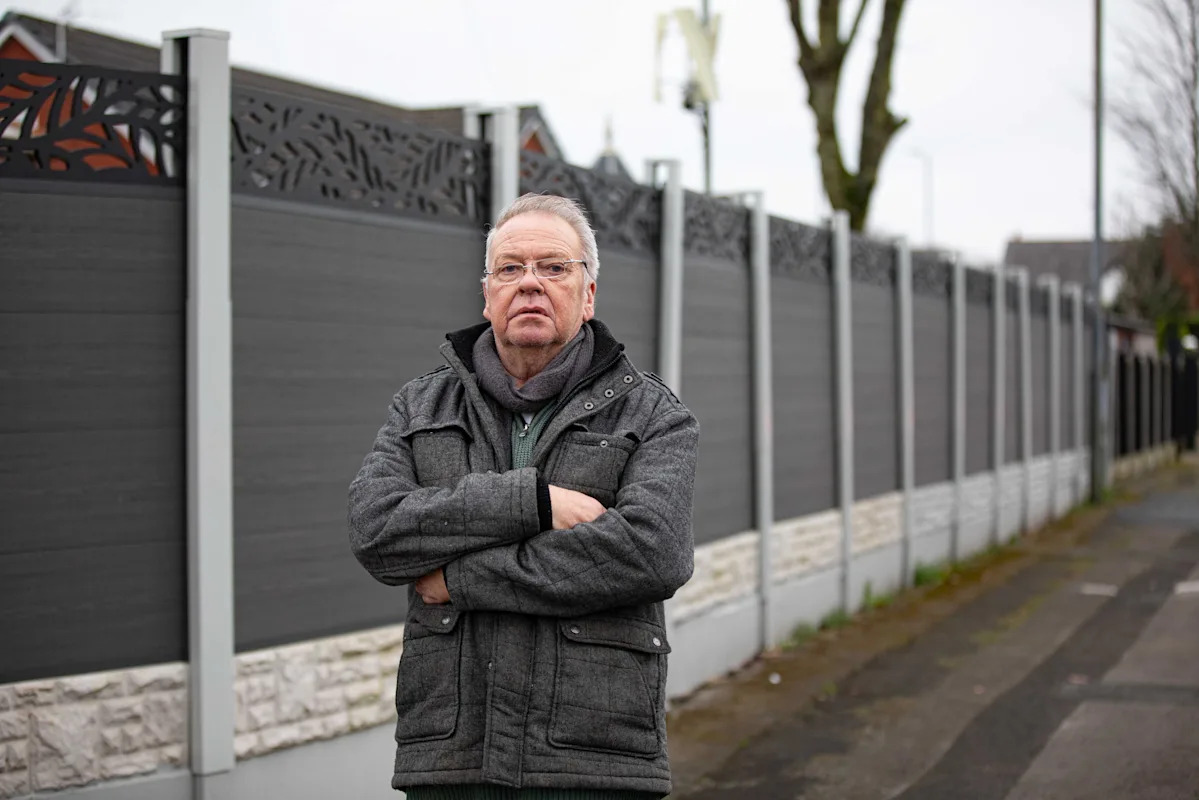
A retired couple have been told to take down a seven-foot high fence they built to stop neighbours from looking into their garden.
David and Denise Hopwood, aged 67 and 66, erected the 25 metre long, grey composite fence around their home in Bolton, Greater Manchester.
They said it replaced a nine-foot-high hedge that was costing them £800 a year to look after, and was becoming more difficult to maintain due to their age and disabilities.
However, after a neighbour complained about the fence’s height, the Hopwoods were forced to seek retrospective planning permission.
Last year they were told permission had been refused because the fence was out of touch with the “character and appearance of the surrounding area”.
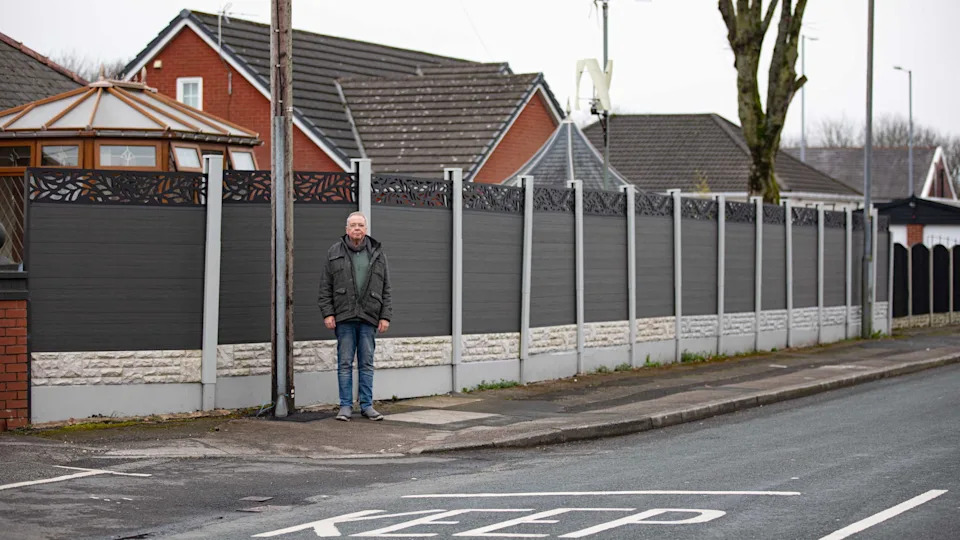
David Hopwood says it would be ‘terrible’ if he was handed an enforcement notice to take the fence down.
(SWNS)
The couple appealed the decision, but this was rejected by the council, who last month sent an inspector to the address, and this week shared a report listing five reasons why the appeal was turned down.
“We both have arthritis and the hedge was out of control, we weren’t able to look after it,” David said. “I feel we have been hard done by saying it doesn’t fit with the street scene, there isn’t one size that fits all here.
“They seem to be focused on the colour and the type but there is a right mix already on the street… There is a jet black one across the road, a number of brick ones, I feel like we have been picked on.”
The council report said the 2.1m-high fence, positioned at the back edge of the pavement, is “very prominent” when travelling along Plodder Lane. It also found the fence to be “at odds with the open frontages, low walls and hedgerows of the dwellings opposite”.
The couple say they have yet to receive an enforcement notice, but said it would be “terrible” if they were forced to pull the fence down.
How high can my neighbour build their fence?
In most parts of England, fences next to a highway or footpath are usually limited to a maximum height of one metre without planning permission.
Elsewhere, including between neighbouring gardens, fences can normally be up to two metres (around 6ft 6in) high before planning permission is required.
However, there are exceptions: local planning authorities can impose restrictions in conservation areas or where developments have specific planning conditions attached. If land levels differ between properties, height is usually measured from the ground level on the higher side. Disputes often arise where a fence replaces a hedge or wall, as different rules can apply.
If a fence exceeds permitted height limits, the council can request a retrospective application or enforcement action, although this is typically triggered by complaints.
Which side of the fence am I responsible for in the UK?
There is no automatic rule that says homeowners are responsible for the fence on the left- or right-hand side of their property.
Responsibility depends on title deeds or property plans, which may show boundary ownership using “T” marks.
There is no automatic rule that says homeowners are responsible for the fence on the left or right-hand side of their property.
(Catherine Falls Commercial via Getty Images)
If this is unclear, neighbours are generally expected to reach an agreement between themselves.
There is no legal obligation to erect or maintain a boundary fence unless stated in the deeds, which is why disagreements over maintenance, repairs or replacement costs are common.
If agreement cannot be reached, mediation is often recommended before formal legal action, as boundary disputes can become lengthy and expensive for both sides.