
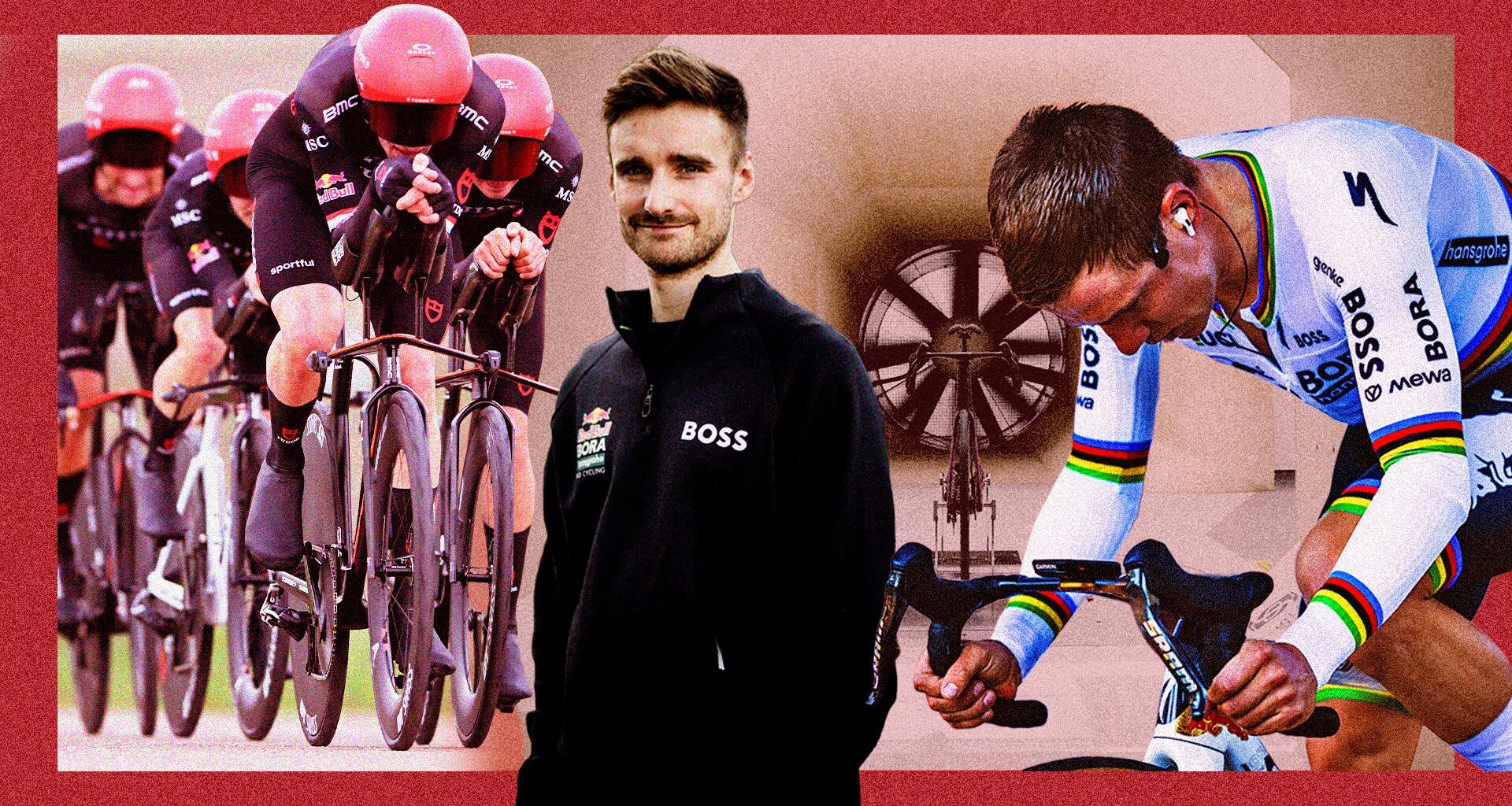
It’s the race behind the race, a secretive scientific battle between the richest and most technologically advanced teams in professional cycling.
Suffering on the road remains a core part of cycling, but training, nutrition and performance physiology have advanced massively in the last three decades, and especially the last ten years.
As cycling performance nears its physiological limit, teams are looking to push the scientific boundaries of the sport. Behind the scenes, scientists, engineers and PhD researchers are working in wind tunnels and laboratories, aided by computational fluid dynamics (CFD) and artificial intelligence (AI), as they hunt for new marginal – or even maximal – gains.
Article continues below
You may like
What to read next
Visma-Lease a Bike also don’t shy away from innovation and reportedly have a new ‘secret advantage’ ready for the 2026 season. Lease a Bike owner Pon also owns bike sponsor Cervélo and high-end Italian shoe brand Nimbl, which now provides the team with race clothing developed using thermal mapping and aerodynamic modelling.

UAE Team Emirates-XRG in action during the team time trial at this year’s Paris-Nice (Image credit: David Pintens/Getty Images)
Why innovation can be worth more than a star rider
Professional cycling’s super teams have the financial backing and sponsors to develop their performance arm while simultaneously paying some of the sport’s biggest names to compete for Grand Tour titles. But what about those teams further down the pecking order?
Tudor Pro Cycling, a ProTeam since only 2023, have opted to invest in innovation rather than solely bulking out their roster with extra team leaders.
At their recent pre-season media day in Spain, new signing Stefan Küng praised the Swiss team’s focus on performance. It immediately sparked Cyclingnews’ interest in what Tudor are secretly doing off the bike and in the laboratory.
Their Head of Performance, Ricardo Scheidecker, confirmed to Cyclingnews that the Swiss team has a group of scientists and researchers hunting down the next potential marginal gains via applied science. They are known as the Innovation Team.
Long-term financial support from the Tudor watch brand, a Rolex sister company, provides the team with the resources to make immediate performance and technological improvements while also developing a long-term, strategic approach. Few other teams in professional cycling have the same resources and vision.
They prioritised long-term scientific improvement, which can benefit everyone in the team and inspire an innovative culture, ahead of signing a rider who can score 1,000 UCI ranking points per season. Being one of the most scientifically advanced teams in the sport also helps attract the next generation of young talent.
“We are quite discreet about this. We don’t put out photographs of riders in a [wind] tunnel in press releases, that’s not our style,” Scheidecker told Cyclingnews, in what seems like a dig at rivals Red Bull-Bora-Hansgrohe and their Particle Image Velocimetry test in the darkness of the Catesby tunnel.
“Innovation is about being ahead of the game; it’s a non-stop process. To lead the way, you need very competent people, competent technical sponsors, and a synergy to put it all together so we can help the riders go as fast as they can.”
If Julian Alaphilippe is Tudor’s team leader and cycling’s James Bond, then Scheidecker is M, the Head of Performance working for team owner Fabian Cancellara. Kurt Bergin-Taylor, Tudor’s Head of Innovation, is Q, the scientist in charge of the research, which is then applied to cycling, like the secret devices or sports car given to James Bond.
Bergin-Taylor, who is from near Manchester, England, is part of the team’s senior management group and has embraced the Swiss team’s aptitude and motto of ‘Swiss, Human, Performance.’
He studied Nutrition and Physiology at Loughborough University and has recently completed a PhD. He cut his teeth with Bigham and the British ‘boys from Derbados’ track team that used innovative physiology and technology to win World Cup events.
Bergin-Taylor worked with the Canadian track team before the Tokyo Olympics, providing the science that helped win gold and bronze medals and elevated the men’s team pursuit squad to fifth place. After the COVID-19 pandemic, he worked as a coach for Team DSM, but then in 2023 he jumped at the chance for a more central, innovation and applied science role at Tudor.
“The team really allows innovation to be a key theme of our philosophy. It gives us a big strategic direction, that is perhaps quite different to other teams,” Bergin-Taylor told Cyclingnews during an exclusive interview.
“A lot of teams have to think about winning now, but we’re really fortunate at Tudor. We have a long-term vision and believe that we’ll gain a competitive advantage on our competitors over the long-term.
“With Tudor, we talked about build or buy, and they really want to build their team for the long-term, which says ‘This is us’.”
Tudor have an office near the Silverstone wind tunnel, and their innovation team is packed with scientists, not former pro riders, including David Ogg, who worked for skinsuit expert Vorteq in the past. Another engineer is mentored by Neil Ashton, the British engineer who was part of Team GB’s ‘secret squirrel club’ – the technical brains behind the nation’s unparalleled track cycling success in recent decades. Ashton is now a renowned computational engineer and works for Nvidia.
“Over the last two years and particularly in the last year, we’ve built out the innovation team,” Bergin-Taylor said.
“There are now seven of us: three full-time engineers, an industrial designer, a data scientist and PhD students too. We really work with our partners, making better products based on our demands. We also make a lot of internal tools and systems, and we have our own intellectual property.”
One engineer in the Innovation Team focuses on applying the results of their work out on the road with the team. Jonny Wale, who was also part of the Derby-based track squad and the Huub-WattBike team, has a similar role at Red Bull-Bora-Hansgrohe.

One of Tudor Pro Cycling’s key riders, Julian Alaphilippe, challenging at Tirreno-Adriatico (Image credit: Tim de Waele/Getty Images)
Tudor has already benefitted from Bergin-Taylor’s applied science, just like Remco Evenepoel and Red Bull-Bora-Hansgrohe are starting to benefit from Bigham’s talents.
Tudor’s work with Oakley in late 2024, to design new road racing and time trial helmets, was the innovation team’s first key project.
Most bike and equipment brands carry out their own research and development and then offer their products and sponsorship cash to teams in exchange for visibility.
At Tudor, R&D is a two-way street, with the team happy to cover part of the costs and push the science and development. The equipment is perhaps designed firstly for professional performance needs, with the brands benefiting from any trickle-down technology for their wider product range.
“Both the team and Oakley took responsibility for developing the helmets, which I think is quite unique in pro cycling, but it’s what we do with all our partners now,” Bergin-Taylor said.
“Rather than simply asking Oakley to make us a better helmet and waiting for them to deliver it, we offered our internal resources on aerodynamics, on wind tunnel testing, CFD and computer parametric design. Oakley brought their expertise in helmet design and manufacturing. Together, we made a better product which was more aligned to our demands and in a shorter timeline. We developed the three helmets we use now in just seven months. We’re super happy with the results, and some independent testing has validated our work.”
Indeed, a Cyclingnews Labs test showed that the Oakley Velo Mach helmet saved at least seven watts compared to other less aerodynamic road race helmets in the wind tunnel.
During 2025, the Tudor Innovation Team worked intensely with BMC to design a new innovative time trial bike.
Escape Collective’s Ronan McLaughlin recently published an insider look at the bike’s developments with Stefan Küng racing on it for the first time at the early-season Challenge Mallorca team time trial. More Tudor riders will use the bike in the months ahead, with Tudor hoping to see the combined benefits as every time trial goes by, and especially in the team time trial stage at the Tour de France.
“A normal timeline for bike development is maybe four years, but we were able to do it in just over 12 months, even with a UCI rule change during the process,” Bergin-Taylor said with pride.
Tudor have other applied science projects underway, with wheel sponsor DT Swiss, tyre sponsor Schwalbe and saddle sponsor Selle Italia. All to provide scientific advantages for the riders.
For the 2026 season, Tudor changed race clothing partner, with Sportful replacing Assos, who in turn replaced Rapha at EF Education-EasyPost. Sportful and Tudor are carrying out combined research and development as skinsuits become ever more personal and weather-dependent.
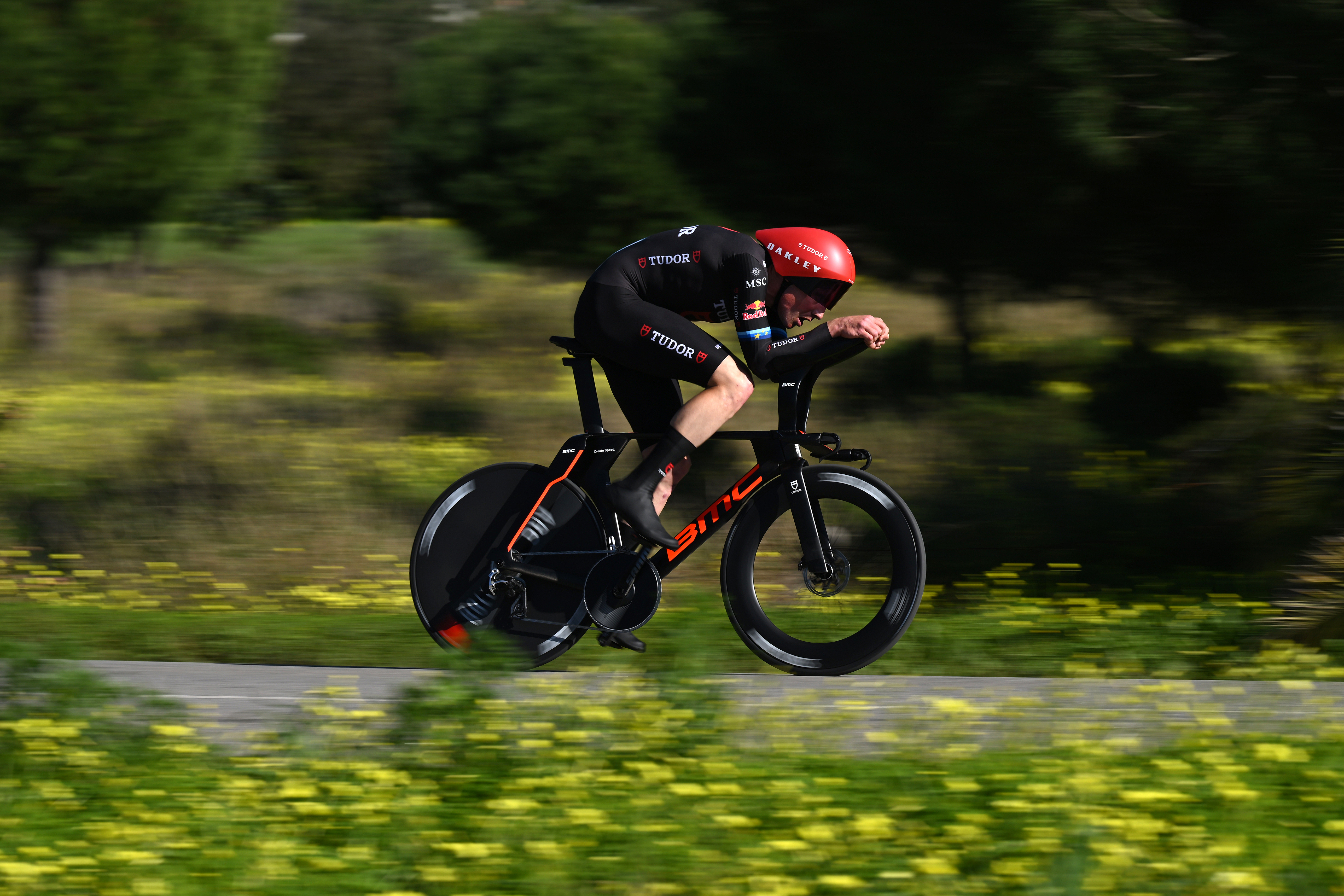
Stefan Küng in full flight during an ITT at the Volta ao Algarve, riding the same innovative time trial bike (Image credit: Dario Belingheri/Getty Images)
Where will the science take cycling next?
Tudor is a ProTeam in 2026 but intends to grow, improve and score enough UCI ranking points to secure WorldTour status in 2029, when the next team licences are awarded.
They hope the long-term view of their innovation strategy will help them to achieve this major goal.
“We have staff who work on innovation for what we call ‘tomorrow’, working on the products and science for the next 12 months, with the information, knowledge and tools we have now. We also have staff who work on three to five-year projects, including PhD students and their professors,” Bergin-Taylor said.
“If you don’t do that, you’re not going to crack the really complex stuff. Some of the questions we’re asking and performance aspects we’re looking at are going to take a lot of research and understanding. They take time and investment, but once we have done the hard work, we can hopefully take a big jump in performance, not just small incremental gains.”
Bigham applies the same research philosophy at Red Bull-Bora-Hansgrohe. He loves to ask questions based on his past as an elite track rider and Hour Record holder, and is curious about how science and technology are used in other sports.
“The fun I enjoy is in unearthing those new gems,” Bigham said, admitting he is fascinated by the discoveries of Graeme Obree, one of the sport’s true mavericks and innovators.
“I’m really interested in understanding a piece of knowledge that maybe nobody else knows, and how I can use that to win more bike races. You’ve got to research it. If you don’t, someone else will, and you won’t be ahead.”
Performance nutrition and increased carbohydrate digestion have transformed the sport in recent years, fueling more aggressive racing during the Tadej Pogacar era. However, riders have reached the limit of how many carbohydrates they can ingest and assimilate. Training techniques and other performance improvements have also plateaued.
Innovative applied science, especially around improving aerodynamics and thermal dynamics, appears to offer the next improvement in performance. Whoever develops them first will have an advantage on the road.
“To take the next step, you really have to take everything as a whole system, but then focus on rider individualisation,” Bergin-Taylor suggested.
“The peloton is going faster and faster, perhaps even 10% faster. But that’s not because they’re 10 per cent fitter, much of that is because of aerodynamic reduction.
“The rider is now the biggest unknown and creates about 80 per cent of the aerodynamic drag. Reducing that is going to get you the biggest gains, and that means clothing is really important and a fascinating area to develop.
“The flow structures of road racing, even in time trials, are super complicated, they’re really hard to understand and so to model. It’s hard for everyone in the sport, but at Tudor, we tell each other that if we crack it, we’ll have even more of an advantage.”
Every rider’s clothing will be optimised based on each race and their role in it, balancing aerodynamics with heat dissipation.
“In the long term, I think we’ll see fully individualised aerodynamic development, even for individual races, when the environmental demands are different but have a big impact. That’s where I think the frontier of cycling development will be,” Bergin-Taylor predicted.
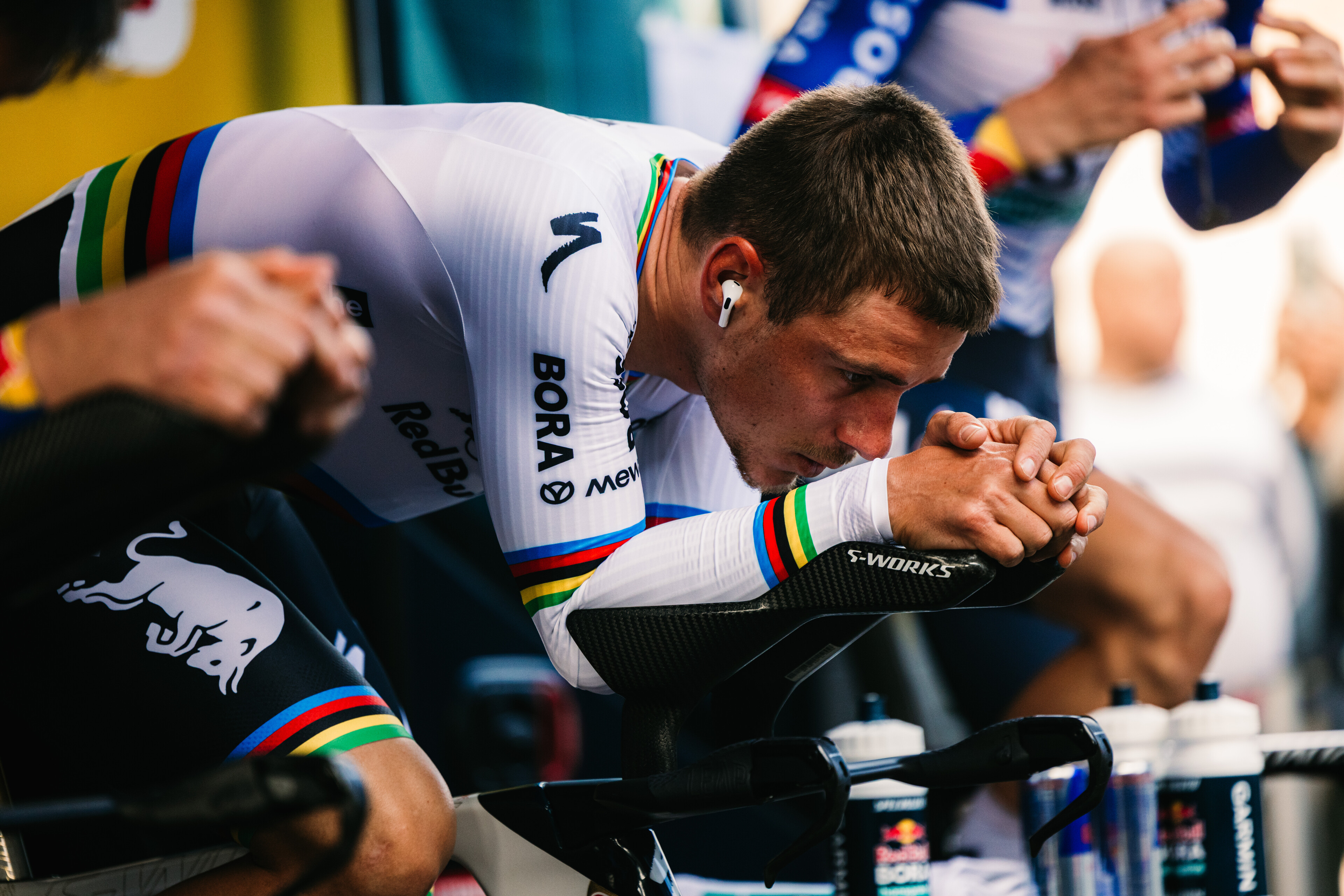
Bigham is already enjoying working alongside multiple-time TT world champion Remco Evenepoel as they search for technical advancements (Image credit: Maximilian Fries/Red Bull Content Pool)
Bigham sees the same kind of individualisation offering the improvements of the future. Thanks to the Red Bull Formula 1 team, he already has access to an app that predicts the speed profile and power distribution of a race, indicating the best wheel, tyre, and chainring/cassette combination to use based on the team’s race strategy.
“The question everyone looking at the science of pro cycling is trying to answer is how do we predict what’s going to happen in a race,” Bigham admitted.
“Then we can decide what the optimal setup is for this rider to do the optimal strategy for those conditions, against whoever we’re racing against.”
Bigham revealed how he is enjoying working with Remco Evenepoel, due to the Belgian’s open-minded, progressive and motivated attitude.
Evenepoel’s performance at the UAE Tour was perhaps a surprise step backwards, but he won the time trial and will likely come back stronger after an altitude training camp.
“When you’re testing with him in the wind tunnel, he’s always willing to try new things. Sometimes I encounter riders who are completely the opposite, which is frustrating. As an engineer, you’re always trying to push the boundaries a little, and Remco pulls you in the right direction,” Bigham recently told Belgian newspaper Het Nieuwsblad.
Bigham, like Bergin-Taylor and everyone in the Tudor Innovation Team, gets a kick from applying their scientific knowledge and curiosity to professional cycling.
“I simply try to make riders go faster without them having to put in any extra effort,” said Bigham, explaining pro cycling’s innovation race in just a few words.