
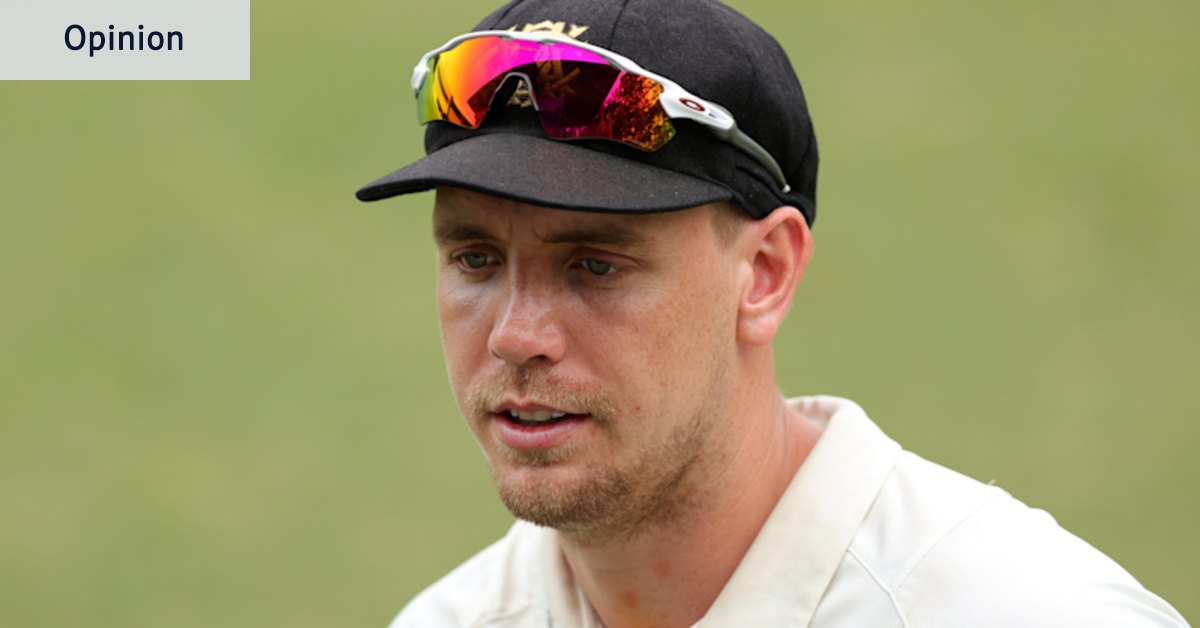
Before I can reject those parameters, Green is walking over – visibly annoyed at having to be here.
I start with a Dorothy Dixer: How pleasing is it to be back in the runs?
“Yeah, it’s obviously a great feeling,” he says. “We’ve had a really good start the first three days, so hopefully we can get a win tomorrow.”
I gently ask how the preceding period, in which he struggled for runs, has been. It must have been different to what he’s used to?
“I’m not answering that question,” Green spits back. “Next question.”
Recognising that continuing the interview will be futile, I decide to end it after just 20 seconds. If he does not want to engage, I tell Green, it’s no stress.
“Waste of time,” Green mutters, as he storms off in a huff. I tell him that our versions of a waste of time are different, given I’ve waited all afternoon to speak to him after being invited out to western Sydney.
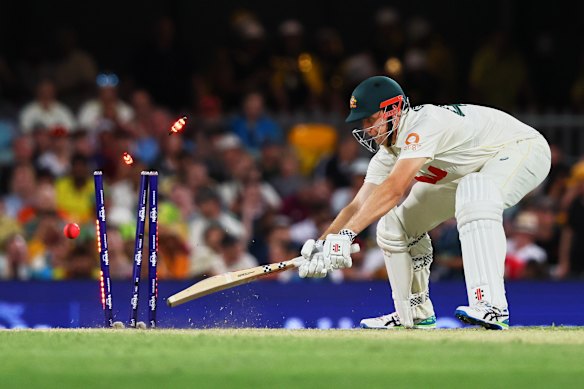
Cameron Green is bowled by Brydon Carse at the Gabba. Credit: AP
To my surprise, Green walks back and, clearly emotional, asks why I’m out to get him. Casson comes over to apologise as Green strides towards the car park.
Green, a cricketer who has done countless interviews, appeared shocked to have been asked such a question. Fronting journalists isn’t always comfortable, and Green is entitled to say as little or as much as he likes. But he had the opportunity to talk about his mental approach, discuss any tweaks he had made to his batting, or offer an insight into why he might have turned a corner, having broken his century drought.
That’s before even getting to the more thorny – and newsworthy – topics. Perhaps a few more questions about the game at hand would have helped progress the conversation, but two minutes isn’t enough time for a proper interview.
Cricketers sometimes get stuck in their own little bubble, forgetting the media is a gateway to the fans.
Green’s outburst spoke volumes, and suggested that a lack of runs this season has indeed taken a mental toll. Experts and fans have debated whether Green still deserves his place in Australia’s Test and T20 sides, and it is clearly a sensitive subject.
Usually one of the most affable and well-spoken players in the Test set-up, Green’s behaviour felt out of character. Those who witnessed it said they were shocked. Cricket Australia was made aware of the exchange on Tuesday.
Nor am I a part-time cricket reporter, having toured the Caribbean with the Australian team last year and covered every Ashes Test during the summer.
Perhaps the pressure of expectation is getting to Green, a player Greg Chappell once described as Australia’s best batting talent since Ricky Ponting. His Test average is 32.75 from 37 matches since debuting in 2020. In Australia, that average drops to 28.96. His last Test hundred came more than two years ago.
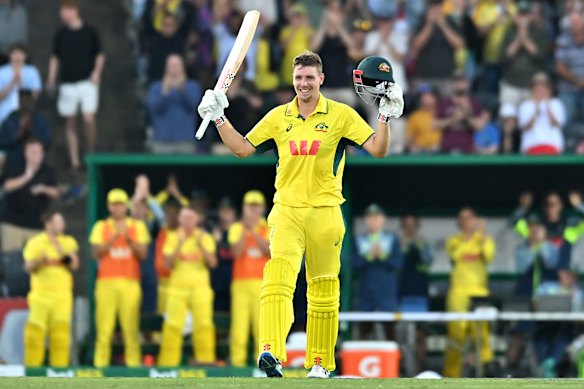
Cameron Green celebrates a century in a one-dayer against South Africa in 2025. Credit: Getty Images
Even Chappell is worried by Green’s lack of runs.
“I’m alarmed at where he’s heading, particularly with his batting,” Chappell said on Tuesday on SEN. “I think the time he’s had away from bowling has also impacted his batting. He can still be one of the great all-rounders of the game because he has the talent, but whether he’s got the decision-making and the mental skills to go with it, whether he’s getting the best advice on where he’s going [I’m not sure].
“There are very few balls he can score off with the method that he’s using at the moment.”
The realisation he may no longer be a lock for the Australian side would be difficult to navigate, but the best players front up, whether they are going well or not. Rugby league star Nathan Cleary is a perfect example.
Next week, Green begins a stint in the Indian Premier League as the highest-paid international player in the tournament’s history. His $4.17 million salary does not reflect his run output over the past three months, but he has every chance to reverse that. Everyone knows he is a special player.
But if he cannot handle a simple question about his form, how will Green handle the big stage?
In the IPL, players are treated like rock stars and are barely required to do any media.
Loading
Australian star Ellyse Perry summed up the dynamic of athlete and media well when speaking last year about the growth of the women’s game.
“While criticism and being held to account isn’t always a pleasant thing, equally it’s a very positive thing for the direction of the game and that it’s being taken really seriously,” Perry told the BBC.
“People expect more [now we are paid more] and all we’ve wanted is to be taken seriously and to be respected … so with that comes pressure to perform.”
If Green expects journalists to avoid or tiptoe around the big issues, he doesn’t understand our role. Perhaps questions need to be asked about who is advising Green.
At the same time, Australian cricket may need to put an arm around the 26-year-old, particularly if he is dropped for Australia’s next Test series against Bangladesh in August.
Green’s next press conference will be interesting. Rest assured, there will be more than one reporter there.