
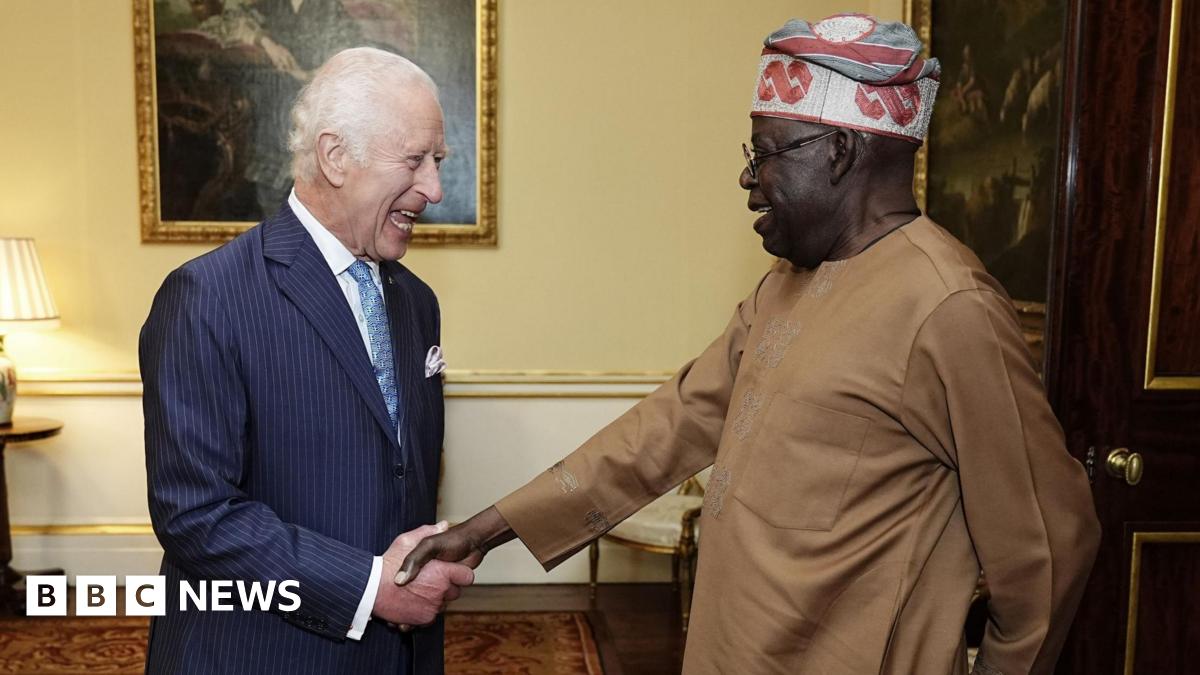
“This state visit is about turning a historic relationship into a modern economic partnership – transforming trust into opportunity,” said Nigeria’s government spokesman, Mohammed Idris.
“Nigeria’s economic reforms are unlocking the potential of Africa’s largest consumer market. The United Kingdom is a natural partner in what comes next.
“This visit marks the next step in deepening co-operation across trade, finance and defence,” said Idris.
The Nigerian visitors, who arrived in the UK on Tuesday, will be given the ceremonial grandeur of a royal welcome on Wednesday, with a carriage procession and then a military parade on the manicured lawns inside Windsor Castle.
There will be exchanges of gifts and displays of items related to Nigeria that are kept in the Royal Collection, before an opulent state banquet in St George’s Hall.
President Tinubu and Mrs Tinubu will lay a wreath of flowers on the tomb of the late Queen Elizabeth II, in St George’s Chapel.
They will also attend an interfaith event, designed to build bridges between religions.
The president is a Muslim and as this is the month of fasting during Ramadan there won’t be the usual lunch hosted by the King for the visiting dignitaries.
His wife Oluremi is a Christian who is an ordained pastor.
But there are religious tensions. In Nigeria’s Borno state this week at least 23 people were killed and 108 injured by a series of suspected suicide bombings, blamed on Islamist militants from the Boko Haram group.
President Tinubu condemned the “evil-minded” terror groups – and MPs in the UK have called for the protection of freedom of worship in Nigeria.
The visit takes place against the backdrop of war in the Middle East as well as the conflict in Ukraine – with Ukraine’s President Zelensky meeting King Charles on Tuesday.
The banquet will also see the King’s first speech since the arrest of his brother Andrew Mountbatten-Windsor.