
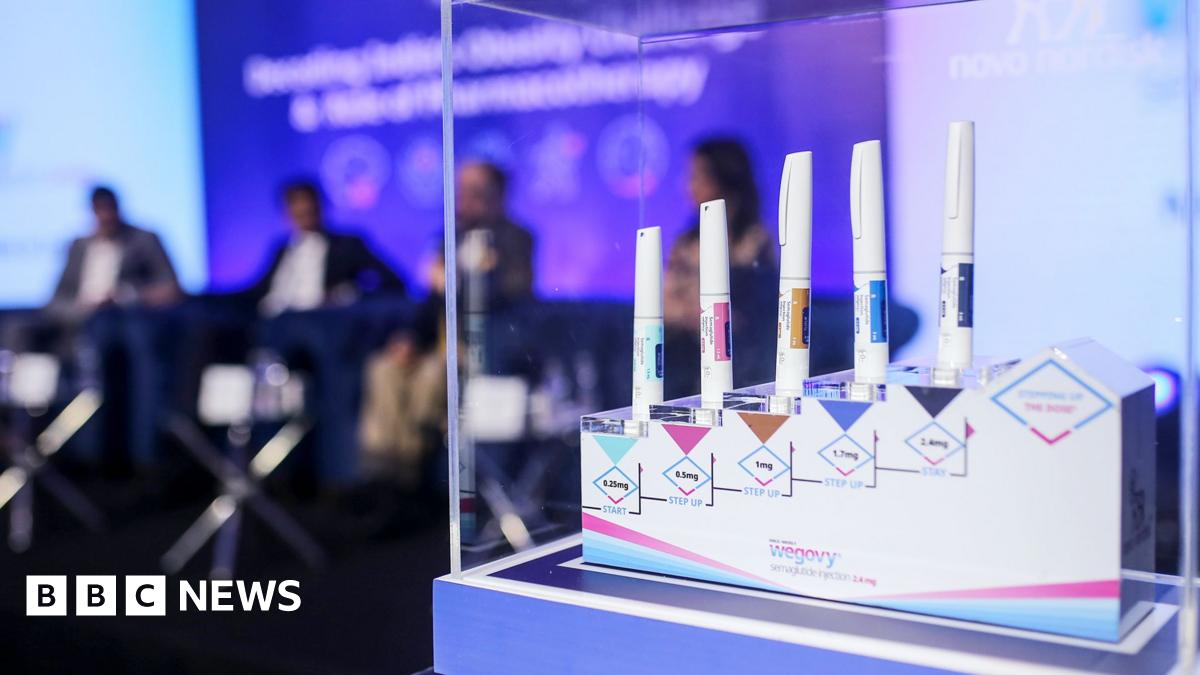
Several Indian drugmakers are already preparing to make the move. According to Sheetal Sapale, vice-president at research firm Pharmarack, major firms including Cipla, Sun Pharma, Dr Reddy’s Laboratories, Biocon, Natco, Zydus and Mankind Pharma are readying branded generics, with many more likely to follow. Prices are expected to fall sharply.
Current monthly treatment costs are steep: Ozempic typically sells for 8,800 – 11,000 rupees ($95-$119; £71-£89), while Wegovy can cost 10,000-16,000 rupees ($108-$173). Sapale expects generic competition to push that down to roughly 3,000-5,000 rupees ($36-54) per month.
Lower prices could transform the market.
India’s anti-obesity drug sector – covering both injectables and oral medicines – has already grown rapidly, from roughly $16m in 2021 to close to $100m, according to Pharmarack. Demand accelerated after the launch of Rybelsus in 2022, the first oral version of semaglutide.
The surge reflects a broader health shift.
India already has more than 77 million people with type-2 diabetes and one of the world’s largest populations of overweight adults. Urban lifestyles, carbohydrate-heavy diets and sedentary habits have helped drive both conditions.
For doctors, cheaper GLP-1 drugs could soon add a powerful new tool to treat them.
Weight-loss drugs are also moving beyond endocrinology clinics. Cardiologists use them to help patients shed weight before procedures such as angioplasty, orthopaedic surgeons to ease stress on joints before knee surgery, and chest physicians to treat conditions such as obstructive sleep apnoea.
Muffazal Lakdawala, a Mumbai-based bariatric surgeon, says these drugs could dramatically expand treatment for India’s large population of patients with diabetes and obesity.
Until recently, he notes, access was limited: injectable GLP-1 drugs were expensive and difficult to obtain, while the oral drug Rybelsus was the only widely available option.
“It is great that these will become cheaper so that more of the diabetic and obese Indian population can access them,” he says.
But he adds a warning: “The quality of the drugs being made here must be very tightly regulated.”