
(Credits: Raph Pour-Hashemi)
Wed 18 March 2026 5:00, UK
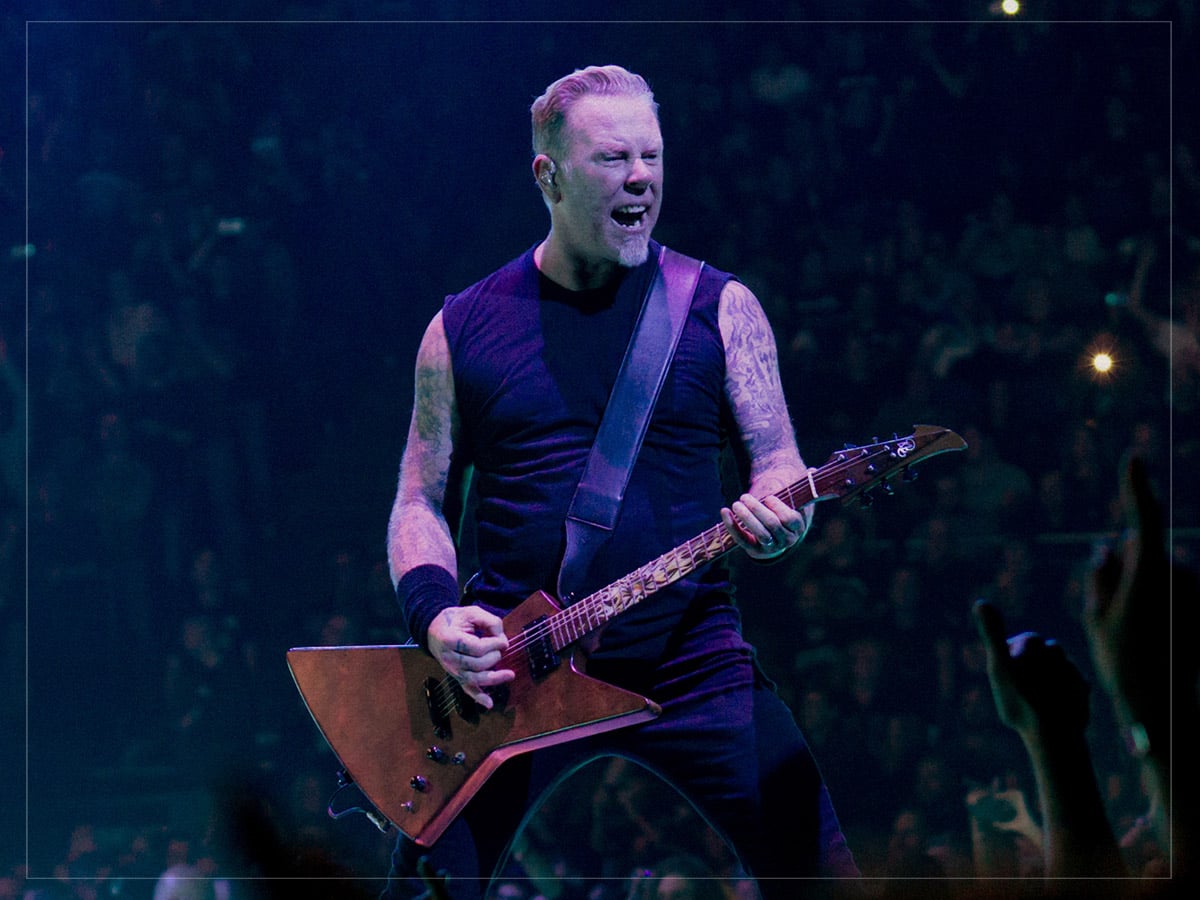
There are hardly any metal bands in the world that could manage to compete with what James Hetfield does with one guitar.
Aside from writing some of the greatest riffs that the metal world has ever seen, the fact that he can get through a song like ‘Master of Puppets’ while downpicking the entire thing is the kind of feat that makes you wonder whether he’s actually a musician or a musical mutant of some kind. No one else can have that kind of machine-like accuracy, but there were always ways for Hetfield and the rest of his band to be challenged whenever they took a few chances.
Hell, even if they never got out of San Francisco, Cliff Burton was already the one helping show them the ropes of music theory. Burton was never a snob about music and wasn’t even the biggest metal fan in the world, but since he had a deep love of all things classical, it wasn’t hard to find him throwing in a few harmonies into their songs or eventually using several tracks to put together one of the most beautiful bass breaks of all time on ‘Orion’.
But a lot of the complexity that those songs had almost came together by accident. ‘Master of Puppets’ is still one of the strangest songs to count because of how they stop the main riff during the verses, and while they weren’t exactly virtuosos when they started, And Justice for All is about the closest that they were ever going to come to making a prog-rock album, complete with time signature changes on nearly every song.
It’s all well and good to make rock and roll songs that bend the fabric of the genre, but after they went mainstream with The Black Album, it was going to be a lot more difficult for them to change things up. They had legions of fans that got on board with softer songs like ‘The Unforgiven’ and ‘Nothing Else Matters’, and while Load and Reload had their fair share of complex moments, it’s not like they were going to make a grand opus in between their radio hits.
Or at least, that’s what everyone thought. Because when you look through the band’s output in the late 1990s, every single record seemed like a new learning experience. And since they had reached the point where they could pretty much do whatever the hell they wanted, why not try out a few tracks with an orchestra behind them? That’s what Burton had been working towards with rock instruments, but when Hetfield started jamming with the orchestra, he felt more than a little bit intimidated.
None of the band knew the first thing about reading sheet music, so working alongside a string section and a full brass section was enough for them to break out in a sweat, saying, “I was pretty nervous playing with real musicians. I don’t know why I think they’re ‘real’ – ’cause they can read music or something. We don’t know how to read music but we feel it. We love the power and we love what it does to us. Let’s connect there. They obviously feel the same thing.”
Granted, it also helps having the right translator there to help realise their ideas. Michael Kamen had already begun working with the band as far back as ‘Nothing Else Matters’, and given his work with records like The Wall, he could bring that sense of grandeur to all of the arrangements, to the point where he almost feels like another member of the band when working out the changes on the new songs like ‘No Leaf Clover’ and ‘-Human’.
Some of the metal purists would have been pissed to see their favourite metal band devolving even further, but that’s not how Metallica thought about their music. They figured that they were going to do well by following their bliss, and if their songs could be played perfectly with an electric guitar, why not add a string section?