
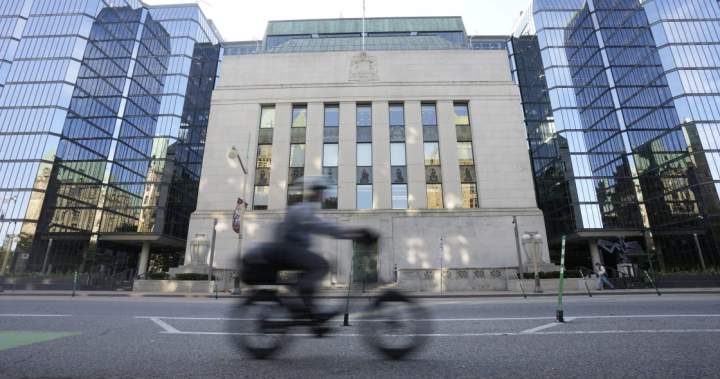
The Bank of Canada left interest rates unchanged at 2.25 per cent on Wednesday as the Iran war rattles economies around the world.

Oil prices have spiked in recent weeks as the Strait of Hormuz puts about 20 per cent of the world’s oil supply in jeopardy, which risks higher prices for fuel and just about everything else.
The Bank of Canada said in a statement that the war has “heightened the risks to the global economy,” and the full impact will depend on how long the conflict goes on for and how severe it becomes.
“Since the outbreak of the conflict in the Middle East, global oil and natural gas prices have risen sharply, and this will boost global inflation in the near-term,” said the Bank of Canada in the statement.
“In addition to energy supply disruptions, transportation bottlenecks stemming from the effective closure of the Strait of Hormuz could impact the supply of other commodities, such as fertilizer.”
Story continues below advertisement
This marks the second rate announcement from the central bank in 2026, and the third straight rate hold since it delivered a cut of 0.25 percentage points in October 2025.
In the U.S., the Federal Reserve also announced a rate hold on Wednesday.
1:55
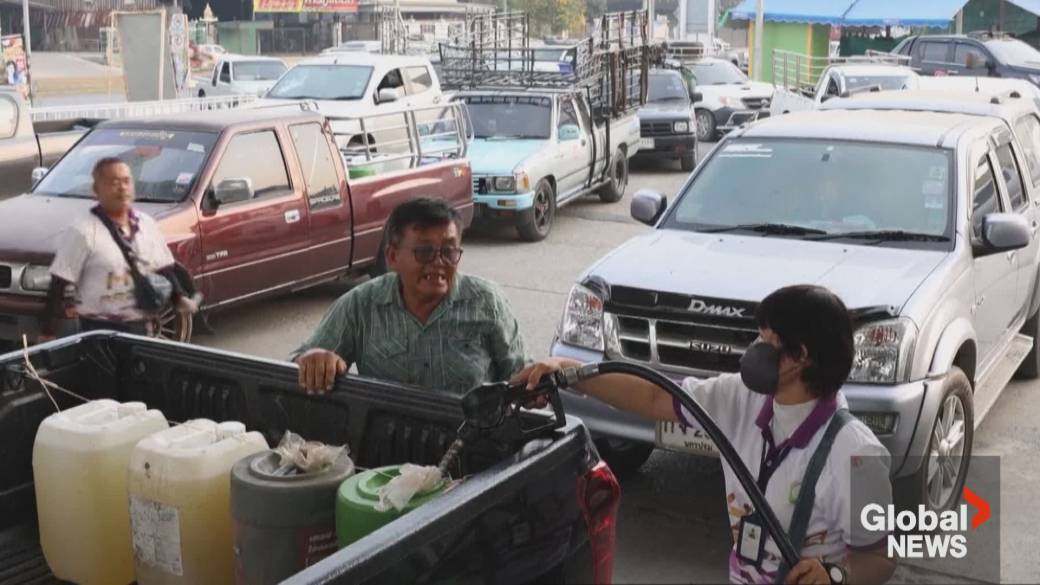
Iran war price shock forces countries to ration fuel consumption
Interest rates set by commercial banks and other lenders for loans like mortgages are based on the Bank of Canada’s and other central bank’s minimum benchmark.
“We will continue to assess the impact of U.S. tariffs and trade policy uncertainty, and how the Canadian economy is adjusting. We are also monitoring the unfolding conflict in the Middle East closely and assessing its impact on growth and inflation,” said the Bank of Canada.
“As the outlook evolves, we stand ready to respond as needed. The Bank is committed to ensuring that Canadians continue to have confidence in price stability through this period of global upheaval.”
Story continues below advertisement
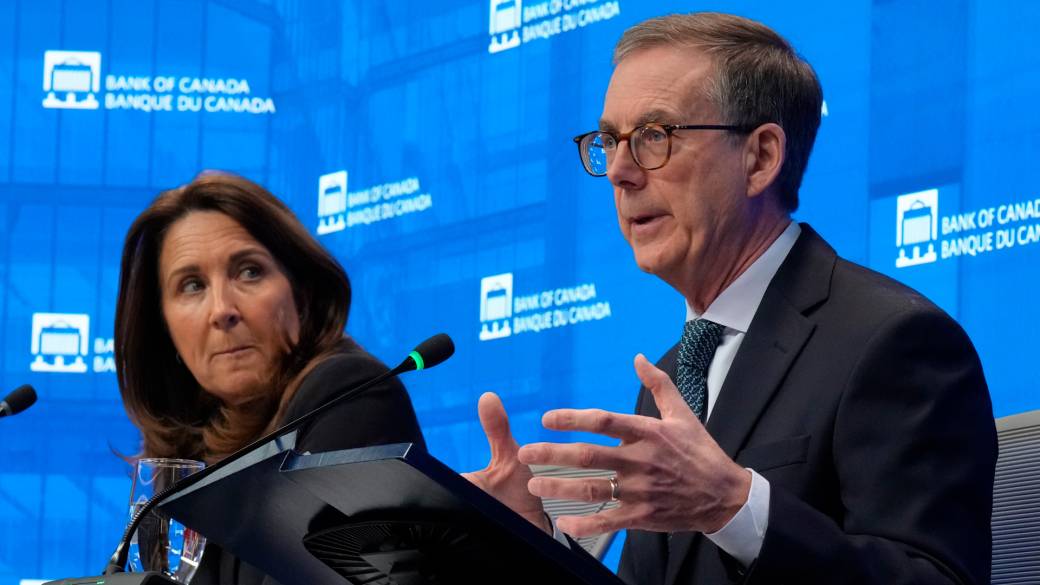
Bank of Canada Governor Tiff Macklem spoke to reporters after the announcement on Wednesday, and was asked about how the Iran war could impact consumers and businesses if it becomes a long term conflict.
“The fact that the Strait of Hormuz is essentially closed is cutting off a significant amount of global supply of energy. In Canada that’s not affecting us very directly, but when there’s less supply globally, prices are higher globally,” Macklem said.
“In the short run, companies have inventories, countries have inventories. They can manage. But the longer it [the Iran war] goes, those inventories get depleted. And that shortage really starts to bite.”
Food inflation could get worse if Iran war continues
On food inflation in particular, the Bank of Canada notes how it was outpacing overall inflation for several months before the Iran war began. This means consumers will likely not be seeing much relief at the grocery store anytime soon — especially if the war goes on for the long term.
Story continues below advertisement
“We’re starting from a position where food inflation continues to outpace headline inflation a bit. It’s certainly adding to that sense of affordability that Canadians are feeling. Energy shocks can affect food prices,” said Senior Deputy Governor Carolyn Rogers.

Get weekly money news
Get expert insights, Q&A on markets, housing, inflation, and personal finance information delivered to you every Saturday.
“If that persists, that could have a longer term effect on food inflation too. So it’s a bit early to tell what the effects on food inflation will be, but certainly energy is a big input cost to food.”
1:49
Economic uncertainty of Iran war hovers over latest Bank of Canada decision
Macklem also stressed that energy resources are not the only thing that relies on the Strait of Hormuz staying open, with fertilizer being one of the main examples. This means higher prices for consumers could come from a combination of supply shortages, including oil, gas and other commodities essential for fuel, food and other products.
Although consumers will likely end up paying more for gas, groceries and other items as a result of the Iran war, Macklem says Canada’s economy may see indirect benefits because of higher demand for Canadian resources and as prices are elevated globally.
Story continues below advertisement
“We’re a net exporter of energy. We’re a net exporter of fertilizer. Higher prices means more income coming into the country, but for consumers or any business buying those products, those costs are up. They’re getting squeezed,” Macklem said.
“I realize that’s going to impact Canadians. Unfortunately, we can’t fix the war.”
Macklem continued: “What we can do, though, and what we will do, is we will ensure that if energy prices stay high, that does not become ongoing, generalized, persistent inflation.”
Are the risks of holding rising?
More on Economy
More videos
Although the Bank of Canada left rates unchanged on Wednesday for the third straight meeting, the risks of keeping rates unchanged may be rising.
If inflation gets too high, including as a knock-on effect of the Iran war, then there is more of a chance the Bank would have to raise rates.
Story continues below advertisement
Macklem was asked by reporters if the central bank is leaning more towards an increase since the last meeting given the Iran war.
“Obviously, we’re going to be looking at developments in Iran….there’s still a lot of trade uncertainty. We’ll be assessing that part as well,” he said.
“Looking forward, I don’t think I can say it any clearer. As those risks evolve, as the economy plays out, we’re prepared to respond as needed.”
Derek Holt, vice president and head of capital markets economics at Scotiabank, said the key with this response is that Macklem “didn’t shoot down” the idea of raising rates.
“This is clearly not a central bank in a rush but the message is extremely clear—the oil shock is too early to assess now and so far raises little pass through risk to core inflation because of modest slack and prior softening of inflation,” Holt said in a statement.
“But if it persists or worsens, they’re going to have to respond and that probably would mean hiking.”
2:17
Business Matters: Bank of Canada holds key interest rate at 2.25%
TD Bank expects the Bank of Canada to continue taking a wait-and-see approach, but “uncertainty is high.”
Story continues below advertisement
“We expect the Bank of Canada to stay on the sidelines, for now. However, uncertainty is high and the supply shock could easily escalate, broadening inflation beyond energy prices,” said director and senior economist Andrew Hencic at TD Bank in a statement.
“In the event that both core inflation and inflation expectations drift higher we would expect the BoC [Bank of Canada] to be ready to respond.”
Consumers struggling with the heightened cost of living may be about to face more headwind trying to make ends meet with the Iran war expected to broadly raise prices.
A rate hike could potentially lead to more pressure on households in the short term because of higher borrowing costs.
“The Bank is kind of in the same position as a lot of consumers, where the immediate effects of the Iran war are just compounding these daily financial challenges, and we really don’t know what the final outcome is going to be,” says Clay Jarvis, a mortgage expert at NerdWallet Canada.
Story continues below advertisement
“A lot of people are feeling maybe even more cynical than they were last year and realizing that the amount of control they have over their own household bottom line is even less than they might have thought they had at this point last year.”