
DWP tells MPs when a key review into further rises will happen with concerns life expectancy is going down in some areas
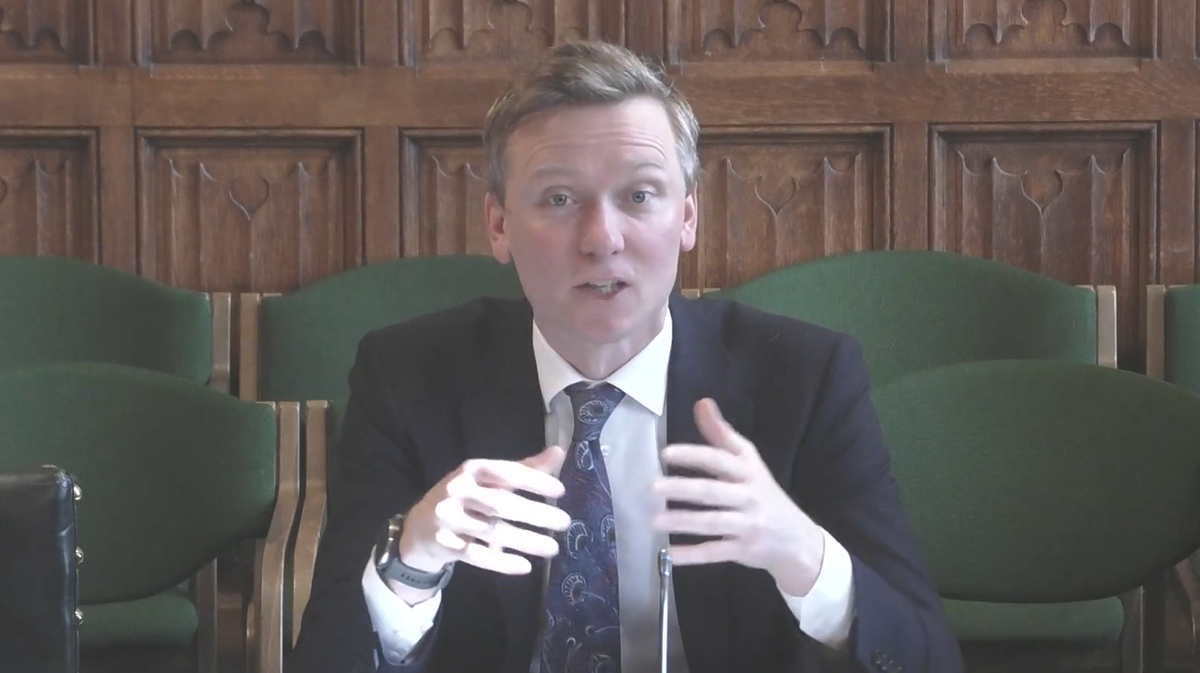
Under-Secretary of State for Pensions Torsten Bell explained pension age changes coming in(Image: Parliament TV)
The government has provided an update regarding plans to increase the state pension age to 68 – and revealed a crucial date for the decision. The process of raising the qualifying age for pensions is set to commence next month.
The State Pension age for both men and women is now scheduled to rise to 67 between 2026 and 2028. A further increase to 68 is also planned – with the government currently conducting a review to establish the timing of this change.
Currently, from April 2026, the UK State Pension age will start increasing from 66 to 67 for people born on or after 6 April 1960. This gradual rise, intended to reach 67 by April 2028, impacts anyone born after this date. Individuals born between 6 April 1960 and 5 March 1961 will qualify for their state pension at 66 years plus a specific number of months, rather than precisely 66. For further details on the schedule click here.
During Work and Pensions questions at Parliament today, it was revealed that the independent report, being led by Dr Suzy Morrissey, aims to establish a framework for determining the State Pension Age in coming decades.
At today’s committee, Labour chair Debbie Abrahams enquired about the report’s expected return date: “Suzy Morrissey is currently conducting her review into state pension age and she’s due to report in the spring. Now the spring is quite a wide time frame. So when do you think, and this is an interim report before her final one at the beginning of next year, but when do you expect to receive that interim report?”
Parliamentary Under-Secretary of State for Pensions Torsten Bell outlined when the final report would be delivered: “The independent review we’ve asked them to consider the framework for thinking about the right level for the state pension age (SPA). Obviously, it’s the statute that requires the Secretary of State to conduct a review of the SPA. I’m not going to get into the timings for that today. There’s a formal process for that. I haven’t received the independent review yet, but obviously what is set out in the legislation is that we’ll need to finish the Secretary of State’s review by March 2029.”
Ms Abrahams raised concerns that whilst life expectancy nationally is increasing, thereby influencing decisions to raise the SPA, certain regions are experiencing the opposite trend, potentially disadvantaging some of the most deprived communities. She questioned: “At all levels of the income spectrum, life expectancy has increased as has healthy life expectancy. But it is increased much more slowly for low-income households for particular groups of the country.
“So, given that, what are the considerations that are going to be taken into account, or for areas like mine in Oldham, where there has actually been a fall in life expectancy?” Mr Bell stated: “A lot but I think that is I think one of the problems so there is if I take the long view of the last like you know state pension increases have been going on for different reasons since the early 90s then If you take the long view, there’s obviously to some degree a a consensus that as you see increases in longevity that there will be consequential changes in the state pension age to some degree.
“I think what sometimes flips too easily is being relaxed about that, not weighing that. So you can take the fiscal constraints seriously, you can take seriously the need to support people working into later life, whilst taking the consequences and the distributional effects of those consequences of increases in the SBA very seriously. And if I was looking at the changes in 2011, for example, there and some of the comments I saw from then ministers after very fast accelerations of the state pension age, I would say they weren’t weighing those consequences seriously enough in the way they went about it.”
The timeline for raising the State Pension age from 67 to 68 may be subject to change following a future review. Any proposed alterations would require Parliamentary approval before being enacted into law.