
(Credits: Far Out / Record Sleeve)
Thu 19 March 2026 5:00, UK
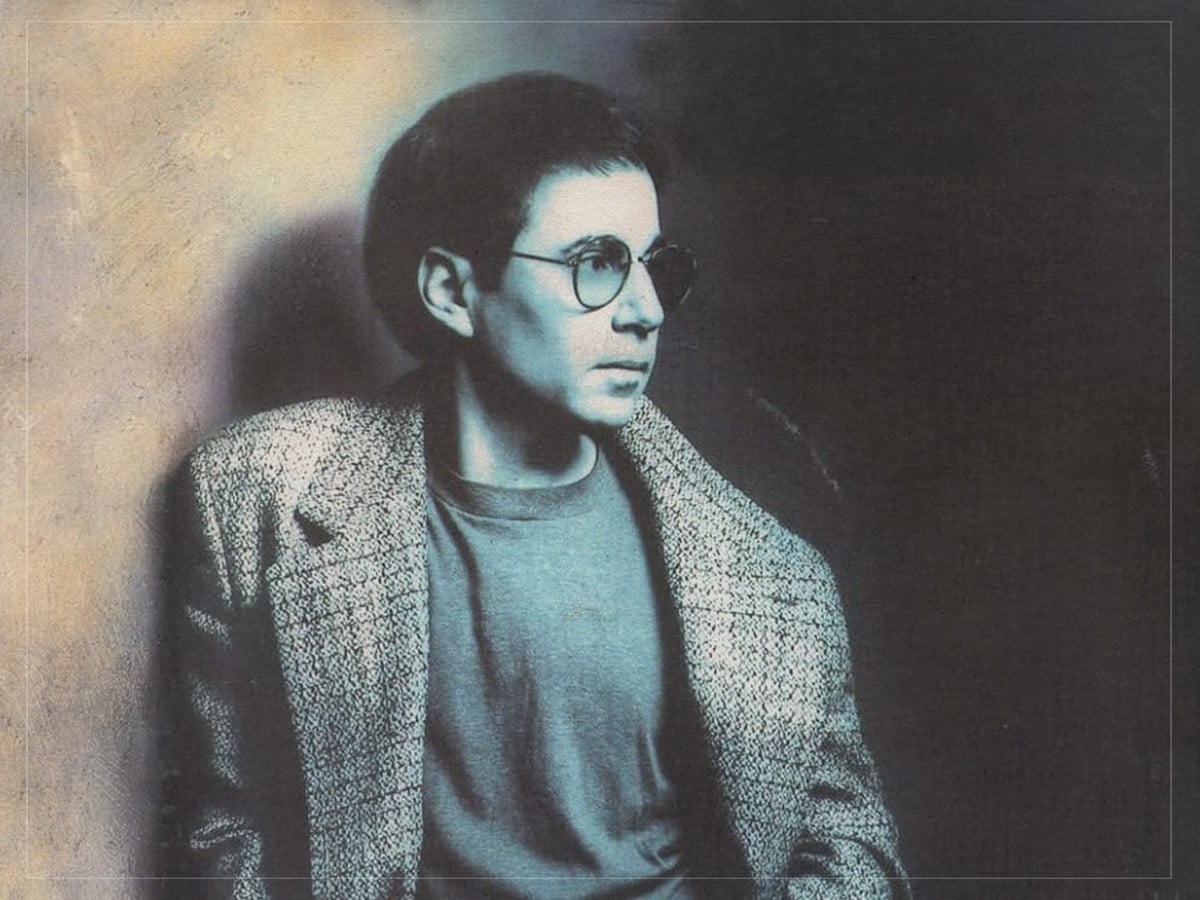
Paul Simon has had nearly every kind of hit.
In songs like ‘You Can Call Me Al’ and ‘Me And Julio Down By The Schoolyard’, he’s got the playful singalong hits that have a big chorus along with it, ready to pack a punch. But alongside that, Simon has crafted a legacy built around storytelling profundity, with songs less concerned about baselessly hypnotising the brains of the masses and instead, concerned about tapping into something more existential and spiritual.
He saw songwriting as not just an art form, but a duty, and to deliver lyrics that were carefully thought out was something of a bare minimum for Simon. Bearing that responsibility didn’t come lightly to him, and so whenever Simon felt as though a fellow artist was falling short of that measure themselves, he was never shy to call it out.
He once took aim at Billy Joel’s songwriting for lacking the sort of lyrical depth he felt was necessary for a great song. The ‘Uptown Girl’ and ‘Piano Man’ hitmaker was well known for his ability to write a singalong anthem, and while he was less revered for any lyrical influence, that was fine for him. But not for Simon, who claimed that Joel was “lyrically naive,” adding, “He thinks about larger issues, but he doesn’t think about them hard enough.”
While cutting and harsh, it is difficult to completely argue with Simon in that regard, especially through the lens of Joel’s hit ‘We Didn’t Start The Fire’. Joel’s simple listing of cultural names isn’t quite as sharp a narrative as Simon’s ‘Bridge Over Troubled Water’, and fails to fully exercise his ability as a performer by cheaply thrilling his musical audience.
But Simon didn’t just take aim at Joel’s lyrical ability. No, he had a similar issue with Joel’s vocal style as well, and regarded it as a representation of his wasted potential, especially given how underwhelming his lyrics are.
Simon continued, “Meanwhile, he makes very good, solid rock tracks and sings with a powerful, clear, cutting rock ‘n’ roll voice. I think he’s insufficiently credited for how good his voice is. In fact, part of his weakness is that his voice is so good, he’s able to imitate – and I always felt that Billy should be stretching more to find out who Billy Joel is.”
He concluded, “Being an artist doesn’t mean that you’re a good artist. It’s just a certain type of person. And he is that type of person by temperament, a creator.”
It’s hard to tell whether or not Simon is a fan of Joel, who wants more from the artist, or whether he is simply adopting the role of scathing critic. It’s likely the former, for Simon never cut the figure of a disgruntled musician looking to punch down on his fellow industry companions.
Because clearly, there is a yearning for more that comes from Simon’s quiet fandom of Joel. A belief that behind the baseless rock singalong hits, sits an artist who could have achieved so much more and created a back catalogue that displayed a heightened sense of artistic meaning.
