

Your support helps us to tell the story
From reproductive rights to climate change to Big Tech, The Independent is on the ground when the story is developing. Whether it’s investigating the financials of Elon Musk’s pro-Trump PAC or producing our latest documentary, ‘The A Word’, which shines a light on the American women fighting for reproductive rights, we know how important it is to parse out the facts from the messaging.
At such a critical moment in US history, we need reporters on the ground. Your donation allows us to keep sending journalists to speak to both sides of the story.
The Independent is trusted by Americans across the entire political spectrum. And unlike many other quality news outlets, we choose not to lock Americans out of our reporting and analysis with paywalls. We believe quality journalism should be available to everyone, paid for by those who can afford it.
Your support makes all the difference.Read more
Greg Jackson strikes a rueful smile. “There is evidence they are listening,” he says of the government. “But there is a lot more low-hanging fruit they could be picking.”
Jackson is the founder and chief executive of Octopus Energy, Britain’s biggest electricity and gas supplier. He is a supporter of green energy and a member of the Cabinet Office Board. “The Iran crisis has shone a light on our energy needs,” he says. “The UK must not be so vulnerable when something like this occurs.”
As the impact of the Iran war on global fuel prices gets ever bleaker, the message is being received loud and clear. The latest strikes on facilities in Iran, the Ras Laffan complex in Qatar and oil refineries in Saudi Arabia and Kuwait, point to a deepening crisis. The vulnerability of Britain to events outside its control have been brought into sharp focus, as all it takes is for Trump to tweet a threat in CAPS to send prices spiralling. Businesses and consumers, understandably, are beginning to panic. They are also angry. Something must change.
Jackson is determined, the UK must revise its approach to energy, and fast. His is a pragmatic, thoughtful approach that you just wish the politicians, energy commentators, those with historic, vested interests, would follow. Too often, the UK power debate is binary, with little room for compromise. The result, as has been shown yet again, is exposure.
They could do worse than to listen to Jackson, who launched Octopus in 2016 and in under 10 years, has steered it from challenger supplier to global force. By matching tech advances with customer service, Octopus has annual revenues of £16bn, employs 11,000 people across 27 countries in six continents, serving 11 million customers globally, of whom 8 million are in the UK. Along the way, it has become the UK’s most feted energy supplier, named the “Which? Recommended Provider” for nine years straight.
Britain must get a grip. It has to have sovereign energy, fulfilling its own requirements and not be so reliant on others, but yet again, a combination, as Jackson puts it, of “ideology, wishful thinking, nostalgia and culture wars” drowns out reason. He goes on, “The big picture is that the UK became self-sufficient in gas from the mid-80s to the 2000s. Two factors accounted for that: we produced enough in the North Sea to meet our needs; and gas was less traded internationally.” Since then, “two huge swings” have substantially undermined the UK’s position: “Easy-to-reach gas in the North Sea has depleted and gas is now traded internationally.”
The North Sea is part of the solution, but just a part and a small one at that. “We’re deluding ourselves if we think we can get enough out of the North Sea and in a market where the price is set internationally. Therefore, we should be asking, how do you create a more secure system with enough supply and at the right price?”
Iran, he says, must “act as a wake-up call to the UK”. We should reassess and find a cheaper, more efficient outcome.
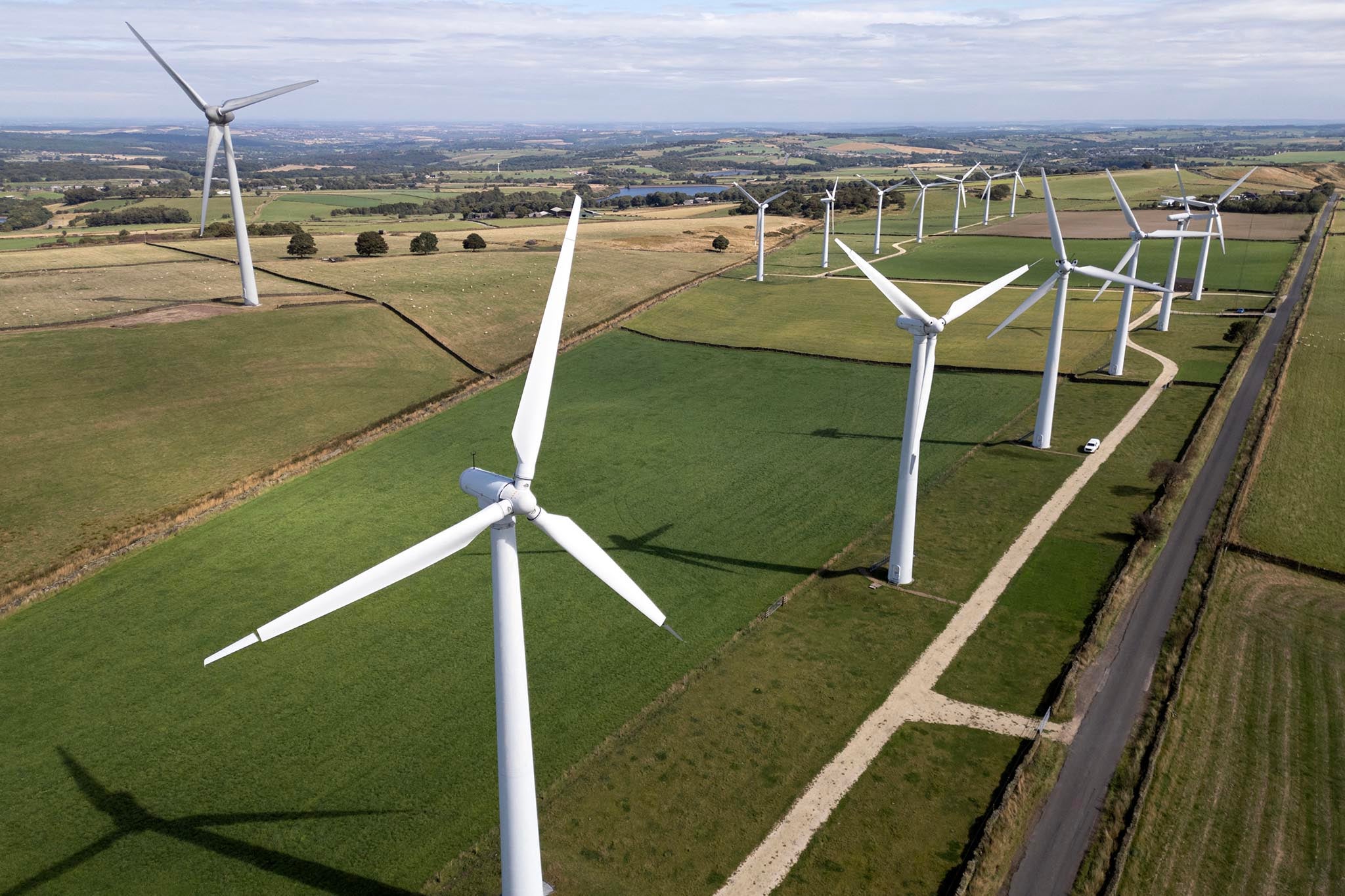 Wind farms, solar energy and installing heat pumps in homes are all ways we could reduce our dependency on fossil fuels (AFP/Getty)
We should push ahead with nuclear, but be mindful that new nuclear plants take 10 to 15 years to build and may be costly. That means the private sector taking on greater funding risk, not counting on the public purse.
In the meantime, we should cut our dependency on gas – cut wastage, add wind farms and solar and install heat pumps in homes where they are suitable. That would help us approach self-sufficiency, increase security and mean we were not so dependent on global markets.
The Jackson recipe also includes reform of how we store more of our electricity as well. It is “madness”, he says, that we pay wind farms to switch off on windy days. We should be storing the electricity the turbines produce. We’re too concerned about peak periods and peak demand, when we should be “storing and using the electricity and making the grid flatter”.
Also, he says, we should urgently reassess the colossal planned spend on new grids and networks. Electricity demand is 25 per cent lower than 20 years ago, and modern technologies allow us to get much more out of existing infrastructure. DLR, or dynamic line rating, is a technology used in other countries to allow power lines to handle 20 per cent or more additional peak load. He’s on a roll. “And we shouldn’t be paying billions for expensive distractions like carbon capture and hydrogen. We also need to break the link between electricity costs and gas costs.”
More realism should be applied. Margaret Thatcher closed the coal mines because they were uneconomic – not because of net zero (although she was the first global leader to speak at the UN about climate change; as a scientist, she knew it was real). We do have shale gas reserves and we can frack, but we also have a much denser population and much less productive geology than the US, who are enthusiastic supporters of fracking. This means it wouldn’t make sense, and for the trouble, not be sufficiently meaningful.
Now is the time, Jackson says, “to be James Bond about it, to take the threat seriously and to calmly and carefully plan our options. Crisis is a time to catalyse thinking on the underlying issues”. We set off down an electric, net zero route; now, we’re reversing that, rapidly heading in the other direction. “There is no lobbying and PR machine on earth more powerful than the fossil fuel industry. I am mind-blown that after the last energy crisis, which cost the Treasury £100bn in subsidising bills, they are winning the argument again, claiming that more oil and gas is the only solution.”
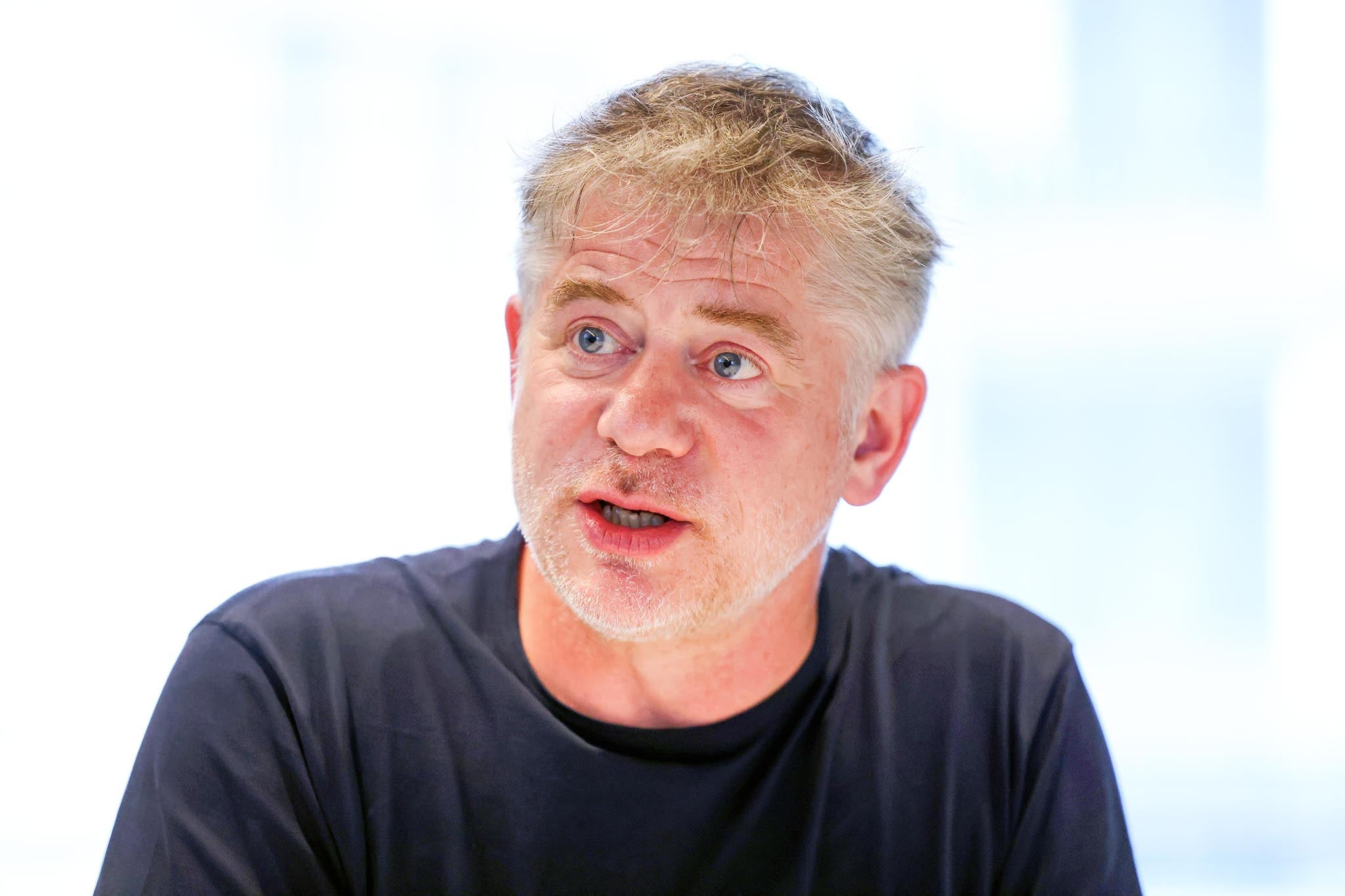 Greg Jackson believes we are being ‘held to ransom’ by European car manufacturers who can’t make money from electric vehicles (Octopus)
Look at Norway, he says. “Only 5 per cent of Norway’s heating comes from fossil fuels. Norway’s visionary approach means that 97 per cent of new cars sold in Norway are electric. From where we are, only 5 per cent of the UK vehicle fleet is electric. As a nation, they are immune from energy shocks. Here, we are subject to a powerful lobby that says we should be downgrading the push to electric when we should be upgrading.”
The rhetoric in the UK, he says, is “all about charging and batteries, when the truth is that most people would not have to charge very often – the average UK commute is only 11 miles”.
We’re being held to ransom, Jackson says, by “incumbent European car manufacturers who can’t make money on electric vehicles. That’s because they’re too expensive and they can’t sell them. The problems are inherent to the companies, not us. Chinese car makers are doing very well, thank you, from electric.”
That’s because they’re new firms, who understand the new technology better. “Look at Rupert Murdoch, the most successful media baron in history. He bought MySpace and killed it within two years. Incumbents rarely understand the technology.
“Donald Trump’s ‘drill baby, drill’ may seem rational, but 10 years of progress on clean energy has made the gap between fossil fuels and electrification so wide as to make the UK look like an underdeveloped country, not one of the most successful on Earth. In the UK, it’s like we’re all nostalgic for the smog on Teesside, where I grew up in the 1980s.”
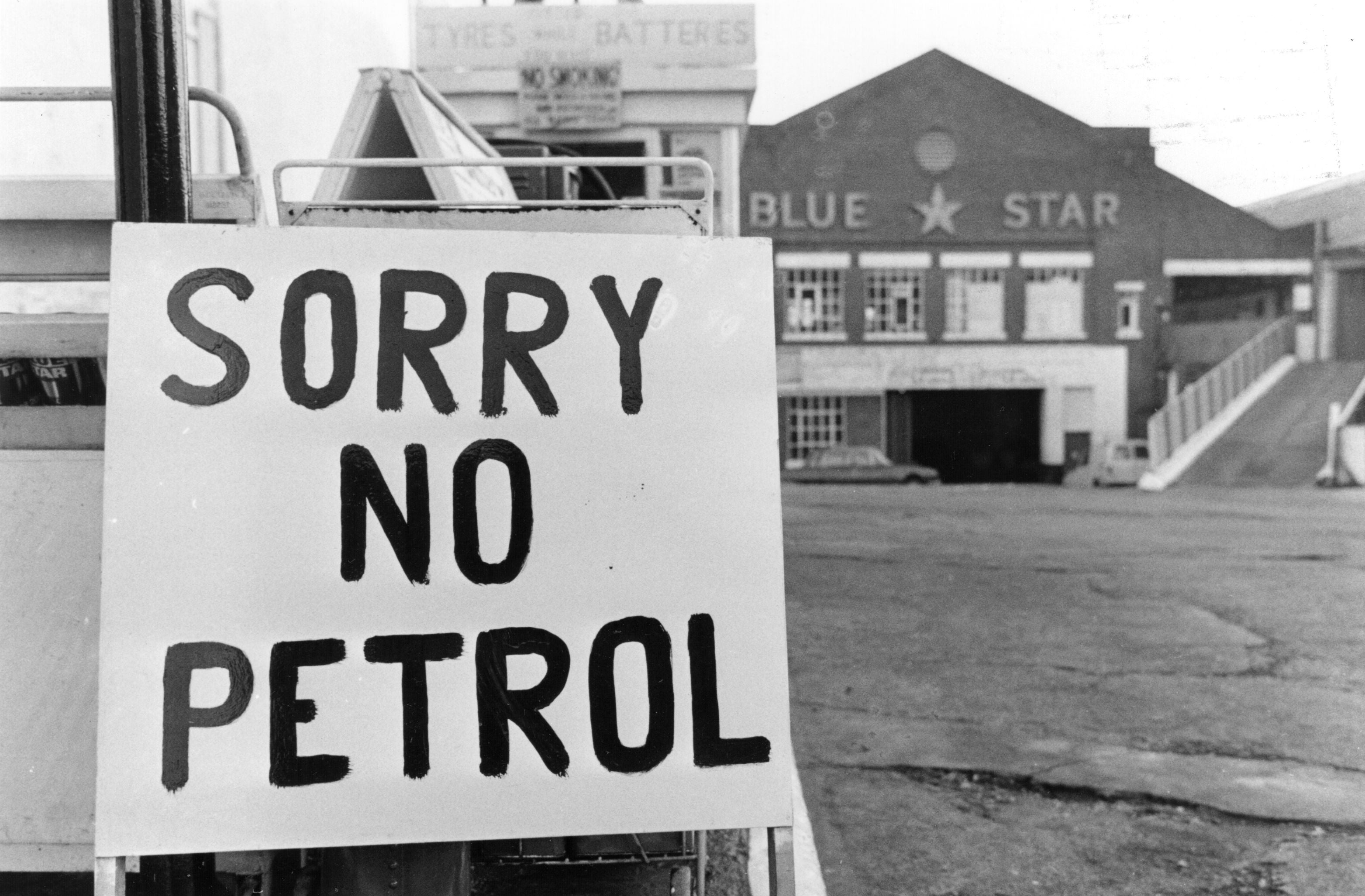 A petrol station shows a common sign during the 1973 fuel crisis, caused by similar geopolitical unrest in the Middle East (Getty)
The tech is there, he says, for vehicles, for heating via pumps. “It took 10 years from the Wright brothers’ first flight for aeroplanes to be used in World War One; 15 years from the creation of petrol cars to the Ford Model T. Technology moves that quickly.”
We should be across it and moving with it. Instead, we’re in thrall to the fossil fuel companies and incumbents, and we’re blaming clean energy when we ought to be embracing it.
“Fossil fuel companies have got 100 years of the deepest relationships with governments, 100 years of owning the deepest pockets,” says Jackson. “They are very low on morals, which enables them to say and do anything. They have erected a pretty solid wall to battle against. We saw it with tobacco. They denied smoking causes cancer. Then they created the smokescreen, so to speak, of low tar and filters. Then, finally, they admitted smoking causes cancer. Every stage of the tobacco playbook is being repeated, except the fossil fuel companies are even stronger; their resistance to change is stronger.”
Iran is a jolt. We’ve had them before. The choice, as he sees it, is to do nothing or use it to reform. Jackson is smiling again. He knows the answer. He wants the government – and Britain – to be smiling with him.