
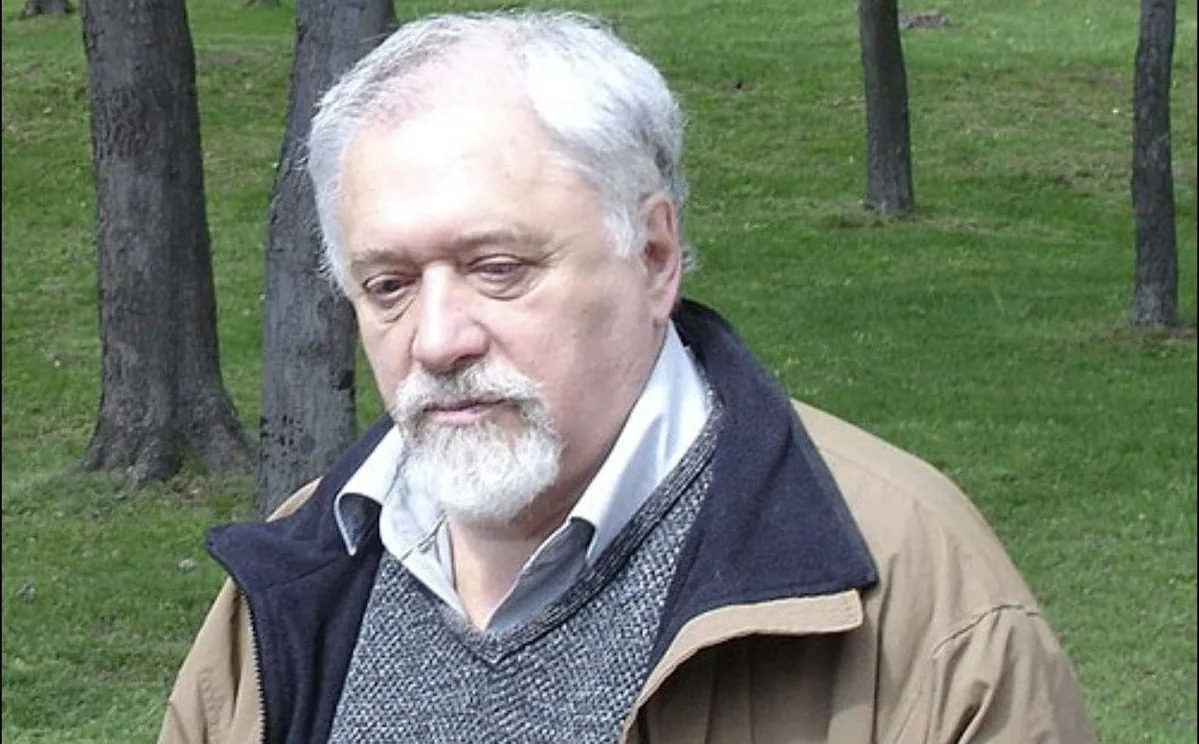
Semyon Gluzman, who has died aged 79, was the first Soviet psychiatrist to blow the whistle on the Soviet Union’s abuse of psychiatry – for which he spent seven years in the gulag.
During the 1950s the “Moscow school” of psychiatry, founded by Andrei Snezhnevsky, introduced a classification scheme of syndromes and disorders so comprehensive that just about anyone could find themselves ensnared in a diagnostic trap. In particular, Snezhnevsky promoted the concept of “sluggish schizophrenia”, a form of schizophrenia so slow-developing that it could be diagnosed even in those who showed no symptoms.
Promoted as dogma throughout the USSR and its satellites, it became a potent weapon against political dissidents. Criticism of the Soviet system was seen as clear proof that the critics must be schizophrenic – or exhibiting “paranoid reformist delusional ideas”. From the 1960s to the 1980s, KGB-appro​ved psychiatrists confined thousands of dissenters indefinitely in “special psychiatric hospitals”, where they were forcibly injected with heavy doses of anti-psychotic drugs.
In 1971 Gluzman, a newly qualified psychiatrist, heard that Pyotr G​rigorenko, a prominent general who had criticised the Khrushchev regime, had been locked up in a hospital for the criminally insane. Instead of keeping his head down, Gluzman decided to write an article ​exposing the general’s wrongful incarceration. “I decided I would be the first professional who would not simply go along with what was happening,” he recalled.
With the help of the dissident physicist Andrei Sakharov, Gluzman published his article in an underground journal, creating a stir at home and abroad.
Arrested in 1972, Gluzman spent seven years at the Perm 35 labour camp for political prisoners, and three more in exile in Siberia. In 1974 he and his fellow dissident Vladimir Bukovsky wrote a 24-page “survival guide” for fellow dissidents to help them outwit psychiatrists and endure detention. Smuggled out of the camp, circulated in samizdat and translated into several languages, it included the bleak warning that “there are no grounds for hope in the conscience of doctors… as regards the criminal use of psychiatry in the USSR.”
Gluzman characterised the Soviet system as “exhausted totalitarianism” – in which the political elite, no longer confident enough to kill dissenters en masse, found itself forced to maintain control by underhand means.
During the era of glasnost and after the break-up of the Soviet Union, there were hopes that such abuses would come to an end. But a 2024 article in The Lancet reported that the 2022 invasion of Ukraine had coincided with a resurgence of such practices in the Russian Federation. And while the Russian version of the 10th revision of the International Statistical Classification of Diseases and Related Health Problems no longer lists “sluggish schizophrenia” as a form of schizophrenia, it is still included as a “schizotypal disorder”.
In a poem composed after his release from the camps, Gluzman wrote: “Little children see miracles:/ Talking lions,/ Two-headed birds,/ And kind people./ But I’ve already grown up.”
Semyon Fishelevich Gluzman was born on September 10 1946 to Jewish parents in Kyiv, which was then in the USSR. After graduating from the Kyiv Medical Institute in 1968 he took a position at a psychiatric hospital in southern Ukraine.
Gluzman was elected an honorary member of the Royal College of Psychiatrists in 1980. But he had few allies at home: in 1988, when he was offered work as a psychiatrist in Kyiv, the KGB vetoed the offer. His official rehabilitation in 1992, after Ukraine gained independence, was grudging: “The Ukraine prosecutor sent me a piece of paper that said: ‘You are rehabilitated.’ Nothing else. Not even, ‘Sorry about those 10 years.’ ”
In 1991 Gluzman founded the Ukrainian Psychiatric Association as an independent mouthpiece and campaigned to pull psychiatry out of the Soviet maw. In 2012 he intervened to secure the release of a protester, Anatoly Ilchenko, from the Pavlov Psychiatric Hospital in Kyiv.
Gluzman was married to Irina. His daughter Julia Pievskaya is a director of the Federation Global Initiative on Psychiatry.
​Semyon Gluzman, born September 10 1946, died February 16 2026