
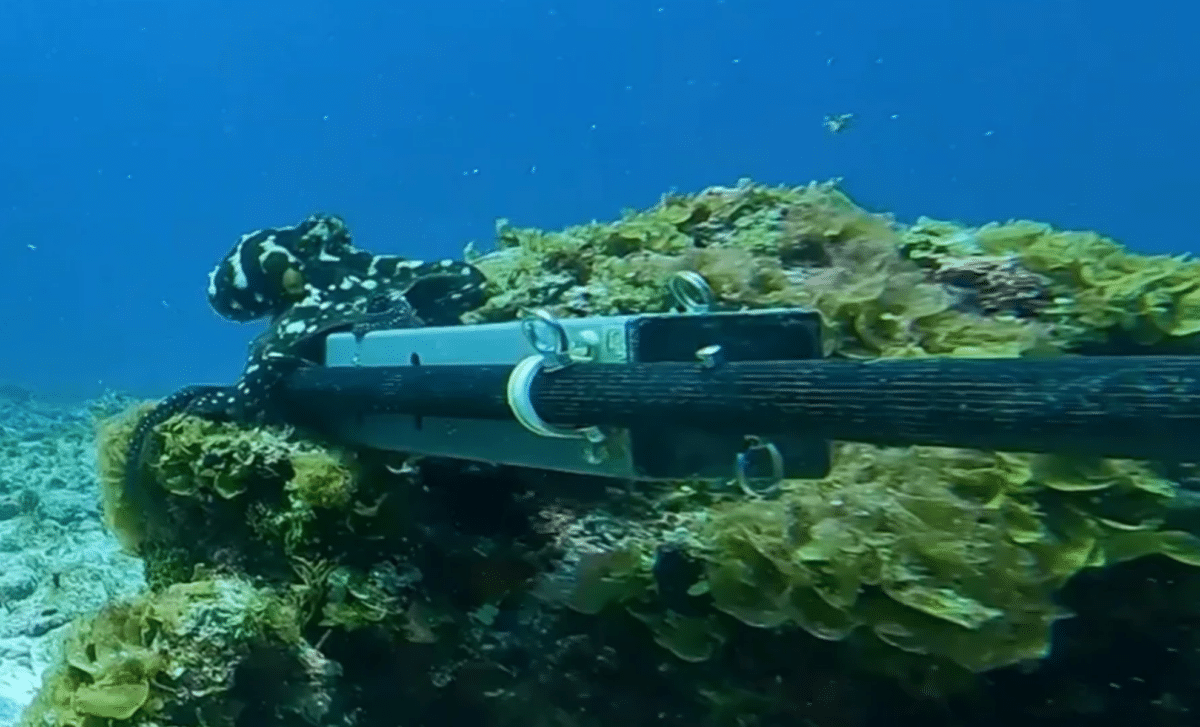
The ocean is full of surprises, but one recent event caught scientists off guard in a way they didn’t expect. While studying the marine life off the coast of Tuvalu, researchers placed a camera on the seafloor, thinking they knew exactly what they’d capture. What they didn’t anticipate was the unexpected interaction from a creature that would shift the course of their research, and challenge everything they thought they knew about octopuses.
Unveiling the Ocean’s Hidden Secrets
The discovery occurred during a routine scientific operation by National Geographic Pristine Seas, a team dedicated to studying and preserving the world’s most pristine marine ecosystems. The scientists had placed a baited remote underwater video system (BRUVS) on the reef habitat near Niulakita, a small island in Tuvalu. The goal was to observe the local marine life in its natural state, but what they didn’t expect was an extraordinary interaction with one of the ocean’s most elusive creatures: an octopus.
The BRUVS setup, which is typically weighed down to keep it in place, was a perfect setup for recording the movements of fish. Yet, when the footage was reviewed, it revealed something unexpected, an octopus had approached the setup, tugged at the camera, and even moved it across the seabed. This behavior highlights the unique abilities of octopuses to engage with their environment in unexpected ways.
Chris Thompson, a marine ecologist with National Geographic Pristine Seas, described the footage as both surprising and enlightening: “In this footage we see a day octopus (Octopus cyanea) pulling the bait canister of the BRUVS towards its perch on a nearby rock and starting to investigate it with its arms.” This discovery underlines the impressive adaptability and problem-solving skills of octopuses, which are known for their extraordinary cognitive abilities.
Octopus Intelligence and Sensory Skills
The day octopus’s actions were not just a random act of curiosity. Octopuses are known for their highly developed nervous systems and complex problem-solving skills. What made this incident particularly fascinating was the way the octopus interacted with the camera. Octopuses hunt using a set of highly specialized sensors located on the suckers of their arms. These receptors are capable of “tasting” the environment around them, a trait that allows them to identify prey and navigate their surroundings with incredible precision.
As Thompson further explained, “Octopuses hunt by ‘tasting’ with special receptors on the suckers of their arms. So, once it gets a hold of the canister, this octopus starts feeling around, tastes the delicious sardines inside, and starts trying to get inside.” This sensory method is unique to octopuses and plays a crucial role in their hunting and exploratory behavior.
The camera itself was no lightweight object. Weighed down by lead to prevent it from drifting, the BRUVS system typically weighs around 10-15 kg. Yet the octopus was able to shift the equipment, showcasing both its strength and curiosity. The footage reveals a species of remarkable intelligence, one that continuously surprises researchers with its capacity for complex behaviors.
Why This Discovery Matters
This unprecedented interaction not only provides deeper insight into the natural behaviors of octopuses but also emphasizes the need to continue exploring and protecting the world’s oceans. By documenting this rare and remarkable footage, scientists have shown that there is still so much to learn about the underwater world. The intelligence of creatures like the day octopus challenges long-held assumptions about marine life and highlights the importance of studying these beings in their natural habitats.
The discovery also serves as a reminder of the delicate balance of marine ecosystems. Despite their intelligence, these creatures face numerous threats, including habitat destruction and climate change. By continuing to monitor their behavior and interactions, researchers can better understand how to protect these vital species and the oceans they inhabit.