
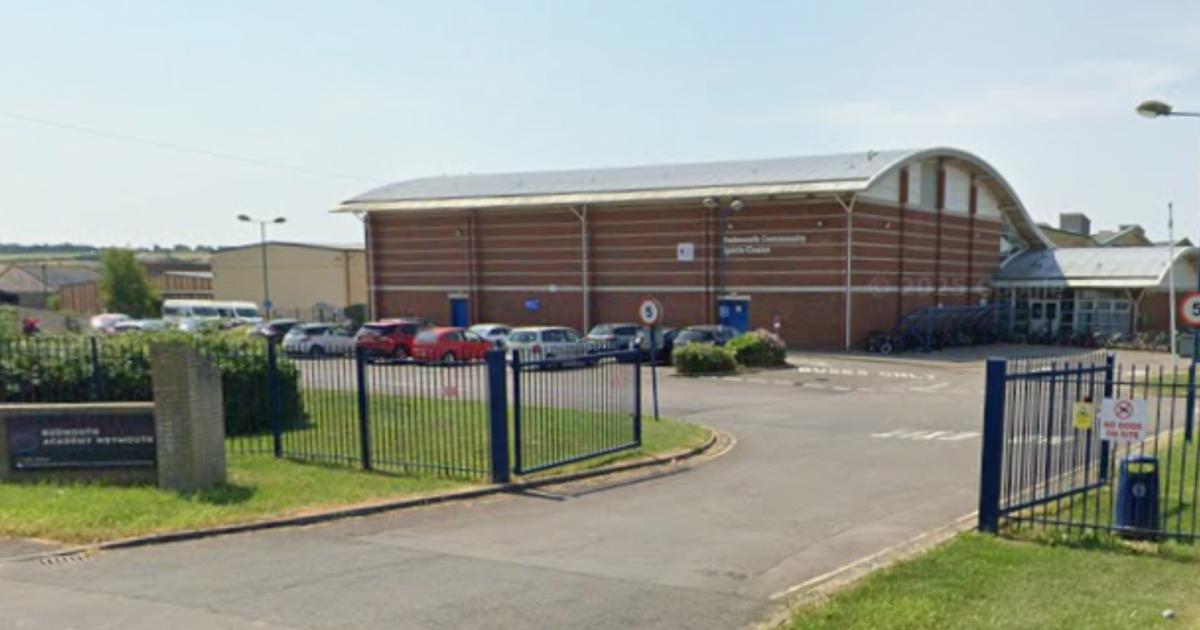
Yesterday Budmouth Academy said an ‘isolated’ case of the disease was identified with a student being treated and has provided advice on how to identify symptoms, while health officials said parents should ensure their children are up to date on their vaccinations.
Rumours have since started circulating about a second case, but the school has confirmed that it is ‘just a rumour.’
Close contacts of the one student involved have been identified and will be offered antibiotics.
Parents were told in a letter sent out yesterday there is no reason to make any changes to the routine and children do not need to be kept at home.
Meningococcal disease can cause both meningitis and septicaemia.
It is stressed that this case is not linked to the meningitis outbreak in Kent where two students have died and 18 more cases are being investigated.
The UK Health Security Agency (UKHSA) South West is working closely with Budmouth, Dorset Council and NHS partners following the notification that a student at the school is currently being treated for a suspected meningococcal infection.
Headteacher Sara Mashike told parents that risk of another case is ‘very small’ but has provided advice from the UKHSA on how to identify symptoms.
Dr Alasdair Wood, Consultant in Health Protection at UKHSA South West, said: “We understand that there will be concern among students, staff and parents following this case, and the current outbreak in Kent. We’re following national guidelines to ensure close contacts are offered antibiotics to reduce the risk of the infection spreading. There is no reason to make any change in the school routine and no reason for students to be kept at home.
“Students and staff will be feeling worried about the likelihood of further cases, particularly given the situation in Kent, however, I would like to reassure them that meningococcal meningitis does not spread very easily, and the risk of another case at the school is very low.”
He added: “The best advice remains for young people to check that they are up to date with their vaccinations, including the MenACWY vaccine, which is free on the NHS until they are 25.
“The MenACWY vaccine offers good protection against several strains of meningococcal disease and is routinely offered to teenagers in school Years 9 and 10.
“However, it does not protect against all strains. Other strains, such as MenB, can circulate among young adults. This is why it is important for everyone to know the signs and symptoms regardless of vaccination status.
“The signs and symptoms of meningococcal meningitis and septicaemia can include a fever, headache, rapid breathing, drowsiness, shivering, vomiting and cold hands and feet. Septicaemia can also cause a characteristic rash that does not fade when pressed against a glass.
“Early recognition of meningitis and septicaemia symptoms can greatly improve the outcome of the disease, and so anyone concerned about any of these symptoms, at any time, should contact their GP, call NHS 111 or 999 in an emergency.”