
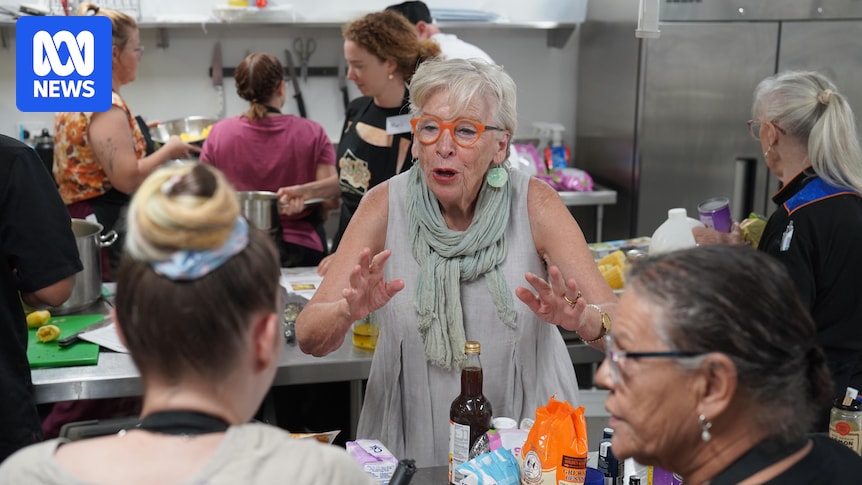
Australian culinary icon Maggie Beer is in Alice Springs training workers at an Aboriginal community-controlled health organisation that provides dialysis and aged care for people with kidney failure.
Her work at Purple House is part of her foundation’s effort to transform food and menus in aged care homes across Australia.
Ms Beer was lured to central Australia by Purple House CEO Sarah Brown’s promise of a feral-cat sandwich.
“We talked a lot about cooking kangaroo tails and then I also told her about how one of our directors … had recently cooked us a feral cat from Kiwirrkurra,” Ms Brown said.
“She got very excited about this and I said, ‘Well if you come to Alice Springs and do some cooking classes with us, then Bobby West will teach you how to cook a pussycat and you can have a pussycat sandwich for lunch,'” Ms Brown said.
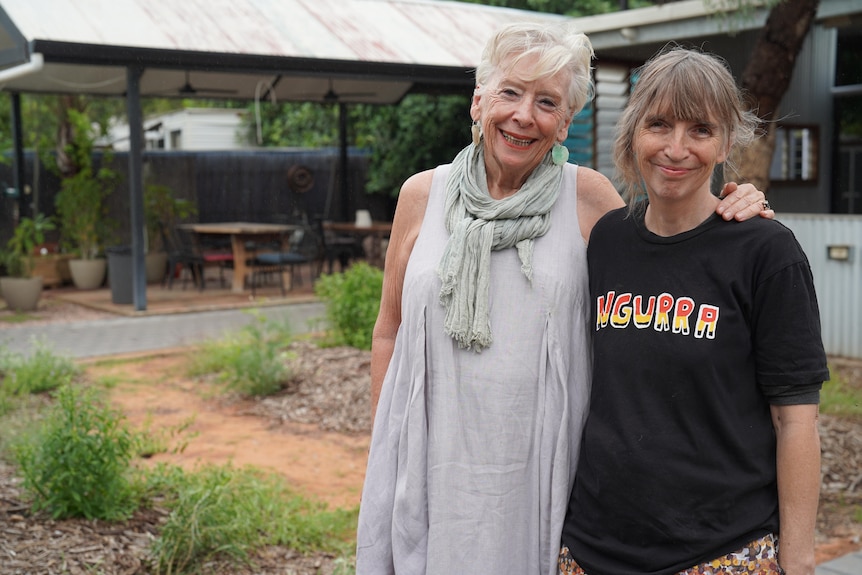
Maggie Beer and Sarah Brown meet at Purple House in Alice Springs. (ABC Alice Springs: Emma Haskin)
Ms Brown said they were unfortunately unable to secure a feral cat due to recent rain in the region.
She said having a team from the Maggie Beer Foundation was crucial to providing nutritional food and keeping elderly people living on country in their homelands.
Remote community celebrates anniversary of dialysis breakthrough
“We cook thousands of meals every year, both for dialysis patients in town and we run aged care in Mount Liebig and Yuendumu,” she said.
“It can be a bit of a slog, so for people to have the opportunity to step out of their day job role and have some fun with food … is really important.”
Ms Brown said hosting the Maggie Beer Foundation on Close the Gap Day highlighted how Purple House was “thinking outside the square”.
“It’s all about agency and having a voice and having some hope and that’s what Purple House is all about,” she said.
Malnutrition dangers
Ms Beer said her foundation was hoping to transform nutrition and food across the aged care landscape by sharing knowledge and empowering cooks and chefs.
“We can set them up for success by sharing what we’ve learned over many years about beautiful food that is simple, accessible, affordable, that can be done for 100 people at a time,” she said.
She said malnutrition was the biggest danger for elderly residents.
Maggie Beer Foundation brings training to aged care homes to improve dining offerings
“We have to think of it from so many points of view, like texture modified dysphagia, that inability to swallow.”
“You have to tempt a resident to eat and what is going to give them joy as well as sustenance.”
Cookery challenge
Maggie Beer Foundation senior chef trainer Paul MacDonald worked in the kitchen with the course participants.
“Today we’ve got a cookery challenge. We’re cooking lunch for 15 people in 90 minutes from scratch,” he said.
Mr MacDonald said the menu comprised of barramundi wrapped in banana leaves, lemon blueberry high protein cakes, fresh vegetables, and thyme crumbed pork steak.
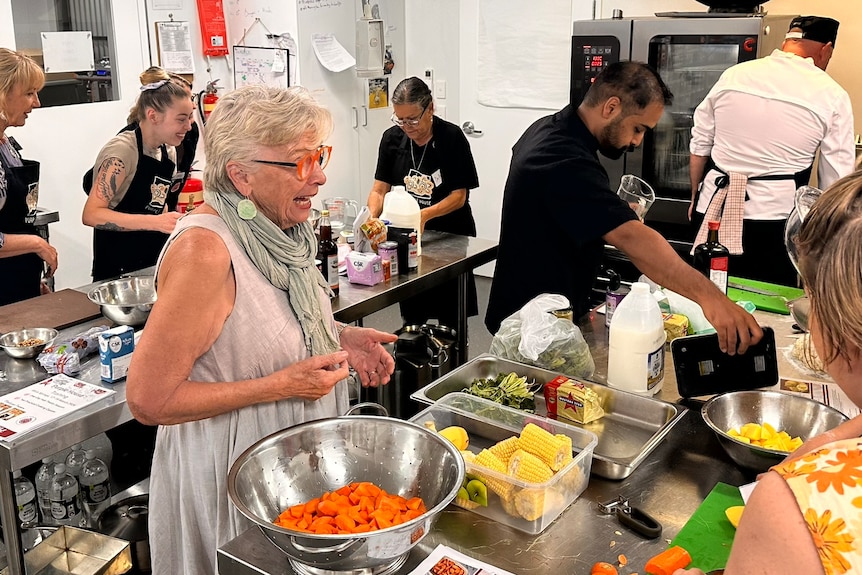
A cookery challenge was held at Purple House. (ABC Alice Springs: Emma Haskin)
“The idea behind this is we’re simulating a real-life kitchen, real-life drama, real-life pressure,” he said.
“It is fun but we’re throwing in some curveballs.”
Mr MacDonald said it was important to be able to improvise, adapt and overcome challenges.
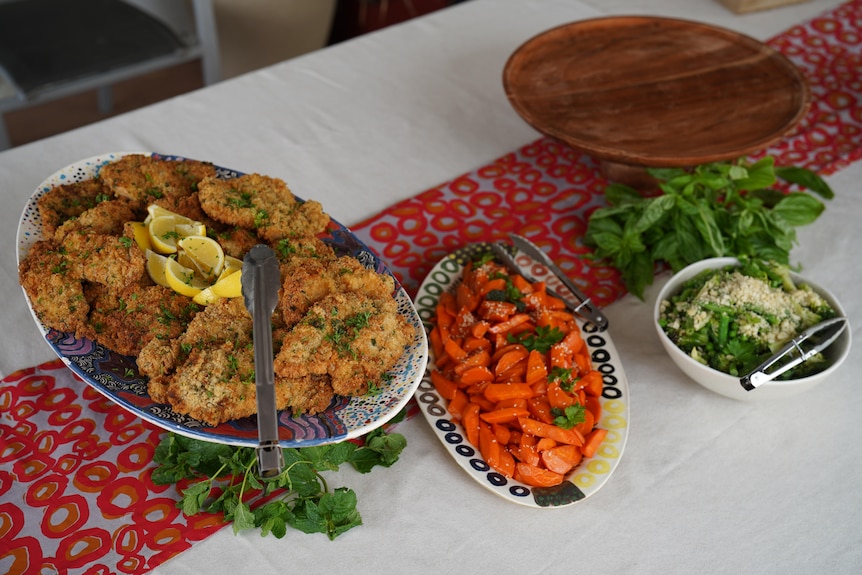
Some of the food prepared in the cookery challenge. (ABC News: Victoria Ellis)
“Where we are is a remote location so we can’t always get what we need,” he said.
“We’re in Alice but it’s flooded so some of the ingredients we haven’t got.”
Mr MacDonald said working with flavour and nutrition was vital.
“That’s how we keep people healthier for longer,” he said.
“Good nutrition throughout the day.”
Everyone’s role
Dolly Hampton, who has worked as Purple House’s laundry manager for more than three years, was relishing the opportunity to learn more about providing nutritious food.
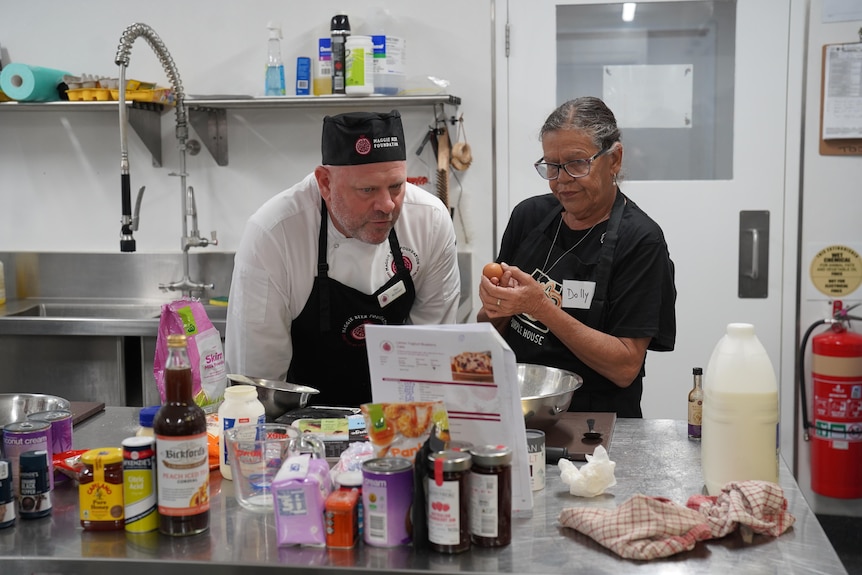
Paul MacDonald gives some advice to Dolly Hampton. (ABC Alice Springs: Emma Haskin)
“I do jump in the kitchen at times, just to help out,” she said.
Ms Hampton said she was making a dessert as part of the training.
“We are doing an oven-baked custard and lemon yoghurt blueberry cake,” she said.
“[I’m] learning about what foods to include for our patients.”
She said she also learnt about how to cater for diabetic and renal clients.
“[It’s also about] putting variety into the food and making it look even more appetising,” she said.
“With the drinks too because they don’t always want water or cup of tea.”
Ms Hampton said the course was fantastic.
“They’re also teaching us if we don’t have the ingredient, we can … substitute something else,” she said.