
Why you can trust TechRadar
We spend hours testing every product or service we review, so you can be sure you’re buying the best. Find out more about how we test.
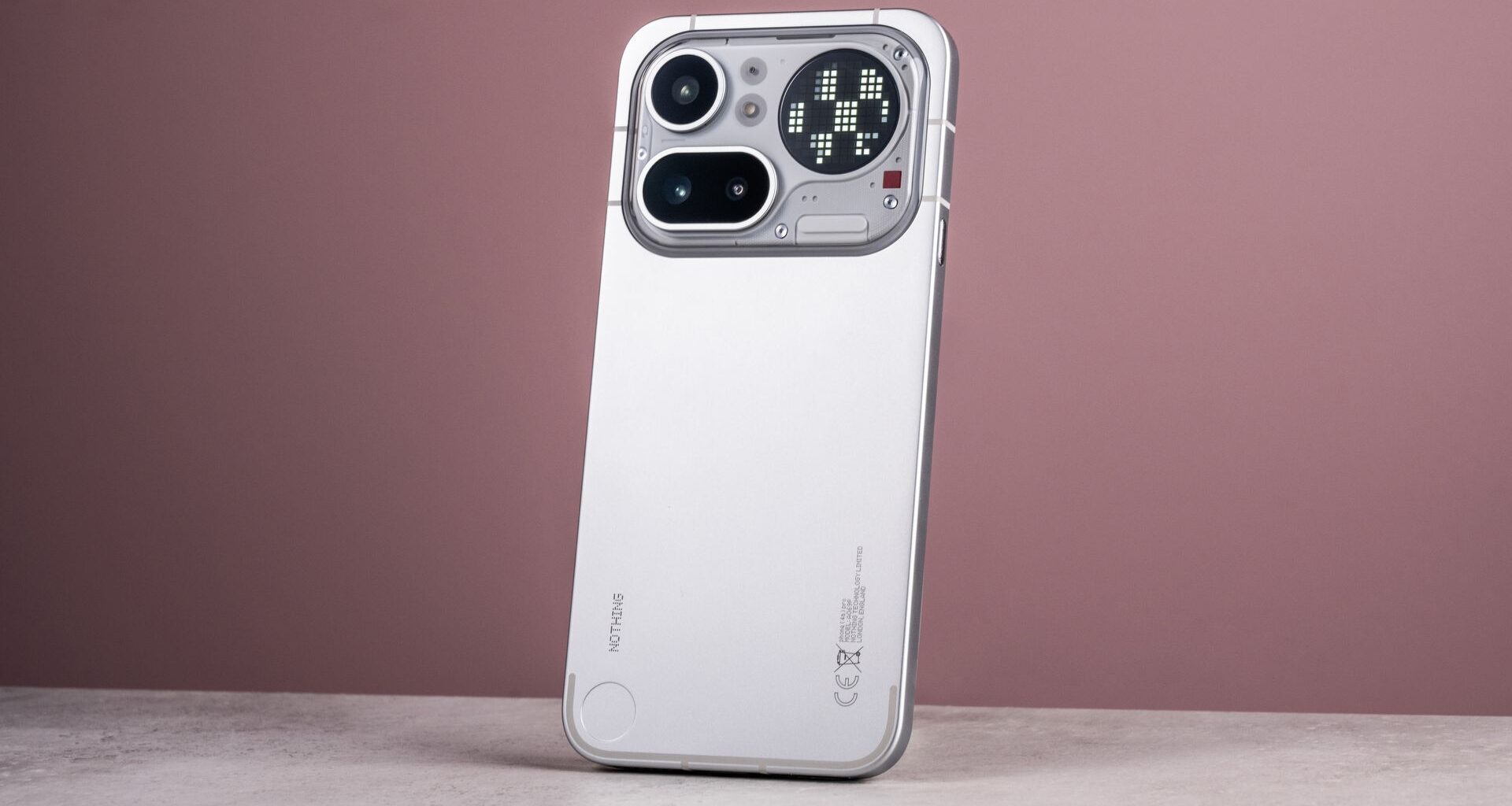
The Nothing Phone (4a) Pro is a budget phone with its sights firmly trained on flagships. It offers a huge 5000-nit AMOLED display, a seriously stylish 0.31-inch / 7.95mm thick aluminum unibody, and a sufficiently powerful mid-range chipset to play games without breaking much of a sweat. More importantly, it continues to champion Nothing’s disruptive attitude to design and brings back the Phone 3’s super-flexible Glyph Matrix.
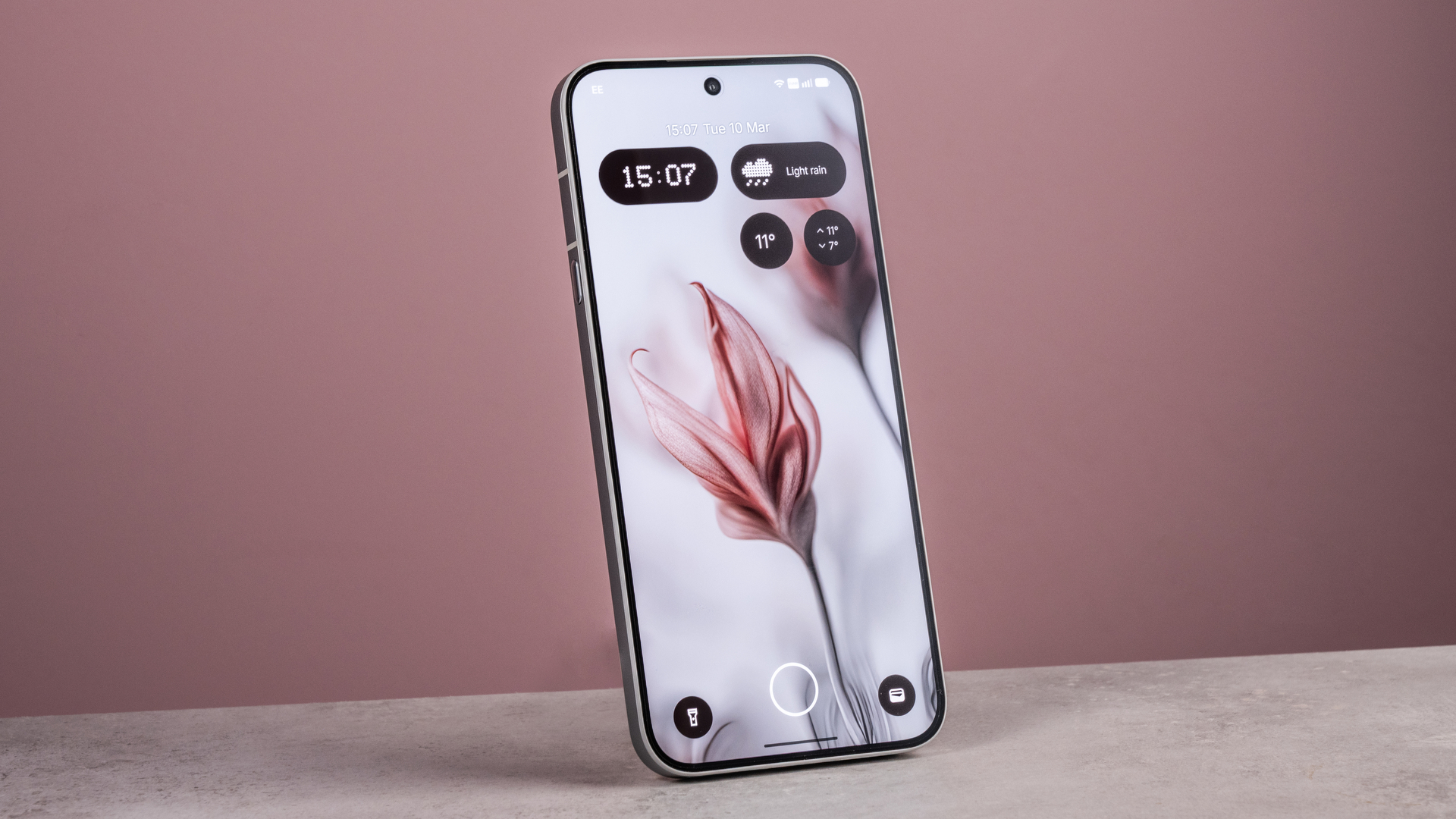
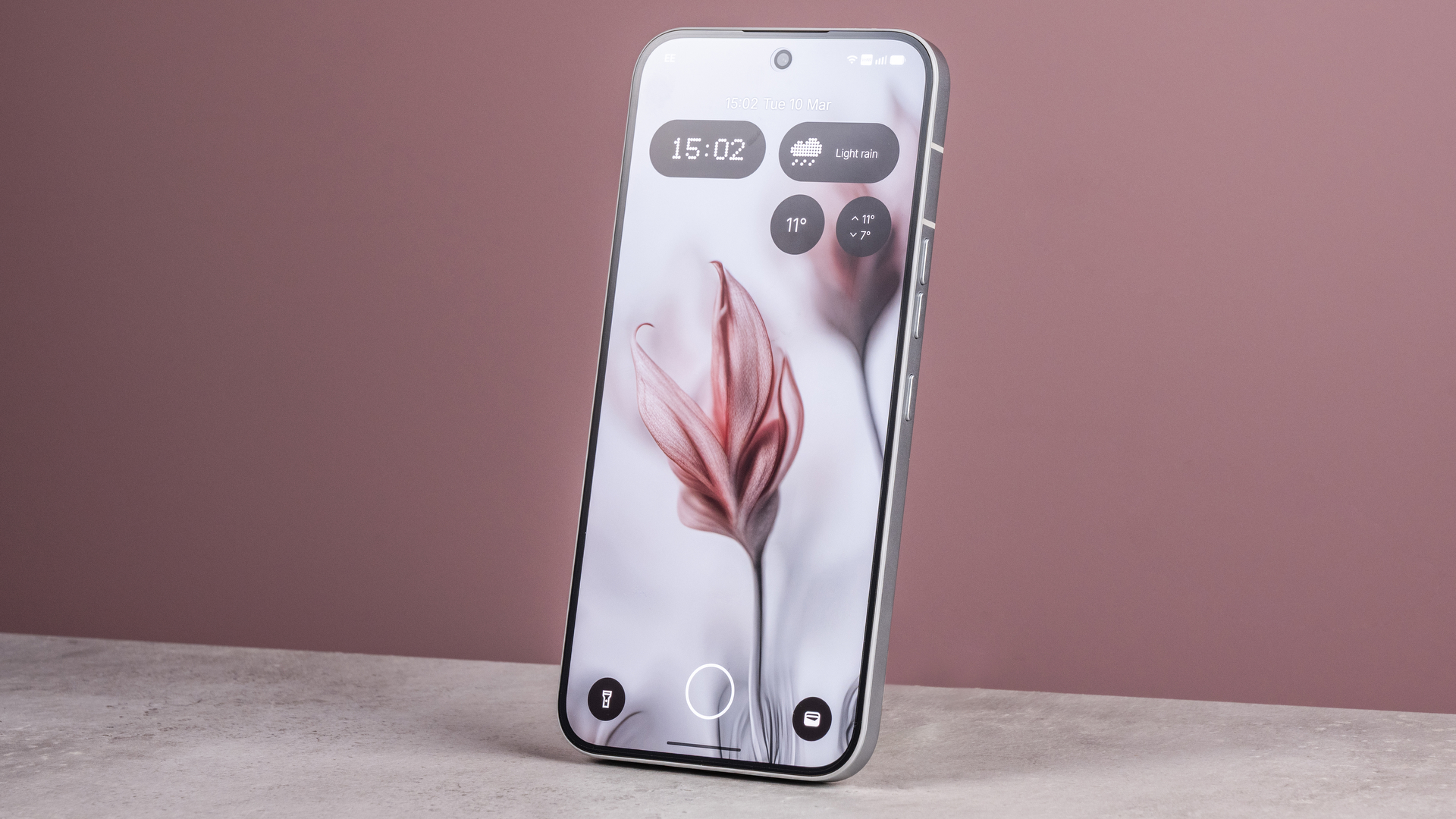
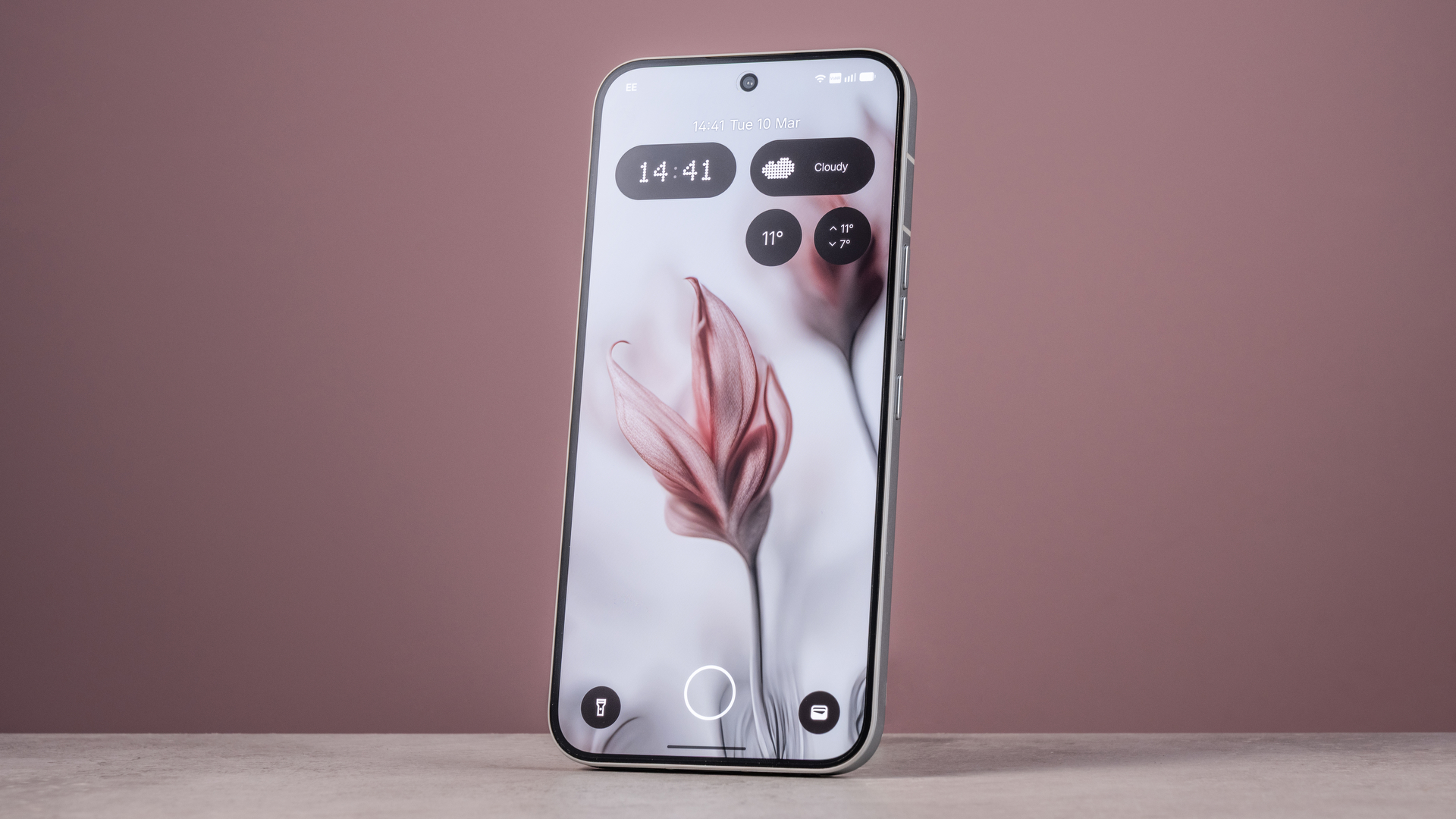
Let’s start with the Nothing Phone (4a) Pro’s display: at 6.83 inches, it gives you a serious amount of screen estate. I fired up some 2K videos and its picture always looked clean and precise, while its 5000-nit peak brightness is probably enough that you could use it as a reading torch. I did find its colors weren’t quite as rich as my iPhone 16 Pro’s Super Retina XDR display, but it looked pretty lush all the same.
But for me, the (4a) Pro’s design is what earns it a place among the best phones. Its aluminum unibody feels solid yet light, and while I think some diehard Nothing fans might miss the transparent back plate from its predecessors, it keeps just enough of those iconoclastic design touches in its camera and glyph module to really stand out in a world of interchangeable gray rectangles.
Not gonna lie: I had a lot of fun playing with Nothing’s Glyph Matrix. While it could easily be read as gimmicky, the sheer quantity of functions it offers meant I found a bunch of ways to use it that genuinely felt helpful. From being able to tell when my girlfriend had messaged to seeing a custom dollar glyph every time I got a transaction notification from my bank, I could easily keep tabs on important things without getting distracted by the daily noise. It went beyond flashing lights and started to actively feel really useful.
More generally, software on the (4a) Pro is also seriously polished, feeling fun to use yet knowing when to stay out of your way. Built on Android 16, Nothing OS 4.1 offers a whole load of customizability, while still feeling clean and bloat-free. Its AI tools allow you to analyze notes, screenshots, and recordings but – crucially – you can also choose which files you want this AI to access, and how much you want to engage with it.
This is backed up by the phone’s admirable performance. While its Qualcomm Snapdragon 7 Gen 4 chipset isn’t exactly top of the range, I found that, coupled with the 12GB RAM of my testing model, it handled productivity tasks and multitasking without complaint. On top of this, the (4a) Pro happily crunched through any game I threw at it on the highest settings without any perceptible lag or frame rate drops; its 5,300mm2 vapor chamber cooling system keeps it from getting too hot during these kinds of heavy loads.
Unfortunately, this can’t be a total love-fest, and I’m a little less enamored with the (4a) Pro’s camera system. On the positive side, the images I shot with it felt sufficiently sharp and detailed – the 3.5x optical zoom produces deliciously crisp images, for example – while night photography is bright and grain-free. However, I did find color reproduction to be a little more subdued than on the best phones on the market, and the exposure on my snaps could be weirdly inconsistent at times.
There’s a slightly mixed picture with the (4a) Pro’s battery, too. While it offers a seriously ample 5,080mAh cell, I couldn’t quite eke out the 21 hours of YouTube vids that Nothing indicated it should deliver – I found it delivered a little over 13 hours of 2K streaming instead. Still, that’s very decent and, thanks to its 50W wired charging, you can quickly top it up to full in a little over an hour.
Of course, if you want top-of-the-range power and an unimpeachable camera, you’ll want to pick up a flagship. But if you’re after a mid-range handset, I’d happily recommend the (4a) Pro.
Today’s best Nothing Phone (4a) Pro deals
(Image credit: Future)Nothing Phone (4a) Pro review: price and availabilityLaunched on March 19, 2026List price from $499 / £499
Launched on March 19, 2026, the Nothing Phone (4a) Pro is available now. It has a list price of $499 / £499, which will net you the spec with 8GB of RAM and 128GB of storage. While that version isn’t available in Australia, don’t feel left out – you can still get your hands on the edition with 12GB RAM and 256GB storage, which retails for $599 / £549 / AU$949.
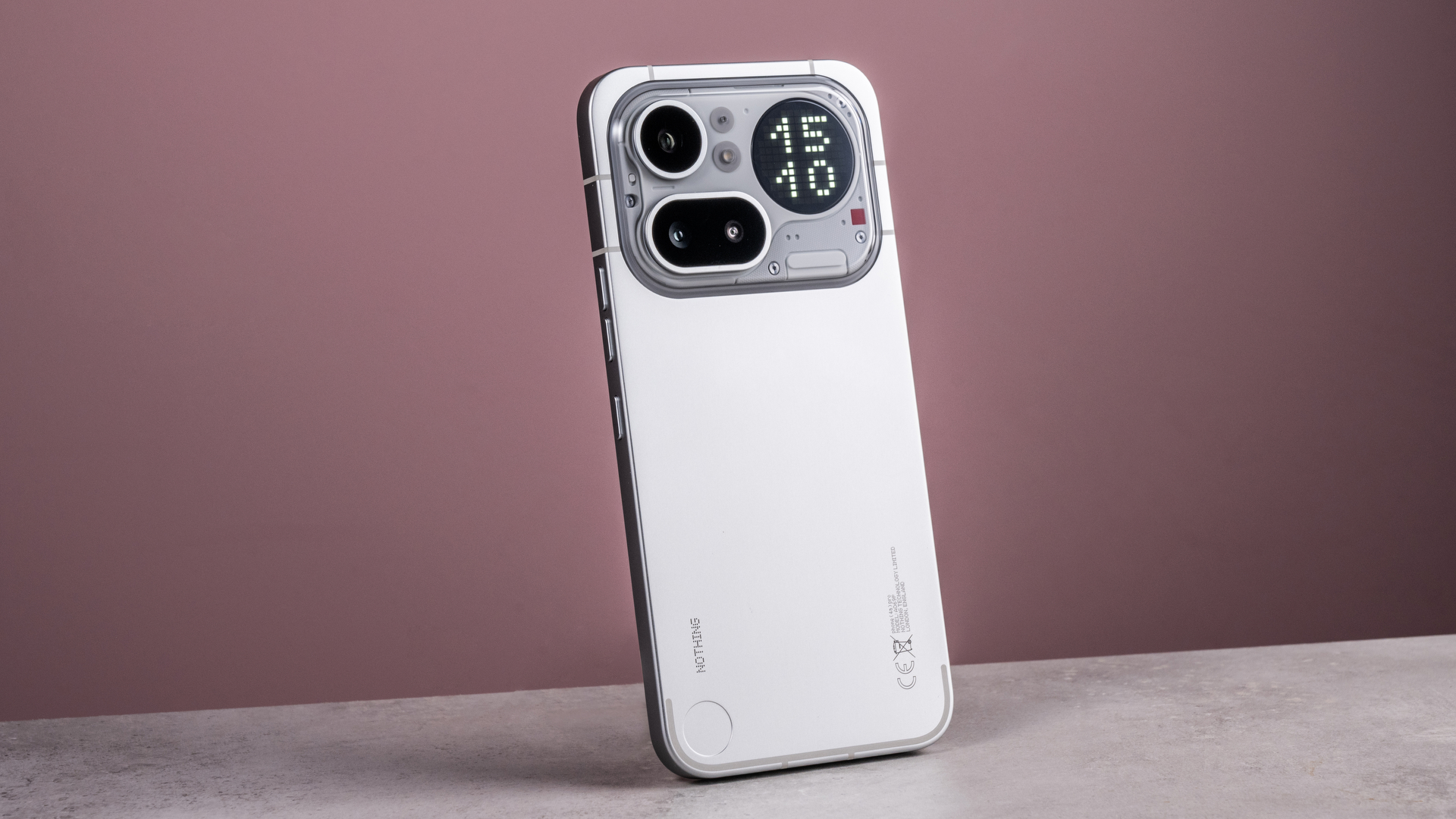
As well as those two different versions, you can also pick between three different colorways: black, white, and a dusty pink. The pink looks awesome and I’m glad there are options for those who don’t just want a monochrome handset, but the pick of the litter for me is the white I tested here, as it really shows off that aluminum body and stark, semi-transparent camera module.
(Image credit: Future)Nothing Phone (4a) Pro review: specsSwipe to scroll horizontally
Dimensions
6.44 x 3.02 x 0.31 inches / 163.66 x 76.62 x 7.95mm
Weight
7.41 oz / 210g
Screen
6.83-inch LTPS flexible AMOLED
Resolution
2,800 x 1,260
Refresh rate
144Hz
Chipset
Qualcomm Snapdragon 7 Gen 4
RAM
8GB / 12GB
Storage
128GB / 256GB
OS
Android 16, Nothing OS 4.1
Rear cameras
50MP f/1.88 main, 8MP f/2.2 ultra-wide, 50MP f/2.88 periscope
Front camera
32MP f/2.2
Battery
5,080mAh
Charging
50W fast charging, no wireless charging
(Image credit: Future)Nothing Phone (4a) Pro review: designStunning build qualityExpansive yet easy to handleGorgeous Glyph Matrix module
I’ll be honest: when Nothing phones first entered the market, I wasn’t totally swayed by their style. At the time the Phone (1) was released, it both felt a little too brutalist and yet not quite as outré as the pre-release hype had led me to expect. I’ve gradually come around on this, particularly as more concrete innovations like the series’ Glyph notifications have been introduced alongside those stark looks.
Why do I mention this? To add a little context to what I’m about to say next.
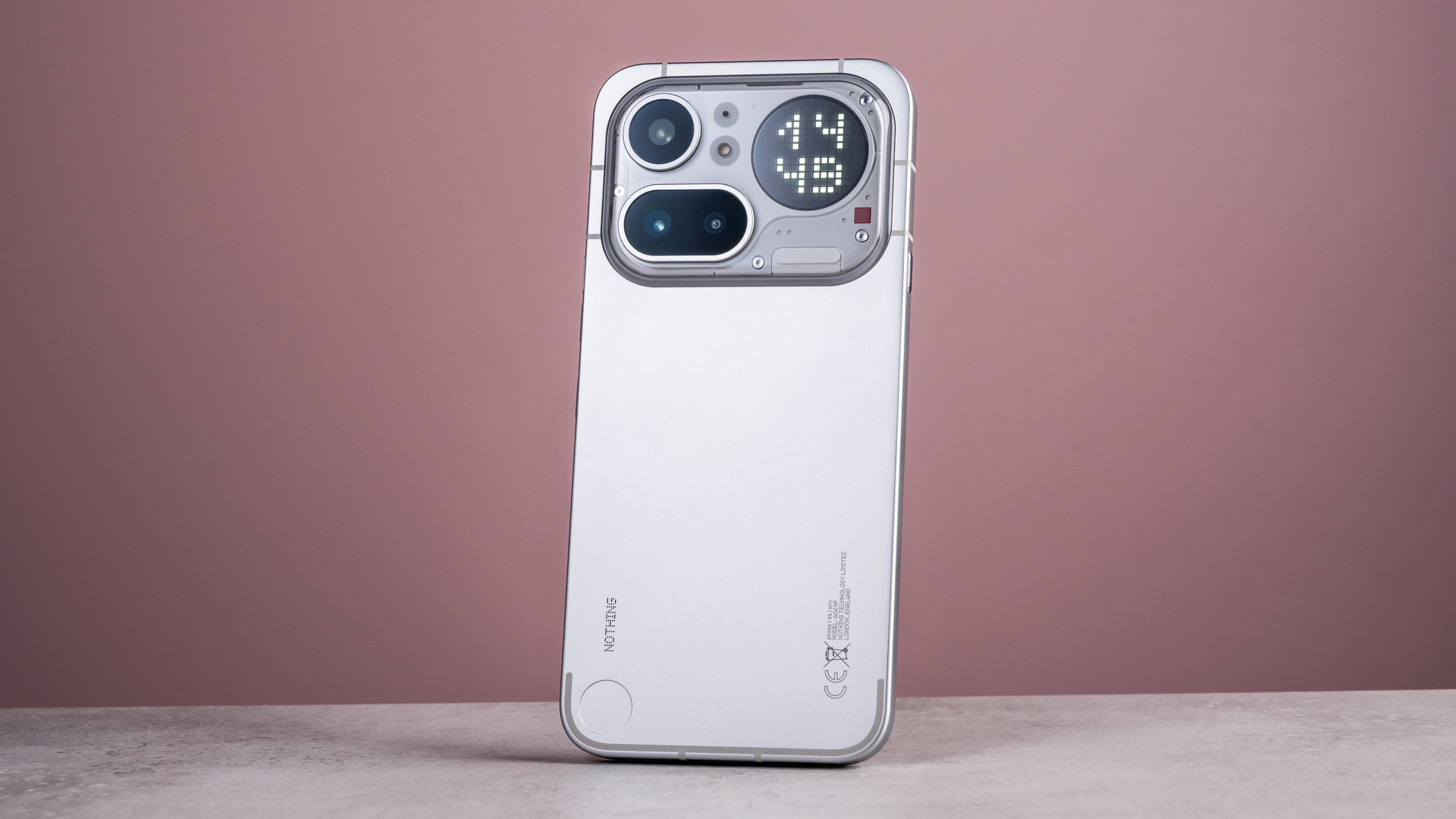
I love the Nothing Phone (4a) Pro’s design. There’s something effortlessly understated about its build, which manages to remain both unique and instantly recognizable. I know some will be sorry not to see the series’ full transparent backplate here – you might want to opt for the base (4a) if you prefer that look – but the (4a) Pro’s aircraft-grade aluminium body still looks suitably industrial while also feeling pleasingly premium to the touch.
It’s also Nothing’s slimmest phone to date, measuring just 7.95mm / 0.313 inches and weighing in at 210g / 7.41oz. As a result, even taking into account its expansive 163.66 x 76.62mm / 6.44 x 3.02 inches height and width, the (4a) Pro never felt anything less than comfortable in my hand. Yet it’s no delicate flower either – its Gorilla Glass 7i screen should help protect it against scratches and drops, while its IP65 rating should entirely keep dust at bay and, Nothing promises, allow it to endure a dunking in 25cm / 9.84 inches of water for up to 20 minutes.
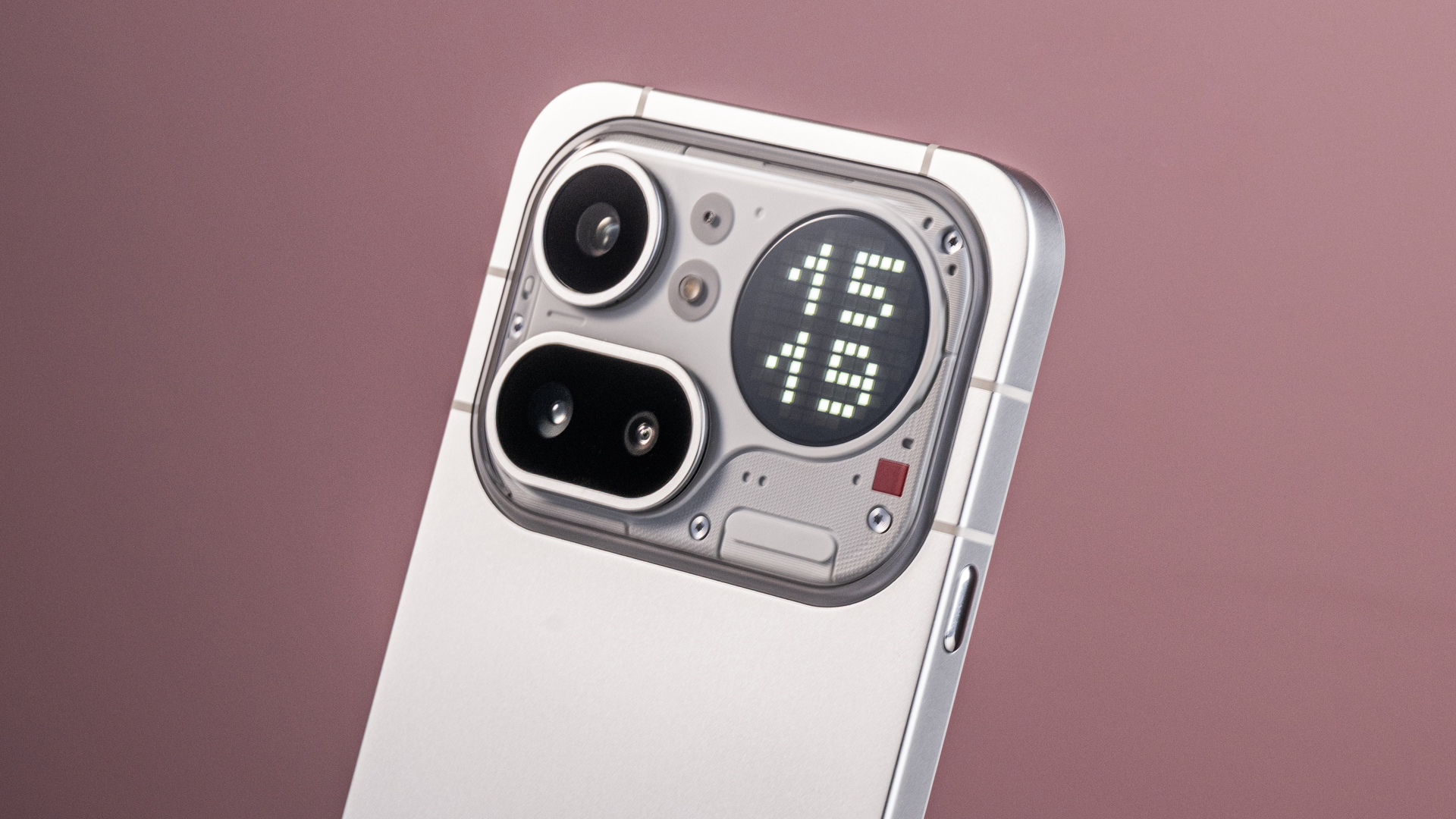
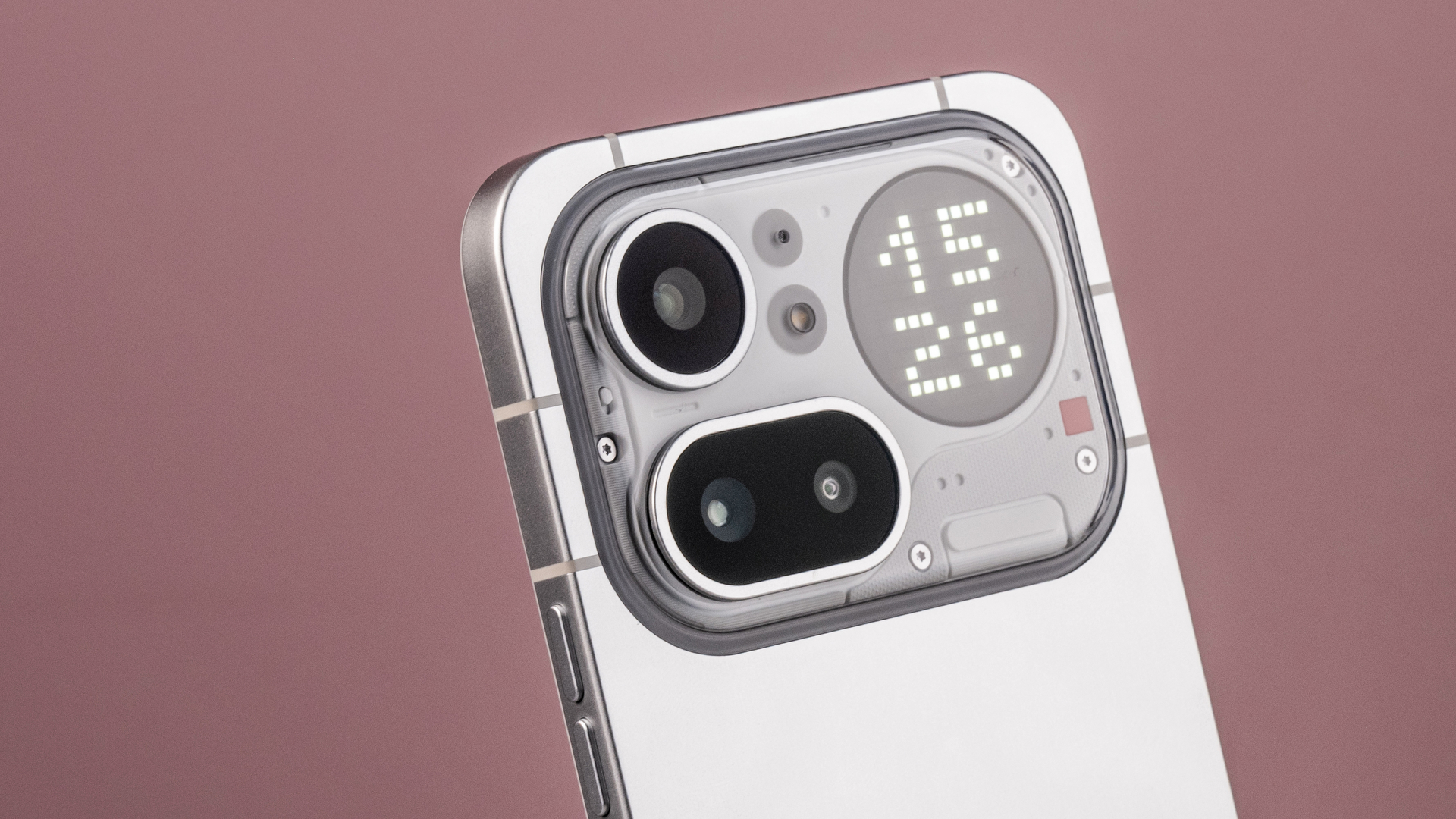
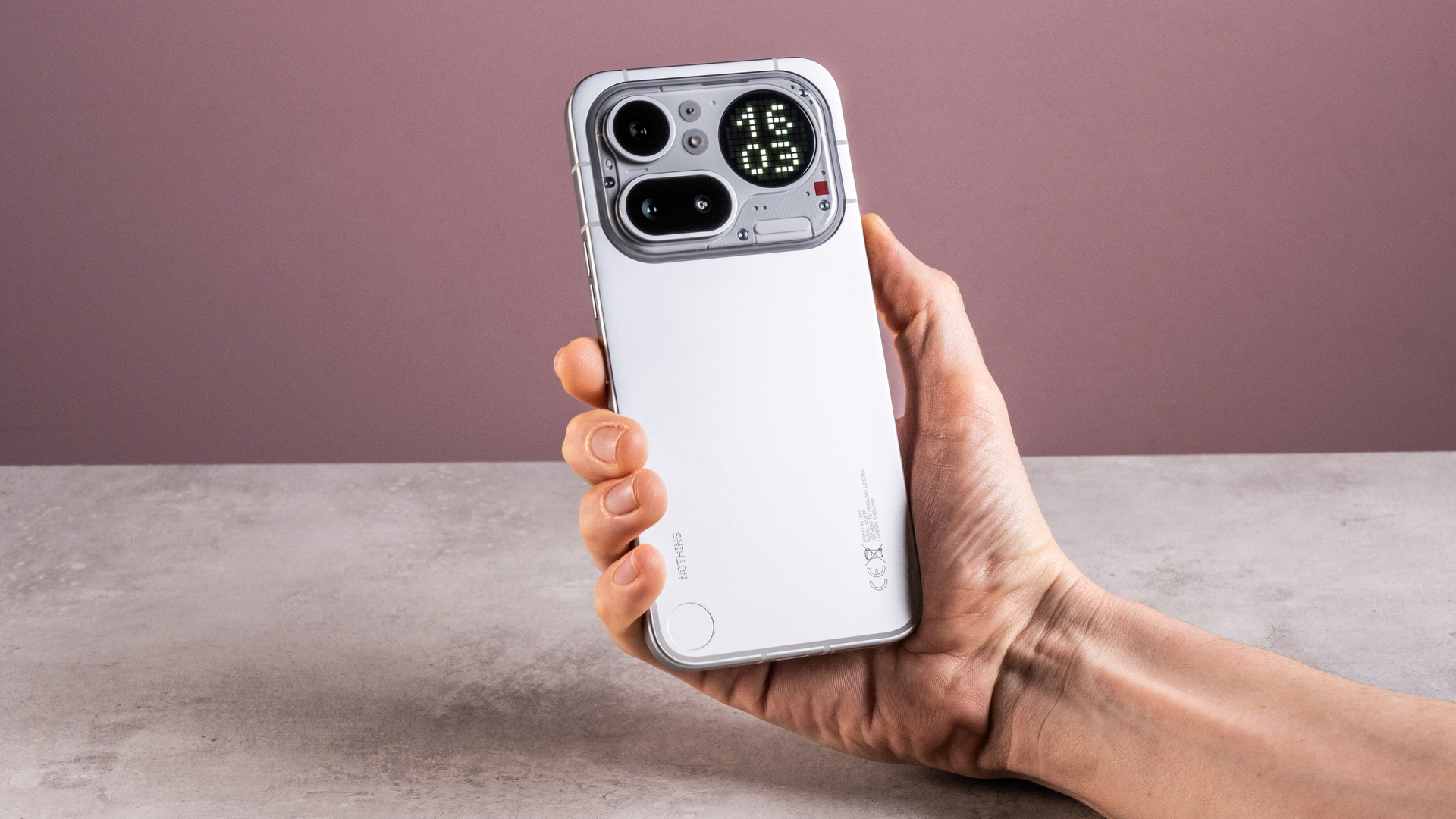
Undoubtedly, the phone’s most prominent feature is that chunky camera module on the back. Nothing is very much on board with the full-width camera trend we’ve seen from the Google Pixel series and the iPhone 17 Pro. But while these blocky camera bulges sometimes look a little unsightly to my eye, I have to say, Nothing has nailed it here – not only has the brand broken it up by using its transparent design language, but that expansive Glyph Matrix turns it from dead space into a striking visual feature.
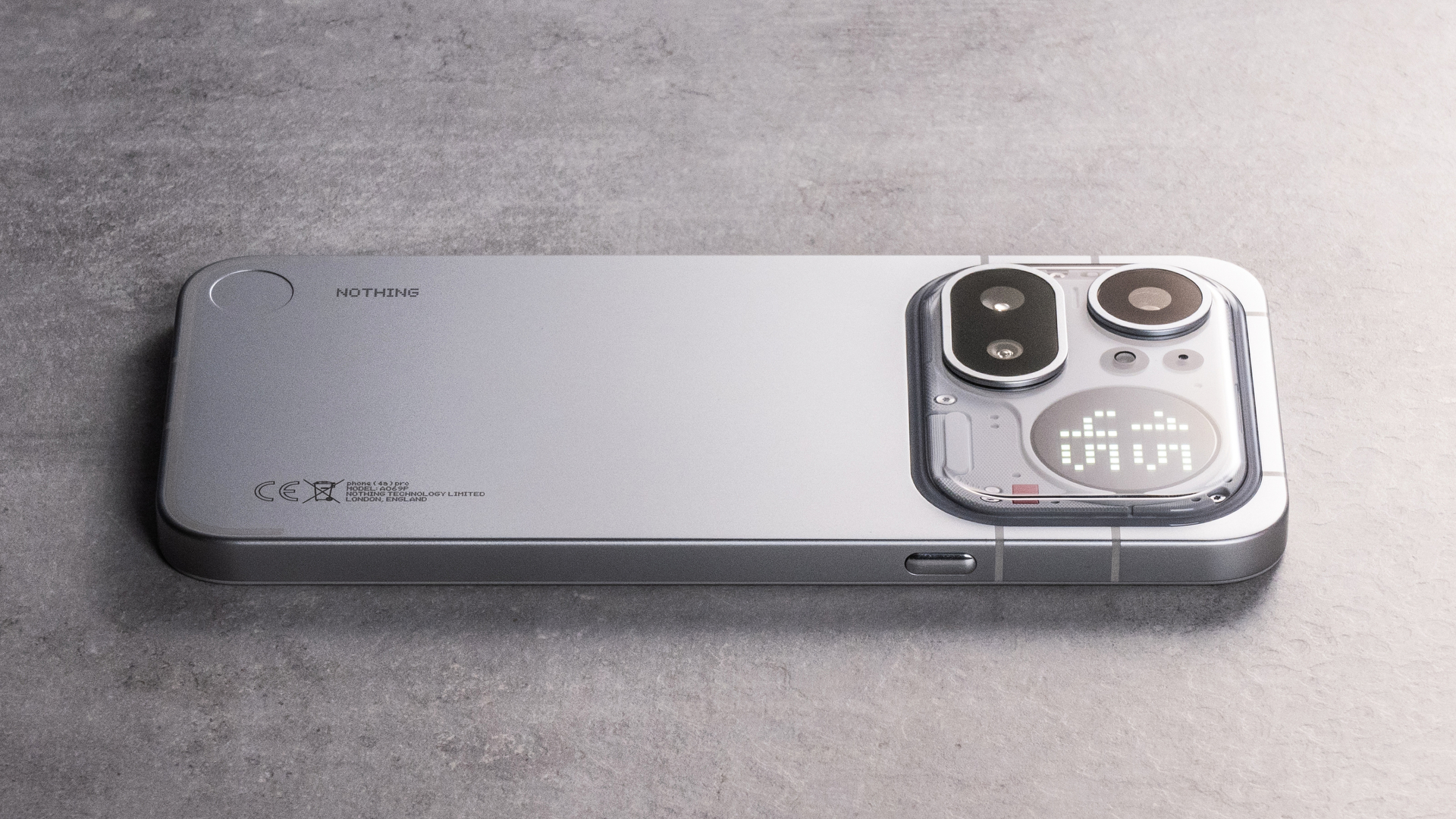
Speaking of: the Glyph Matrix itself is also seriously well designed. Comprising 137 mini-LEDs, it offers fantastic versatility, allowing you to display a wide range of moving and still glyphs to accompany various functions on your phone, which I’ll explore more in the software section below. And it’s also ludicrously bright at 3,000 nits – when I first excitedly showed off what it could do to my partner, she winced as if I’d just let off a flashbulb in her face. Oops. Fortunately, you can turn the brightness down if you don’t want it set to ‘stadium floodlight’.
After using the Nothing Phone (4a) Pro, my trusty iPhone 16 Pro has genuinely felt a little drab by comparison. Given how much I loved the latter’s looks when I first bought it, that shows the high bar the (4a) Pro has set in terms of its design.
(Image credit: Future)Nothing Phone (4a) Pro review: displayHuge 6.83-inch screenWonderfully brightColors less vibrant than some flagships
Almost immediately, the first thing that will strike you about the Nothing Phone (4a) Pro’s display is its size. It’s huge. At 6.83 inches, it’s only a shade smaller than the Samsung Galaxy 26 Ultra’s gargantuan 6.9 inches, although the 2,800 x 1,260 resolution of its AMOLED panel can’t quite reach the 3120 x 1440 pixels offered by Samsung’s flagship.
Still, during my testing, I found it looked impressively crisp. To really try out what it could do, I watched Planet Earth III on BBC iPlayer and was impressed by how clear the footage seemed, rendering elements like the huge, red glistening eyes of a gliding tree frog in gorgeous detail. It also shows off images with bags of contrast; that AMOLED display is capable of hitting deep blacks that offer a real HDR pop to everything you see.
The Nothing Phone (4a) Pro is also impressively bright. While it didn’t quite hit the supernova-like glare that its 5,000 nit peak brightness would suggest – I’d peg it as not dissimilar to the brightness hit by the 3,000 nit-peak iPhone 17 Pro – it still absolutely glowed. Whether I was testing under our office’s fluorescent lights or one of those rare guest appearances the sun makes in the British sky, it never appeared anything less than luminous.
There’s pretty much only one area in which I found the (4a) Pro’s display wasn’t quite able to keep pace with flagships: color. Comparing it side-by-side with my iPhone 16 Pro, its hues felt just a tiny bit too cool by contrast – for example, a burning sunset over a colossal river delta looked a tiny bit less amber and glowing, missing out on the rich realism of the more premium phone. But the fact that the (4a) Pro can be credibly compared with handsets nearly twice its price, even if it can’t quite best them, shows just how impressive its display is.
(Image credit: Future)Nothing Phone (4a) Pro review: softwareSlick, bloat-free OSWonderfully innovative Glyph Matrix functionsGood AI tools that aren’t forced on you
Software can be the Achilles heel of some Android handsets. I’ve seen a few too many OSes over the years that focused on aesthetics over usability and came crammed with low-quality, third-party apps – forcing apps like Temu on me does not endear me to your phones.
Fortunately, Nothing OS sidesteps all of these issues. It’s lean and intuitive – within a few hours of starting to use the (4a) Pro, I understood pretty much everything about how it worked – but more importantly, there’s almost zero bloat. After setting the phone up, pretty much the only third-party apps in the App Drawer were ones I’d imported from my old phone, while the homescreen was kept wonderfully clean. Take note, Android developers.
It also looks great. I’ve tried minimal, monochrome interfaces on phones like the iPhone in the past, but I’ve often found that, without the cognitive cue color provides, I just spend longer hunting for the app I need. Yet here, Nothing OS not only looks pleasingly stylized, but it also manages to do so without increasing my cognitive friction when navigating, thanks to those clear app icons and the ability to scale up my most commonly used apps.
The Nothing Phone (4a) Pro also offers plenty of AI features. But unlike some brands that make these tools impossible to avoid, Nothing largely confines them to its Essential Space section.
Press the button on the left side of the screen to capture a screenshot, record your screen, or take a voice note – these are then added to the Essential Space app for your easy access, and made available to be analyzed and have key information extracted. This info can then be harnessed by Essential Search or Essential Apps, which are effectively apps created by your prompts, customized to your specific needs. Kudos to Nothing for taking such a balanced approach here between giving users access to these tools and allowing them to choose how much they want to engage with them.
Right, time to put adultish things away – let’s talk about some of the fun stuff the Nothing Phone (4a) Pro has to offer.
The Flip to Glyph feature allows you to mute your ringtone and notifications by turning your phone face down – I found this invaluable, given I often place my phone screen down to minimize distractions at work. You can even restrict calls and notifications to only come through from essential contacts like your partner or kids. Should you want to see a caller’s ID or check your battery level without getting drawn in by the screen, you can just wiggle your phone, and it’ll show up on the Glyph Matrix.
That’s far from all the Glyph Matrix can do, though. Always-on Glyph Toys let you assign information like the time, battery level, sun’s position in the sky, or even the phases of the moon to the display. On a more practical level, you can also use it to track the progress of timers or even third-party apps – although currently the only ones that appear to offer integration right now are Google Calendar, Uber, and Zomato, which rather limits this feature’s usefulness right now.
But perhaps my favorite feature is the ability to create your own rules and assign custom glyphs to them. As well as allowing you to assign unique glyphs to specific people – I set my partner’s calls and messages to display as a heart, for example – you can also set rules for specific apps, allowing you to differentiate between a WhatsApp and an Instagram notification. You can even set glyphs for specific keywords: I set it so any message mentioning my cat’s name would flash the cat glyph.
Not only is the Glyph Matrix an incredibly fun feature, but Nothing has found countless ways for it to actually materially improve your experience using the device. I definitely think that elevates it from a mere gimmick to something I genuinely used.
(Image credit: Future)Nothing Phone (4a) Pro review: camerasCrisp, well-defined detailsSometimes looks over-exposedColors a little pale
Overall, I found images captured with the Nothing (4a) Pro to be pretty crisp. While using the 50MP main camera, edges were largely as well defined as on my iPhone 16 Pro, and it maintains this detail well when using the 3.5x optical zoom. I’m less keen on digital zooms, given the same results can usually be achieved with judicious cropping, but the (4a) Pro’s 7x lossless zoom was almost as crisp as the 16 Pro’s 5x optical zoom, despite some slight haloing around highlights.
On the whole, night photography was pretty impressive too. The (4a) Pro merges seven frames into one, which Nothing claims lets in 500% more light than rival cameras, and you can definitely see that in the finished results. None of the photos I took looked dingy or underexposed, and there wasn’t a hint of grain there, although I would personally prefer a little less brightening of the mid-tones, as a bit more HDR punch would make these photos look even more bold and contrasty.
Unfortunately, the (4a) Pro’s camera system has some definite weaknesses too. Although black levels were consistently deep, highlights were a lot less reliable – some of my shots of feeding swans ended up looking totally overexposed, while my snaps of magnolias in the park didn’t quite capture the same brilliant whites as the ones I shot on my iPhone. I’m used to exposure levels remaining pretty stable from shot to shot, but sometimes the Nothing feels like it can produce weirdly divergent shots from the exact same lighting conditions.
Additionally, colors don’t always look totally true to life. Shooting tulips on the brink of bloom, some of the hues were a lot more muted than I was hoping, looking a little more washed out than the iPhone’s intense reds. And while I look pretty pale and pasty in most selfies, the (4a) Pro’s front-facing cam sometimes made me look a little like Gary Oldman in Bram Stoker’s Dracula.
Fundamentally, you can’t expect a totally flagship experience from a mid-range phone – compromises have to be made somewhere to keep costs this low. But I think the (4a) Pro meets such a high standard in several other areas that this one shortcoming is a lot more noticeable by contrast. It’s a decent camera on the whole – it just doesn’t reach the same heights as the rest of the phone.
(Image credit: Future)Nothing Phone (4a) Pro review: performanceNo noticeable lag or hanging when multi-taskingGreat gaming performanceStays cool even under a heavy load
The Nothing Phone (4a) Pro’s impressive design isn’t just skin deep – under the hood, it’s packing the Qualcomm Snapdragon 7 Gen 4. While this isn’t the most powerful CPU on the market, it still gives the (4a) Pro the edge over many mid-market rivals – for example, the Samsung Galaxy A56 relies on the weaker Exynos 1580. Add in the fact that you can spec Nothing’s phone with up to 12GB RAM, and you can see why I was expecting some pretty serious performance here.
And I’m delighted to say that the (4a) Pro more than lived up to these expectations. During everyday use, I didn’t experience any hanging or appreciable slowdown. Swiping between various apps, I was able to quickly pivot from watching YouTube videos to navigating on Google Maps. Even when multi-tasking, the phone didn’t seem to break much of a sweat – I cheekily loaded up a game and left it running picture-in-picture while I typed some of this review in Google Docs, and both apps continued to run fluidly, like this wasn’t a slightly outrageous thing to ask of the phone.
On top of that, while we criticized the Samsung Galaxy A56 for its weaker gaming capabilities, I found the (4a) Pro’s gaming performance to be pretty unimpeachable. Loading up Genshin Impact, I found there wasn’t a hint of lag or stuttering, whether I was battling Hilichurls or charging around cities. Meanwhile, Call of Duty: Mobile was silky smooth, seeming to deliver on Nothing’s promise of 90Hz refresh rates and making it easy to gun down my bewildered opponents while they were still desperately swiping their screens trying to train me in their sights.
But this kind of performance is no good if your phone can’t sustain it. Fortunately, I found that, thanks to its 5,300mm2 VC cooling system, the (4a) Pro was able to keep its cooling under this kind of strain. Despite the fact that I spent a couple of hours gaming on the (4a) Pro, there was only very mild warming on the back – and I think that was much more likely from my sweaty mitts than its CPU overheating. Given that quite a few phones still get blisteringly hot from demanding games, I was really glad to see how chill the Nothing Phone was.
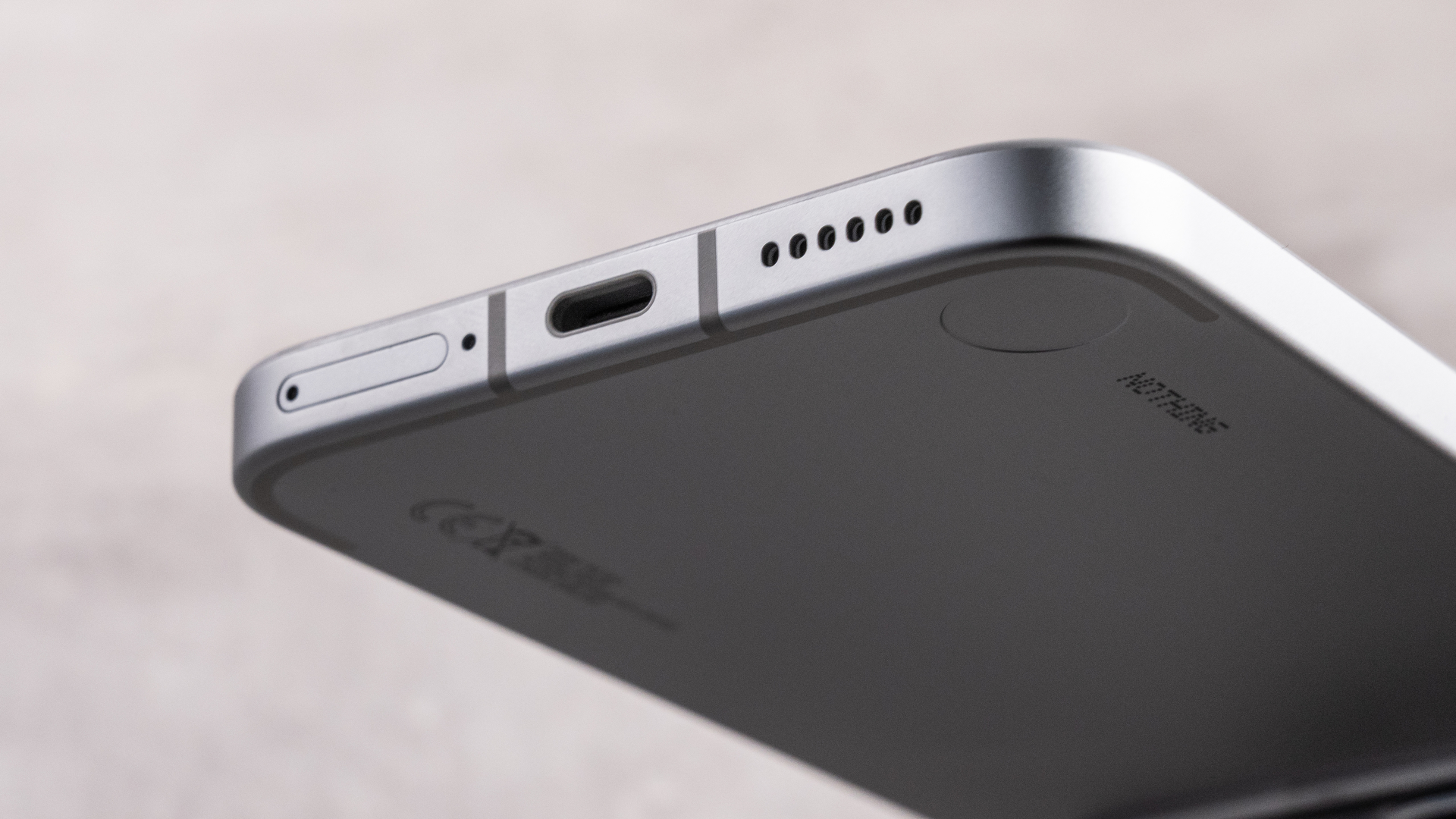
(Image credit: Future)Nothing Phone (4a) Pro review: battery lifeLarge 5,080mAh capacityFell a little short of Nothing’s usage estimates50W charging juices it up fast
With a capacity of 5,080mAh, the Nothing Phone (4a) Pro is able to keep pace with huge flagships like the Samsung Galaxy S26 Ultra, which has a typical capacity of 5,000mAh – although it can’t quite beat the OnePlus 15 with its voluminous 7,300mAh battery.
What does this mean in practical terms? Well, despite using it pretty intensively during my testing, I found that the (4a) Pro would often last well into a second day’s usage, meaning you’re unlikely to need to worry about it lasting your whole day.
In terms of hard numbers, Nothing estimates it should give you 17 hours of combined usage or 21 hours of YouTube viewing. Putting this claim to the test, I set the (4a) Pro streaming 2K video for hours on end to see how it held up. After six hours, its battery had dropped to 56% – that means I’d expect it to last around 13 hours 40 minutes in total. That’s quite a way short of what was estimated, but this was at max brightness, which likely brought its life down somewhat.
Fortunately, even when the phone does run out, juicing it up again is lightning fast, thanks to its 50W wired charging. Nothing’s estimates weren’t quite borne out by my testing here either: rather than the 0% to 60% they suggested I’d see in just 30 minutes, I got to 47%. Still, that’s seriously fast, meaning you’ll likely be full after just an hour’s charging – that’s still speedier than many mainstream handsets, even if the phone can’t quite hit the absurd pace of something like the 100W charging of the OnePlus 15.
(Image credit: Future)Should I buy the Nothing Phone (4a) Pro?Swipe to scroll horizontally
Attributes
Notes
Rating
Design
Both stylishly understated and utterly singular, huge yet perfectly ergonomic, slim yet robustly built.
5/5
Display
Absolutely enormous and wonderfully bright, crisp even if it’s not quite as high resolution as some flagships. Colors less vibrant than the best phones though.
4/5
Software
OS is simple to use, feeling slick and streamlined. Can engage with AI tools as much or as little as you like. Glyph Matrix tools both fun and surprisingly useful.
4.5/5
Cameras
Crisp detail, decent black levels and impressive night photography. But inconsistent exposure levels and muted hues hold it back from greatness.
3.5/5
Performance
Strong chipset and RAM options for a mid-range phone, handles multi-tasking and gaming without noticeable issues, and stays impressively chill under heavy workloads.
4/5
Battery life
With its 5,080mAh capacity, the battery lasts a good long while, although it fell a little short of Nothing’s estimates. 50W fast-charging topped it up super fast though.
4/5
Buy it if…Don’t buy it if…Nothing Phone (4a) Pro review: also considerSwipe to scroll horizontallyHeader Cell – Column 0
Nothing Phone (4a) Pro
Samsung Galaxy A56
Nothing Phone (4a)
Dimensions
6.44 x 3.02 x 0.31 inches / 163.66 x 76.62 x 7.95mm
6.39 x 3.05 x 0.29 inches / 162.2 x 77.5 x 7.4mm
6.46 x 3.06 x 0.34 inches / 164 x 77.6 x 8.6mm
Weight
7.41 oz / 210g
6.98 oz / 198g
7.21 oz / 204.5g
Screen
6.83-inch LTPS flexible AMOLED
6.7-inch FHD+ Super AMOLED
6.78-inch LTPS flexible AMOLED
Resolution
2,800 x 1,260
2340 x 1080
2720 x 1224
Refresh rate
144Hz
120Hz
120Hz
Chipset
Qualcomm Snapdragon 7 Gen 4
Exynos 1580
Qualcomm Snapdragon 7s Gen 4
RAM
8GB / 12GB
8GB (12GB in limited locations)
8GB / 12GB
Storage
128GB / 256GB
128GB / 256GB
128GB / 256GB
OS
Android 16, Nothing OS 4.1
Android 15 with Samsung’s One UI 7
Android 16, Nothing OS 4.1
Rear cameras
50MP f/1.88 main, 8MP f/2.2 ultra-wide, 50MP f/2.88 periscope
50 MP main; 12MP ultra-wide; 5MP Macro
50MP f/1.88 main, 8MP f/2.2 ultra-wide, 50MP f/2.88 periscope
Front camera
32MP f/2.2
12MP
32MP f/2.2
Battery
5,080mAh
5,000mAh
5,080mAh
Charging
50W wired fast charging, no wireless charging
45W wired
50W wired fast charging, no wireless charging
(Image credit: Future)How I tested the Nothing Phone (4a) ProUsed it consistently over a week and a halfTested every core function in real-world scenariosUtilized years of gadget testing experience
I tested the Nothing Phone (4a) Pro over the course of a week and a half. To test out its display, I engaged in plenty of browsing and watched multiple 2K HDR videos to compare it to flagship devices. When assessing performance, I tested it out both in a variety of productivity contexts and by playing demanding games like Genshin Impact and Call of Duty: Mobile on max settings.
When putting its camera through its paces, I took a variety of photographs in different contexts, from floral shots during bright sunlight to nighttime shots in a city, comparing them to my iPhone 16 Pro for context. And to try out its battery life, I looped 2K YouTube videos for six hours to see how much the battery drained, before juicing it up with a 50W charger to see how quickly it would refill.
In terms of my experience, I’ve been reviewing a wide variety of gadgets for many years, as well as editing plenty of phone and tablet reviews written by the reviews team. I’m also a regular mobile gamer and have shot some 46,000 photos on my iPhone over the years, meaning I have a lot of experience shooting on mobile.
Nothing Phone (4a) Pro: Price Comparison