
Some leading research is taking place in Scotland too.
The University of Edinburgh is home to ARCHER2, the UK’s national supercomputer, and – after a brief period of outrage where the UK government cancelled then reinstated it – will soon host a £750m supercomputing centre.
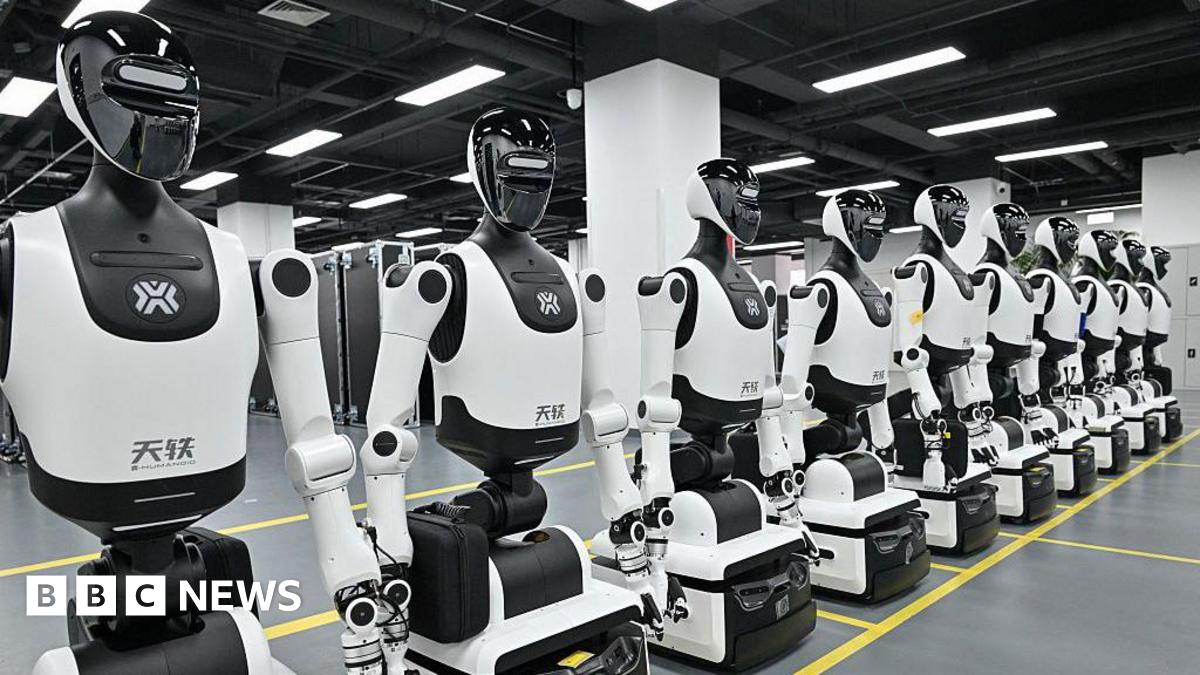
The National Robotarium at Heriot-Watt University is leading breakthroughs in medical and offshore robotics, having incubated 14 companies in its first few years.
Healthcare is in the centre of some of the most eye-catching developments in terms of AI in public services.
A study published last week found that AI tools could increase cancer detection, while also speeding up diagnoses and cutting the workload of clinical workers.
It was based on a project led by the University of Aberdeen and NHS Grampian which looked at breast screening processes.
Across the UK, all women aged between 50 and 70 are invited for mammograms every three years – and two million of the tests are carried out annually.
Two radiologists are required to read every mammogram, and patients are called back in for further tests where there is any dubiety – but still, 20% of cancers are missed.
A number of different health studies have capitalised on the way AI tools can be trained in image recognition to help read scans, swiftly highlighting minute areas of concern that could easily be missed.
And this one found that by using software called Mia in the place of the second radiologist, they could improve detection by 10.4%, cut the waiting time for results from 14 days to three, and reduce the workload of the doctors by more than 30%.
This retained the safeguard of a human radiologist reviewing each case, while maximising the potential gains from the use of technology.