
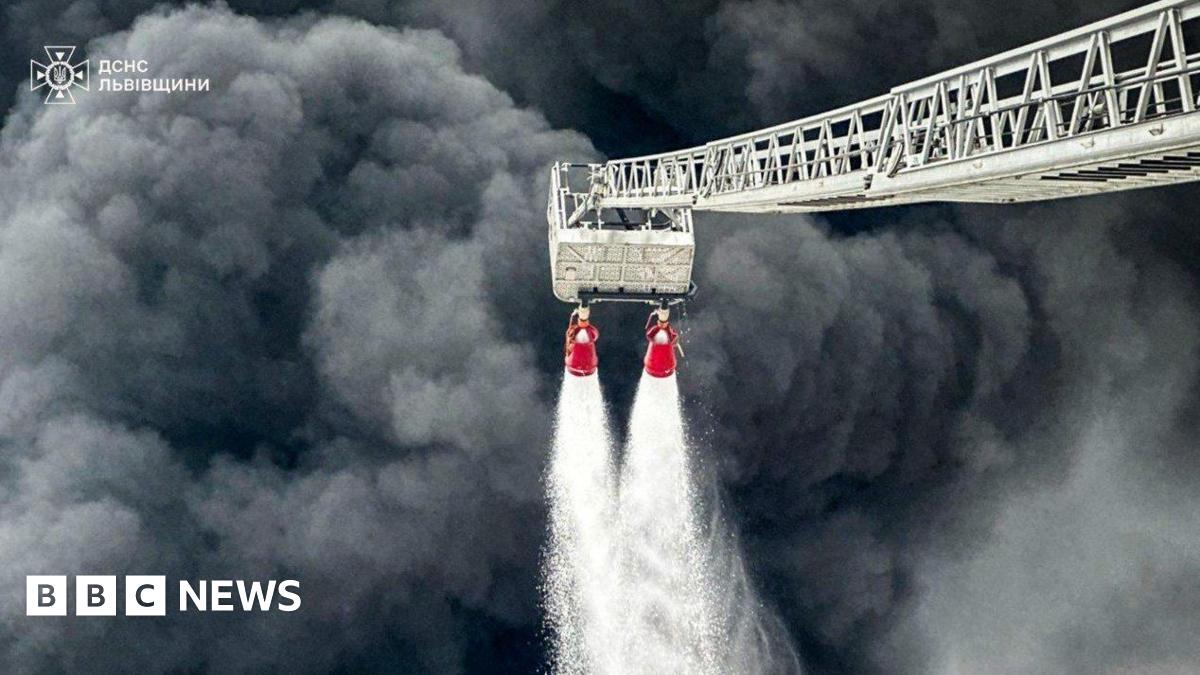
Satellite images obtained by the BBC suggest that the Russian strike on 27 January damaged its key part – a huge tank used to store oil necessary to keep the pipeline pressurised and functioning.
The photos appear to show the tank smouldering after the attack and suggest that a fire raged there for days.
This is the biggest oil tank in Ukraine, with a capacity of 75,000 cubic metres.
Ukrainian energy expert Henadiy Ryabtsev says damage caused to the pumping station at Brody is severe, and is possibly not just limited to the oil tank.
According to him, the extreme heat resulting from the fire may have also damaged other systems at Brody, such as pumps and the pipeline itself.
“The oil was on fire for about a week, which means that during that time everything around it was affected by the high temperature,” he told the BBC.
The government in Kyiv says the damage caused to Brody is severe and Ukraine does not have the resources to repair it more quickly.
“This is a technical issue,” Ukrainian Foreign Ministry spokesman Heorhy Tykhy told the BBC.
“Our infrastructure is being damaged every day… Ukraine repairs all of that, but we do not have unlimited resources. We are in a full-scale war, which Hungary decides to ignore for some reason,” Mr Tykhy said.
To speed up the repairs, the EU has offered Ukraine “technical support” and funding, says European Commission President Ursula von der Leyen. “The Ukrainians have welcomed and accepted this offer. European experts are available immediately,” she said in a message on X.
President Volodymyr Zelensky had earlier signalled reluctance to repair the pipeline.
“I’ll be honest, I wouldn’t restore it… because it’s Russian oil,” he told journalists on 5 March.