

Add Silicon Canals to your Google News feed. 
Most people end their day the same way: screen on, brain off. A show, a scroll, maybe both at once. It’s the path of least resistance, and after a long day, resistance is exactly what nobody has the energy for. But neuroscience research is making something increasingly clear: the activity you choose for the last 30 minutes of your day isn’t just a preference. It’s a nightly investment in the kind of brain you’re building.
And the gap between people who read before bed and people who watch television is not small.
What Happens When You Read
Reading is one of the most neurologically demanding things a human brain can do voluntarily. Unlike watching a screen, where images and sounds are delivered to you, reading requires your brain to construct everything internally. It has to decode symbols into language, assemble that language into meaning, generate mental imagery, track characters, hold narrative threads in working memory, and simulate emotional states that aren’t your own.
An fMRI study at Emory University led by neuroscientist Gregory Berns measured what happens to the brain after reading a novel in the evening. Over 19 consecutive days, participants were scanned each morning. During the nine days they were reading assigned sections of a novel, their brain scans showed significant increases in connectivity in the left temporal cortex, an area associated with language receptivity, and in the central sulcus, the primary sensory motor region involved in grounded cognition.
The remarkable finding was that these changes persisted into the following morning, even though participants weren’t reading during the scan. Berns described this as “shadow activity,” comparing it to muscle memory. The brain was still processing the narrative hours after the book was closed. And the connectivity changes in the central sulcus suggested something even more interesting: readers’ brains were simulating the physical experiences of the characters, as though they were living inside the story.
What Happens When You Watch TV
Television is a fundamentally different cognitive experience. The brain is receiving rather than constructing. Images are provided. Sounds are provided. Emotional cues are delivered through music, pacing, and cinematography. Your brain doesn’t need to build anything. It just needs to process what’s being handed to it.
This isn’t inherently bad. Some television is genuinely excellent storytelling. But the neurological difference matters, especially before sleep. A causal analysis published in Human Brain Mapping using data from the Adolescent Brain Cognitive Development study found that screen use, particularly watching TV and movies, had a significant causal influence on lower language skills. The same study found that reading habits were positively associated with brain volume in multiple areas, including bilateral prefrontal cortex, insula, and temporal lobes, regions essential for cognitive control, emotional processing, and language.
The contrast is stark: screen time was linked to reduced cognitive performance and, in some cases, reduced brain volume. Reading was linked to the opposite on both counts.
The Sleep Equation
The timing of this activity matters as much as the activity itself. The Sleep Foundation reports that screens emit short-wavelength blue light that suppresses melatonin production, the hormone your body needs to initiate sleep. Multiple studies have established a consistent link between screen use before bed and increased sleep latency, meaning it takes longer to fall asleep. The cognitive arousal from engaging or suspenseful content compounds this effect, keeping the brain in an alert state when it should be downshifting.
Reading a physical book does the opposite. Research reviewed by the Sleep Foundation indicates that people who read before bed sleep better, wake up less often, and sleep longer than those who don’t read. The mechanism involves both physical relaxation, reading slows heart rate and reduces muscle tension, and mental transition, the absorption into a narrative signals to the brain that the day’s demands are over.
A 2021 randomized trial of nearly 1,000 participants found that 42 percent of those assigned to read a book in bed reported improved sleep, compared to only 28 percent of non-readers. The effect isn’t dramatic on any given night. But compounded over months and years, the difference in sleep quality produces cascading effects on memory consolidation, emotional regulation, and cognitive function.
The Compounding Brain
This is where the distinction between readers and TV watchers becomes structural rather than temporary. A single night of reading doesn’t fundamentally change your brain. But the Emory study found that even nine consecutive evenings of reading produced measurable connectivity changes that persisted beyond the reading period. Scale that habit across years or decades, and you’re looking at a fundamentally different neurological profile.
Regular readers are building denser connectivity in language processing regions, stronger activation in areas associated with empathy and perspective-taking, and more robust neural pathways for memory and attention. Regular television watchers, especially those who use screens right up to sleep onset, are getting less restorative sleep, which impairs the very processes, memory consolidation, emotional processing, cognitive repair, that reading actively strengthens.
The two habits don’t just produce different evenings. They produce different brains.
The Stress Reduction Gap
There’s one more piece of this worth noting. A frequently cited study from the University of Sussex found that just six minutes of reading reduced stress levels by 68 percent, outperforming listening to music, drinking tea, and going for a walk. The researcher behind the study, cognitive neuropsychologist David Lewis, described reading as an active engagement of the imagination that causes the reader to enter what he called an altered state of consciousness.
Television can be relaxing, but it’s a different kind of relaxation. It’s passive reception rather than active immersion. And when the content is stimulating, which most entertainment is designed to be, it often increases arousal rather than reducing it. The person who closes a book and turns off the light is entering sleep from a state of deep cognitive calm. The person who turns off the TV and closes their eyes is entering sleep from a state of residual stimulation. Night after night, that difference adds up.
What This Means in Practice
None of this means you need to give up television. It means that if you’re choosing between a screen and a book for the final stretch of your day, the research points clearly in one direction. Reading before bed reduces stress more effectively, produces better sleep, strengthens brain connectivity in areas associated with language, empathy, and cognition, and generates neural changes that persist into the following day.
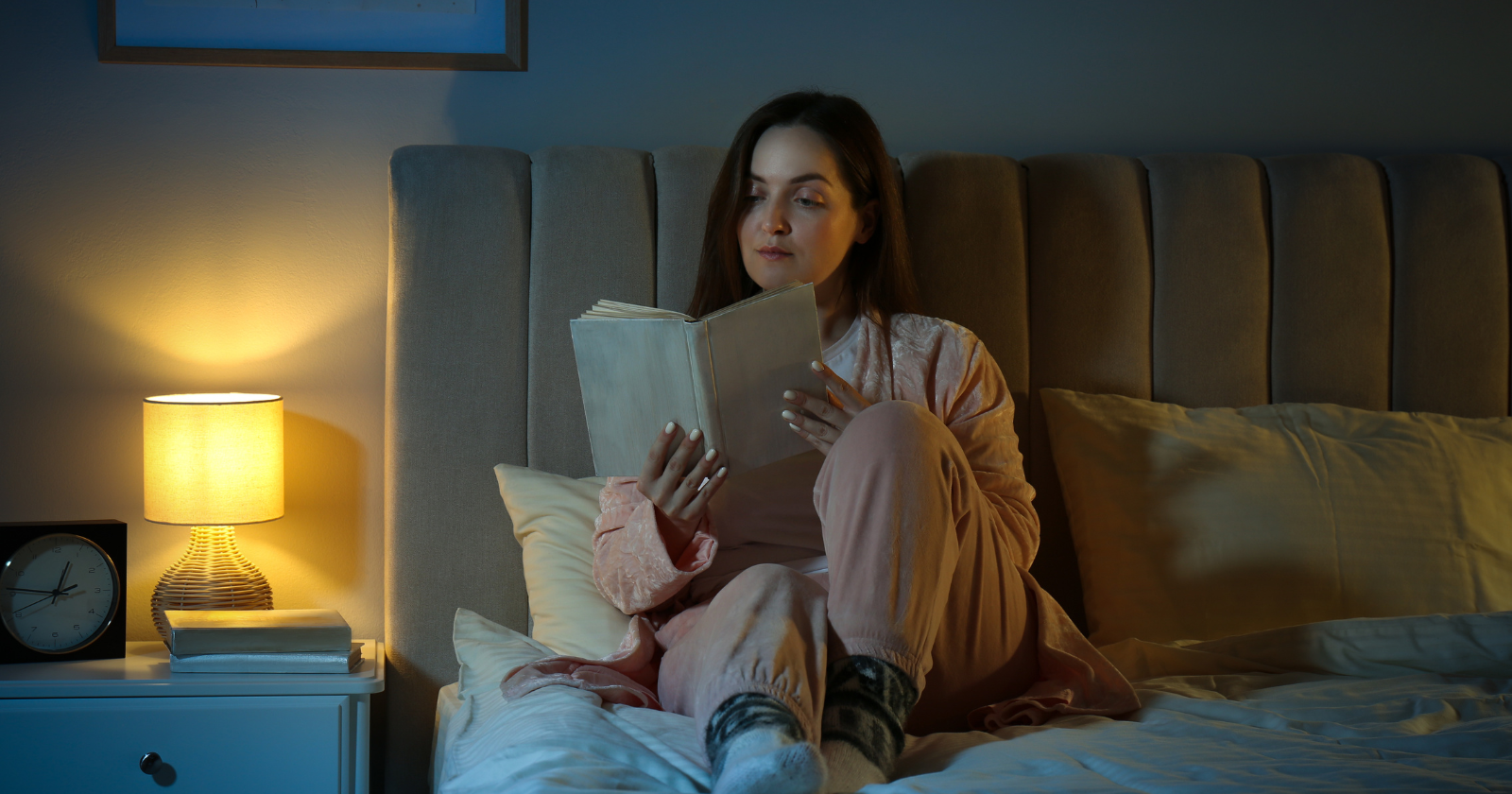
It doesn’t matter what you read. The key finding from JAMA Network Open’s study on screen use and sleep isn’t that certain content is better than others. It’s that the medium itself matters. A physical book in dim light, engaging your brain in active construction rather than passive reception, is a fundamentally different neurological experience than a screen delivering images to your visual cortex.
Ten minutes is enough to start. Keep a book on your nightstand. Pick something you actually enjoy. And let the last thing your brain does before sleep be the thing it was built to do: make meaning from language, construct a world from words, and carry the residue of that experience into tomorrow morning’s wiring.
That’s not a small change. Over time, it’s a different brain.
From the editors
Undercurrent — our weekly newsletter. The sharpest writing from Silicon Canals, curated reads from across the web, and an editorial connecting what others cover in isolation. Every Sunday.
Free. No spam. Unsubscribe anytime.