
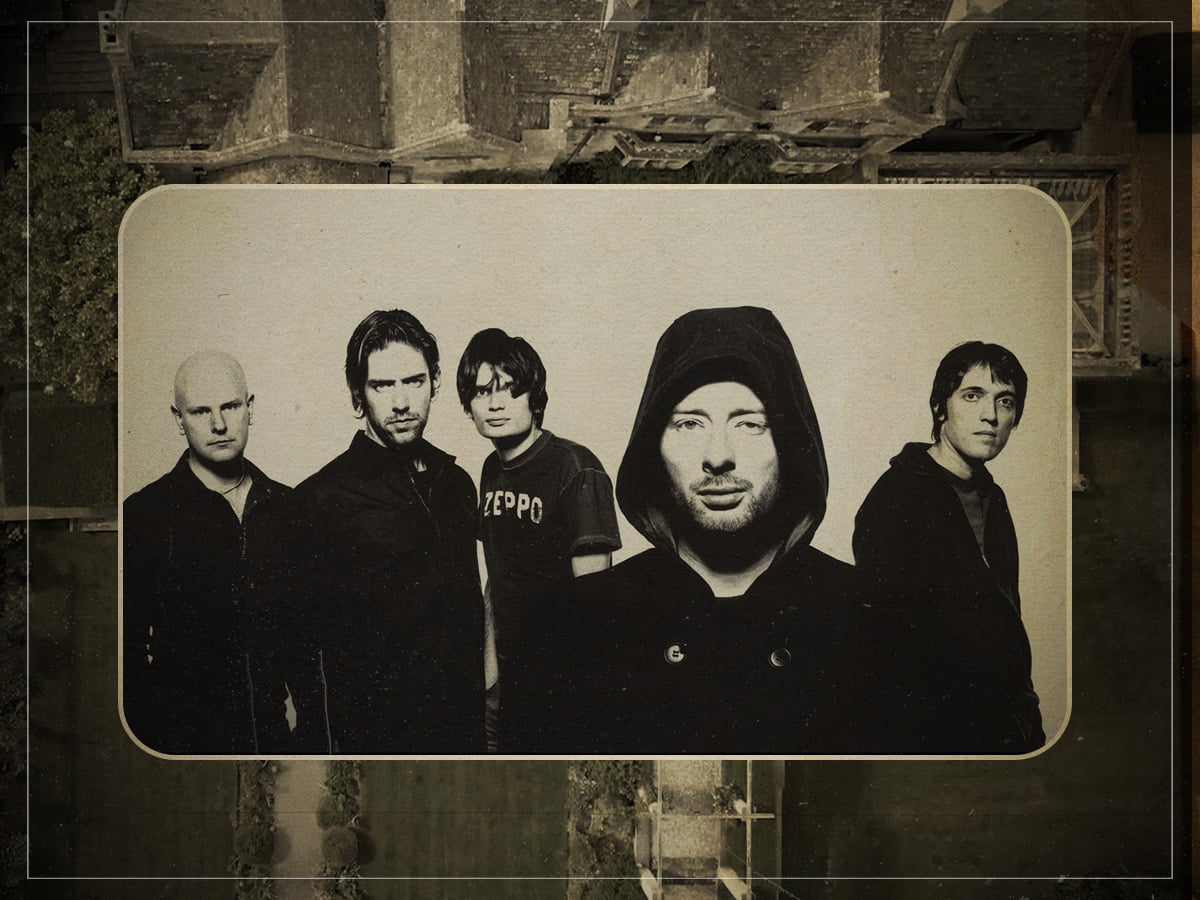
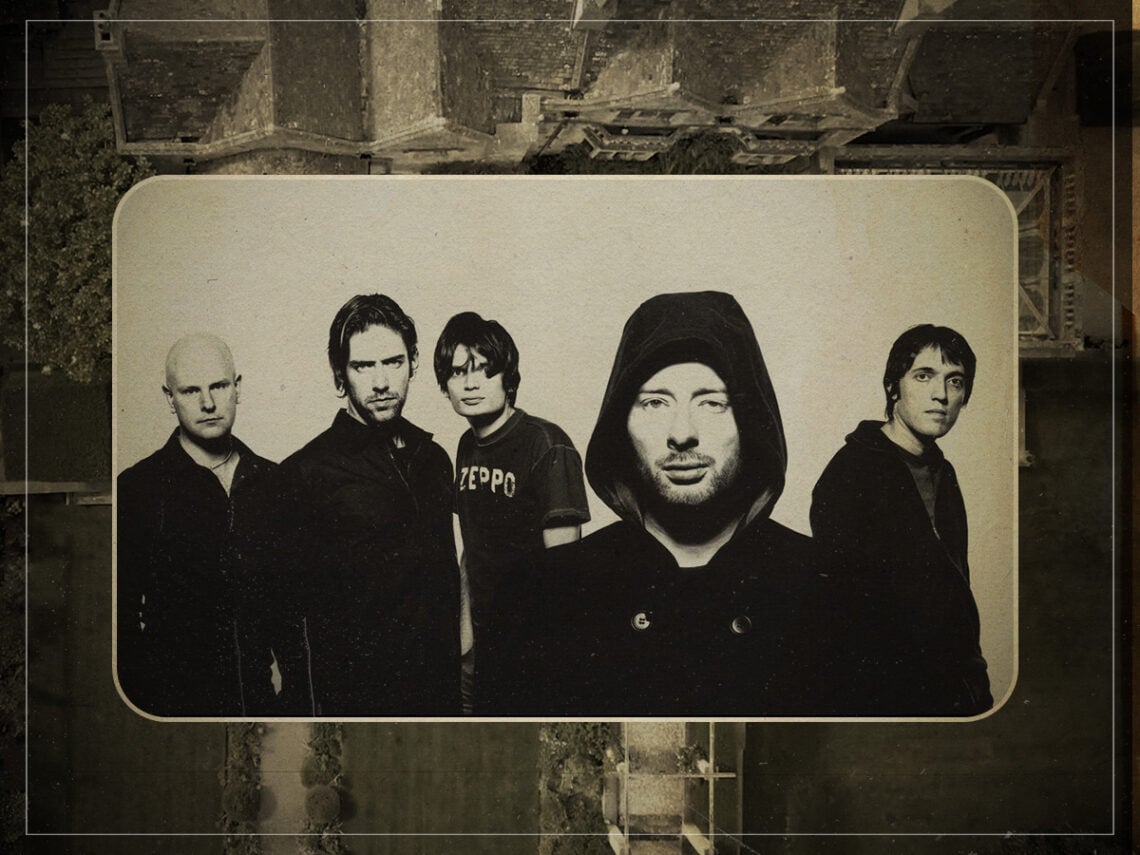
(Credits: Far Out / YouTube Still / Radiohead / Tom Sheehan)
Sat 21 March 2026 12:00, UK
Radiohead are one of the prestigious few to have headlined Glastonbury more than once. In fact, they are one of the prestigious few to have done it three times, joining Arctic Monkeys, Muse, Van Morrison and Elvis Costello in the esteemed club.
So the Oxford band are well acquainted with the rolling green hills of Somerset, having trotted onto its hallowed turf a near unprecedented three times to play on its most prized stage. But how well acquainted are they with what exists outside the daunting realms of Glastonbury’s high-security walled fences?
It’s hard to tell where on the stardom spectrum Radiohead lie. On one end are the likes of Kanye West and Beyonce, whose trip across the Atlantic to headline Glastonbury isn’t usually tailed off with a midnight wander into the stone circle to find drug-fuelled enlightenment with the remaining wanderers of the festival’s general public. At the other end is Florence Welch, who wasted no time in heading to the festival’s notorious South East Corner following her headline set, where she got down and dirty with the peasant folk who had just been watching her.
I’d imagine Radiohead are somewhere in the middle – willing to grab a warm cider post set, but wasting little time in doing so and will likely hop in their A-class taxi with haste, to hit the warm welcome of their hotel bed.
Because the truth is, the Oxford band don’t need to explore the grassy depths of Glastonbury’s home county. Back in 1997, they got to know it pretty well as they recorded their seminal 1997 record OK Computer there, in St Catherine’s Court.
 (Credits: Far Out / YouTube Still)
The 16th century manor house, located just outside Bath, has become an unlikely creative hub in its more recent years, hosting the recording of Radiohead’s iconic album, while also playing host to The Cure for their recording of Wild Mood Swings, as well as New Order’s Waiting for the Sirens’ Call.
But while Radiohead’s iconic ‘97 album largely deals with existentialism in the modern, digital world, the ancient Somerset relic in which they recorded it provoked a sort of crisis of another kind.
Yorke recalled, “Ghosts would talk to me while I was asleep. There was one point where I got up in the morning after a night of hearing voices and decided I had to cut my hair.”
He added, “I was basically catatonic. The claustrophobia – just having no sense of reality at all. I was getting into the sense of information overload, which is ironic, really, since it’s so much worse now.”
He continued to explain how his experiences in that 16th-century building translated into the modern observations that populated the lyrics of the album. He explained, “The paranoia I felt at the time was much more related to how people related to each other. But I was using the terminology of technology to express it. Everything I was writing was actually a way of trying to reconnect with other human beings when you’re always in transit. That’s what I had to write about because that’s what was going on, which in itself instilled a kind of loneliness and disconnection.”
The West Country county undoubtedly brings with it some conflicted feelings for the band, who have conquered the musical mountain there, from both a live and studio standpoint. But beneath it is a sinister reality that fuelled one of the greatest albums of all time, meaning it’s unlikely the band will ever rush back to record there.
