
It’s a chore that many people dread.
And now it turns out you’ve probably been doing your laundry wrong this entire time.
Experts at AO.com have revealed why you should never close the washing machine door after a wash.
While it might look tidier, closing the door can cause condensation to build up – creating the perfect breeding ground for mould.
Gwil Snook, Laundry Appliance Expert at AO.com, explained: ‘Washing machine rubber door seals are one of the biggest hidden breeding grounds for mould in the home.
‘They trap moisture, detergent residue and fabric fibres during and after washes, creating the perfect warm, damp environment for mould and bacteria to thrive.
‘Because the seal folds inward, it often stays wet long after a wash has finished, especially if the door is kept closed.
‘If your clothes smell stale when they come out of the wash, or you notice that your washing machine smells a bit funky when you open the door, then the chances are that you’ve got a mould problem.’

Experts at AO.com have revealed why you should never close the washing machine door after a wash (stock image)
Mouldy washing machines affect many Brits, with several taking to social media to share their woes.
‘I didn’t realise how minging my washing machine was until I went to put a load of washing on and saw how disgusting the seal is,’ @describingolivia said on TikTok.
@aprilxfour added: ‘I can’t believe I’m actually showing you this, but yes, this is my washing machine. It is clean, but I’ve not been able to get these stains off to save my life.’
And @clara.mold shared a video of the mouldy seal in her washing machine, writing: ‘ur sign to check ur washing machine.’
To help you keep your washing machine free of mould, Ms Snook has also revealed six tips.
Firstly, make sure you leave both the washing machine door and the detergent drawer open after every wash.
‘Closing the door straight after a cycle might look tidy, but it traps moisture where you can’t see it. Letting the machine air out between washes is one of the simplest habits you can get into if you want to avoid mould,’ the cleaning expert explained.
Next, try to wipe down the door seal and drum on a monthly basis.
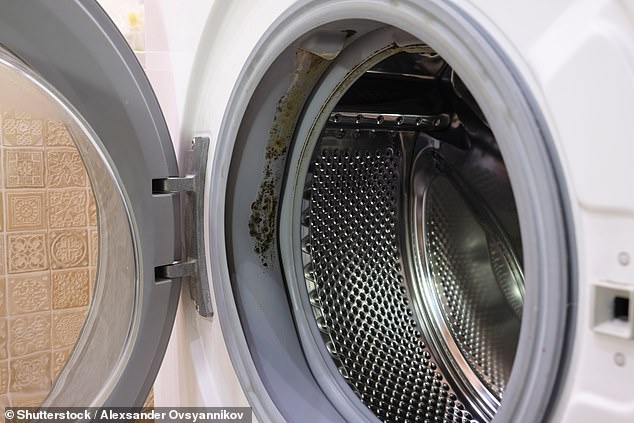
While it might look tidier, closing the door can cause condensation to build up – creating the perfect breeding ground for mould
How to keep your washing machine mould–free Clean the seal with white vinegar and a microfibre cloth Leave the door and detergent drawer open after each wash Wipe down the door seal and drum once a month Clean the detergent drawer and filter once a month Run empty cleaning cycles to kill early signs of mould Don’t overload your machine and remove wet laundry immediately
<!- – ad: https://mads.dailymail.co.uk/v8/us/sciencetech/none/article/other/mpu_factbox.html?id=mpu_factbox_1 – ->
Ms Snook said: ‘The door seal is usually the first place mould appears, and it catches people out.
‘A quick wipe every so often stops build–up before it turns into a bigger problem – and helps keep that musty smell away from clean laundry.’
During your monthly wipe, it’s also wise to clean the detergent drawer and filter.
The expert added: ‘If a washing machine smells even when it’s empty, the drawer or filter is usually to blame.
‘These areas are easy to forget, but keeping them clean helps the whole machine run better and stay fresher for longer.’
If you do spot the early signs of mould – don’t panic.
Give the seal a clean with white vinegar and a microfibre cloth, before running an empty cleaning cycle.
‘Detergent alone won’t keep a washing machine clean. A regular hot empty cycle clears out hidden residue and build–up inside the drum and pipes, which is often what causes lingering odours and mould,’ Ms Snook said.
Finally, make sure you don’t overload the machine, and that you remove wet laundry immediately.
The expert concluded: ‘Overfilling the drum or leaving wet clothes sitting inside creates the perfect damp environment for mould.
‘Finishing the job properly and giving the machine space to drain makes a noticeable difference over time.’