
(Credits: Far Out / Gladstone~dewiki)
Sun 22 March 2026 12:08, UK
To stand up on your own and be counted takes a lot of guile in any field, let alone music. To eschew tradition and do something genuinely original with sonics has always been the forte of the bravest of creators, those who match natural talent with ample self-belief and a touch of arrogance.
While John Lennon of The Beatles typifies this notion, the likes of Jimi Hendrix and Kurt Cobain also provide stellar examples, as does Ritchie Blackmore. One of the more extreme versions of a rock star not afraid of their own talent, using it to bash some contemporaries.
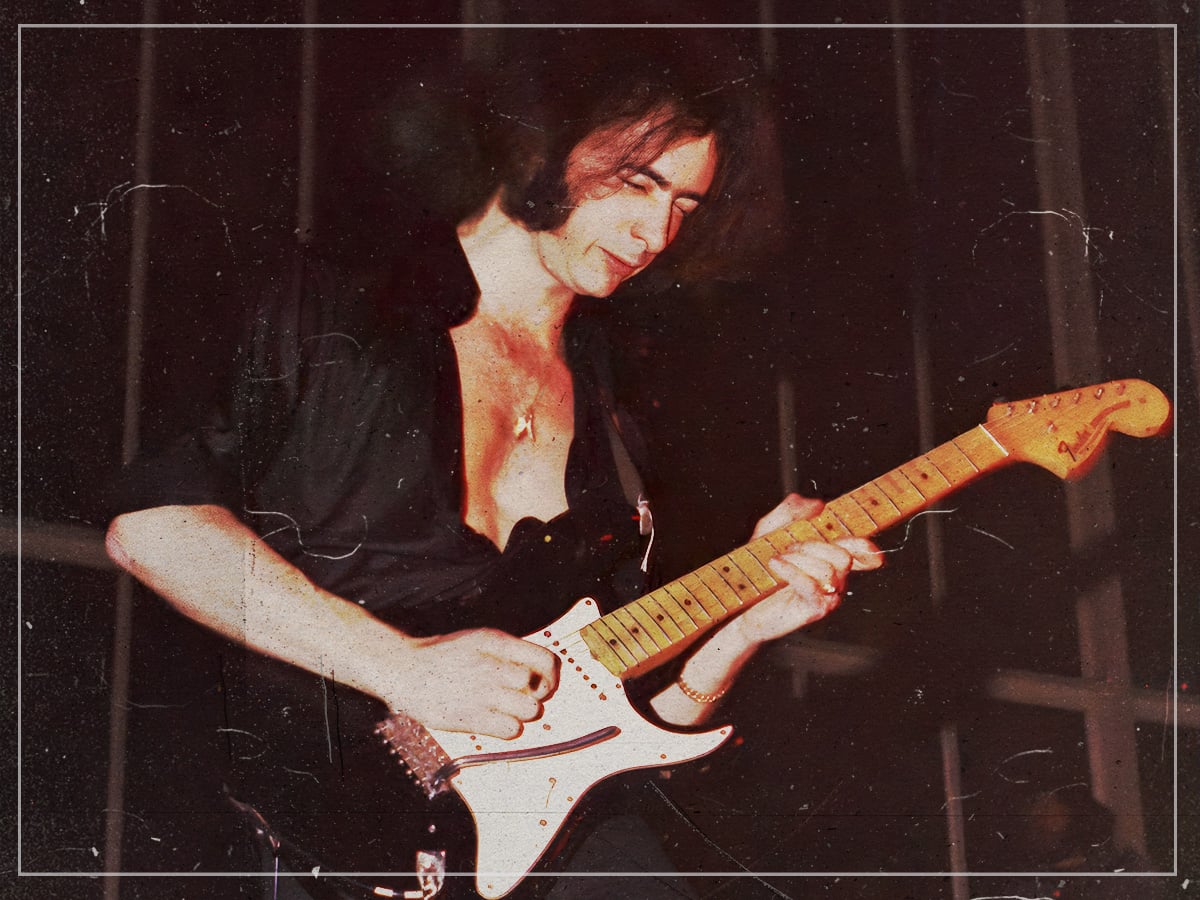
In the era of the guitar hero, it took a lot to cut through the noise and hammer out a unique lair, and that was exactly what the Deep Purple wizard did. Becoming a mainstay on the stage, Blackmore would create a whole new sense of songs that push forward his hard rock outfit into a new start. Without Blackmore, Deep Purple would be nowhere near the powerhouse classic rock out fit they are today.
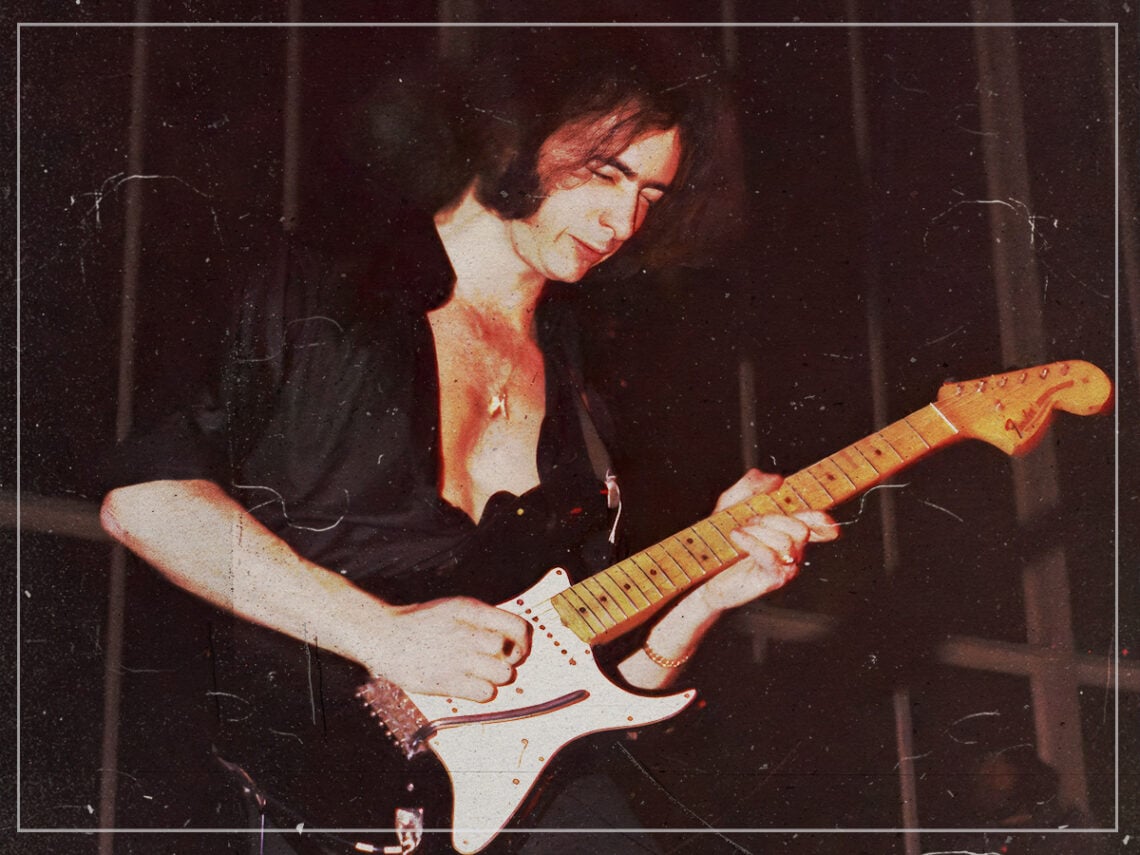
Weaponising the Fender Stratocaster just as the finest players of his generation also managed to do, his furious playing and ear for an infectious riff, as well as his propensity for dive bombs, string-tapping, and noisy soloing, meant that the clamour of noise he produced, saw him quickly rise to the top of the game. He promptly took a seat at the table alongside London’s other foremost axemen, Eric Clapton, Jimmy Page, and Jeff Beck.
This deeply innovative sonic essence has always been supplemented by his fearlessness in character. Like all truly great musicians, Blackmore knows what he likes and what he doesn’t, and this augmented all of his most significant artistic moves in that he could see a clear path ahead and was undeterred in following it.
 (Credits: Far Out / Alamy)
While Blackmore has demonstrated his outspoken nature on numerous occasions, such as the time he brutally took down Sting and The Police, he’s also been unrestrained in how he deems the work of his most renowned peers from swinging sixties London. One band that hasn’t been safe from his wrath is The Rolling Stones, whom he dislikes significantly because of what he deems their immense lack of originality, which is anathema to him.
The ‘Black Night’ icon revealed all when speaking to Trouser Press in 1978. This was a period when he had achieved enormous commercial and critical success with Deep Purple and had left to form his celebrated supergroup, Rainbow. He arrived at his account of The Rolling Stones by recalling how he got into rock music.
Early rock and roll stars such as Tommy Steele, Elvis Presley, and Duane Eddy first showed him the way. Later, just like the rest of his generation’s forward-thinking stars, Hank Marvin, Django Reinhardt, Wes Montgomery, James Burton, Buddy Holly, and Les Paul were the guitarists who demonstrated just how impactful the instrument could be to him.
However, in a show of that unique character, Blackmore maintained that from 17, he “didn’t have any idols” and was “mostly practising” his own style. He explained: “Then I was on my own. I didn’t have any inspirations from guitarists; it went more into inspiration from violinists. I don’t listen to too much rock ‘n’ roll really.”
Hendrix and Cream were good, but vocal-oriented groups such as The Beatles and The Hollies did absolutely nothing for him. Finally, he arrived at the “idiots” in The Rolling Stones. Outlining his disdain for Mick Jagger and the band, he asserted: “The Stones? I considered them idiots. It was just a nick from Chuck Berry riffs. Chuck Berry was OK. Sometimes I’m outspoken, but I don’t have any time for the Stones. I can see why they’re respected and their rhythms are very good, very steady on record. I respect them, but I don’t like them.”
The group have released 26 studio albums and while there are certainly some dull moments or songs that have no place in the Stones canon, by and large, their discography is quality and quantity combined, so, idiots or not, they delivered a career that was smarter than most give.
