
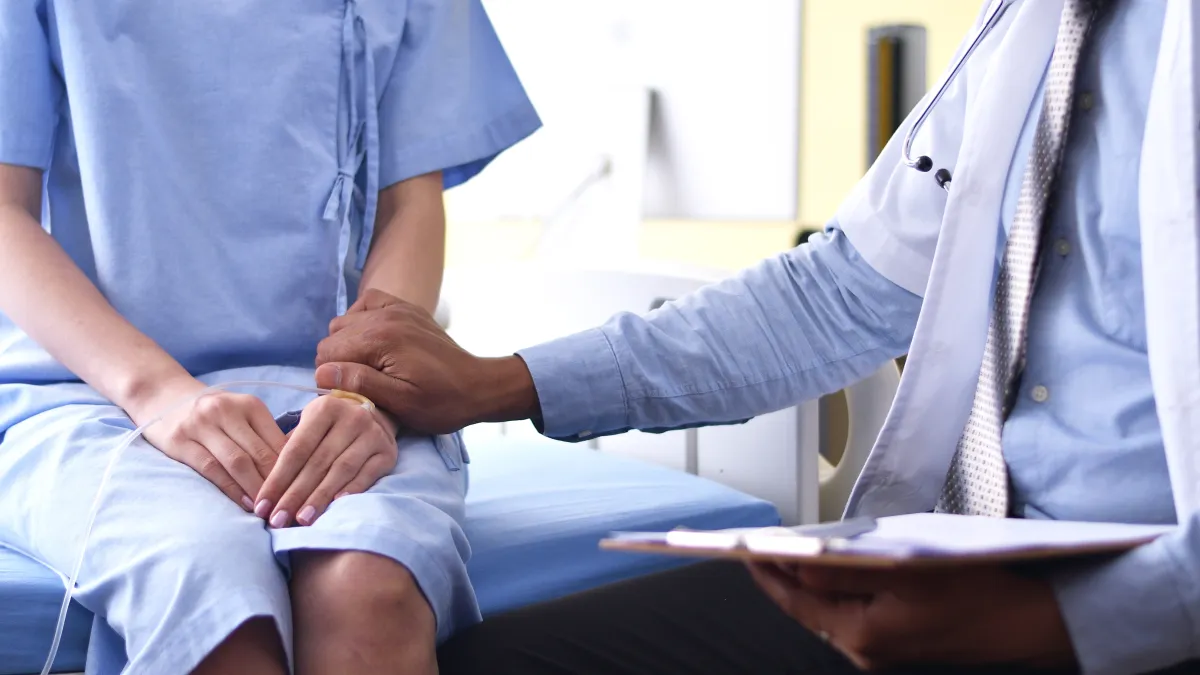
More than 70,000 cancer patients suffered potentially deadly delays to NHS treatment last year, figures show.
Last year only 125,000 people, 63 per cent, with a cancer diagnosis received their first treatment within two months of a referral, significantly below the national NHS target of 85 per cent, according to data released to The Times under the Freedom of Information Act.
A further 72,400 patients did not receive treatment within 62 days of an urgent referral. The figures also highlighted significant disparities in healthcare across the country.
The worst-performing integrated care board (ICB) in England was Mid and South Essex, where only four in ten cancer diagnoses received treatment within 62 days. One in ten patients had to wait for more than four months.
In contrast, the median patient in Cornwall and the Isles of Scilly had to wait only 42 days for care to begin, a month quicker than in Mid and South Essex.
NHS services in Surrey Heartlands began treatment on time for 79 per cent of cancer patients, the highest rate in the country.
Matt Sample, senior health policy manager at Cancer Research UK, said: “While there has been a small improvement to cancer wait times across England over the last year, thousands of patients continue to wait longer than they should to begin their treatment.
 Matt Sample
“No matter where someone lives, it’s important that they can rely on the NHS to see them quickly — every day of waiting can feel like for ever. One study has estimated that for some cancers, a four-week delay to surgery leads to a 6-8 per cent increased risk of death.
“The UK government has made a welcome commitment to meet cancer wait time targets by 2029. In order for this to happen, it’s crucial that the NHS is backed with investment in additional staff and equipment, otherwise patients will continue to be let down.”
Cancer care has been central to plans laid out by Wes Streeting, the health secretary, to reform the NHS.
Last month, he announced a national cancer plan to ensure that three in four cancer patients survive the disease by 2035, which is equivalent to 320,000 lives saved.
Longer waiting times for treatment means “cancer is more likely to be a death sentence in Britain than other countries”, Streeting said.
In addition to a £2.3 billion investment in diagnosis and robotic surgery equipment, the government has pledged to meet cancer waiting time targets including the two-month treatment standard, which has not been achieved since 2014.
 SeventyFour/Getty images
Streeting, who was diagnosed with kidney cancer in 2021, said: “As a cancer survivor who owes my life to the NHS, I owe it to future patients to make sure they receive the same outstanding care I did.”
He added: “This plan will slash waits, invest in cutting-edge technology, and give every patient the best possible chance of beating cancer.”
However, health policy experts have been sceptical that the service will meet its targets even with improved funding.
Sarah Scobie, the deputy director of research at the Nuffield Trust, said that providing care within 62 days for 85 per cent of patients would require “the NHS improving at 30 times the rate it has managed since April”.
The NHS said it was seeing and treating “record numbers of patients for cancer” and that almost three quarters of people received a diagnosis or all-clear within four weeks, and nine in ten started treatment within a month of the decision to treat.
It added: “Our landmark national cancer plan sets out a clear road map to ensuring we are meeting all three cancer standards to see and treat patients on time over the next three years, with further improvements to make care more personalised and significantly improve survival.”