
Home » New Zealand Travel News » United Kingdom & United States Tourists Flee New Zealand Plans as Emirates, Air New Zealand Flight Cuts Spark Hotel Cancellations — What It Means for Tourism GDP
Published on
March 23, 2026
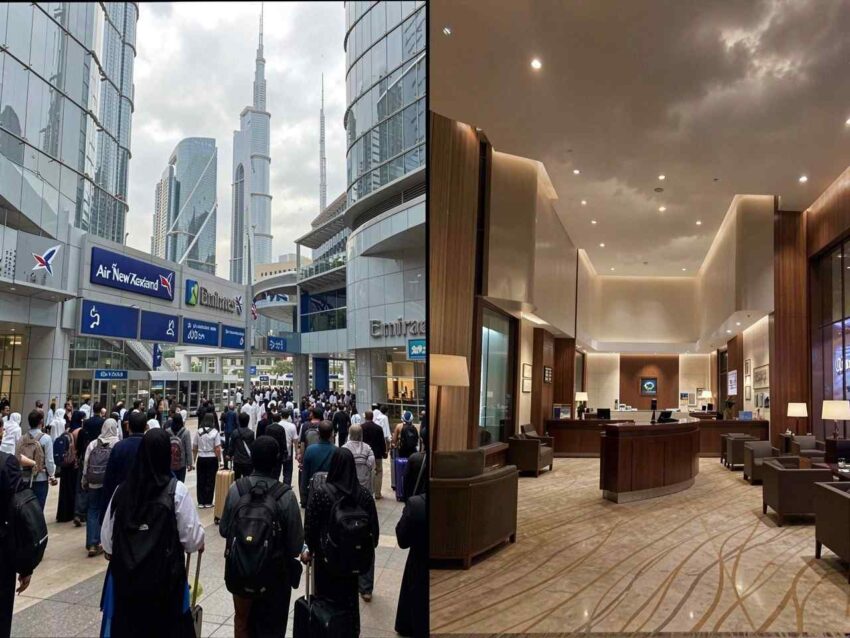
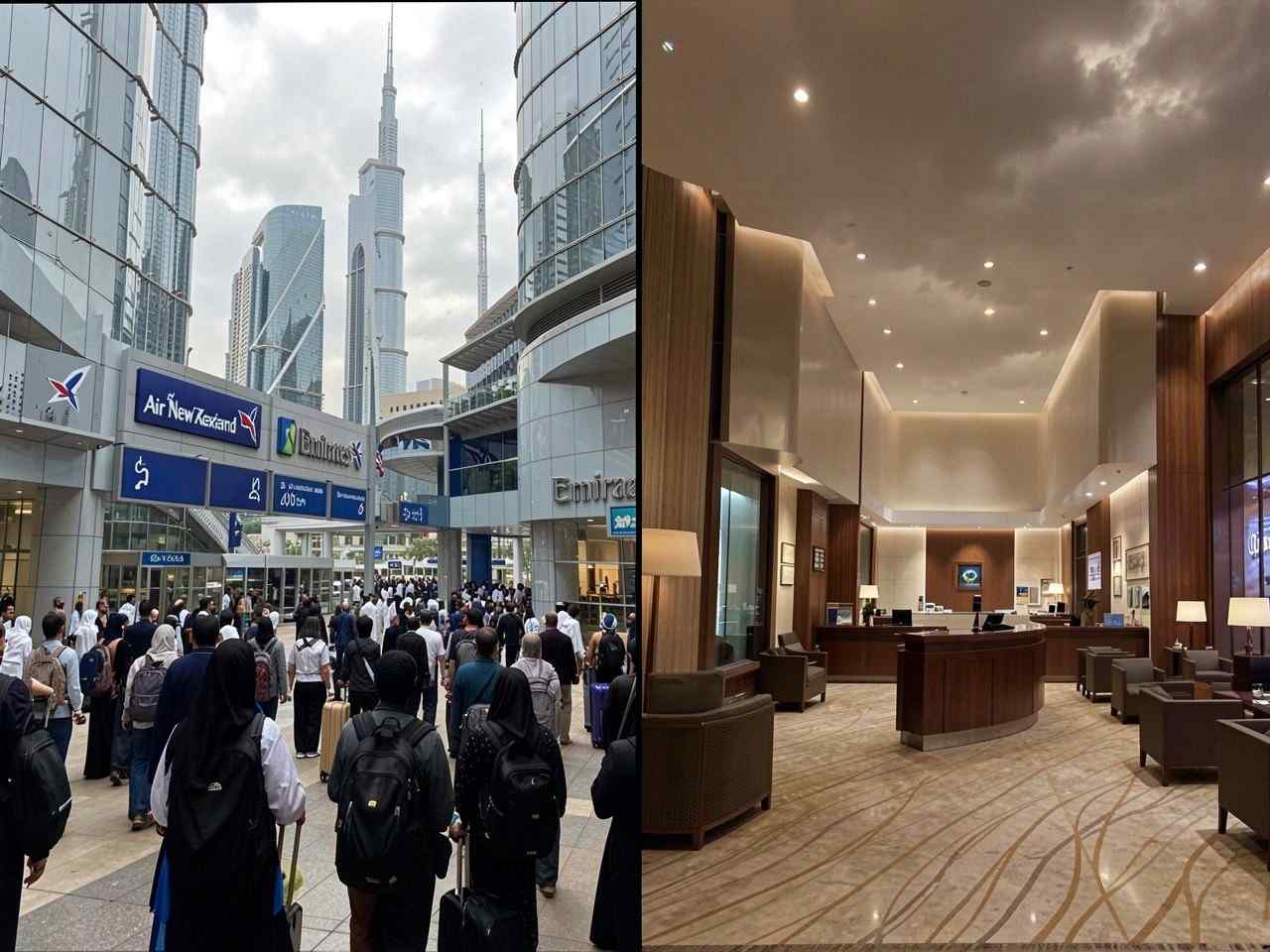
Image generated with Ai
In an unprecedented turn of events, United Kingdom and United States tourists have started cancelling their long-anticipated trips to New Zealand, as ongoing geopolitical tensions in the Middle East disrupt flight routes. Emirates and Air New Zealand, both key airlines connecting Europe and North America to the Pacific island nation, have been forced to scale back services, exacerbating the issue. With flight schedules altered and higher fuel prices pushing airfares skyward, many visitors from these key markets are now looking to alternative destinations. The sudden drop in tourism has sent shockwaves through New Zealand’s hospitality sector, with hotels, particularly in hotspots like Auckland, Queenstown, and Rotorua, experiencing a surge in cancellations. For an industry that heavily depends on international visitors, particularly from the United Kingdom and United States, this decline could severely impact New Zealand’s tourism GDP. As airfares continue to rise and availability dwindles, what does this mean for the future of New Zealand’s tourism sector, and what opportunities might arise amidst the challenges?
United Kingdom & United States Tourists Flee New Zealand Plans as Emirates, Air New Zealand Flight Cuts Spark Hotel Cancellations — What It Means for Tourism GDP
The tourism industry in New Zealand is facing a sharp decline in visitor numbers as the ongoing disruptions caused by the Middle East conflict impact air travel. Both Emirates and Air New Zealand have slashed flights, causing a ripple effect on hotels and other hospitality services. With United Kingdom and United States tourists cancelling their trips, New Zealand’s tourism GDP stands to lose significant revenue. This article explores how these disruptions are affecting travel, flight details, the hotel sector, and what this means for tourism in New Zealand.
Emirates and Air New Zealand Flight Cuts Spark Hotel Cancellations
With geopolitical unrest in the Middle East, airlines are adjusting their schedules, causing mass flight cancellations. The Middle East conflict has prompted Emirates and Air New Zealand to curtail flights, significantly impacting air connectivity between Europe, the United States, and New Zealand. Emirates, a major player for connecting passengers between Europe and New Zealand, has reduced the number of daily flights to Auckland and Wellington. These changes are driven by the closure of airspace over the Gulf region, and changes in fuel prices and demand.
Advertisement
Advertisement
The flight disruptions and cancellations have left many international tourists unable to proceed with their holiday plans. According to recent surveys, 77% of tourism operators in New Zealand reported cancellations from United Kingdom and United States visitors for March and April 2026. This has a direct knock-on effect on the hotel sector, especially in tourist-heavy regions like Auckland, Queenstown, and Rotorua, where accommodations had been expecting full occupancy for the peak travel months. Hotel managers have been struggling to fill rooms, as European and American holidaymakers, who typically make up a large portion of the tourist base, are now looking for alternative destinations due to flight disruptions.
The absence of these high-spending international tourists has left hotels scrambling to find new guests. In addition to this, the ongoing uncertainty surrounding future flights means that many hotels are seeing a significant drop in bookings, particularly for high-end resorts. While New Zealand is perceived as a safe haven, it cannot escape the impact of the travel sector’s global ripple effect.
Advertisement
Advertisement
United Kingdom and United States Tourists Flee New Zealand Travel Plans
The United Kingdom and United States make up a substantial share of New Zealand’s international tourism market, contributing to both the hospitality and airline industries. United Kingdom travellers have been particularly affected by the disruptions to flights through the Middle East. Emirates, along with Qantas and British Airways, are key players in connecting Europe to New Zealand. With flight schedules reduced, tourists are left scrambling for alternative routes, and many are opting to delay or cancel their trips altogether.
For many United Kingdom tourists, New Zealand represents an exotic getaway, often bundled with extended stopovers in cities like Dubai or Doha. However, flight availability is becoming limited due to rerouted flights. United States tourists, who also make up a significant portion of the tourism revenue, are witnessing inflated airfare costs. The closure of major Gulf airspace hubs has increased the length and cost of flights, discouraging potential visitors from making the journey to New Zealand.
Advertisement
Advertisement
This situation is particularly worrisome for the tourism industry, which was already recovering from the impacts of the pandemic. The ongoing disruptions, combined with rising airfare prices, have resulted in a sharp decline in bookings from both these regions. According to New Zealand tourism boards, UK and US tourists represent over 40% of total arrivals, with a significant impact on luxury hotel chains like Hilton and Marriott.
Impact on Airfares and Flight Details for Tourists
The soaring cost of jet fuel and the closure of key airspaces have directly led to higher airfares for international travellers. Air New Zealand, which serves as the national carrier, has faced numerous challenges in maintaining flight schedules and reducing operational costs. The airline has been forced to cancel several flights to the United Kingdom and United States, with future cancellations likely unless the geopolitical situation improves. As a result, airfares have skyrocketed for passengers attempting to travel to New Zealand from Europe and North America.
For instance, a flight from London Heathrow to Auckland that typically costs around $1,200 USD in normal times has seen a price hike to $2,000 USD or more due to the rerouting of flights and fuel surcharges. Air New Zealand has not only reduced its number of international flights but has also implemented dynamic pricing models, which means the cost of last-minute bookings has become unaffordable for many potential travellers.
Moreover, Qantas, which is another major airline connecting Australia and New Zealand to Europe and the US, has seen its routes through the Middle East severely impacted. Passengers flying from Los Angeles to Auckland or San Francisco to Wellington now have to take longer, costlier routes with extended layovers. These additional costs have discouraged last-minute bookings, with many prospective visitors deciding to delay or cancel their trips to New Zealand.
Rising Hotel Cancellations Amidst Flight Disruptions
Hotel operators are not only struggling with a drop in bookings from European and American tourists, but they are also facing increased cancellations. According to data from the Tourism Export Council, nearly 77% of respondents noted cancellations or reduced bookings from overseas visitors. Hotels and resorts that rely heavily on international traffic are especially affected. High-end hotel chains such as Marriott, Hilton, and Accor have reported lower-than-expected occupancy rates.
In addition, New Zealand’s tourism industry, heavily reliant on international visitors, has been seeing hotel closures in regions like Rotorua and Queenstown, where international tourists have historically made up the majority of the clientele. As flight cancellations continue, many tourism operators are expressing concerns over the potential for further revenue loss during the upcoming winter season.
The West Coast, for example, is already feeling the squeeze. With Originair, the region’s only air service, shutting down in May, the tourism infrastructure in Westport is at risk of losing more potential visitors. The region had previously seen a significant increase in international tourism prior to these disruptions. With the cancellation of flights to Christchurch and Auckland, combined with a general loss of confidence in travel safety, the region’s tourism growth appears to be at risk.
Tourism Recovery and Opportunities for New Zealand
Despite the current struggles, New Zealand’s tourism industry still has potential for growth, especially as American and Canadian tourists may seek alternative destinations. New Zealand’s reputation as a safe, non-volatile destination in the Pacific could attract visitors looking for peace of mind amid global uncertainty. This could provide a temporary boost for hotels and attractions targeting North American visitors who no longer feel comfortable visiting Europe or the Middle East.
There are also opportunities for New Zealand’s tourism industry to adapt by targeting markets outside the United Kingdom and United States, especially from Asia-Pacific regions. In particular, China, South Korea, and India offer growth potential, with tourists increasingly seeking new destinations due to the ongoing disruptions to the traditional travel routes. In fact, China has seen a rebound in travel as restrictions lifted, with New Zealand emerging as an attractive destination for luxury travellers looking for an escape.
In the long term, however, New Zealand’s ability to maintain competitiveness in the global tourism market will depend on its ability to communicate effectively with international trade partners. Coordinated efforts with airlines and hotels to offer flexible travel options and new routes could ensure the country remains a sought-after destination for international tourists.
Travel Tips for Tourists Amid Flight and Hotel Disruptions
If you are planning to visit New Zealand in the coming months, here are some travel tips to help you navigate the disruptions caused by the ongoing geopolitical situation:
Book Early – With many flights being cancelled or rerouted, it’s important to book your flight well in advance. Look for alternatives to major hubs like Dubai and Doha, and consider flights from Australia or Singapore.Check for Flexible Hotel Policies – Many hotels are offering flexible cancellation policies due to the uncertainty around flights. Make sure your accommodation has a free cancellation option in case of last-minute flight changes.Monitor Flight Updates Regularly – Airlines are making constant changes to flight schedules, and it’s crucial to stay updated on any changes to your itinerary. Sign up for flight alerts with your airline for real-time updates.Travel Insurance – With the unpredictability of air travel, purchasing comprehensive travel insurance is essential to protect yourself from unexpected cancellations or delays.Explore Alternative Routes – If flights to New Zealand through traditional hubs are unavailable, consider alternative routes via Asia or the Pacific Islands. Airlines such as Singapore Airlines and Cathay Pacific may offer more flexible and reliable options.
Tourism in New Zealand takes a massive hit as United Kingdom and United States travellers cancel their trips due to flight disruptions caused by geopolitical tensions. Emirates and Air New Zealand slashing flights have led to hotel cancellations, causing significant concerns for the country’s tourism GDP.
In conclusion, the impact of the Middle East conflict on the tourism industry in New Zealand is undeniable. Emirates and Air New Zealand’s flight cuts, paired with higher airfare costs, have contributed to a significant reduction in bookings from key markets like the United Kingdom and United States. However, New Zealand’s reputation as a safe haven could still present an opportunity to attract new travellers from other regions, such as North America and Asia. The key to overcoming this crisis lies in collaboration between airlines, tourism operators, and hospitality sectors, as well as ensuring clear communication with international trade partners. While challenges remain, New Zealand’s tourism sector has the potential to adapt and rebound as global travel conditions stabilize.
