
(Credits: Far Out / Open Culture)
Mon 23 March 2026 9:00, UK
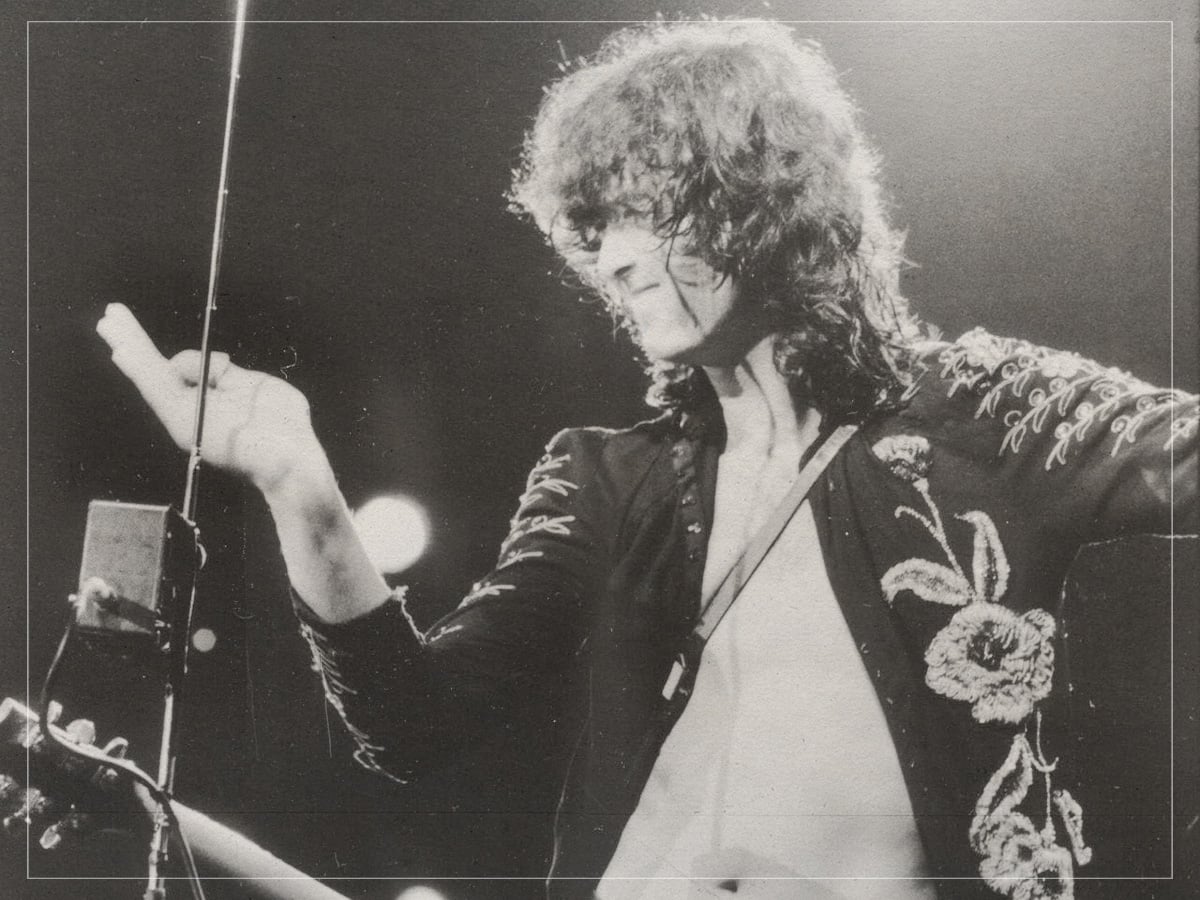
It says a lot that Jimmy Page struggles to criticise much of Led Zeppelin’s material, though it’s not entirely unexpected considering how much of a leader he became in perfecting everything that they stood for.
Perhaps this was because, by the time Page formed the band in 1968, he was already one of the most influential guitar heroes of the entire generation. Up until that point, he’d become one of rock’s most sought-after session musicians, playing on a handful of era-defining hits and carving out his own niche as a true guitar-playing virtuoso who could transform any song into a great anthem.
In the beginning, this was a dream for a young Page, who found that any opportunity to work on any project was special in its own way, and dismissing anything was simply out of the question. After all, given that he was finally living his dream, it was exciting to be given the chance to work on lots of different styles and genres, and so for a while, he accepted most things that came his way.
However, this eventually took its toll, and Page found himself no longer finding joy in embracing everything, yearning instead for something more that he could sink his teeth into. Granted, the decision to move on was officially made after one especially heinous musak session, but he would have reached that point sooner or later anyway, as he was also hanging out with Jeff Beck and even joined The Yardbirds for a couple of gigs after their bassist left the band.
After his brief stint in the band, Page then collected the likes of Robert Plant, John Bonham, and John Paul Jones for a new group, taking the rock arena by storm the moment their debut dropped in 1969. Led Zeppelin was a lightning in a bottle affair, recorded in just 30 hours, something that Page later credited to his use of the Telecaster and “what could be achieved with a minimal amount of equipment”.
Given his position as the mastermind behind their sound and live appeal, therefore, Page rarely criticises their material or decision-making, much less the kinds of songs he’d have liked to have left off their discography entirely. However, when he was once faced with the question during an SFGATE interview in 2000, he once admitted to feeling a certain type of way about the band’s heartfelt ballad, ‘All My Love’.
Initially, Page was reluctant to answer the question, quipping, “How do you mean? I like all of them.” However, when pressed for an honest answer, he said that ‘All My Love’ wasn’t his type of “thing” and that, sonically, it felt like more“the Rod Stewart songs of the time with the scarf-waving chorus” than a straight-up Led Zeppelin tune.
Interestingly, ‘All My Love’ is one of the only songs that Page had no writing involvement with, which likely explains why he felt so detached from it in the first place. It was also written in tribute to Plant’s late son, who died at the age of five in 1977. A stark departure from their usual sound, ‘All My Love’ was understandably one of Plant’s defining moments, though Page – and Bonham – were less convinced.
If we’re to look at sonic appeal alone, Page’s comments aren’t entirely unwarranted. After all, it’s not exactly the song you point towards when you think about that quintessential Zeppelin sound, taking a softer approach that unintentionally captured that familiar Stewart-esque pop-rock energy.
ADD AS A PREFERRED SOURCE ON GOOGLE  The Far Out Led Zeppelin Newsletter
All the latest stories about Led Zeppelin from the independent voice of culture.
Straight to your inbox.