
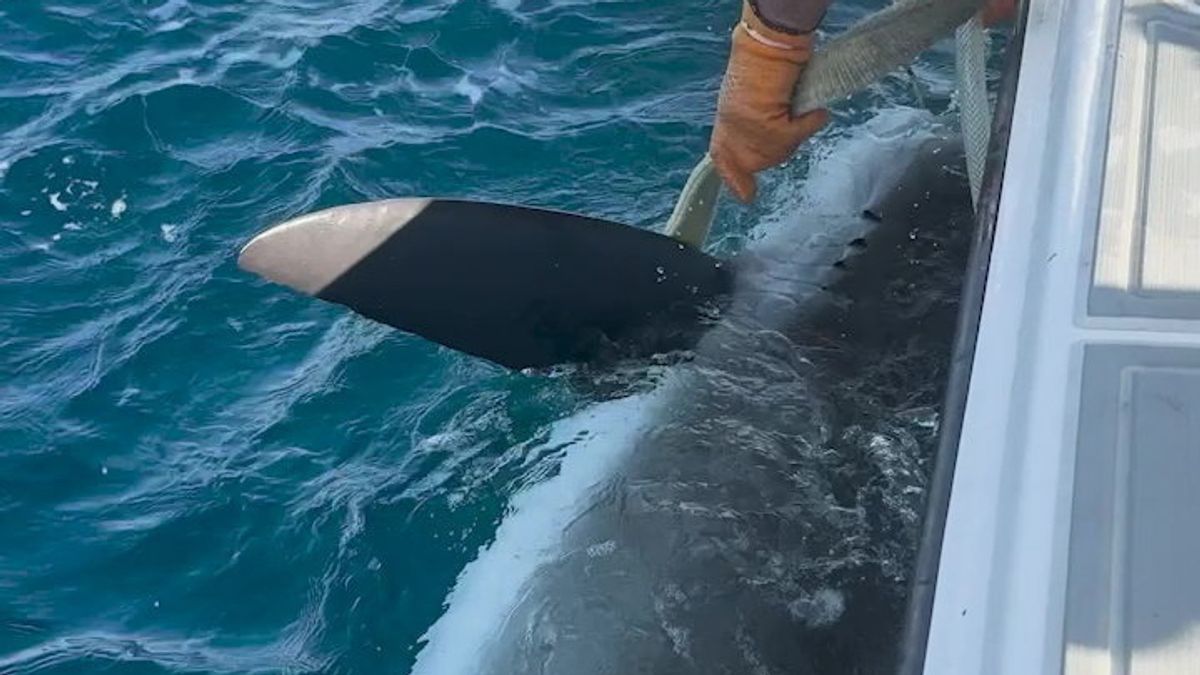
The beast belongs to an extremely rare species of shark that, while once thought of as harmless, killed a snorkeler in Israel last year in a shocking and sudden attack
Edward Easton and Michael Lee Simpson
15:08, 23 Mar 2026Updated 15:08, 23 Mar 2026
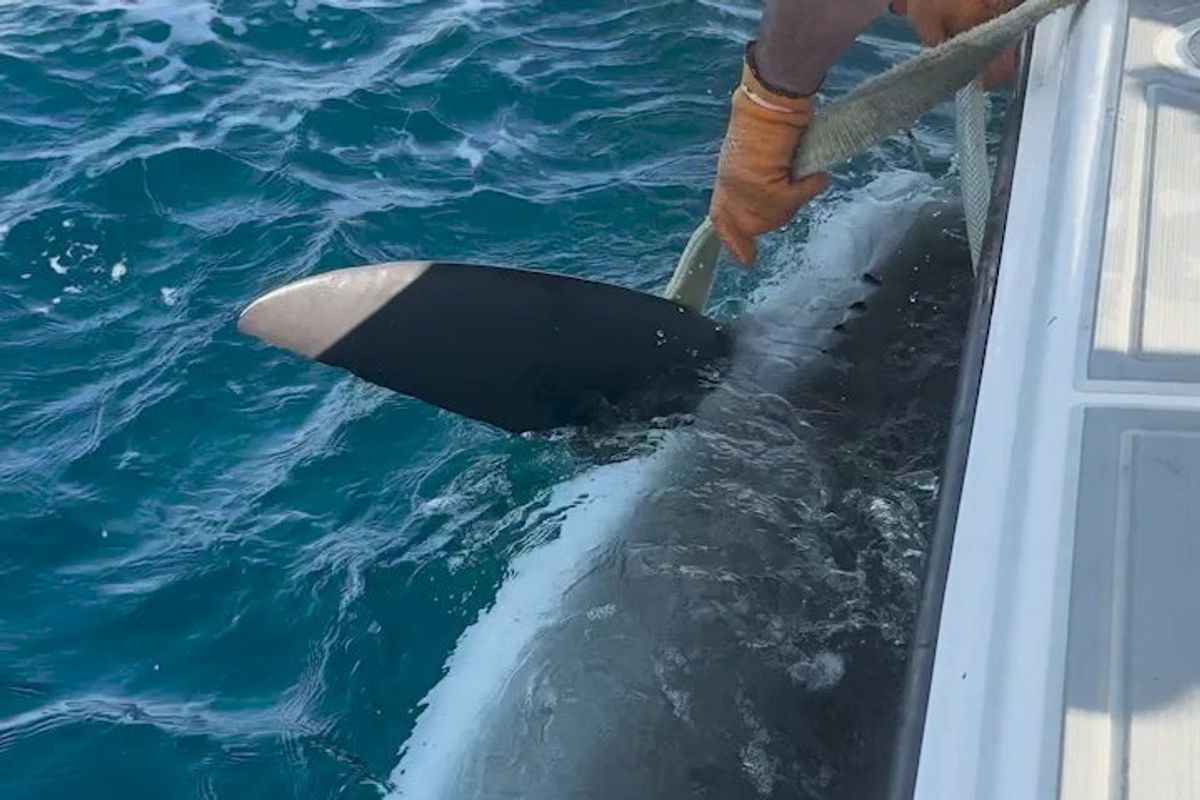
Dusky sharks can grow up to 14ft long (Image: OCEARCH / SWNS)
A rare and endangered dusky shark has entered the Gulf of Mexico, pinging about 60 miles west of St. Petersburg, Florida.
The sighting comes after a group of dusky sharks, a species often thought to be totally harmless to humans, killed a snorkeler off the coast of Israel last year.
The 9-foot-8, 327-pound predator has been named “Mira”, and is believed to be the first of its kind to be tagged and tracked.
Her unexpected movement into the Gulf is offering fresh hope for the recovery of one of the ocean’s most vulnerable top predators.
On March 10, Mira was detected about 60 miles west of St. Petersburg, Florida. Marine scientists have achieved a significant milestone in shark conservation with the successful tagging of Mira, representing a beacon of hope for one of the ocean’s most vulnerable predator species.
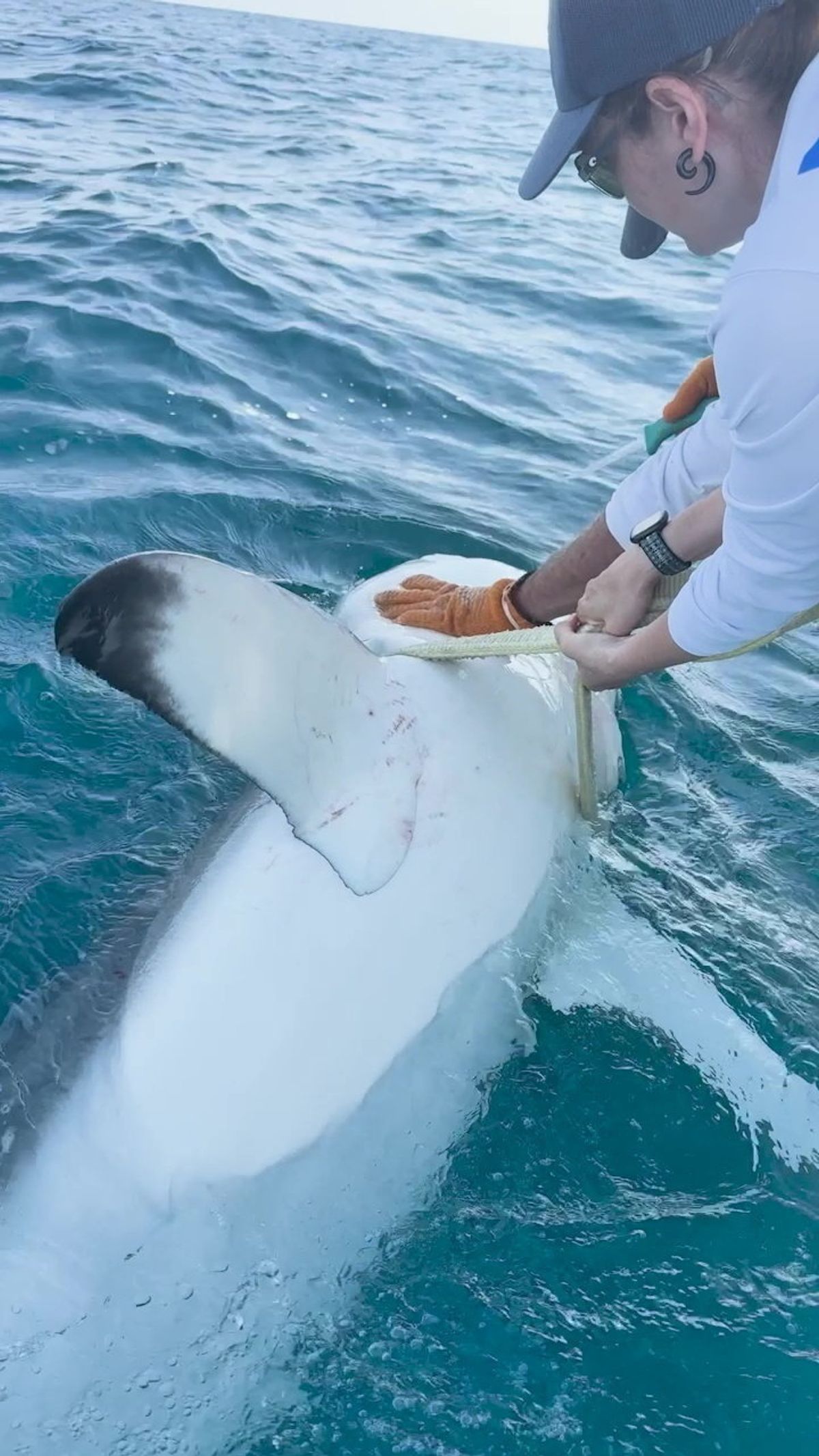
The rare creature was tagged off the coast of Florida (Image: OCEARCH / SWNS)
On May 15, 2025, a team from marine research group OCEARCH tagged and sampled Mira off the coast of Jacksonville, Florida, marking the organization’s first dusky shark tagged, sampled, and released. Mira is just above the known maturity size for this species.
John Tyminski, Senior Data Scientist at Ocearch emphasized the significance of this breakthrough. “Mira is the one and only dusky shark that has been tagged, and this is a species that has great interest in part because dusky sharks are certainly a lesser-known species,” he said.
“They’re not as common to most people, but they are a very, very important part of the ecosystem.” Dusky sharks are formidable ocean predators that deserve greater recognition for their ecological importance. “They actually grow quite large,” Tyminski said. “They’re one of the largest of the requiem family of sharks. They get up to be about 14 feet long.”
Scientists say the species was decimated by overfishing, with populations dropping as much as 90 percent.
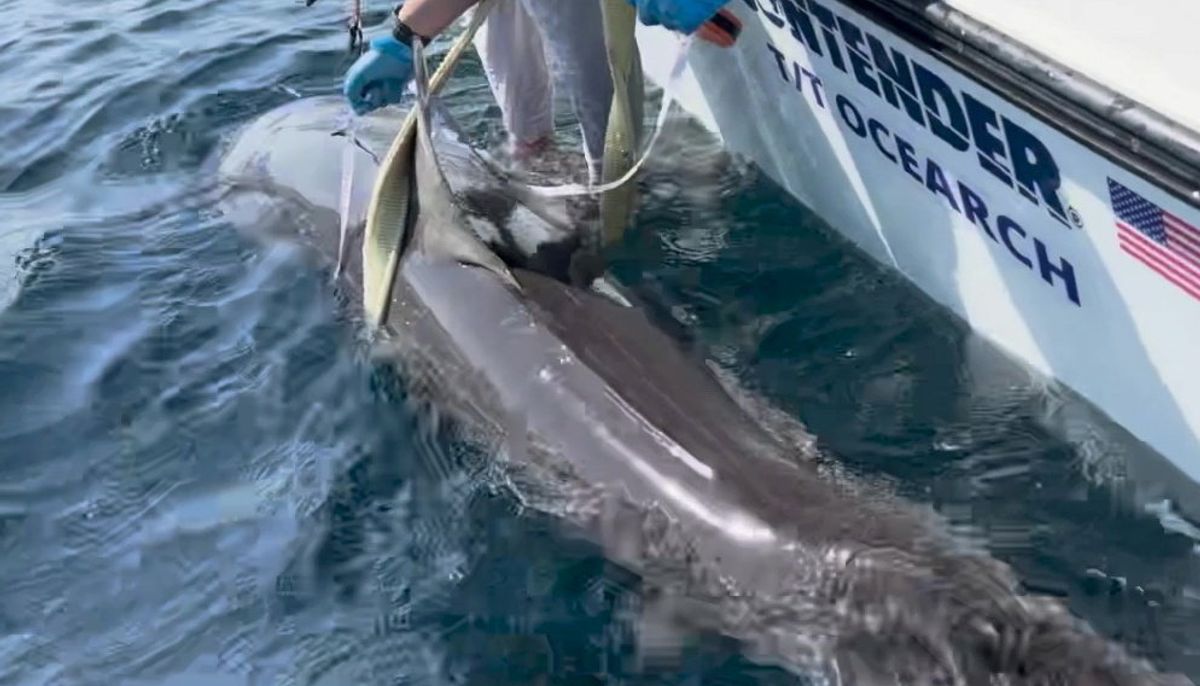
The team say that this is the first dusky shark they’ve tagged (Image: OCEARCH / SWNS)
Dusky sharks are globally endangered and considered vulnerable in the North Atlantic and Gulf of Mexico. Like white sharks, they have small litters, late maturity, and a three-year reproductive cycle – including nearly two years of gestation followed by a year of rest.
The species’ precarious situation stems from decades of overfishing pressure. “As a result of, largely as a result of overfishing in the 1990s and the 2000s and earlier, dusky sharks were really, really decimated due to overfishing, largely because they were non-target or bycatch in pelagic long lines,” Tyminski said. These fishing operations primarily target tuna and swordfish but also inadvertently catch dusky sharks.
What makes dusky sharks particularly vulnerable is their biology. “They are very slow to mature, slow to grow, and have very low reproductive output. The females, for example, only give birth every third year,” Tyminski said.
This reproductive strategy, while successful in stable environments, makes recovery from population declines extremely challenging. “As a result, their numbers were really, really significantly reduced, maybe as much as 90 percent of their population reduced,” he said.

Shark populations have been declining for decades, with many breeds being hunted for their fins, which are popular in several Asian cuisines. (Image: AFP)
Despite this grim history, there are encouraging signs of recovery. “Thanks to protective measures that began to come into play in the late 1990s, they’re actually listed as an endangered species by IUCN [Union for Conservation of Nature],” Tyminski said.
“Their numbers are beginning to show some signs of rebounding.” Mira’s tracking data is already providing valuable insights into dusky shark behavior and habitat use.
Mira did not show signs of pregnancy or recent mating, offering a valuable data point on her life stage. Named Mira, which means “wonder” and is also a star in the night sky, this shark reminds researchers how much there is still to learn about this species.
“The fact that we’ve got Mira that’s in the Gulf of Mexico recently, she’s pinged in there, and she was tagged in the Atlantic, the open Atlantic, is really interesting,” Tyminski said.
“Getting data from tracks like Mira can show the migration corridors, can show areas of habitat use, and ultimately, this kind of information can be used to help protect a vulnerable species like the dusky shark.”
He added: “I feel like Mira’s movement into the Gulf gives us a little bit of hope about this species and all of the top predators that we need that are so vital to keeping ocean balance.”