
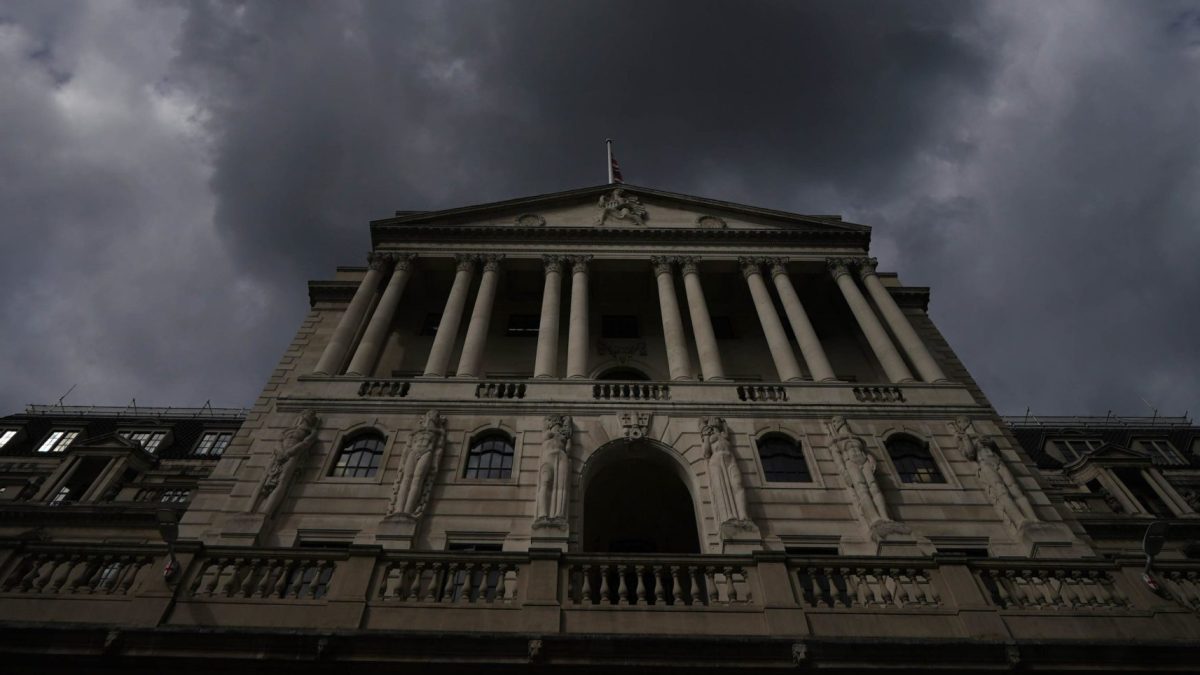
Some mortgage lenders are pulling their entire range of home loans from the market as traders continue to bet on multiple Bank of England rate hikes this year.
Mortgage prices have been rising for weeks after the conflict in the Middle East sent the price of oil higher, raising inflation expectations.
Before March, experts had expected the Bank of England to cut interest rates this year, but earlier on Monday, financial markets suggested there could be as many as four rate hikes.
The base rate is currently 3.75 per cent so four 0.25 percentage point increases could bring the rate to 4.75 per cent.
New FeatureIn ShortQuick Stories. Same trusted journalism.
Expectations of increases has sent swap rates – which have a large bearing on mortgage prices – higher, and means many banks have had to increase prices. Some banks have continued to do so, with Halifax and Nationwide announcing that it will hike rates on Tuesday, but others have simply pulled their range of deals.
Brokers say that many lenders simply cannot price quickly enough, because swap rates are moving too quickly, making it simpler to remove all their deals.
Clydesdale Bank said that “in light of current market conditions”, it would withdraw all its fixed-rate mortgages for new customers at 8pm on Monday evening.
Fleet Mortgages, owned by Starling Bank, also pulled all fixed deals on Monday afternoon – including product transfer for existing customers – citing “extreme market volatility” in an email to brokers.
Coventry for Intermediaries – an arm of Coventry Building Society that deals with brokers – pulled all its new customer deals on Sunday evening.
Family Building Society also emailed brokers on Monday to withdraw its range of fixed mortgages, including for existing customers.
It said in an email to brokers: “Due to significant increases in the cost of funding our fixed-rate mortgages, we have temporarily withdrawn all of our fixed rate mortgage products from sale today, 23 March 2026, with immediate effect.
“The product withdrawals apply for both new and existing customers, and are no longer available for purchase, remortgage, further advance or product switch applications.”
Lewis Shaw, a broker at Shaw Financial Services, described the rate of change as “relentless”, and added: “Some lenders can’t reprice as quickly and can find themselves underwater very fast.”
During times of volatility, lenders can quickly become overwhelmed by customers if they have a well priced product.
When swap rates are going up quickly, as they currently are, banks also have to reprice very regularly to ensure their rates are in line with funding levels, and to continue to be commercially viable.
Nick Mendes of John Charcol brokers said: “The immediate impact is likely to be further upward pressure on fixed mortgage rates, along with more short-notice withdrawals as lenders try to keep pace with fast-moving markets.
“Mortgage pricing does not wait for the Bank of England to come to fruition. If markets keep pricing in higher rates from here, lenders are likely to continue repricing in advance.
“Aldermore, Metro, Gen H, TSB, Nottingham, Leeds, Shawbrook and Principality have all either raised rates, withdrawn products, or repriced parts of their range. That is usually the clearest sign that higher funding costs are starting to bite.”
Figures from data firm Moneyfacts show that the average two-year fix has risen from 4.83 per cent at the start of March to 5.43 per cent on Monday.
Meanwhile the average five-year fix has risen from 4.95 per cent at the start of March to 5.45 per cent. This is the highest level since summer 2024.
Adam French, head of consumer finance at Moneyfacts said: “Hundreds of mortgage products have been withdrawn since the base-rate decision last week, taking the total reduction to almost 1,500 deals since the conflict in Iran began – around a fifth of the market.
“The combination of rising rates and falling choice is a direct response to the conflict in the Middle East which has dramatically shifted expectations around inflation and interest rates.
“Many deals are likely to return to the market in the coming days and weeks but repriced at higher rates.”
Swap rates have been climbing in March and dropped earlier on Monday amid news of a potential ceasefire between the US and Iran, which also sent oil prices down and stock markets up.
But they are still sitting around one percentage point higher than before the crisis in the Middle East started.
It is bad news for the hundreds of thousands of mortgage customers coming off fixed deals this summer, who may now find themselves paying hundreds of pounds a month more than expected when they come to sign a new deal.
Much will depend on the outcome of Trump’s next move, and whether his ceasefire agreement continues.